
Children's Savings Accounts and Financial Literacy in Japan

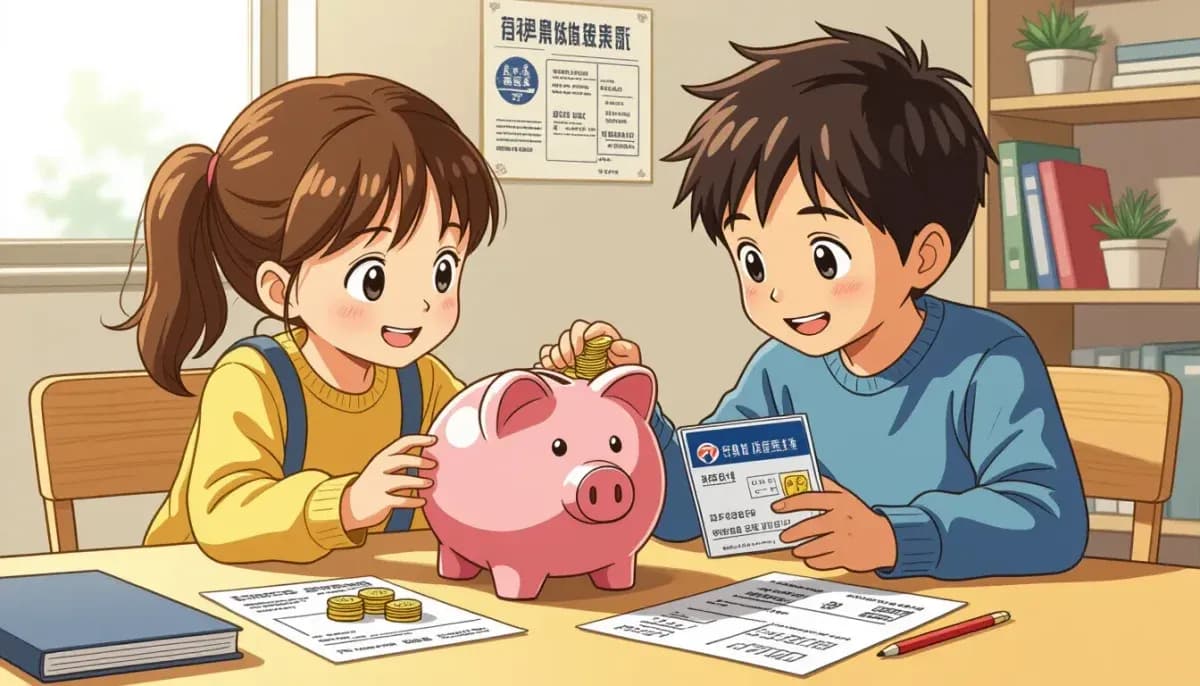
Complete guide to opening children's savings accounts in Japan, the new Kodomo NISA, Junior NISA, and teaching financial literacy to expat kids. Practical tips for foreign families.
Children's Savings Accounts and Financial Literacy in Japan
Building financial security for your children while living in Japan requires understanding a unique set of rules, account types, and cultural approaches to money. Whether you're an expat raising kids long-term in Japan or a family planning for education costs, this guide covers everything you need to know about children's savings accounts, investment options, and teaching financial literacy in Japan.
Japan's banking and investment landscape has changed significantly in recent years, with the government actively promoting asset-building for families. From the new Kodomo NISA launching around 2027 to the Japan Financial Literacy and Education Corporation (J-FLEC) established in 2024, there has never been a better time to start your child's financial journey in Japan.
Why Start Early: The Case for Children's Savings in Japan
Education in Japan is one of the biggest financial commitments a family will make. Costs vary enormously depending on whether you choose public or private schooling. A child educated entirely through the public system (from elementary through university) might cost a few million yen in total expenses. However, a family choosing private schools at every level—including a private university—can face expenses approaching 100 million yen or more.
This reality makes early, consistent saving essential. The good news is that Japan offers several structured ways for families to save and invest for their children's futures, and the government has been expanding support for families in recent years.
For context on the broader financial planning picture, see our guide on financial planning for expat families raising children in Japan and government benefits and subsidies for families in Japan.
Opening a Bank Account for Your Child in Japan
The most straightforward starting point is opening a basic savings account in your child's name. This creates a foundation for saving and, importantly, can be a tangible teaching tool for financial literacy.
Japan Post Bank (Yucho Bank) — Top Pick for Kids
The expat community consistently recommends Japan Post Bank (ゆうちょ銀行, Yucho Ginko) as the best option for children's accounts. Here's why:
- Easy passbook updates: Japan Post Bank provides physical passbooks, which are excellent for showing children their savings growing over time
- Wide network: Post office branches are everywhere in Japan, making it convenient to deposit and update
- Low friction: Opening a child's account, while requiring multiple visits to the post office, is considered straightforward compared to other banks
- Integration: Yucho links to online brokers like Monex and Rakuten for future investment needs
To open a child's account at Yucho, you will need:
- The child's residence card (在留カード) or health insurance card showing their address
- Your own ID (residence card or passport)
- The child's My Number (if available)
- Proof of your relationship as parent/guardian
Other Bank Options
- Sony Bank: English-friendly interface, good for expat parents who need English support
- SBI Shinsei Bank: Offers online management and competitive rates; check their FAQ for foreign minor account requirements
- Rakuten Bank: Best when combined with Rakuten Securities for higher interest rates via the Money Bridge feature
Savings Account Interest Rates (2025)
| Bank | Rate (Ordinary Account) | Notes |
|---|---|---|
| Aozora Bank BANK app | 0.50% | First ¥1 million |
| GMO Aozora Net Bank | 0.50% | First ¥1 million |
| au Jibun Bank | Up to 0.51% | Within au ecosystem |
| SBI Shinsei Bank | Up to 0.42% | Linked securities account |
| Rakuten Bank + Money Bridge | 0.28% | Up to ¥3 million |
| Yucho Bank | ~0.20% | Standard rate |
Note: Banks automatically withhold 20.315% tax on interest earnings (combined national tax, local tax, and reconstruction surcharge). Deposit insurance through DICJ covers up to ¥10 million per institution for yen accounts.
For more on managing finances in Japan, Living in Nihon provides practical guides for foreigners navigating Japanese financial systems.
Junior NISA and the Coming Kodomo NISA
Japan's investment account system (NISA — Nippon Individual Savings Account) has long offered tax-free investing, and children are included in this framework.
Junior NISA (Now Closed to New Contributions)
The original Junior NISA program ran from 2016 to 2023 and allowed parents to invest up to ¥800,000 per year per child in a tax-free account. While the program attracted 1.24 million accounts, it was ultimately abolished because of a critical flaw: funds were locked until the child turned 18, with almost no exceptions. This withdrawal restriction severely limited appeal.
Key legacy point: Existing Junior NISA accounts continue to roll over and will transfer into a regular adult NISA when the child turns 18. If your family already has a Junior NISA, it continues to grow tax-free.
The New Kodomo NISA (Launching ~2027)
Japan's government has announced a new investment program for minors, expected to launch around 2027 as part of fiscal reform efforts:
- Annual contribution limit: ¥600,000 per year
- Lifetime tax-free cap: ¥6 million per child
- Withdrawal flexibility: Funds can be accessed from age 12 onward (for specific needs like education)
- Gift tax compatibility: Annual contributions fit within Japan's ¥1.1 million annual gift tax exemption
- Grandparent participation: Grandparents can contribute, making multigenerational savings easier
This is a significant improvement over the old Junior NISA because early withdrawal will be permitted for legitimate educational expenses. The ¥6 million lifetime cap is designed to encourage saving without enabling extreme wealth concentration.
For the latest news on the Kodomo NISA, see coverage from Japan Times. The expat community at RetireJapan also maintains an excellent resource on saving for children's education in Japan.
Education Savings Strategies for Expat Families
Beyond dedicated children's accounts, there are several savings and investment strategies that expat families in Japan use to prepare for education costs.
Strategy 1: Cash Savings in Child's Name
The simplest approach — open a Yucho or other bank account in your child's name and deposit a fixed amount monthly. Useful for teaching children about money directly, and the passbook format makes growth visible and tangible.
Strategy 2: Personal NISA in Parent's Name for Child's Education
Since a new regular NISA allows up to ¥1.8 million per year in tax-free investments (as of 2024 reforms), many parents simply use their own NISA accounts to save for their children's education. This avoids the restrictions of junior/child accounts while still benefiting from tax-free growth.
Strategy 3: Educational Gift Tax Exemption
A special tax provision allows grandparents or parents to give up to ¥15 million per child for educational expenses on a tax-free basis. This provision was extended but is set to expire after 2026, so families with access to this level of gifting should act before then.
Note for US Citizens: If you or your children are US citizens or green card holders, you must report foreign bank and investment accounts through FBAR (FinCEN Form 114) if total balances in all foreign accounts exceed $10,000 at any point during the year. Investment in Japanese mutual funds may also trigger PFIC (Passive Foreign Investment Company) tax treatment. Consult a cross-border tax specialist before investing.
For working expat families navigating Japan's financial systems, For Work in Japan offers resources on salary, taxes, and financial planning for foreign workers. Japan Handbook also provides a practical money-saving guide specifically for families living in Japan.
Teaching Financial Literacy to Children in Japan
Japan has historically struggled with financial literacy among its population — surveys consistently show that many adults lack basic knowledge about investing and compound interest. This is changing rapidly.
Japan's Financial Literacy Landscape
J-FLEC (Japan Financial Literacy and Education Corporation) became fully operational in August 2024. This public-private organization:
- Distributes financial education materials to schools nationwide
- Trains certified financial literacy instructors
- Partners with companies to bring financial education to workplaces and communities
Kids Money Station runs programs for children from preschool through university, covering:
- Basic concepts of earning, saving, and spending
- Introduction to banking and interest
- Age-appropriate introduction to investing concepts
Age-Appropriate Financial Lessons
| Age Range | Key Financial Concepts | Practical Tools |
|---|---|---|
| 3–6 years | Money is exchanged for goods/services | Piggy bank, counting coins |
| 7–10 years | Saving toward a goal; difference between wants and needs | Bank passbook (Yucho), savings jar |
| 11–14 years | Budgeting; understanding interest | Debit card (Sony Bank Family Card, Revolut) |
| 15–18 years | Investing basics; compound interest; NISA introduction | Junior NISA/Kodomo NISA; investment apps |
Revolut for Kids launched in Japan in March 2025, offering debit cards for children aged 6–17 with parental monitoring and spending controls. This can be an excellent practical tool for teaching money management.
Sony Bank Family Debit Cards are available for children aged 12 and up, linked to parents' accounts with spending limits and notifications.
For bilingual families raising children in Japan, teaching financial concepts in both Japanese and your home language can reinforce both language skills and financial understanding. See our guide on raising bilingual children in Japan.
Child Allowance: Free Money to Save
One resource many expat families overlook is Japan's Child Allowance (児童手当, Jidou Teate). As of October 2024, significant changes were made:
- Extended age coverage: Now covers children through age 18 (previously ended at age 12/junior high)
- Income limits removed: All eligible families receive the allowance regardless of income
- Higher payments for third or subsequent children: ¥30,000/month per child (versus ¥10,000–¥15,000 for first and second children)
Standard monthly amounts:
- Children aged 0–2: ¥15,000/month
- Children aged 3 through age 18: ¥10,000/month (¥30,000 for 3rd+ child)
Strategy: Automatically transfer the full child allowance amount each month into your child's dedicated savings account. Over 18 years, consistent saving of the child allowance alone can accumulate several million yen — a meaningful contribution to education costs.
For full details on government support available to your family, see our guide on government benefits and subsidies for families in Japan.
Practical Tips for Expat Parents
- Open an account early: Even a newborn can have a bank account in Japan. Starting early maximizes the time for savings to grow.
- Involve your child in the process: Take your child to the bank to update their passbook. Seeing numbers grow is a powerful motivator.
- Set up automatic transfers: Most Japanese banks support standing orders (自動振替). Set up a monthly automatic transfer to your child's account so saving happens without effort.
- Keep records: Japanese banks are generally safe, but maintain records of all account numbers, passbooks, and transaction history. This is especially important for FBAR reporting for US citizens.
- Reassess annually: Education costs, savings rates, and government programs change. Review your savings strategy each year.
- Consider Japan's education cost subsidies: Public elementary and junior high are tuition-free; public high school has been free nationwide since 2025. Early childhood education (ages 3–5) is also free for most families. Factor these subsidies into how much you actually need to save. See our guide on the Japanese education system for foreign families.
For information about education choices that affect how much you need to save, our guide on international schools in Japan covers private and international school costs in detail.
For further expat financial guidance, Chuukou Benkyou provides resources for families navigating Japan's educational and financial landscape.
Summary: Building Your Child's Financial Future in Japan
Japan offers a solid foundation for building children's savings, with tax-advantaged accounts, generous government allowances, and improving financial literacy resources. The key steps for expat families are:
- Open a Yucho or online bank account in your child's name as early as possible
- Direct child allowance payments automatically into the savings account
- Use your own NISA to invest for education costs in a tax-efficient way
- Prepare for the Kodomo NISA launching around 2027 with ¥600,000/year capacity
- Teach financial concepts at every age using Japan's growing fintech tools and school programs
- Consult a cross-border tax specialist if you have US or other foreign tax obligations
The combination of disciplined monthly saving, government allowances, and tax-free investing through NISA can realistically cover a significant portion of your children's education expenses in Japan.
For comprehensive guidance on managing your family's finances as an expat in Japan, explore our complete resource on financial planning for expat families raising children in Japan.

Originally from Vietnam, living in Japan for 16+ years. Graduated from Nagoya University, with 11 years of professional experience at Japanese and international companies. Sharing practical information for foreign parents raising children in Japan.
View Profile →Related Articles

Financial Impact of Choosing International Schooling
Discover the real financial impact of international schooling in Japan. Compare tuition tiers from JPY 1.2M to 10M+, one-time fees, employer allowances, government subsidies, and long-term planning strategies for expat families.
Read more →
College Fund Planning for Children in Japan
Learn how to plan a college fund for your children in Japan. Compare education savings options including gakushihoken, NISA, and government subsidies. Costs, strategies, and tips for foreign families.
Read more →
Childcare Costs and Affordability in Different Regions of Japan
A complete guide to childcare costs across Japan's regions — Tokyo, Osaka, rural areas — including subsidies, free preschool, and tips for expat families to save money.
Read more →
Managing Finances Across Two Countries as a Family
A complete guide for expat families in Japan on managing money across two countries: dual taxes, cross-border banking, international transfers, budgeting, and investments.
Read more →
Cost Comparison: Urban vs Rural Family Life in Japan
Compare the real costs of urban vs rural family life in Japan. From rent and transportation to education and food — find out which lifestyle suits your family's budget and needs.
Read more →
Estate Planning for International Families in Japan
Complete guide to estate planning for expat families in Japan: inheritance tax rates, will writing requirements, the 2024 gift tax reform, cross-border strategies, and what to do now to protect your children and spouse.
Read more →