The Complete Guide to Daycare and Hoikuen in Japan for Foreign Parents
Finding reliable childcare is one of the biggest challenges foreign parents face when living in Japan. Whether you have just arrived or have been here for years, understanding how the Japanese daycare system works — from the different facility types to the application process and costs — can feel overwhelming, especially when most information is in Japanese. This comprehensive guide breaks down everything you need to know about enrolling your child in daycare (hoikuen) in Japan as a foreign parent.
Understanding the Types of Childcare in Japan
Japan offers several types of childcare facilities, each serving different needs and age groups. Knowing the differences is essential before you start the application process.
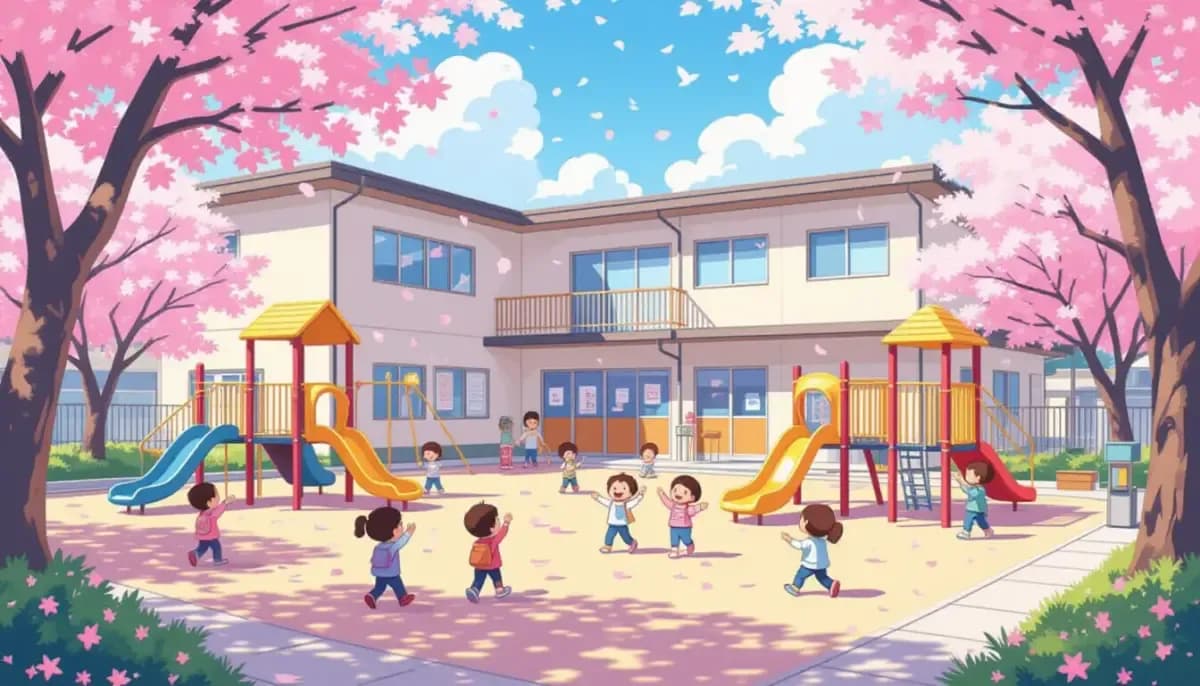
Hoikuen (保育園) — Daycare/Nursery is the most common option for working parents. Hoikuen accepts children from as young as a few months old up to age 5 (pre-elementary school). The primary purpose is childcare while parents work, so operating hours are longer — typically 7:00 AM to 6:00 PM, with some offering extended care until 8:00 PM. To qualify, both parents must demonstrate a "need for childcare," such as employment, job searching, illness, or attending school.
Yochien (幼稚園) — Kindergarten focuses on early childhood education for children aged 3 to 5. Yochien operates more like a school, with shorter hours (usually 9:00 AM to 2:00 PM). Parents do not need to prove employment, making it accessible to stay-at-home families. However, the shorter hours can be difficult for dual-income households.
Nintei Kodomoen (認定こども園) — Certified Children's Centers combine elements of both hoikuen and yochien. Introduced in 2006, these centers provide childcare and education under one roof and are increasingly popular among parents who want the best of both worlds.
For a broader overview of the education system, see our guide to the Japanese education system for foreign families. If your child is approaching kindergarten age, our yochien guide for foreign parents covers that option in depth.
Licensed vs. Unlicensed Daycare: What Foreign Parents Should Know
One of the most important distinctions in the Japanese daycare system is between licensed and unlicensed facilities.
| Feature | Licensed Hoikuen (Ninka 認可) | Unlicensed Hoikuen (Ninkagai 認可外) |
|---|
| Government regulation | Strict national standards | Fewer regulations |
| Fees | Income-based (¥5,000–¥70,000/month) | Set by facility (avg. ¥45,000/month for under-3) |
| Subsidies | Fully eligible for government subsidies | Limited or no subsidies |
| Application | Through city/ward office, point-based | Directly to facility |
| Availability | Competitive, especially in urban areas | Often has openings year-round |
| Staff ratios | Government-mandated | Varies by facility |
| Hours | Typically 7:00–18:00 (extended to 20:00) | Flexible, some offer 24-hour care |
Licensed hoikuen (ninka) are government-authorized and meet strict national standards for staffing, space, and safety. Around 30% of licensed daycares are publicly operated, while the rest are private but government-approved. Fees are calculated based on household income, making them affordable for most families.
Unlicensed hoikuen (ninkagai or mu-ninka) operate independently without government subsidies. They set their own fees, which tend to be higher, but they offer more flexibility in enrollment timing and hours. Many international daycare centers fall into this category.
For more about navigating life in Japan as a foreign family, check out the complete guide to raising children in Japan on Living in Nihon.
How Much Does Daycare Cost in Japan?
Understanding daycare costs helps you plan your family budget effectively. Here is a breakdown of typical monthly costs by facility type:
| Facility Type | Age Group | Monthly Cost Range | Notes |
|---|
| Licensed Hoikuen | 0–2 years | ¥5,000–¥70,000 | Based on household income |
| Licensed Hoikuen | 3–5 years | Free (since Oct 2019) | Government subsidy covers tuition |
| Unlicensed Hoikuen | 0–2 years | ¥30,000–¥80,000 | Set by facility, not income-based |
| Unlicensed Hoikuen | 3–5 years | ¥25,700/month subsidy cap | Partial government subsidy available |
| Private/International | All ages | ¥40,000–¥80,000+ | Premium services, English environment |
| Yochien (Kindergarten) | 3–5 years | Free (tuition) | Lunch, supplies, bus fees extra |
Key cost facts for foreign parents:
- Since October 2019, children aged 3–5 receive free tuition at all licensed facilities under the national cashless childcare program
- Tokyo is introducing free childcare for the first child aged 0–2 at licensed centers from September 2025
- Most families with children under 3 at licensed hoikuen pay between ¥10,000 and ¥20,000 per month
- Additional costs include uniforms, futon sets, lunch fees, event fees, and annual excursion charges
Foreign residents with valid residence status and local registration qualify for the same subsidies as Japanese citizens. There are no nationality requirements — just residency and, in some cases, income verification. For more about family life in Japan as a foreigner, For Work in Japan offers helpful resources.
The Hoikuen Application Process Step by Step
Applying for licensed daycare in Japan follows a structured process that can be confusing for foreign parents. Here is a clear timeline:
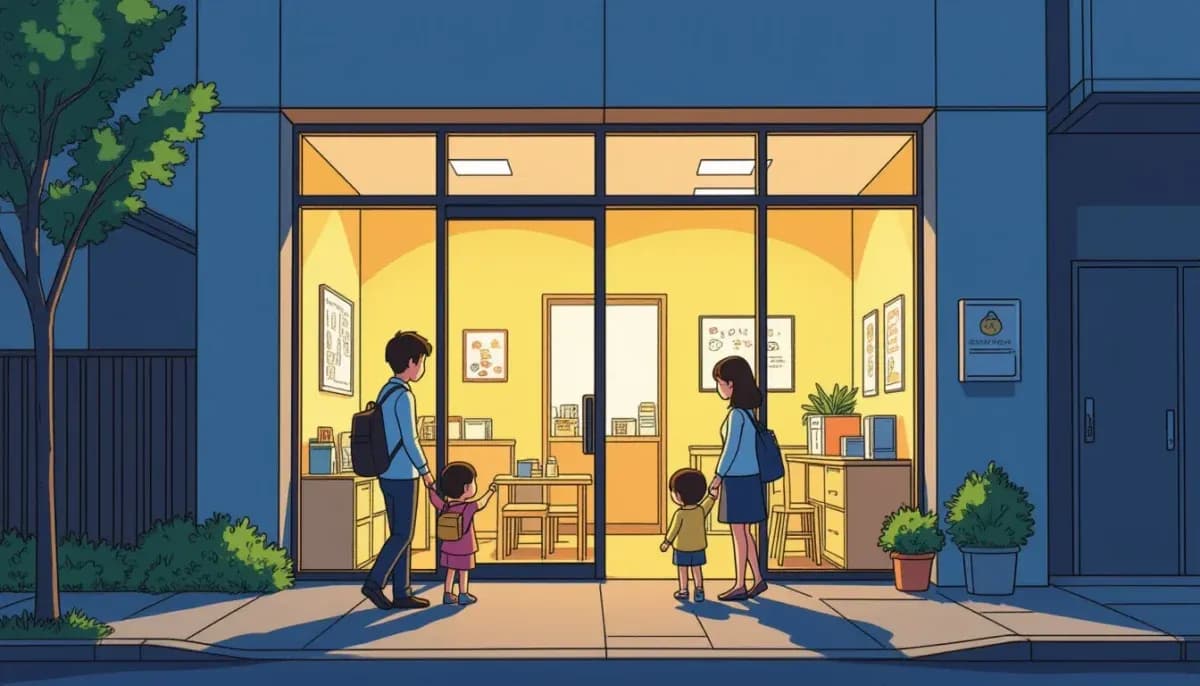
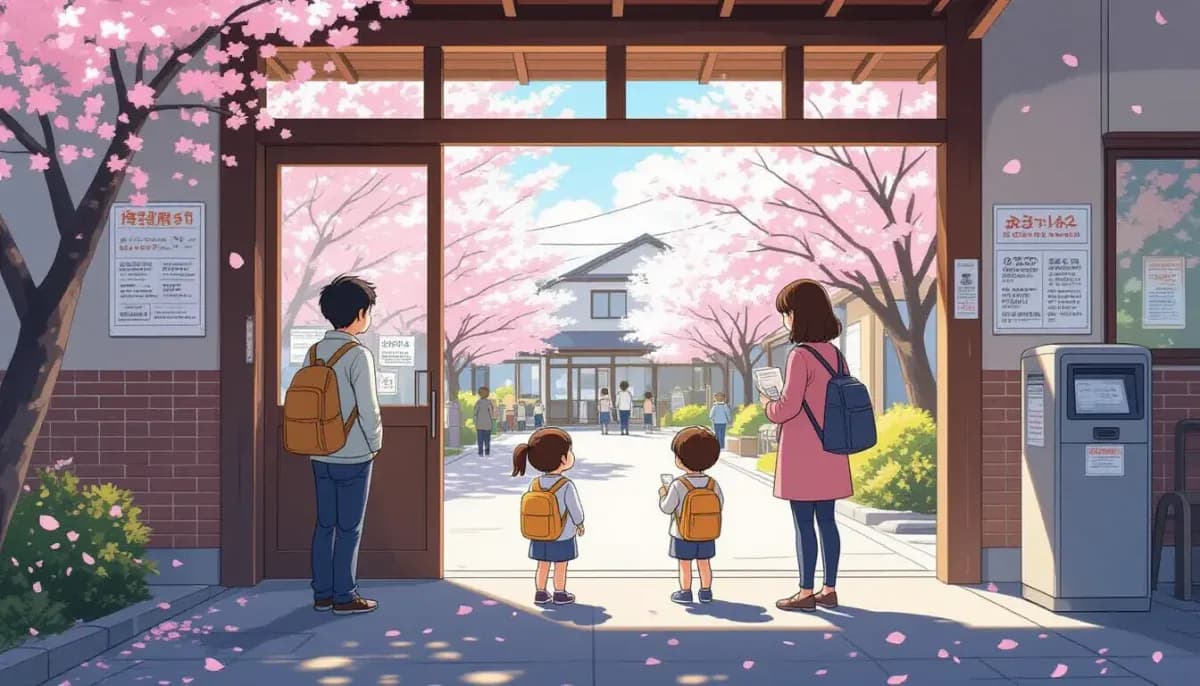
May–July: Research and Visit Start by visiting your local ward or city office (市区町村役所) to collect the childcare guide (保育園利用案内). This booklet lists all available facilities in your area. Schedule tours (見学/kengaku) of facilities you are interested in — most hoikuen welcome visits and some require them before you can apply.
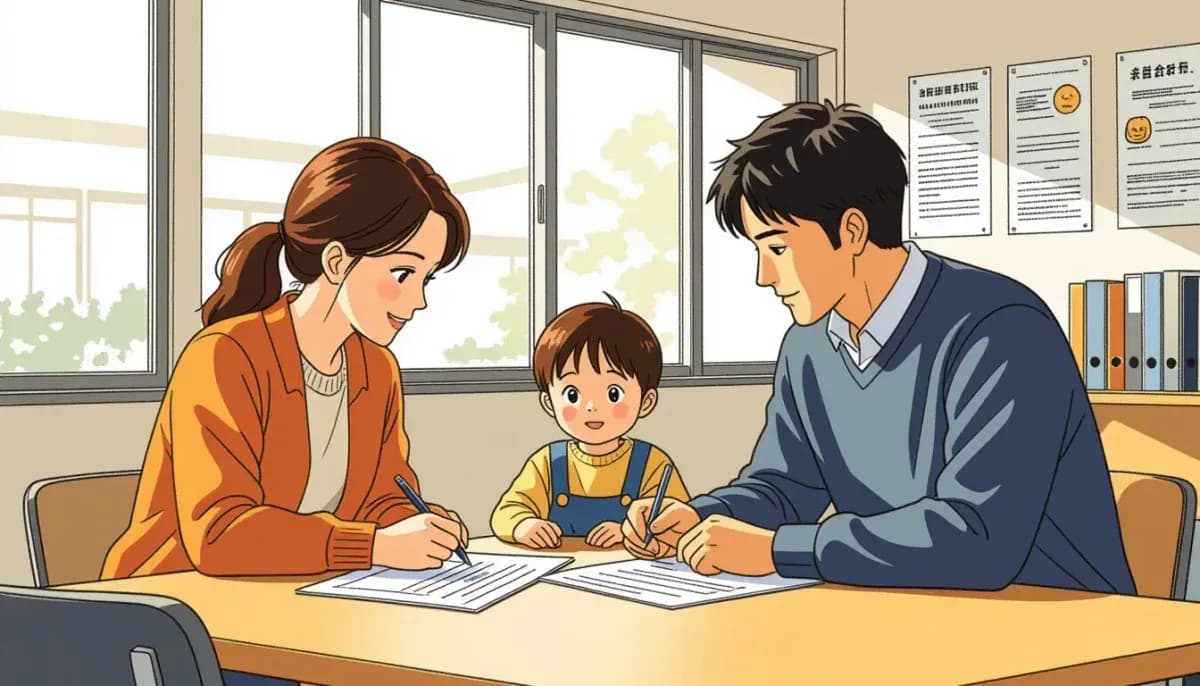
August–September: Prepare Documents Gather all required documents well in advance. Foreign parents typically need:
- Hoikuen admission application form (入園申込書)
- Childcare benefit certification form (保育認定申請書)
- Work certificates for both parents (就労証明書)
- Copy of both sides of your Residence Card (在留カード)
- Passport copy
- Income tax documents (課税証明書 or 住民税決定通知書)
- Child's health record (母子手帳)
- My Number notification card
October–November: Submit Application The main application window for April enrollment opens in October or November, depending on your municipality. In Tokyo's Arakawa ward, for example, the first-round application period for April 2025 was October 28 to November 11, 2024. Submit your application at the ward office — online submission is not available in most areas.
December–January: Point Calculation and Results Your application is evaluated using a point-based system. Points are awarded based on factors like employment status, hours worked, number of children, and special circumstances (single parent, disability, siblings already enrolled). Higher point totals receive priority placement.
February–March: Enrollment and Preparation If accepted, you will receive notification and attend an orientation meeting (入園説明会) at the daycare. You will need to purchase supplies like indoor shoes, bags, and name labels for all belongings.
For tips on managing your baby's early months while navigating this process, see our baby and infant care guide for foreign parents.
Tips for Foreign Parents Navigating the Point System
The point system (指数/shisuu) determines who gets a spot at competitive licensed hoikuen. Understanding how it works can significantly improve your chances.
How points are calculated:
- Both parents working full-time (40+ hours/week): highest base points
- Part-time work, job searching, or studying: lower base points
- Single-parent household: significant bonus points
- Sibling already enrolled at the same facility: bonus points
- Living in the ward/city for a longer period: possible bonus
- Child on the waitlist from a previous application: bonus in some areas
Strategies to improve your chances:
- Apply to multiple facilities — List as many acceptable hoikuen as possible on your application (most areas allow 10–20 choices)
- Consider less popular facilities — Newer or slightly farther facilities often have lower competition
- Apply for mid-year entry — April is the most competitive month; some spots open in other months
- Enroll in unlicensed daycare first — Being on a waitlist while using unlicensed care can earn bonus points in some municipalities
- Check the previous year's cutoff points — Ward offices publish minimum points for each facility, so you can gauge your competitiveness
Many municipalities now offer multilingual support for foreign parents. Larger wards provide translated application kits, interpretation services at the childcare counter, and consultation desks in English, Chinese, Korean, and other languages. Always ask your ward office what language support is available.
Learn more about education preparation and exam readiness for when your child reaches school age at Chuukou Benkyou.
What to Expect at a Japanese Hoikuen: Daily Life
Understanding the daily routine at a hoikuen helps you prepare your child and yourself for the experience.
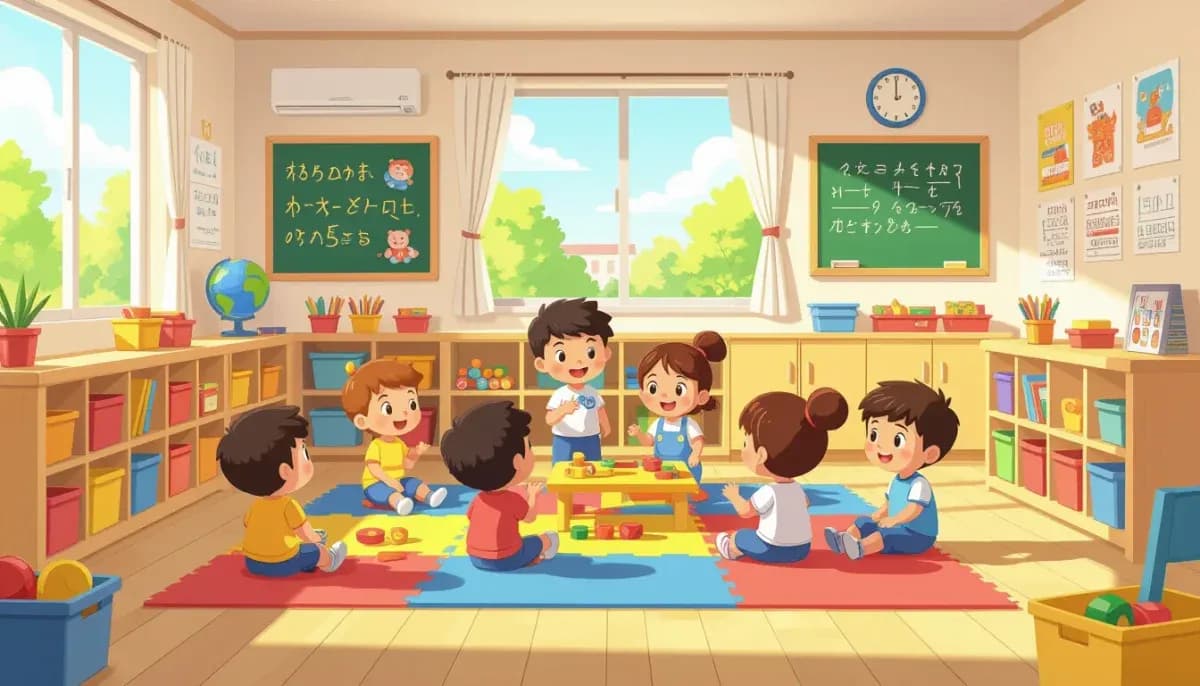
A typical day at hoikuen:
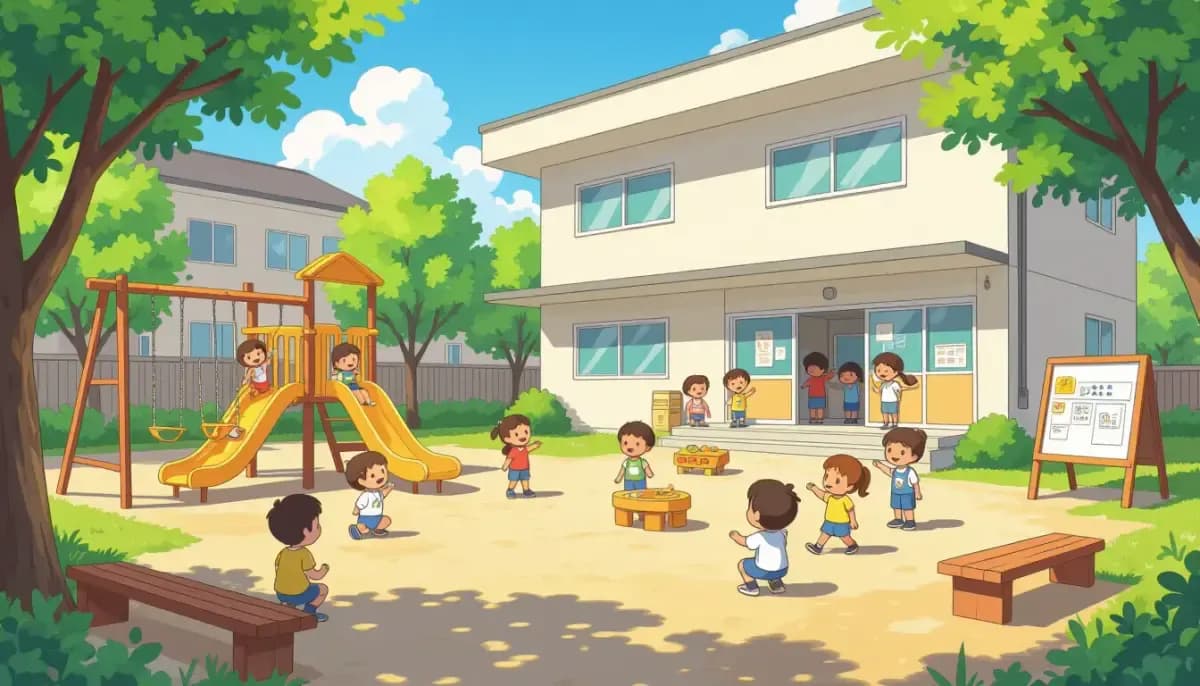
- 7:00–9:00 — Drop-off and free play
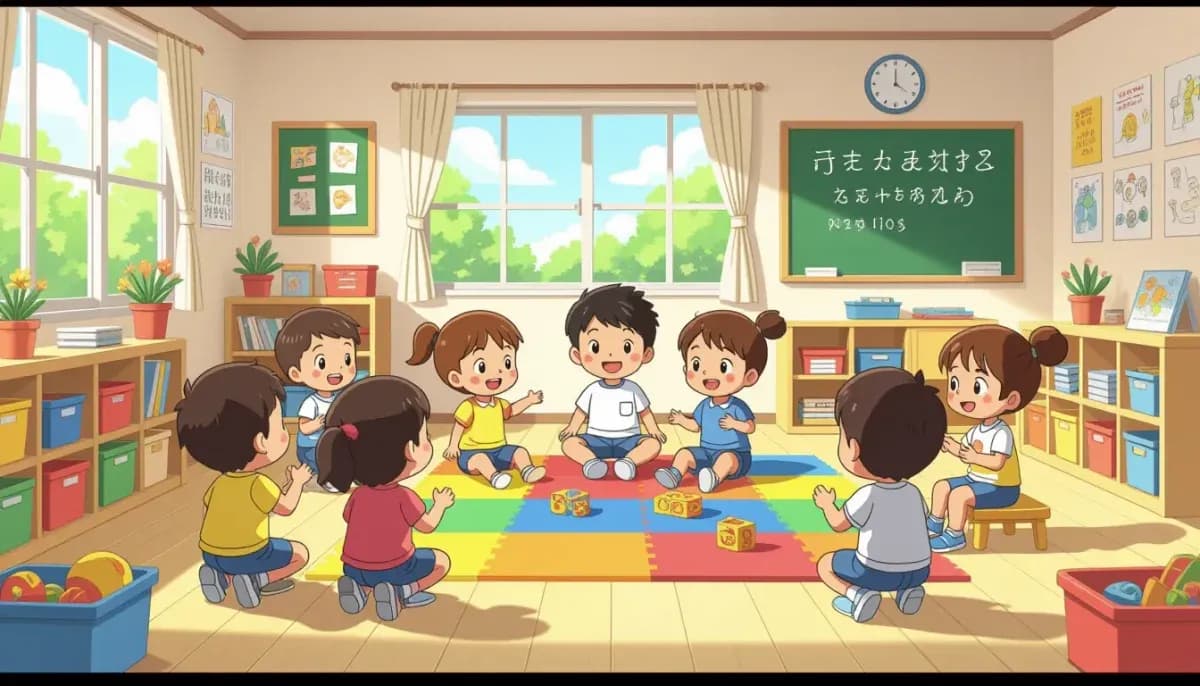
- 9:30–10:00 — Morning circle, attendance, and singing
- 10:00–11:30 — Structured activities (arts, outdoor play, music)
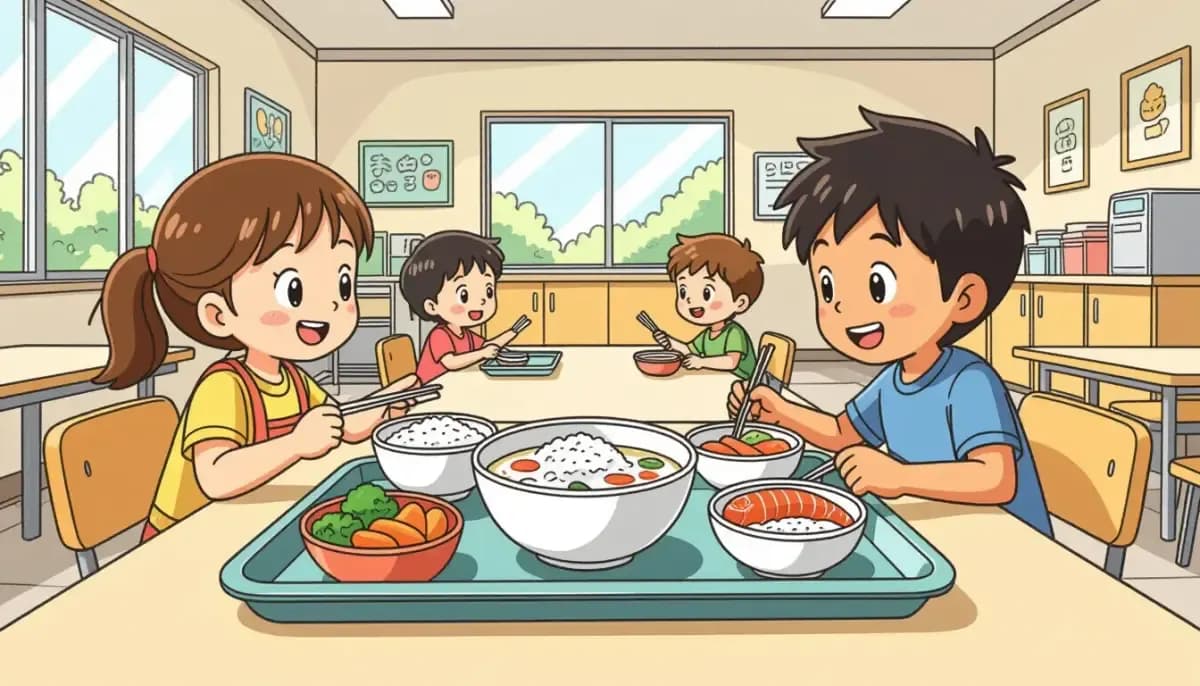
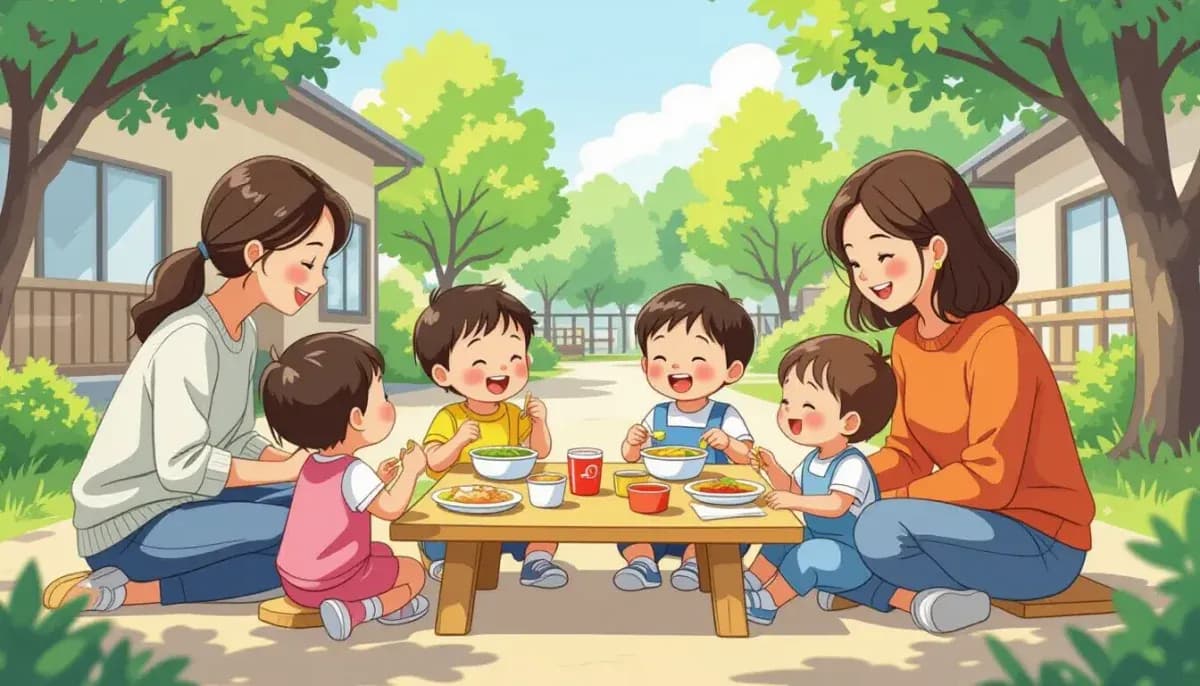
- 11:30–12:30 — Lunch (provided by the facility in most cases)
- 12:30–15:00 — Nap time (younger children)
- 15:00–15:30 — Snack time
- 15:30–18:00 — Free play and pickup
- 18:00–20:00 — Extended care (延長保育) for parents who need it
Things foreign parents should know:
- You will need to prepare a daily communication notebook (連絡帳/renrakucho) documenting your child's meals, temperature, and sleep at home
- Most hoikuen serve Japanese-style lunches — inform staff of any allergies or dietary restrictions early
- Seasonal events are important: undoukai (sports day), tanabata, setsubun, and more
- Expect to bring supplies like changes of clothes, towels, and specific bags labeled with your child's name
- Communication with teachers is primarily in Japanese, though some facilities in international areas have bilingual staff
If you are concerned about your child adapting culturally, our article on cultural identity for hafu and mixed-race children may be helpful. For language development, check out our guide on raising bilingual children in Japan.
Handling the Waitlist: What to Do If You Don't Get a Spot
Getting placed on the waitlist (待機児童/taiki jidou) is unfortunately common, especially in urban areas like Tokyo, Osaka, and Yokohama. Here is what you can do:
Immediate alternatives:
- Unlicensed daycare (ninkagai) — Apply directly; many have spots available throughout the year
- Small-scale nurseries (小規模保育) — Licensed facilities for children aged 0–2, often with shorter waitlists
- Family daycare (家庭的保育) — A certified caregiver watches a small group of children in their home
- Temporary childcare (一時保育) — Some hoikuen offer drop-in care by the hour or day
- Babysitter services — Companies like Kids Line and Poppins offer professional babysitting
Reapplying:
- Apply again for the second round (二次募集) in February–March
- Apply for mid-year entry (途中入園) — check with your ward office monthly for openings
- Update your circumstances if anything changes (new job, change in work hours) to potentially increase your points
For information about healthcare options while your child is young, see our healthcare and medical care guide for children in Japan.
Special Considerations for International Families
Foreign families often face unique situations when dealing with the Japanese daycare system:
Language barrier: The biggest challenge is that most hoikuen operate entirely in Japanese. Application forms, daily communication notebooks, and parent meetings are conducted in Japanese. Consider asking a Japanese-speaking friend, your company's HR department, or a paid translation service for help with paperwork.
Visa and residency requirements: You must have a valid residence status and be registered at your local ward office to apply. Your visa type does not affect eligibility for subsidies — all legal residents qualify equally. If you have concerns about visa matters and your family, see our visa and legal issues guide for foreign families.
Cultural expectations: Japanese hoikuen have specific expectations about parent involvement. You may be asked to sew bags, prepare specific supplies in exact sizes, and participate in parent committees (保護者会). Seasonal events require attendance and sometimes preparation of costumes or food.
Food and allergies: Japanese daycare meals follow set menus. If your child has allergies or religious dietary restrictions (halal, vegetarian), communicate this clearly during enrollment. Most facilities are accommodating but need advance notice.
Moving between cities: If you relocate within Japan, you must reapply at your new ward office. Enrollment does not transfer between municipalities, and you may face a new waitlist.
For details about legal and custody matters, our guide on child custody and family law in Japan covers important legal considerations.
Useful Resources and Next Steps
Getting your child into daycare in Japan as a foreign parent takes preparation, patience, and persistence. Start early, visit multiple facilities, and don't hesitate to ask for help at your ward office — many now have multilingual support for foreign families.
Helpful external resources:
Your checklist before applying:
- Visit your ward office and collect the childcare guide
- Tour at least 3–5 facilities in your area
- Prepare all documents including residence card, work certificates, and income proof
- Submit your application during the October–November window
- List as many acceptable facilities as possible to maximize your chances
Once your child is settled in daycare, you can start thinking ahead to the next stages. Check out our guides on elementary school in Japan and toddler parenting tips to stay prepared for what comes next.