Visa and Legal Issues for Foreign Families with Children in Japan
Navigating Japan's immigration and legal landscape as a foreign family with children can feel overwhelming. From securing dependent visas and understanding residence card rules to managing your children's nationality status and knowing your rights in the school system, there are many layers to unpack. This comprehensive guide covers the key visa and legal issues that foreign families face when raising children in Japan — so you can plan ahead and avoid costly mistakes.
Understanding the Dependent Visa (Family Stay Status)
The most common visa path for foreign families is the Dependent Visa, formally known as "Family Stay" (家族滞在, kazoku taizai). This status allows spouses and unmarried dependent children to accompany a primary visa holder (the "sponsor") in Japan.
Who Qualifies
Only legally married spouses and unmarried dependent children qualify for Family Stay status. Japan does not recognize common-law or de facto partnerships for visa purposes, which means unmarried partners cannot sponsor or be sponsored under this category.
Children are generally eligible if they are:
- Under 18 years of age
- Unmarried
- Financially dependent on the sponsor
Adult children who are full-time students and remain financially dependent may still qualify, depending on the immigration officer's assessment.
Who does NOT qualify: Parents, siblings, grandparents, and other relatives are excluded. This is a common source of confusion for families expecting extended family support.
The primary visa holder (sponsor) must:
- Hold a qualifying long-term residence status (work visa, student visa at an accredited university, etc.)
- Demonstrate sufficient income to support dependents
Language school students cannot sponsor dependents. University and graduate school students at accredited institutions can, provided they show financial capacity.
Income thresholds (approximate):
| Number of Dependents | Approximate Annual Income Required |
|---|
| 1 dependent | ¥3,000,000+ |
| 2 dependents | ¥4,000,000–¥5,000,000 |
| 3+ dependents | ¥5,000,000+ |
| Monthly per dependent | ¥80,000–¥120,000 |
These figures are guidelines — immigration officers exercise discretion, and a clean financial history matters.
How to Apply for a Dependent Visa
The application process involves two main stages:
Stage 1: Certificate of Eligibility (COE)
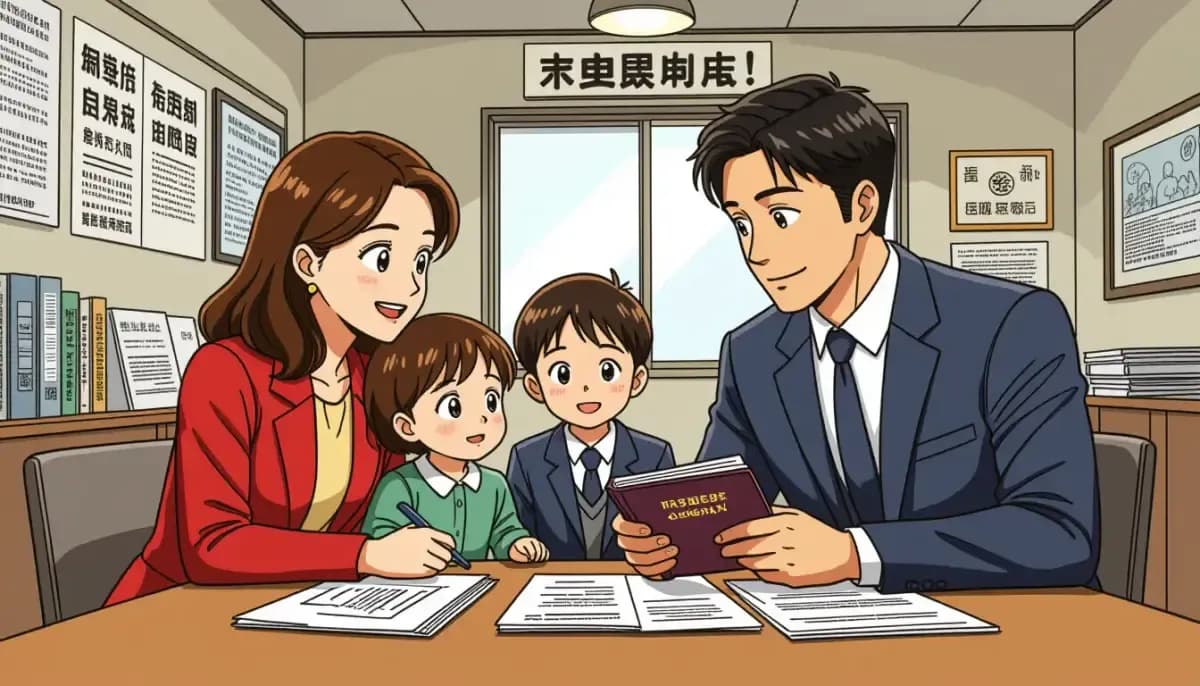
The sponsor applies for a Certificate of Eligibility (COE) at the regional Immigration Services Bureau in Japan. This document verifies that the dependent meets the criteria for Family Stay status.
- Processing time: 1–3 months
- Fee: Free
- Where to apply: Regional Immigration Services Bureau nearest to your residence
Required documents typically include:
- Sponsor's passport and residence card copies
- Marriage certificate (with certified Japanese translation)
- Birth certificates for children (with certified Japanese translation)
- Sponsor's employment certificate and income proof
- Most recent tax certificates (nouzei shomei-sho)
- Bank statements showing financial stability
- Housing lease agreement
Stage 2: Visa Application Overseas
Once the COE is issued, your dependent applies for the actual visa at the Japanese embassy or consulate in their home country (or the country where they currently reside legally).
- Processing time: 1–2 weeks
- Fee: Approximately ¥3,000–¥6,000 (varies by country)
Upon arrival in Japan, all family members aged 16 and older receive a Residence Card at the port of entry. Those under 16 receive their card after registering at the local city/ward office.
For a detailed walkthrough of the dependent visa process, see this 2025 guide from Terratern and the official Ministry of Foreign Affairs page.
Residence Card Rules and Obligations
Once in Japan, foreign family members have ongoing legal obligations related to their Residence Card:
- Always carry your Residence Card — failure to present it to authorities on request is a violation
- Register your address within 14 days of moving — at your local city/ward office
- Notify address changes within 14 days when moving within Japan
- Renew before expiry — your dependent's Residence Card period mirrors the sponsor's visa period
Visa duration ranges from 6 months to 5 years, depending on the sponsor's visa category and the immigration officer's determination.
My Number Card Update (2024)
As of December 2, 2024, traditional health insurance cards (hoken-sho) are no longer issued. All residents — including foreign dependents — must use their My Number Card (マイナンバーカード) for health insurance purposes. Foreign nationals with valid residence status receive a My Number automatically and can apply for the card at their local municipal office.
If you need help understanding how health insurance works for foreign families, forworkinjapan.com has a detailed guide on family health insurance procedures.
Work Rights for Dependent Visa Holders
One of the most important legal points for families to understand is that dependent visa holders cannot work by default.
- Spouses may apply for "Permission to Engage in Activity Other Than That Permitted Under the Status of Residence Previously Granted" — commonly called shikaku-gai katsudo kyoka — which allows part-time work up to 28 hours per week
- Full-time employment requires changing to an independent work visa
- Children on dependent visas are not restricted from part-time work once they reach legal working age (15+), but their visa status means any transition to full-time work requires a status change
Children's Rights in Japan: School and Healthcare
Right to Education
All children residing in Japan — regardless of nationality or visa status — have the right to attend public school. Municipal education boards are required to accept foreign children. Public education is free at the elementary and junior high levels.
If you are planning your children's education, our guides on elementary school in Japan for foreign parents and junior high school for foreign families cover enrollment procedures in detail.
Healthcare Coverage
Foreign dependents qualify for National Health Insurance (NHI) upon registering their address at the local city/ward office. NHI covers 70% of standard medical costs, with families responsible for the remaining 30%.
Under the company-based social insurance system (shakai hoken), if the sponsor's employer provides this coverage, dependent children and spouses can be added as dependents at no extra cost — provided annual income stays below ¥1.3 million. Children under 18 are automatically included.
For detailed information, refer to our guide on healthcare and medical care for children in Japan.
Nationality Issues for Children Born in Japan or to Mixed-Nationality Parents
This is one of the most complex legal areas for international families.
Dual Nationality Until Age 22
Children born to one Japanese parent and one foreign parent are entitled to dual nationality at birth under Japanese law. However, they are legally required to select one nationality by age 22 (or within two years of becoming 22, if they acquire the second nationality after age 20).
Under current law (though reform debates are ongoing), failure to formally select Japanese nationality can result in loss of Japanese nationality. The process involves submitting a formal nationality selection declaration (kokuseki sentaku no todoke) to the relevant authorities.
For a comprehensive guide on this topic, see this 2025 naturalization and nationality selection guide.
Issues around cultural and national identity for children in this situation are also explored in our article on cultural identity for hafu and mixed-race children in Japan.
Children Born in Japan to Two Foreign Parents
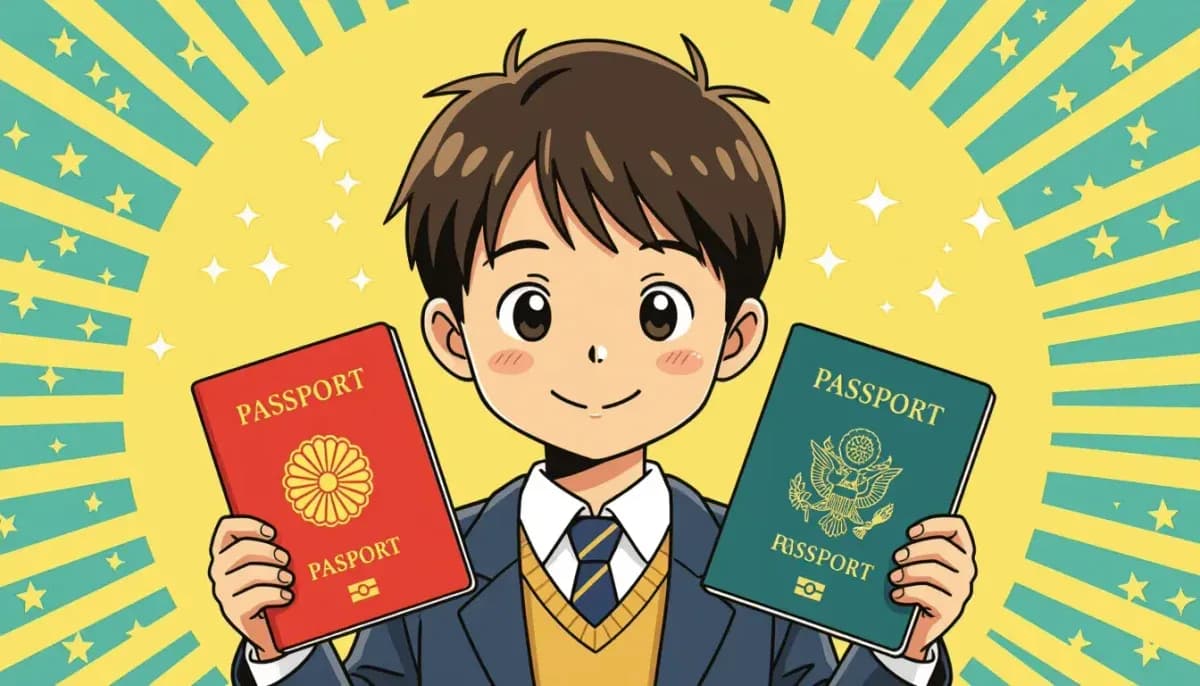
Japan follows jus sanguinis (nationality by blood), not jus soli (nationality by birthplace). Children born in Japan to two foreign parents do not automatically receive Japanese nationality. They inherit the nationality/nationalities of their parents.
This means:
- Parents must notify their home country's embassy of the birth
- Parents must apply for the child's passport and nationality documentation from their home country
- The child should be added to the sponsor's Dependent Visa through the COE process
Stateless and Undocumented Children
Children born to parents who are overstaying their visa or undocumented face particularly serious legal challenges. Without valid residence status, accessing education and healthcare becomes complicated, and the child may face risk of being stateless. Families in this situation should consult an immigration lawyer immediately.
International Child Abduction and the Hague Convention
Japan acceded to the Hague Convention on the Civil Aspects of International Child Abduction in April 2014. This means:
- Japan is legally obligated to cooperate in the return of children wrongfully removed from (or retained in) a country that is also a signatory
- A parent who takes a child from Japan to another Hague signatory country without consent may face legal proceedings for the child's return
- Enforcement remains imperfect — critics note that Japanese courts sometimes struggle to enforce return orders
For foreign families considering relocation or separation, understanding the legal framework around custody is critical. See our guide on child custody and family law in Japan for international families for a deeper dive.
2024 Immigration Reforms: What Changed for Families
Japan's 2024 immigration reforms expanded the scope of the Specified Skilled Worker No. 2 (特定技能2号) program significantly. Historically, SSW2 workers in only two industries could bring family members. The 2024 expansion extended this right to workers across all 12 eligible industries, meaning more skilled workers can now sponsor their families under Family Stay status.
For English-language resources on living and working in Japan as a foreigner, Living in Nihon is a comprehensive resource covering visas, residency, and daily life issues. For school-age children navigating the Japanese middle school and high school exam system, Chuukou Benkyou offers study guidance resources.
Common Mistakes and How to Avoid Them
| Mistake | Consequence | How to Avoid |
|---|
| Not registering address within 14 days | Violation, possible penalty | Register at city/ward office immediately |
| Letting dependent visa expire | Illegal overstay | Track expiry dates and renew 3 months early |
| Working without permission | Deportation risk | Obtain shikaku-gai katsudo kyoka before working |
| Missing nationality selection deadline | Loss of Japanese nationality | File selection declaration before age 22 |
| Not enrolling children in school | Legal and social issues | Contact local Board of Education promptly |
| Using outdated health insurance card | Coverage denial | Transition to My Number Card for health coverage |
Summary: Key Action Items for Foreign Families
Managing your family's legal status in Japan requires staying proactive. Here is a checklist of the most important steps:
- Apply for COE well in advance — processing takes 1–3 months
- Register all family members at the local city/ward office within 14 days of arrival
- Obtain My Number Cards for all family members for healthcare access
- Enroll children in school by contacting the Board of Education
- Apply for shikaku-gai katsudo kyoka if your spouse wants to work part-time
- Track visa expiry dates and begin renewal 3 months before expiry
- Understand nationality selection deadlines if you have dual-national children
- Consult an immigration lawyer for complex situations (stateless children, overstays, custody issues)
For more on building a stable financial foundation for your family in Japan, see our guide on financial planning for expat families raising children in Japan.
If you have questions or want to share your experience navigating the Japanese immigration system with children, feel free to connect with the community at Coto Academy's dependent visa guide for practical Q&A, or explore resources at Online Visa Guide's Japan dependent visa page for the latest procedural updates.