
Applying for Permanent Residency with Children in Japan

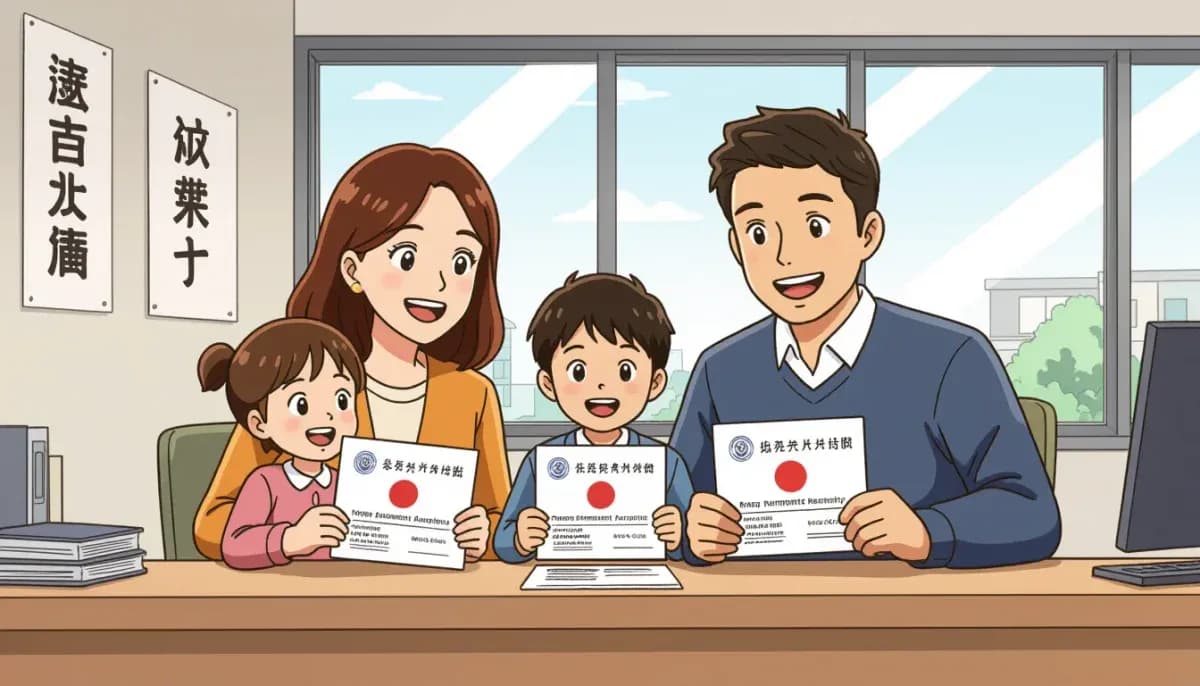
Complete guide to applying for permanent residency in Japan with children. Covers eligibility, 30-day newborn rule, documents needed, common mistakes, and tips to strengthen your family's application.
Applying for Permanent Residency with Children in Japan: A Complete Family Guide
Making Japan your permanent home is a significant milestone, and for families with children, the process of applying for permanent residency (PR) involves additional layers of planning, documentation, and strategy. Whether your children were born in Japan, joined you from abroad, or are dependents on your current visa, understanding how PR works for families can make the difference between a smooth approval and a drawn-out, stressful process.
This guide covers everything foreign families need to know about applying for permanent residency in Japan with children — from eligibility requirements and timing to documents, common pitfalls, and what happens to your kids' status after approval.
Understanding Permanent Residency in Japan: What It Means for Families
Permanent residency in Japan grants you the right to live and work in Japan indefinitely without the need to renew your visa. Unlike naturalization, PR allows you to keep your original nationality — a significant advantage for families who want to maintain connections to their home country while building a life in Japan.
As of December 2024, Japan has 3,768,977 foreign residents, representing approximately 3.04% of the total population. Among these, a growing number are families who have chosen Japan as a long-term or permanent home. In 2024, Japan accepted 116,919 PR applications, but with an approval rate of approximately 50–60%, preparation matters enormously.
For families with children, PR offers several practical benefits:
- No renewal stress: Children on PR status do not need periodic visa renewals
- Educational stability: Schools, entrance exams, and scholarship eligibility are often simpler for PR holders
- Healthcare access: PR holders maintain full access to the national health insurance system
- Financial security: Banking, mortgages, and financial planning are easier with permanent residency status
For more on visa and legal issues for foreign families with children in Japan, see our dedicated guide.
Who Is Eligible: PR Requirements for Foreign Families
Eligibility for PR depends heavily on your current visa category and your children's circumstances.
Standard Residency Requirement
The general rule is 10 consecutive years of residence in Japan. However, there are important exceptions:
| Category | Residency Requirement | Additional Conditions |
|---|---|---|
| General foreign resident | 10 years continuous | 5+ years on work/long-term visa |
| Spouse of Japanese national | 3+ years married + 1+ year in Japan | Genuine marital relationship required |
| Spouse of PR holder | 3+ years married + 1+ year in Japan | Must apply alongside or after primary holder |
| Highly Skilled Professional (80+ points) | 3 years continuous | Points system assessed |
| Highly Skilled Professional (70+ points) | 5 years continuous | Points system assessed |
| Long-Term Resident visa holder | 5 years continuous | Good conduct and stable livelihood |
Children's Eligibility Categories
Your children's eligibility depends on their birth circumstances and your current visa status:
Children born in Japan to PR holders: These children can apply for PR directly, but the application must be filed within 30 days of birth. If submitted within this window and the parent's record is clean, approval is typically granted. After 30 days, only "Spouse or Child of Permanent Resident" status is available.
Children born in Japan to non-PR holder parents: Children acquire the same status as their parents' visa category. When parents apply for PR, children apply simultaneously as dependents.
Children born outside Japan: These children are generally eligible for Long-Term Resident (Notification No. 6) status rather than PR. Approval is significantly more likely for younger children; older children (especially teenagers) face greater scrutiny about whether they intend to settle or work in Japan.
Children already in Japan on dependent visas: Children on Family Stay visas tied to a parent's work visa will see their status invalidated when the primary applicant obtains PR. This is why families should apply together, not sequentially.
For comprehensive information on the government benefits and subsidies available to families in Japan, including what PR status unlocks, see our dedicated resource.
How to Apply: Step-by-Step Process for Families
Step 1: Confirm Your Eligibility Window
Before gathering documents, confirm you meet the minimum residency requirements. Review your residence history, ensuring there are no extended gaps (typically defined as absences of more than 3 months for highly skilled workers, or patterns of frequent long absences for others).
The Immigration Services Agency reviews your entire Japan residency history, so any periods without proper status can disqualify you.
Step 2: Get Your Children's Documents in Order
Children's documentation is a critical part of a family PR application. Immigration reviews children's records as evidence of family stability and long-term settlement intent. You will need:
- Children's residence certificates (jūminhyō)
- Birth certificates (original + certified translation)
- School enrollment certificates and recent report cards
- Health insurance cards and medical visit records
- Childcare/kindergarten enrollment records (for younger children)
- Passport copies for each child
School enrollment records, report cards, and childcare documents actively strengthen your application by demonstrating that your children are integrated into Japanese society and that your family has genuine long-term roots in Japan.
Step 3: Prepare Financial and Tax Documentation
The primary applicant (typically the working parent) bears the full financial burden of proof for the family. Required documents include:
- Tax payment certificates (nōzei shōmeisho) for the past 3–5 years
- Withholding tax slips (gensen chōshūhyō) for the past 3 years
- Proof of pension enrollment (nenkin) and payment history
- Health insurance payment certificates
- Employment certificate from current employer (including salary information)
- Bank statements showing stable savings/financial reserves
A common rejection reason is incomplete tax or pension records, particularly for self-employed individuals or those who changed jobs multiple times. Ensure every year of residency is covered.
Step 4: Compile Family-Specific Documents
For a family application, additional documents are required:
- Family register extract (if married to a Japanese national)
- Marriage certificate (original + certified translation for international marriages)
- Proof of cohabitation (utility bills, household registration showing same address)
- Sponsor declaration letter (hoshō-nin no shiryō) — often you are your own sponsor
- Letter of reason for application (riyūsho), explaining your family's ties to Japan
For families who have gone through birth procedures in Japan, note that you are required to: register the birth at city hall within 14 days, then apply for the child's residency status at Immigration within 30 days, then report to your home country's diplomatic mission, and then apply for the child's passport. Failure to follow this sequence can create complications.
Step 5: Submit the Application
Applications are submitted at your regional Immigration Services Agency office. As of 2025, processing times have extended significantly — the official estimate is 6–12 months, but real-world processing in Tokyo is now 14–18 months. Submit well before any planned travel or major life events.
For detailed guidance on financial planning for expat families raising children in Japan, including how PR status affects your financial options, see our dedicated guide.
Common Mistakes That Lead to Rejection
Understanding why applications are denied is as important as knowing the requirements. The most common rejection reasons for families include:
1. Applying sequentially rather than simultaneously: If you apply for PR first and then try to add your children or spouse later, their original dependent visas become invalid when you receive PR. Always apply as a family unit in one submission.
2. Incomplete tax or pension history: Even a single year of missed pension payments or late tax filings can lead to rejection. Resolve all arrears before applying — immigration will not approve applications with outstanding public duties.
3. Insufficient proof of children's integration: Simply listing your children's names is not enough. Provide detailed school records, extracurricular activities, and healthcare records showing your children are genuinely settled in Japan.
4. Underestimating the 30-day rule for newborns: Parents of children born in Japan often miss the critical 30-day window for PR application. After this deadline, the child can only receive "Spouse or Child of Permanent Resident" status — not PR itself.
5. Weak reason letter: A generic letter of reason is one of the most common soft failures. Your letter should specifically address your family's ties to Japan, children's education, community involvement, and long-term plans.
For Living in Nihon's comprehensive guidance on Japanese visa and residency applications, including detailed information on PR requirements and preparation strategies, their resources are an excellent reference.
After PR Approval: What Changes for Your Children
Once your family's PR applications are approved, several important changes take effect:
Residency card renewal: Children's residency cards will be issued with extended validity. Children under 6 get cards valid for 6 years; children 6–16 get 6-year cards; adults get 7-year cards.
School and university advantages: PR holders are treated more similarly to Japanese nationals for school enrollment, scholarship eligibility, and university entrance purposes. Some scholarships previously unavailable to visa holders become accessible.
Healthcare continuity: Healthcare and medical care for children in Japan remains unchanged — PR holders continue in the national health insurance system with the same access and child medical subsidies.
Travel flexibility: PR holders can travel freely without worrying that extended absences will affect their status (though very long absences — typically over 1 year — can still raise concerns).
No employment restrictions: Children who reach working age as PR holders can work in any job without restrictions, unlike visa categories that limit work types.
For families considering future options, child custody and family law in Japan for international families outlines important legal frameworks that PR status affects.
Tips to Strengthen Your Family's PR Application
Based on the experiences of families who have successfully navigated the PR process, here are practical strategies:
Start documenting early: Don't wait until you're ready to apply. Keep school reports, medical records, and community participation documents from your children's early years in Japan. Immigration looks favorably on decades of settlement, not just the minimum requirement period.
Consult a gyōsei shoshi: Administrative scriveners (行政書士) specializing in immigration can review your application before submission. Given that approval rates are around 50–60%, professional review significantly improves outcomes for complex family applications.
Demonstrate community ties: Volunteer activities, PTA participation, neighborhood association (chōnaikai) membership, and children's club activities all count as evidence of community integration. Include certificates and photos where available.
Write individualized letters for each family member: Rather than a single family letter, many families find success writing separate, personalized letters for each applicant — including older children who can articulate their own ties to Japan.
Time your application carefully: Many families choose to apply after a child starts school, as this provides strong institutional evidence of settlement. Applying right after the minimum residency period is technically allowed but statistically riskier.
For information on raising bilingual children in Japan and how educational integration strengthens PR applications, see our guide.
For comprehensive support on family life in Japan as a foreigner, For Work in Japan's family life guide covers practical aspects from childcare to visas.
For study and educational resources for children at the junior high and high school level in Japan, Chuukou Benkyou provides valuable academic support.
Frequently Asked Questions
Can my child apply for PR even if I'm still on a work visa? Yes — when you apply for PR and are approved, your child's application is reviewed simultaneously. The child receives PR if the application meets requirements; if only the parent is approved, the child's dependent visa must be updated promptly.
What happens to my child's status if my PR application is denied? If your application is denied, your child's current visa status remains valid until its expiry date. You can reapply for PR after addressing the reasons for denial, typically waiting at least 6 months to 1 year.
Do children need to speak Japanese to support a PR application? There is no official Japanese language test for PR. However, children attending Japanese public school, participating in local activities, and integrated into Japanese communities naturally demonstrate the kind of social integration immigration officers look for.
Can I include a child who was not born in Japan? Yes, but the path is different. Children born outside Japan are typically eligible for Long-Term Resident status rather than PR directly. Very young children have a higher approval rate; older children and teenagers should be prepared to demonstrate strong ties to Japan and a clear intention to remain.
How long does the PR application take for a family? As of 2025, expect 14–18 months for families applying in major urban areas like Tokyo. Regional offices may process faster. Plan accordingly and avoid major international moves, job changes, or travel during the waiting period.
For more details on the overall visa and legal landscape for foreign families in Japan, our comprehensive guide covers the full range of residency options and requirements.
For the latest statistics and expert analysis on PR application outcomes, IMS Legal's 2025 FAQ provides regularly updated professional guidance. For dedicated information on children's PR acquisition, Sugita Immigration's guide on permanent residence for children born in Japan is one of the most detailed English-language resources available.

Originally from Vietnam, living in Japan for 16+ years. Graduated from Nagoya University, with 11 years of professional experience at Japanese and international companies. Sharing practical information for foreign parents raising children in Japan.
View Profile →Related Articles
Name Registration Rules for Mixed-Nationality Children
Complete guide to name registration rules for mixed-nationality children in Japan: birth notification deadline, koseki, dual nationality, residence status, and how to avoid statelessness.
Read more →
Consular Registration for Children Born in Japan
Complete guide for foreign parents on consular registration for children born in Japan. Learn deadlines, required documents, embassy procedures, and how to avoid statelessness.
Read more →
When to Hire an Immigration Lawyer for Family Matters
Learn when foreign families in Japan need an immigration lawyer for spousal visas, family status changes, custody disputes, and more. Includes 2025 fee breakdown and free consultation options.
Read more →
Common Family Visa Complications and Solutions
Struggling with Japan's dependent visa? Learn the most common family visa complications — income issues, document errors, rejection reasons — and practical solutions to resolve them.
Read more →
Residence Card (Zairyu Card) Guide for Children
Everything foreign parents need to know about the Zairyu Card (residence card) for children in Japan: how to get it, validity rules for under-16s, the age-16 renewal, carrying requirements, and what to do when a child is born in Japan.
Read more →
Changing Visa Status When You Have Children
Complete guide to changing visa status for children in Japan: Family Stay visa eligibility, COE process, children born in Japan, 2025 fee updates, and common mistakes to avoid.
Read more →