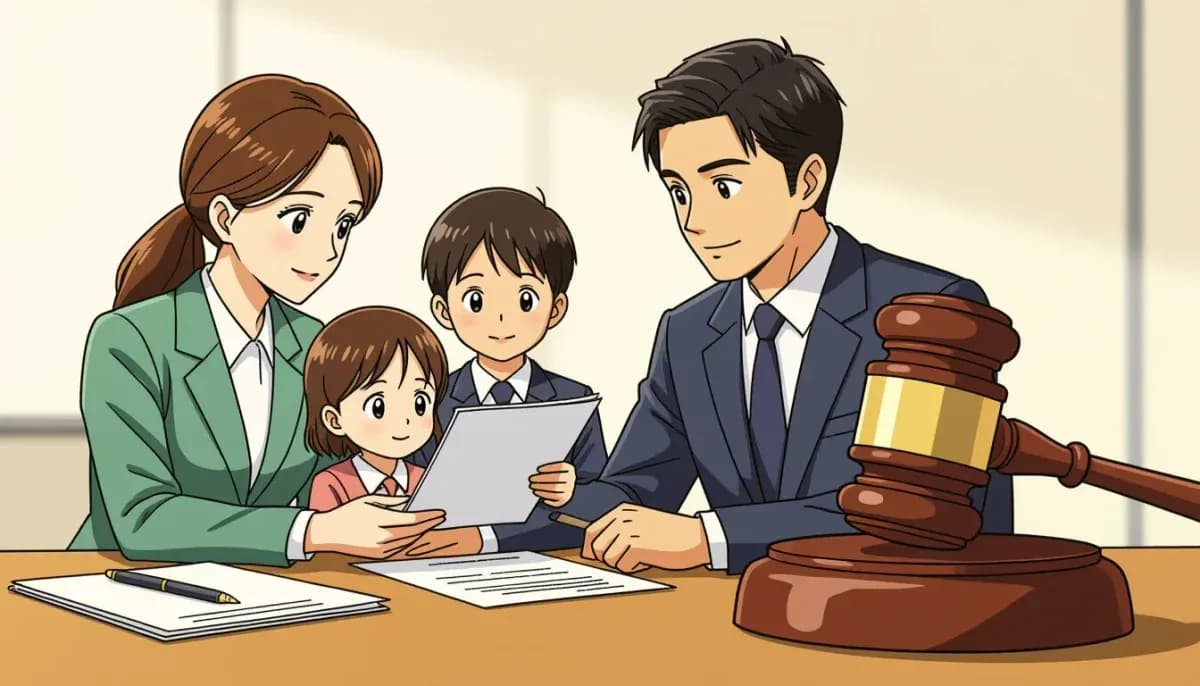
Child Custody and Family Law in Japan for International Families
Navigating child custody and family law in Japan is one of the most challenging experiences an international family can face. Whether you are going through a separation, concerned about your parental rights, or trying to understand how Japan's legal system treats foreign parents, this comprehensive guide will help you understand the rules, recent changes, and practical steps you need to take.
Japan's family law landscape is undergoing its most significant transformation since World War II. A landmark reform — Law No. 33 of 2024 — introduces joint parental custody after divorce, effective April 1, 2026. For international families, this shift has profound implications. But even as the law evolves, many challenges remain unique to foreigners living in or connected to Japan.
This guide covers the current law, the new 2026 reforms, how international custody disputes are handled, the Hague Convention process, and practical advice for foreign parents in Japan.
Understanding Japan's Current Custody System (Before April 2026)
Under Japan's current Civil Code, divorce results in sole custody — only one parent holds parental authority (shinkensha, 親権者) after separation. This has been the law since 1947 and is a source of deep frustration for many international families.
Parental authority in Japan encompasses:
- The right and duty to care for and educate the child
- Legal representation for the child
- Management of the child's assets
- Decision-making over medical, school, and relocation matters
Without a designated parental authority holder, municipal offices will reject divorce registration paperwork. This means custody must be decided as part of the divorce process — there is no legal grey area.
Who gets custody? Japanese family courts apply the following criteria:
| Factor | Weight |
|---|
| Primary caregiver history | Most important |
| Continuity of child's living environment | Very high |
| Child's age and preferences (10+ years) | High |
| Parent's income, health, and support network | Medium |
| Sibling unity | Medium |
| Maternal preference (for young children) | Traditional but declining |
Notably, the "friendly parent" doctrine — rewarding the parent more willing to cooperate with the other — is not an established factor in Japanese law, unlike in many Western countries.
The 2026 Reform: Japan Introduces Joint Custody
In May 2024, Japan passed Law No. 33, which fundamentally changes the post-divorce custody framework. Effective April 1, 2026, joint parental authority becomes legally possible for the first time in postwar Japan.
Key elements of the reform include:
- Joint custody by agreement: Parents can agree to share parental authority after divorce.
- Court-ordered joint custody: Courts may grant joint authority unless it would harm the child's interests — for example, in cases involving domestic violence, abuse, or where joint decision-making is deemed impractical.
- Statutory child support: A minimum child support amount can be claimed even without a prior divorce agreement, with new enforcement tools including liens without prior court judgment.
- Extended property division window: The period to seek asset distribution after divorce is extended from 2 years to 5 years.
- No spousal maintenance: Japan still does not have alimony. Financial support between former spouses after divorce remains absent from the law.
The Japan Times described the reform as "a major shift in the post-WWII legislative system governing families." For international families, the change offers new possibilities but also new complexities. Domestic violence cases, in particular, remain a significant concern — critics worry that joint custody mandates could be misused in abusive situations.
For detailed reporting on the 2026 reform, see: Japan Times — Joint Custody Law Starting April 2026
Divorce in Japan: Types and Grounds
There are four types of divorce in Japan, and the process differs significantly from most Western countries:
1. Divorce by Mutual Agreement (Kyogi Rikon)
The most common type — roughly 90% of divorces. Both parties sign a divorce form and submit it to the municipal office. No court involvement is required. However, custody, child support, visitation, and asset division must all be agreed upon in writing, or the municipality will reject the filing.
2. Divorce by Family Court Mediation (Chotei Rikon)
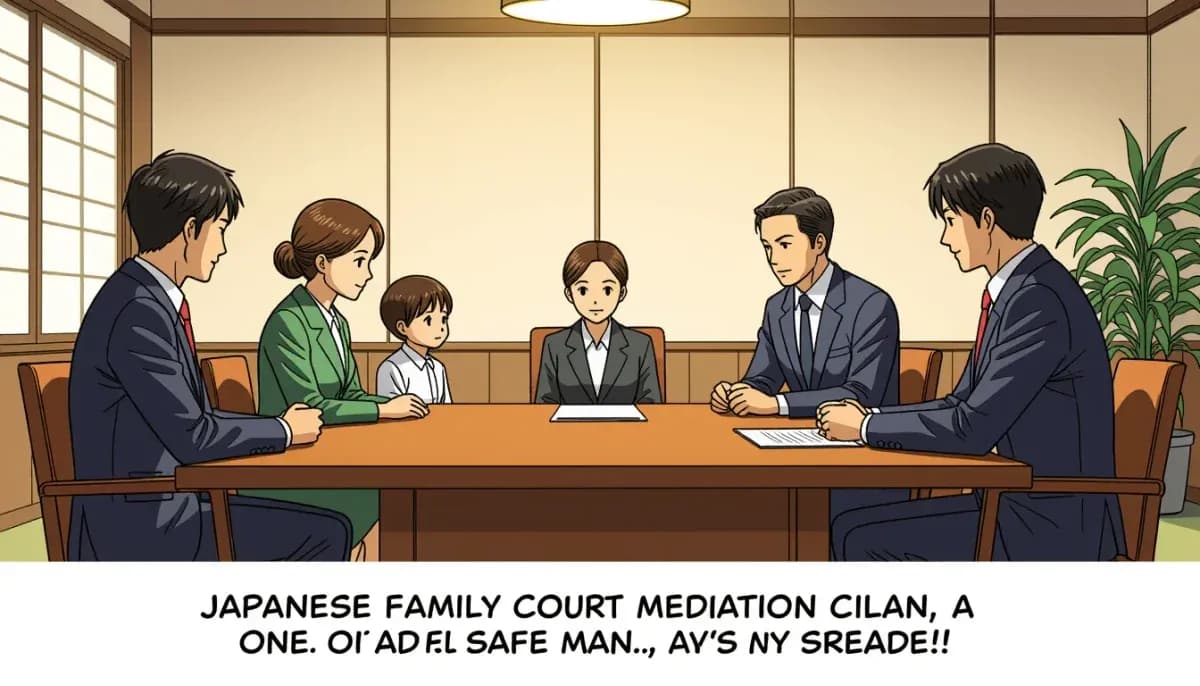
If parties cannot agree, either spouse can apply for mediation at the family court (kateisaibansho). Mediators (often a judge and trained mediators) help parties negotiate. If successful, the agreement is recorded and has legal force.
3. Divorce by Family Court Adjudication (Shimpan Rikon)
If mediation fails, the court may issue an adjudication. Rarely used — courts prefer mediation.
4. Divorce by Trial (Saiban Rikon)
Full litigation before a family court judge. The five legal grounds for divorce are:
- Adultery
- Willful abandonment
- Unknown whereabouts for 3+ years
- Severe mental illness (being removed under the 2026 reform)
- Irrecoverable breakdown of the marriage
For foreign families, jurisdiction matters. Japanese courts handle divorce when: the defendant resides in Japan, both parties are Japanese nationals, or the last common address was in Japan and the plaintiff still resides there (since April 2019 rules).
International Custody Disputes and the Hague Convention
For international families, custody disputes often cross borders — and this is where Japan's legal framework becomes particularly complex.
Japan and the Hague Convention
Japan acceded to the Hague Convention on the Civil Aspects of International Child Abduction on April 1, 2014. This was a watershed moment after decades of international pressure from the US, EU, and Australia regarding Japanese parents taking children from abroad and refusing return.
Under the Hague Convention:
- If a child under 16 is wrongfully removed from their country of habitual residence, the other parent can file for return.
- Japan's Central Authority for Hague cases is the Ministry of Foreign Affairs.
- Cases must typically be filed within one year of the abduction.
- Japan is obligated to order the child's return unless specific exceptions apply (e.g., grave risk of harm to the child).
The gap: domestic abduction
Despite signing the Hague Convention, parental child abduction within Japan remains unprosecuted. If a Japanese parent takes a child from a foreign parent and remains in Japan, police typically treat it as a private family matter rather than a criminal act. This has led to significant international criticism.
As of early 2024, Germany, France, and Italy had formally condemned Japan's custody practices, and the UN Human Rights Council filed formal complaints regarding violations of children's rights to maintain contact with both parents.
For foreign parents facing this situation, resources include:
Practical Guide: What Foreign Parents Need to Know
Passports and Travel
One of the most immediate concerns for international families is child travel documentation:
| Passport Type | Requirement |
|---|
| Japanese passport | Only one parent's signature required |
| Australian passport | Both parents must consent |
| US passport | Both parents' consent typically required |
| Most EU passports | Both parents' consent typically required |
This asymmetry means a Japanese parent with a Japanese child can obtain a Japanese passport without the foreign parent's knowledge or consent, and potentially take the child abroad.
Under current law (before April 2026), the sole custodial parent can relocate a child internationally without the other parent's consent or court permission. This is a critical vulnerability for foreign parents who are not the designated custodial parent.
Child Support in Japan
Child support (youiku-hi, 養育費) is legally required but historically poorly enforced. Key points:
- Generally calculated until the child reaches age 20 (or finishes education)
- Amount determined by a statutory formula based on both parents' incomes
- The 2026 reform introduces stronger enforcement: wage garnishment, bank liens without prior court judgment, and mandatory asset disclosure
- Currently, a large percentage of single parents — especially mothers — receive no child support at all despite court orders
Visitation Rights
Visitation (menkai koryu, 面会交流) is legally recognized but not always enforced in practice. Family courts can order regular visitation, but compliance by the custodial parent is not criminally enforceable. Many foreign parents report that agreed visitation schedules break down without recourse.
The International Social Service Japan (ISSJ) provides mediation and support services for parents facing contact disputes.
Modifying Custody Orders
Changing custody arrangements after divorce is possible but described by legal professionals as "difficult." You must apply to the family court and demonstrate a significant change in circumstances that justifies the modification. Courts are reluctant to disrupt established arrangements, reinforcing the "principle of continuity."
Recognizing Foreign Court Orders
Foreign custody orders are not automatically enforceable in Japan. For recognition under Article 118 of Japan's Code of Civil Procedure, the foreign judgment must meet four criteria:
- The foreign court had proper jurisdiction
- The losing party was properly served
- The judgment is not contrary to Japanese public policy
- Reciprocity exists between Japan and the foreign country
Many foreign custody orders fail the public policy test because they involve joint custody arrangements — which, until April 2026, had no legal basis in Japan.
Prenuptial Agreements and Asset Protection
International couples may consider prenuptial agreements (fuufu zaisan keiyaku, 夫婦財産契約) before marriage:
- Enforceable between the parties under Article 756 of the Civil Code, provided they do not violate public policy
- Must be registered before marriage to be assertable against third parties
- Rarely used in Japan in practice but legally valid
- Cannot predetermine child custody arrangements (courts always decide custody based on the child's best interests at the time)
Property division on divorce is presumed equal under Japanese law. The 2026 reform extends the period to seek division from 2 years to 5 years post-divorce, giving more time for international families to navigate cross-border asset questions.
Resources and Support for International Families
Dealing with Japan's family law system as a foreigner is challenging, but resources are available:
Legal Support
- Verybest Law Offices (English): global.vbest.jp — English-language family law specialists with expertise in parental authority cases
- ICLG Japan Family Law Report 2026: iclg.com — Comprehensive overview of Japanese family law for international practitioners
- Many family courts have foreign language support or interpreter services available on request
Community and Practical Advice
For expats navigating daily life in Japan alongside legal challenges, broader community support matters:
Government Resources
- Japan's Ministry of Foreign Affairs handles Hague Convention applications
- Family courts (kateisaibansho) are located in each prefecture and accept mediation applications from both Japanese and foreign residents
- Your home country's embassy in Tokyo can often provide lists of English-speaking lawyers and consular support in custody emergencies
Related Articles
If your family is navigating life in Japan more broadly, these guides may help:
Key Takeaways
Understanding Japan's family law system is essential for any international parent living in or connected to Japan. The landscape is changing significantly with the 2026 joint custody reform, but many challenges remain — particularly around enforcement, international child abduction within Japan, and recognition of foreign court orders.
| Topic | Key Point |
|---|
| Current custody system | Sole custody only; favors primary caregiver |
| 2026 reform (April 1) | Joint custody becomes possible |
| Hague Convention | Signed 2014; domestic abduction still unprosecuted |
| Child support | Legally required; new enforcement tools from 2026 |
| Foreign court orders | Not automatically enforceable in Japan |
| Property division | Equal split; 5-year claim period from 2026 |
| Spousal maintenance | Not available under Japanese law |
If you are facing a custody or family law issue in Japan, seek qualified legal advice as early as possible. The Japanese family court system moves deliberately, and early preparation — including documenting your role as a caregiver and understanding your rights — can make a significant difference in outcomes.
Approximately 200,000 children are affected by divorce each year in Japan, and around 10% of registered divorces involve international couples. You are not alone, and the legal landscape is evolving in ways that increasingly recognize the rights of both parents and children to maintain meaningful relationships across borders.