
Parental Visitation Rights After Divorce in Japan

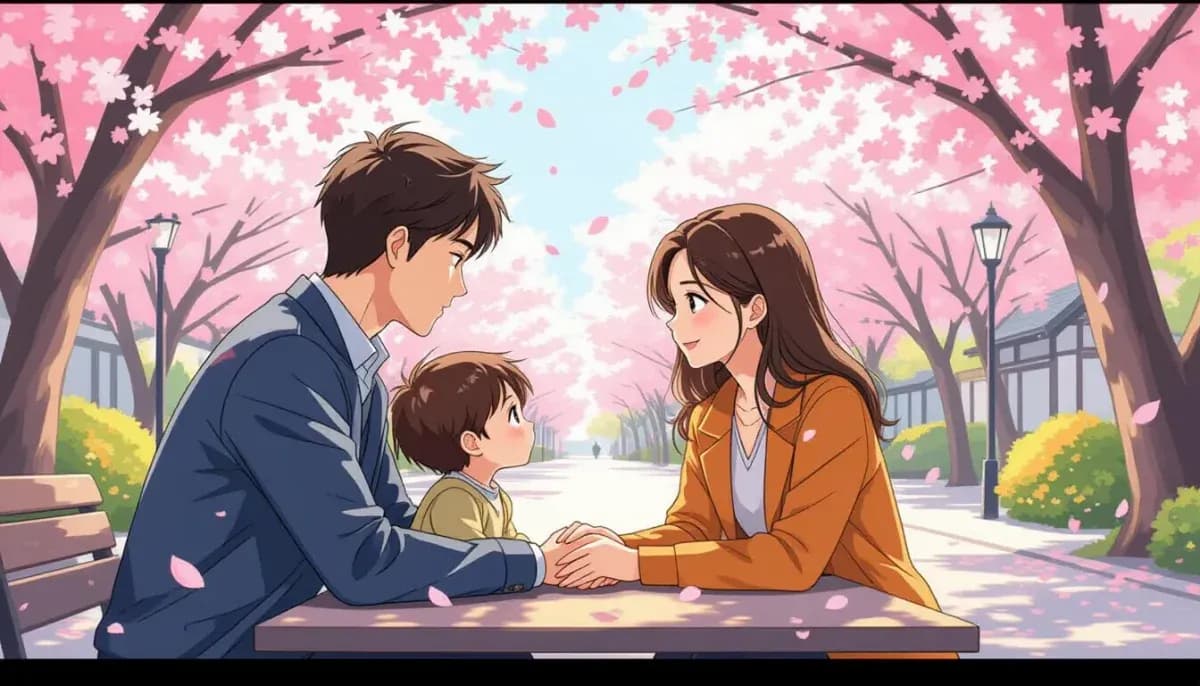
A comprehensive guide to parental visitation rights after divorce in Japan for foreign families. Covers the 2026 joint custody reform, family court process, enforcement, and Hague Convention rights.
Parental Visitation Rights After Divorce in Japan: A Complete Guide for Foreign Families
Navigating parental visitation rights after divorce in Japan can be one of the most challenging experiences for any parent, especially foreign nationals unfamiliar with Japan's unique family law system. Japan's approach to post-divorce parenting has historically differed dramatically from Western norms, but a landmark 2024 civil code reform—which took effect in April 2026—has fundamentally changed the legal landscape. This guide explains how visitation rights work, how to secure and enforce them, and what foreign parents need to know to protect their relationship with their children.
Understanding Japan's Custody System: From Sole to Joint Custody
For decades, Japan operated exclusively under a sole custody model. After divorce, only one parent retained legal parental authority (親権, shinken), while the other parent had no legally enforceable right to see their child unless a family court issued a specific visitation order. This system stood in stark contrast to the joint custody norms common across Europe, North America, and Australia.
Japan was the only G7 nation—and one of only three G20 countries—to maintain sole custody as the sole post-divorce arrangement. The 2019 UN Committee on the Rights of the Child specifically recommended that Japan adopt shared custody. After years of advocacy, the Diet passed a landmark civil code reform in May 2024.
The 2026 Joint Custody Reform:
- Effective April 1, 2026, divorcing parents in Japan may now choose between sole custody and joint custody
- Under joint custody, both parents retain parental authority and must jointly decide on major life matters including surgical procedures, school enrollment, passport applications, and relocation
- A concurrent statutory child support framework also launched in April 2026
- Courts may still award sole custody if joint custody is deemed not in the child's best interests (e.g., cases involving domestic violence)
Even with this reform, the practical reality remains complex. If you are going through a divorce or are already divorced, understanding how to establish and protect visitation rights remains critically important.
How Visitation Rights (面会交流) Are Established in Japan
In Japan, post-divorce visitation is formally called 面会交流 (menkai kōryū, literally "meeting and exchange"). There are two main ways to establish visitation rights:
1. Mutual Agreement (協議離婚)
The simplest path is for both parents to agree on visitation terms when finalizing a divorce. Japan allows a mutual consent divorce (kyōgi rikon) where both parties sign a divorce notification form at the municipal office. At this stage, parents are legally encouraged to record their visitation agreement, but enforcement remains the core weakness of this system.
Best practice: Draft a formal written agreement (rikon kyōgi sho) that specifies:
- Frequency of visits (e.g., twice per month)
- Duration and location of each visit
- Holiday and school vacation arrangements
- How communication (phone, video calls) will be handled
- Process for modifying the schedule as the child grows
Having this notarized or formalized through a family court agreement (chōtei chōsho) significantly improves enforceability.
2. Family Court Mediation (調停)
When parents cannot agree, either parent can apply to the Family Court (Katei Saibansho) for mediation (chōtei). The process works as follows:
| Stage | Process | Timeline |
|---|---|---|
| Application | File for visitation mediation at local Family Court | 1-2 weeks to schedule |
| Mediation (調停) | Alternating sessions with trained mediators | 2-6 months |
| Adjudication (審判) | Judge decides if mediation fails | Additional 3-6 months |
| Enforcement | Monetary fines for non-compliance | Ongoing |
Mediators are not judges—they facilitate negotiation between the parties in separate rooms. If mediation fails, the case automatically moves to adjudication (shimpan), where a judge makes a binding decision based on the child's best interests.
Typical Visitation Arrangements in Japan
The volume and frequency of post-divorce visitation in Japan has historically been low. A government survey found that approximately 70% of non-custodial parents have zero contact with their children after divorce. Among those with contact, the most common arrangement has been a single day visit of a few hours once per month—a standard that remained essentially unchanged since 1964.
More recent family court decisions have begun awarding more generous visitation schedules, particularly when both parents demonstrate willingness to cooperate. Typical arrangements now seen in family courts include:
- Minimum contact: Once per month, 2-4 hours, daytime only
- Moderate contact: Twice per month, with one overnight stay
- Generous contact: Weekly contact, alternating weekends, half of school holidays
- Long-distance contact: Monthly video calls plus annual in-person visits
The trend in Japanese family courts is moving toward recognizing that frequent and meaningful contact with both parents serves children's best interests—particularly for younger children. However, court decisions still vary significantly by region and the specific circumstances of each family.
Enforcement Challenges: What Happens When Visitation Is Denied
One of the most frustrating aspects of Japan's visitation system is enforcement. If a custodial parent refuses to comply with a court-ordered visitation schedule, the available legal remedies are limited:
Indirect Enforcement (間接強制): The family court can issue an indirect enforcement order, imposing a monetary fine (typically ¥50,000–¥100,000 per violation) for each missed visit. However:
- There is no mechanism to physically compel compliance
- Fines often go unpaid or uncollected
- Repeated violations require filing new enforcement applications
Direct Enforcement: Following a 2021 Supreme Court ruling, Japanese courts can theoretically order direct enforcement of visitation. However, this remains rare and courts are reluctant to force a child into a visit against the custodial parent's wishes, particularly if the child is old enough to express their own preferences.
Child's Best Interests: Japanese courts take the position that a child's psychological stability with the primary caregiver takes precedence. If a custodial parent successfully argues that visits are causing the child distress, courts may suspend or limit visitation even without strong evidence.
For foreign parents considering enforcement options, consulting a Japanese family law attorney (bengoshi) specializing in international cases is essential. Resources like the Japan Legal Support Center (Houterasu) offer legal consultation services in multiple languages.
!Father playing with child at a Japanese playground, both smiling and enjoying quality time together
Special Considerations for Foreign Parents
Foreign parents navigating Japan's visitation system face additional challenges that Japanese nationals do not encounter:
Foreign Court Orders Are Not Automatically Recognized
A critical point that many foreign parents overlook: Japanese courts do not automatically recognize or enforce foreign custody or visitation orders. If you have a visitation order from your home country's court, you cannot simply present it at a Japanese police station or family court and expect it to be enforced.
To enforce visitation rights in Japan, you must:
- File a new application in Japanese family court
- Establish jurisdiction in Japan
- Go through the Japanese mediation/adjudication process from scratch
The Hague Convention
Japan acceded to the 1980 Hague Convention on International Child Abduction on April 1, 2014. This provides a legal framework for returning internationally abducted children and facilitating cross-border contact arrangements. If your child has been taken to Japan by the other parent without your consent, or if you are already in Japan and facing such a situation, you should:
- Contact your country's central authority for the Hague Convention
- In Japan, the central authority is the Ministry of Foreign Affairs (Gaimushō)
- The International Social Service Japan (ISSJ) facilitates visitation arrangements under the Convention
For more context on legal challenges facing foreign families in Japan, see our guide to Visa and Legal Issues for Foreign Families with Children in Japan and Child Custody and Family Law in Japan for International Families.
Language and Cultural Barriers
Family court proceedings in Japan are conducted entirely in Japanese. Non-Japanese speakers should:
- Hire a bilingual Japanese family law attorney
- Request a court interpreter (courts can arrange this, though availability varies)
- Have all documents professionally translated
- Be aware that family court mediators may have limited experience with international cases
Residency and Visa Concerns
Your visa status in Japan can be affected by divorce. If your visa is dependent on your spouse's status, a divorce may require changing visa categories. This adds another layer of urgency to resolving visitation and custody matters promptly. For guidance on visa implications, see our article on Financial Planning for Expat Families Raising Children in Japan.
Practical Steps to Protect Your Visitation Rights
Whether you are about to divorce, are currently in the middle of divorce proceedings, or are already divorced and struggling to maintain contact with your child, here are concrete steps to take:
Before or During Divorce:
- Document everything: Keep records of your involvement in your child's life—school pickups, medical appointments, extracurricular activities
- Avoid relocation tactics: Do not allow the other parent to relocate with the child to another city or country without your explicit written consent
- Formalize agreements: Do not rely on verbal agreements—get all visitation terms in writing and file them with the family court
- Hire a specialist: Retain a Japanese family law attorney with experience in international cases before finalizing the divorce
After Divorce:
- File promptly if denied: If the other parent begins blocking visits, file for family court mediation immediately—delay weakens your case
- Keep communication civil: Courts look favorably on parents who demonstrate cooperative co-parenting
- Follow the schedule precisely: Arrive on time, return the child on time, and document each visit
- Modify through court, not informally: If you want to change the schedule, go back to court rather than making informal adjustments that can be misrepresented later
For expat families managing the broader challenges of raising children in Japan, resources like Living in Nihon and For Work in Japan offer practical guidance for foreign residents navigating Japanese systems.
Child Support and Its Relationship to Visitation
A common misconception is that child support and visitation are linked. In Japanese law, they are completely separate legal matters:
- A custodial parent cannot legally withhold visitation because child support has not been paid
- A non-custodial parent cannot refuse to pay child support because visitation has been denied
Courts treat these as entirely independent obligations. If you are being denied visitation, the correct response is to file a new family court application for enforcement—not to stop paying child support, which would only damage your legal position.
The April 2026 child support reform introduced a statutory minimum support obligation that applies even without a formal divorce agreement, making it easier to claim and enforce support payments.
Resources and Support for Foreign Parents
Navigating Japan's family court system is daunting. Here are key resources:
- Japan Legal Support Center (Houterasu): Free legal consultations in multiple languages. Visit houterasu.or.jp
- Ministry of Foreign Affairs – Hague Convention Office: For international parental abduction cases
- International Social Service Japan (ISSJ): Mediation and support for international custody disputes
- Your country's embassy: Most embassies maintain lists of bilingual Japanese family lawyers
- AMICOR (Association of Multicultural International CustOdy Resolution): Support network for parents in international custody disputes in Japan
- Educational support: For children navigating the emotional impact of parental separation, our guide on Mental Health and Emotional Wellbeing for Foreign Children in Japan offers practical strategies
For educational decisions that often arise alongside custody matters, see our guide to the Japanese Education System for Foreign Families and International Schools in Japan.
Also, Chuukou Benkyou provides educational resources that can be helpful for children experiencing transitions, including school changes related to family restructuring.
Conclusion: A System in Transition
Japan's family law system is undergoing its most significant transformation in the post-war era. The 2026 joint custody reform represents a genuine shift toward recognizing both parents' rights to maintain relationships with their children after divorce. However, cultural attitudes, enforcement mechanisms, and court practices will take years to catch up with the new legal framework.
For foreign parents, the key takeaways are:
- Act quickly: The earlier you establish formal visitation rights, the better
- Get it in writing: Formal court agreements are far more enforceable than verbal ones
- Hire specialists: International family law cases in Japan require bilingual legal expertise
- Use available resources: Embassies, NGOs, and legal support centers can provide crucial assistance
- Prioritize the child: Courts respond best to parents who clearly put their child's wellbeing first
With the right preparation, persistence, and professional support, maintaining a meaningful relationship with your child after divorce in Japan is achievable—even within a system that has historically made it difficult.

Originally from Vietnam, living in Japan for 16+ years. Graduated from Nagoya University, with 11 years of professional experience at Japanese and international companies. Sharing practical information for foreign parents raising children in Japan.
View Profile →Related Articles
Changing Children's Names After Divorce in Japan
A complete guide for foreign parents on how to change your child's surname after divorce in Japan — covering koseki rules, family court petitions, dual nationality, and the 2024 custody reform.
Read more →
Legal Rights of Unmarried Foreign Parents in Japan
Complete guide to legal rights of unmarried foreign parents in Japan: recognition (ninchi), parental authority, child nationality, visa options, and the 2024 Civil Code reform explained.
Read more →
Protecting Children's Wellbeing During Divorce in Japan
A complete guide for foreign parents on protecting children's wellbeing during divorce in Japan — covering custody, child support, school continuity, visa issues, and emotional support strategies.
Read more →
Custody Battles Involving Foreign Parents in Japan
Foreign parents navigating custody battles in Japan face a unique legal system. Learn how sole custody works, what the 2024 reform means, Hague Convention rights, and practical steps to protect your parental rights.
Read more →
International Family Law Attorneys in Japan
Find the right international family law attorney in Japan. Learn about divorce, child custody, the 2025 joint custody reform, Hague Convention cases, and free legal resources for foreign nationals.
Read more →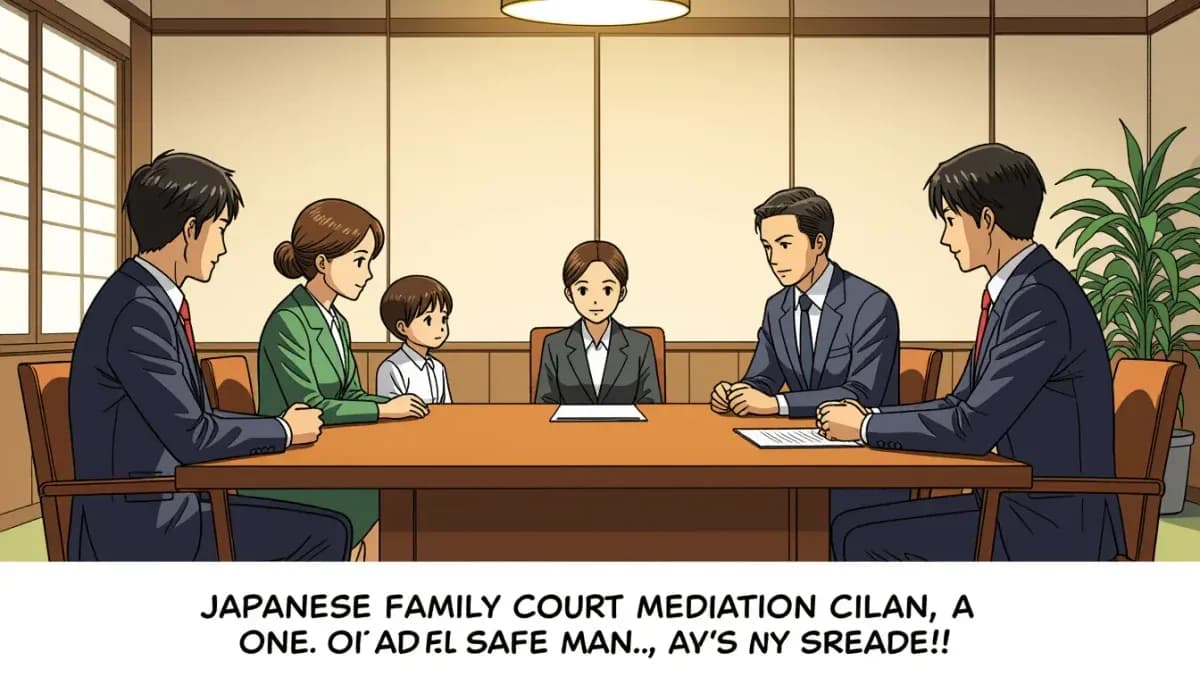
Family Mediation Services in Japan for Disputes
Understand family mediation (choutei) in Japan as a foreigner — from mandatory court mediation to private English-language services, custody rules, and free legal support resources.
Read more →