
Changing Children's Names After Divorce in Japan

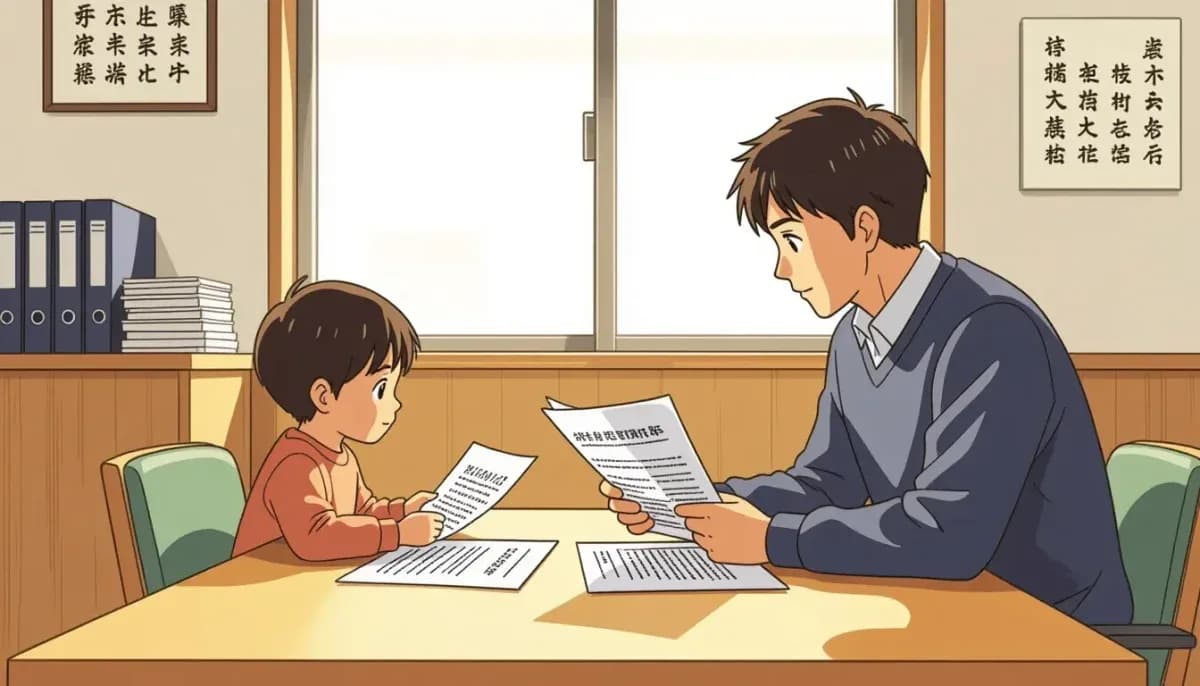
A complete guide for foreign parents on how to change your child's surname after divorce in Japan — covering koseki rules, family court petitions, dual nationality, and the 2024 custody reform.
Changing Children's Names After Divorce in Japan: A Complete Guide for Foreign Parents
Divorce is never easy, and when children are involved, navigating Japan's legal system adds a unique layer of complexity. One of the most confusing — and emotionally charged — issues foreign parents face is understanding whether and how to change their child's surname after divorce. Japan's family register system (戸籍, koseki) governs every aspect of a child's legal identity, and its rules around names can feel rigid and opaque to those unfamiliar with the system.
This guide explains how children's names work after divorce in Japan, what legal steps are required to change a child's surname, and what foreign parents specifically need to know. Whether you are the custodial parent trying to unify your family's surname, or a foreign national trying to understand how Japanese law applies to your child, this article will walk you through everything.
How Japan's Koseki System Controls Children's Surnames
The foundation of Japanese family law is the koseki — the official family register maintained by each municipality. Every Japanese family has one koseki, and critically, all members of a koseki must share the same surname. This is not optional; it is a legal requirement.
When a couple divorces, the person who leaves the family koseki (usually the wife, in most Japanese divorces) has the option to revert to their maiden name or retain their married name. However, the children remain in the original koseki under the original surname unless a court-approved change is made.
This creates a very common scenario in Japan: a mother gains custody of her children after divorce, reverts to her maiden name, but the children still legally carry the father's surname. The mother and her children end up living together under different surnames — something that can cause practical complications at school, hospitals, and when travelling internationally.
Key facts about the koseki and surnames:
- Only Japanese citizens are registered as members of a koseki; foreign nationals are listed as annotations (附票) but are not full members.
- Children's surnames in the koseki can only be changed by a family court order.
- From May 2025, phonetic name readings (furigana) are also being added to koseki entries as part of a digitization reform.
For a deeper overview of how the koseki system works, the U.S. Embassy in Japan has a useful summary of what it means for foreign residents and their families.
Why Surname Mismatches Are So Common After Divorce in Japan
Japan has one of the world's most prescriptive surname systems for married couples. According to data from Japan's Ministry of Justice, 95% of married Japanese couples adopt the husband's surname, meaning the overwhelming majority of children are registered under the father's family name.
After divorce, the statistics tell the rest of the story:
| Statistic | Figure |
|---|---|
| Children living with mother after divorce | Over 80% |
| Married couples using husband's surname | ~95% |
| Children who ultimately take mother's surname post-divorce | ~20% |
| Japanese public supporting separate surnames in marriage (2024) | 62% |
| Support under age 60 | Over 70% |
The result is that a large number of custodial mothers in Japan have children living under a different surname. While this is a common and legally recognized situation, it creates day-to-day friction: teachers and doctors may question the relationship, and bureaucratic forms that ask for a guardian's name can become awkward.
For foreign parents, this mismatch is even more significant. Different surnames across Japanese and foreign passports can trigger scrutiny at immigration checkpoints and cause genuine complications when leaving or entering Japan with children.
For more on navigating custody arrangements as a foreigner, see our guide to Child Custody Laws in Japan: What Foreign Parents Must Know.
The Legal Process for Changing a Child's Surname in Japan
Changing a child's surname in Japan is not a simple administrative process — it requires a family court petition (家庭裁判所, katei saibansho). Here is how the process works step by step.
Step 1: File a Petition at Family Court
The custodial parent (or the child themselves if they are 15 or older) files a petition at the family court with jurisdiction over the child's current address. The petition is called a "Petition for Permission to Change Child's Surname" (子の氏の変更許可申立).
Required documents typically include:
- The child's koseki (family register extract)
- The petitioner's koseki
- A written statement explaining why the name change is in the child's best interest
Step 2: Court Review
The court evaluates the petition based on the benefit of the child (子の利益). Factors considered include:
- The child's age and their own wishes (especially if over 10–12 years old)
- Whether surname unification would reduce practical difficulties for the child
- The stability of the current living situation
- Any history of domestic issues
Unlike many contested legal proceedings, surname change petitions tend to be approved fairly routinely when the custodial parent and child share a household and there is a clear practical benefit to name alignment.
Step 3: Register the Change
Once the court grants permission, the custodial parent must notify the municipal office (役所) to update the child's koseki entry with the new surname.
For mixed-nationality children, the process may also require creating a new independent koseki (分籍) for the child, since foreign nationals cannot be entered as full members of a Japanese koseki.
Ohara & Furukawa Law Office has a detailed breakdown of the specific steps involved, particularly for children in mixed-nationality families.
Special Considerations for Foreign Parents
Foreign parents face unique challenges in Japan's divorce and name-change process that go beyond what Japanese nationals typically encounter.
Foreign Parents and Parental Authority
In Japan, divorce requires designating one parent as the holder of parental authority (親権者). Historically, Japanese courts have been reluctant to grant parental authority to foreign nationals, particularly when the other parent is Japanese. This is changing, but slowly.
Importantly, a child's surname in the koseki is tied to parental authority, not just physical custody. Even if a foreign parent has day-to-day care of the child, if the Japanese parent holds parental authority, the child remains in the Japanese parent's koseki under their surname.
For comprehensive information on custody rights, Verybest Law Offices explains parental authority and custody in detail, including how surname issues arise when authority and custody are split.
The 2024 Joint Custody Reform
A landmark change to Japanese family law passed in May 2024 will allow joint parental authority after divorce for the first time. Currently, Japan mandates sole custody. The new rules, expected to take effect from mid-2026, will mean both parents can share legal rights — and potentially also affect how surname decisions are made for children of divorced couples.
This reform is particularly significant for foreign parents, who have often found themselves shut out of major decisions about their children's lives after divorce.
Foreign Name Reversal Window
If a foreign national changed their name in Japan to match their Japanese spouse (a process available under Article 107 of the Family Register Law), they have a 3-month window after divorce, death, or annulment to revert to their original name without a court petition. After that window closes, a family court petition is required — the same process required for changing a child's surname.
Passport and International Travel Complications
If a child holds dual nationality and their names differ between their Japanese koseki and their foreign passport, this can trigger questions at immigration. Customs officers checking a child's name against an accompanying parent's passport may ask for proof of custody or relationship.
It is strongly advisable to keep documentation — such as a certified copy of your divorce decree, the child's koseki, and a translation — when travelling internationally with your children after a divorce. For expats managing visas alongside family changes, our article on Dependent Visa for Children in Japan covers what you need to know.
Opting Not to Change: When Keeping the Original Name Makes Sense
Not all custodial parents choose to change their child's surname. There are legitimate reasons to maintain the status quo:
- School continuity: Mid-year name changes can be socially disruptive for school-age children, who may face questions from classmates and teachers.
- The child's own preference: Older children, particularly those with strong social ties to their current name, may resist a change.
- Simplicity: If a name change is not legally or practically necessary, avoiding the family court process saves time and stress.
- Remarriage plans: A custodial parent planning to remarry may prefer to wait and consolidate all name changes at once.
Conversely, there are equally strong reasons to pursue a name change:
- Eliminating daily confusion at school, hospital, and government offices.
- Giving the child a clear sense of belonging to the custodial parent's family unit.
- Reducing friction when applying for passports and other identity documents.
Our guide to Understanding Hafu Identity in Modern Japan explores how naming decisions can affect a child's sense of identity in broader terms — a useful read for mixed-nationality families making these choices.
Practical Tips for Foreign Parents Navigating This Process
Regardless of whether you decide to change your child's surname or not, here are practical steps to protect your family:
- Get certified koseki copies early. These are essential for any legal process, school enrollment, or medical care. Request them from your ward office (区役所) or city hall.
- Consult a family law attorney. Japan's family law system is complex, and an attorney experienced with international families can anticipate complications that general guides may miss. Living in Nihon and For Work in Japan both maintain resource directories for foreigners navigating life in Japan, including legal services.
- Contact your home country's embassy. If your child is a dual national, your embassy can advise on how a Japanese surname change affects foreign documents and passports.
- Act within time windows. The 3-month window for foreign name reversion post-divorce is strict — missing it means a court process that could take months longer.
- Keep records of custody arrangements. A notarized summary of your custody arrangements, translated into Japanese and English, is invaluable at schools, hospitals, and borders.
For resources and community support for expat families navigating Japan, Chuukou Benkyou is a useful platform for foreigners raising children in Japan.
What Happens If the Child Reaches Adulthood?
Once a child in Japan turns 18 (the age of majority since 2022), they have the legal right to petition for their own surname change. An adult child who has lived their whole life under one surname but wishes to change to match a parent's name can do so through the same family court petition process described above.
Additionally, Japanese law recognizes a brief window when a child reaches adulthood: within one year of turning 18, they may choose to revert to the surname they held before any court-ordered changes during their childhood. This is intended to give young adults agency over their own identity.
For broader context on how children transition through life milestones in Japan's education and social system, see our overview of the Japanese School System Grade Structure and the Transition from Elementary to Junior High School in Japan.
Conclusion
Changing a child's surname after divorce in Japan requires navigating the family court system, understanding the koseki's strict same-surname rule, and — for foreign parents — managing the additional complications that come with dual nationality and limited parental authority recognition.
The process is workable, but it takes time, documentation, and ideally legal guidance. Understanding your options early — rather than discovering them under pressure — gives you the best chance of making a decision that genuinely serves your child's interests and your family's practical needs.
Japan's family law landscape is also changing. The 2024 joint custody reform signals a gradual opening toward more internationally recognized standards, and staying informed about these changes is important for any foreign parent building a long-term life in Japan.
For more guidance on raising children as a foreign parent in Japan, explore our full library of articles at Children in Japan for Foreign Parents.

Originally from Vietnam, living in Japan for 16+ years. Graduated from Nagoya University, with 11 years of professional experience at Japanese and international companies. Sharing practical information for foreign parents raising children in Japan.
View Profile →Related Articles

Legal Rights of Unmarried Foreign Parents in Japan
Complete guide to legal rights of unmarried foreign parents in Japan: recognition (ninchi), parental authority, child nationality, visa options, and the 2024 Civil Code reform explained.
Read more →
Protecting Children's Wellbeing During Divorce in Japan
A complete guide for foreign parents on protecting children's wellbeing during divorce in Japan — covering custody, child support, school continuity, visa issues, and emotional support strategies.
Read more →
Custody Battles Involving Foreign Parents in Japan
Foreign parents navigating custody battles in Japan face a unique legal system. Learn how sole custody works, what the 2024 reform means, Hague Convention rights, and practical steps to protect your parental rights.
Read more →
International Family Law Attorneys in Japan
Find the right international family law attorney in Japan. Learn about divorce, child custody, the 2025 joint custody reform, Hague Convention cases, and free legal resources for foreign nationals.
Read more →
Family Mediation Services in Japan for Disputes
Understand family mediation (choutei) in Japan as a foreigner — from mandatory court mediation to private English-language services, custody rules, and free legal support resources.
Read more →
Domestic Violence Resources for Families in Japan
Complete guide to domestic violence resources in Japan for foreign families. Emergency hotlines, legal protections, shelters, and safety planning advice for expats experiencing abuse.
Read more →