
Transition from Elementary to Junior High School in Japan

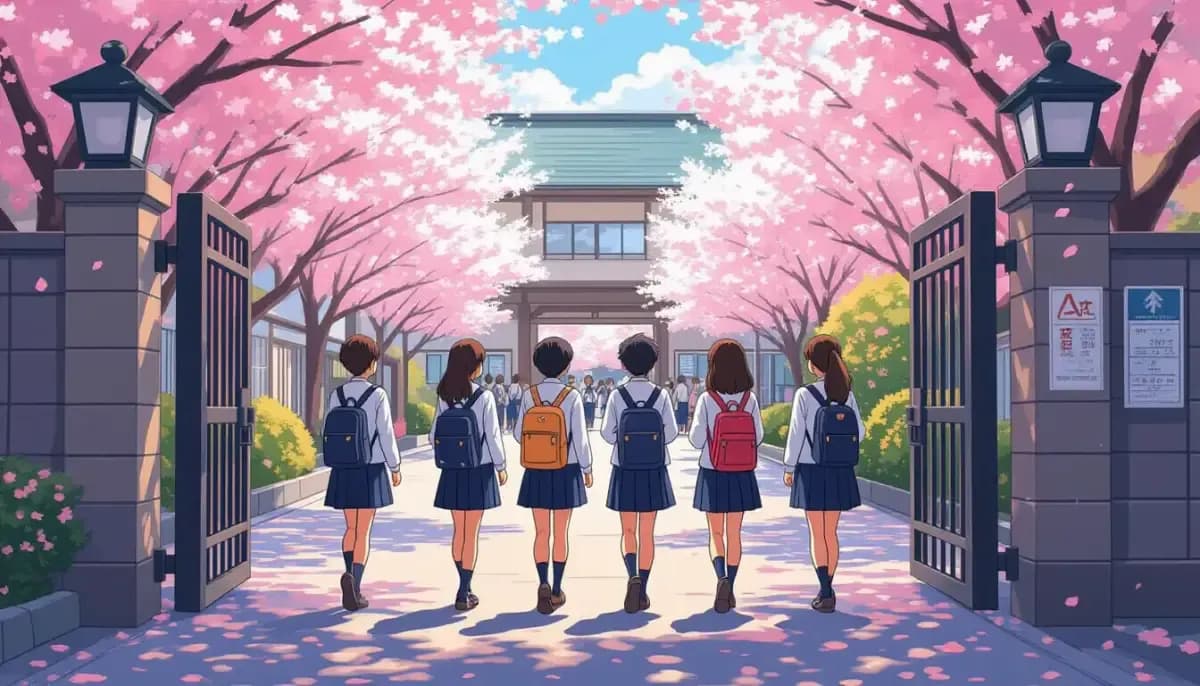
A complete guide for foreign families on the transition from elementary to junior high school in Japan, covering enrollment, language support, costs, club activities, and academic preparation.
Transition from Elementary to Junior High School in Japan: A Complete Guide for Foreign Families
Moving from elementary school (shougakkou) to junior high school (chuugakkou) is one of the most significant milestones in a child's educational journey in Japan. For foreign families, this transition comes with a unique set of challenges — new academic demands, mandatory uniforms, club activities (bukatsu), and a school culture that can feel overwhelming, especially if Japanese language skills are still developing. This guide walks you through everything you need to know to prepare your child for a smooth and confident transition.
Understanding the Japanese School System: Elementary to Junior High
Japan's compulsory education system spans nine years: six years of elementary school and three years of junior high school. Children who turn 12 on or before April 1st automatically advance to junior high school at the start of the new academic year in April.
The shift from elementary to junior high is not just academic — it's cultural. Students move from a relatively nurturing environment to one that emphasizes self-discipline, group responsibility, and preparation for high school entrance examinations. For foreign children, this means adapting to a significantly more structured routine.
Key facts about the transition:
- Elementary school: Grades 1–6 (ages 6–12)
- Junior high school: Grades 7–9 / Year 1–3 (ages 12–15)
- Academic year starts in April and is divided into three terms
- National curriculum is standardized across all public junior high schools
For an overview of the full Japanese education structure, see our Complete Guide to the Japanese Education System for Foreign Families.
Enrollment Process: What Foreign Families Need to Do
Public junior high schools in Japan are free and open to all foreign residents. As long as your child is registered as a resident in your municipality, they are entitled to attend the local public junior high school at no tuition cost.
Step-by-step enrollment timeline:
- October (of previous year): Your municipal office will send a shugaku annai (school enrollment guidance) document to your registered address. This outlines the enrollment process and timeline.
- November–December: Confirm enrollment at your ward/city office. If you wish for your child to attend, notify the office. They will assign your child to the appropriate school based on your home address.
- January–February: Receive the nyugaku tsuchisho (notice of enrollment), which includes your child's assigned school, the date of the entrance ceremony, and orientation details.
- March: Purchase school uniform and required supplies. Most schools have a designated shop; the school will provide a list.
- Early April: Attend the entrance ceremony (nyugakushiki). This is a formal event — parents are expected to attend dressed in formal attire.
Mid-year enrollment: Foreign children can also enroll at any point during the school year, not just in April. Visit your local municipal office after completing resident registration to begin the process.
Documents typically required:
- Residence card (zairyu card)
- Resident registration certificate (juuminhyo)
- Health records / vaccination records (if available)
- Previous school records (if available; translation may be requested)
For more details on residency requirements and documents for your family, check our guide on Visa and Legal Issues for Foreign Families with Children in Japan.
What Changes: Academic and School Life Differences
The jump from elementary to junior high school is steep. Here is a comparison to help you and your child prepare:
| Aspect | Elementary School | Junior High School |
|---|---|---|
| Uniforms | Casual clothes (most schools) | Mandatory school uniform (seifuku) |
| Teachers | One homeroom teacher per class | Multiple subject teachers |
| Subjects | Core subjects only | Expanded: English, tech, home economics, music, art |
| School Hours | Usually ends by 3:00 PM | Often ends 4:00–5:00 PM including club activities |
| Club Activities | Optional | Strongly expected (bukatsu) |
| Exams | Periodic tests | Regular chukan/期末 midterm and final exams |
| Homework | Light to moderate | More intensive; test preparation common |
| School Lunch | Provided (kyushoku) | Usually provided (kyushoku) |
| Homeroom Period | Daily | Daily; includes cleaning duties (souji) |
Club Activities (Bukatsu)
One of the most distinctive features of Japanese junior high school is the expectation to join a club (bukatsu). These range from sports clubs (baseball, soccer, volleyball, tennis, judo) to cultural clubs (brass band, art, calligraphy, drama). Bukatsu meets almost daily after school and sometimes on weekends, and participation — while technically voluntary — is culturally expected.
For foreign children, bukatsu can be both a challenge and an incredible opportunity: it's one of the best ways to make friends and feel part of the school community, even with limited Japanese.
Japanese Language Support for Foreign Children
One of the biggest concerns for foreign families is language. According to the Ministry of Education, in fiscal 2023, nearly 70,000 students in Japanese public schools required Japanese as a Foreign Language (JFL) instruction — double the number from a decade ago. Approximately 30% of all public elementary and middle schools (about 9,241 schools) now have students requiring JFL support.
Most public junior high schools offer some level of Japanese language support, including:
- Withdrawal classes (*toridashi shido*): Small-group Japanese lessons during regular class time
- In-class support: A Japanese language support teacher assists in mainstream classes
- After-school tutoring: Volunteer tutors through the municipal office or NPOs
- Multilingual materials: Some municipalities provide translated school documents in English, Chinese, Portuguese, Tagalog, and more
What you should ask the school and municipal office:
- Does the school have a JFL support teacher?
- Is there a translation/interpretation service for parent meetings?
- Are school materials available in your language?
- What support is available for subject learning (not just Japanese)?
The challenge is real: approximately 20,000 foreign children currently have unconfirmed enrollment status or are not attending school at all. Proactively communicating with your school and the municipal office is essential.
For strategies to support your child's Japanese language development at home, see our guide on Teaching Japanese to Foreign Children: Methods and Resources.
Preparing Your Child Emotionally and Academically
The transition to junior high is emotionally demanding for any child, and even more so for foreign children navigating a new cultural environment. Here are practical ways to support your child:
Academic Preparation
- Japanese literacy: Ensure your child can read and write hiragana, katakana, and at least basic kanji (around 1,000 characters by end of elementary school is standard)
- English classes: English becomes a formal, graded subject in junior high — if English is your home language, this is a genuine advantage
- Math and science foundation: The curriculum accelerates significantly; review core concepts during the summer before entry
- Juku (cram school): Many families in Japan use juku for supplemental academic preparation. This is especially worth considering in 3rd year junior high when high school entrance exams loom
Emotional and Social Preparation
- Talk openly about change: Normalize the transition as a big step for everyone, not just foreign children
- Visit the school beforehand: Request a school tour before April; most schools accommodate this
- Build Japanese friendships early: If possible, arrange playdates with future classmates from the enrollment ceremony
- Stay in touch with the homeroom teacher: The tantosha (homeroom teacher) is your primary point of contact; build that relationship early
For support with your child's social and emotional wellbeing in Japan, see our guide on Mental Health and Emotional Wellbeing for Foreign Children in Japan.
Costs and What to Budget For
While public junior high school is tuition-free, there are real costs that foreign families should budget for:
| Expense | Approximate Cost |
|---|---|
| School uniform (full set) | ¥30,000–¥60,000 |
| PE uniform (taiiku fuku) | ¥5,000–¥10,000 |
| School bag / randoseru (replaced at JHS) | ¥3,000–¥10,000 |
| Shoes (indoor and outdoor) | ¥3,000–¥6,000 |
| Stationery and supplies | ¥5,000–¥10,000 |
| Monthly school lunch (kyushoku) | ¥4,000–¥5,000/month |
| Teaching materials / activity fees | ¥1,000–¥3,000/month |
| Bukatsu fees (club activities) | ¥1,000–¥5,000/month |
| School trip (shugaku ryoko, 3rd year) | ¥50,000–¥100,000 |
Financial assistance: Low-income families (including foreign residents) may qualify for the shugakuhi enjosei (school expense assistance) program through the municipal office. This can cover school lunches, teaching materials, and other school costs. Ask your municipal office about eligibility. For more on family financial support in Japan, see our guide on Government Benefits and Subsidies for Families in Japan.
Thinking Ahead: High School and Beyond
Junior high school in Japan is not just about these three years — it's preparation for high school entrance examinations (koukounyuushi). In 3rd year (age 15), students will take prefectural high school entrance exams or apply to private high schools.
The gap in high school enrollment between Japanese and foreign children is stark: while 98% of Japanese students proceed to high school, estimates suggest only 30–40% of migrant children do so. This gap often begins with the junior high years, where language barriers, lack of academic support, and social isolation compound over time.
Steps to set your child up for high school:
- Start thinking about high school options by 2nd year junior high
- Explore both public and private high schools — some have special quotas or support programs for foreign students
- Ask your child's homeroom teacher about high school recommendations (shinro shidou)
- Consider whether an international school track makes sense for your family's long-term plans
For a detailed look at high school options, see our High School in Japan: Options and Guidance for Foreign Families.
Helpful Resources for Foreign Families
Navigating this transition is easier with the right resources:
- TIPS (Tokyo Metropolitan Government's multilingual support): Elementary and Junior High Schools Guide — an excellent English-language overview of enrollment procedures
- Tokyo Metropolitan Government enrollment info: Enrollment in Public Elementary and Junior High Schools — official information for Tokyo residents
- E-Housing Japan school guide: How Foreign Students Can Attend Public School in Japan — practical tips and up-to-date information
- Living in Nihon: livinginnihon.com — general expat life resources for foreign residents in Japan
- For Work in Japan: forworkinjapan.com — resources for working expat families navigating Japanese systems
- Chuukou Benkyou: chuukoubenkyou.com — study resources relevant to junior high school content in Japan
- Nippon.com foreign children education report: Lagging in Language Skills — in-depth look at challenges facing foreign children in Japanese schools
The transition from elementary to junior high school in Japan is a pivotal moment for your child's future. With the right preparation, proactive communication with the school, and the support resources available in Japan, your child can not only survive this transition — they can truly thrive. Start early, ask questions, and remember: thousands of foreign families navigate this path successfully every year.

Originally from Vietnam, living in Japan for 16+ years. Graduated from Nagoya University, with 11 years of professional experience at Japanese and international companies. Sharing practical information for foreign parents raising children in Japan.
View Profile →Related Articles
Part-Time Rules and Responsibilities for Junior High Students
Can junior high school students work part-time in Japan? Learn the legal restrictions, school regulations, and what foreign families need to know about teen employment rules in Japan.
Read more →
Preparing for High School Entrance Exams in Japan
Complete guide for foreign families preparing for Japanese high school entrance exams (koukounyuushi). Covers special provisions for foreign students, naishinsho, juku, study strategies, and exam timeline.
Read more →
Student Council and Leadership in Japanese Junior High
A complete guide to student council (seitokai) in Japanese junior high schools — how elections work, leadership roles, responsibilities, and how foreign children can participate in school governance.
Read more →
Technology and Computer Education in Junior High Japan
Discover how technology and computer education works in Japanese junior high schools. Learn about Gijutsu Katei, the GIGA School Program, mandatory programming, and what foreign families can expect.
Read more →
English Education in Japanese Junior High Schools
Comprehensive guide to English education in Japanese junior high schools: curriculum, ALT teachers, proficiency data, tips for foreign families, and entrance exam preparation advice.
Read more →
Private Junior High School Entrance Exams in Japan
Everything foreign families need to know about private junior high school entrance exams in Japan: subjects, competition ratios, returnee pathways, costs, and how to prepare.
Read more →