
Private Junior High School Entrance Exams in Japan

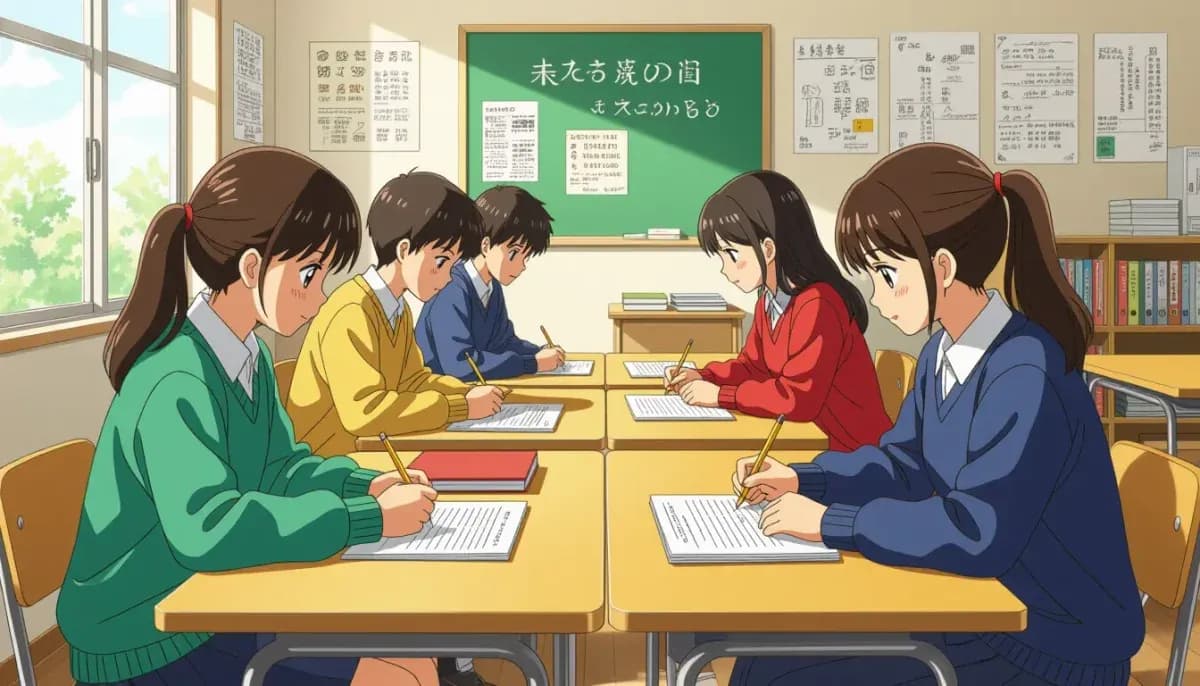
Everything foreign families need to know about private junior high school entrance exams in Japan: subjects, competition ratios, returnee pathways, costs, and how to prepare.
Private Junior High School Entrance Exams in Japan: A Complete Guide for Foreign Families
Japan's private junior high school entrance exam system — known as chugaku juken (中学受験) — is one of the most intense academic competitions in the world. For foreign families living in Japan, understanding how this system works, whether it applies to your child, and what to expect can feel overwhelming. This guide breaks down everything you need to know: from the structure of the exams and preparation timelines to special pathways for returnee and foreign students.
What Are Private Junior High School Entrance Exams in Japan?
In Japan, the transition from elementary school to junior high school is not automatic for students who wish to attend private institutions. While all children are guaranteed a place at their local public junior high school (区立・市立中学校), families who want to enroll their child in a private junior high school must navigate a rigorous application and examination process.
This system, called juken (受験), is a deeply embedded part of Japanese culture. Preparation typically begins in third or fourth grade of elementary school (ages 8–10), with many children attending specialized cram schools called juku (塾) four to five days a week, plus all-day sessions on weekends.
In 2025, approximately 52,300 sixth graders in the Tokyo metropolitan area took private or national junior high school entrance exams — representing 18.1% of all elementary school graduates in the region. While this figure has leveled off after a decade of steady growth due to declining birth rates and rising education costs, competitive private education remains a top priority for many Japanese families.
For foreign and expat families, this system presents both challenges and opportunities. The good news: many private schools now offer dedicated pathways for bilingual, returnee, and internationally educated students.
How the Exam System Works
Standard Exam Format
Most private junior high school entrance exams follow a four-subject format:
| Subject | Approximate Weighting | Score Range |
|---|---|---|
| Mathematics | 50% of preparation time | 100–150 points |
| Japanese Language | 30% of preparation time | 100–150 points |
| Science | 10% of preparation time | 50–100 points |
| Social Studies | 10% of preparation time | 50–100 points |
In recent years, exam content has evolved significantly. Mathematics now emphasizes reasoning and logic over formula memorization. Japanese language passages have grown considerably — reading sections now routinely include texts of 8,000–12,000 characters, often covering social themes like gender equality and diversity. Science has shifted toward analytical thinking using unfamiliar experimental data, and approximately 90% of schools include current-events questions in their social studies sections.
Competition Ratios
The competition for spots at top schools is fierce. Here is how the acceptance ratios break down in the Tokyo and Kanagawa areas:
| School Type | Tokyo Competition Ratio | Kanagawa Competition Ratio |
|---|---|---|
| Boys' Private Schools | 2.5x | 2.4x |
| Girls' Private Schools | 1.9x | 1.8x |
| Co-ed Private Schools | 2.4x | 2.7x |
| National Schools | 4.1x | 2.4x |
| Public Integrated Schools | 6.0x | 6.1x |
Overall, the first-choice school success rate is only 25–30% (roughly 1 in 4 boys and 1 in 3 girls). Among students who adjusted their target school to a more realistic choice, about 49% succeed at their adjusted first choice.
Note: Application ratios can differ drastically from actual acceptance ratios. A school showing a 7.0x application ratio might have only a 2.3x actual ratio once ineligible applicants are removed.
Alternative Exam Formats for International Students
One of the most important recent developments for foreign and bilingual families is the rapid growth of alternative admissions pathways. As of 2025, Tokyo and surrounding areas offer:
- English-based admissions: Approximately 141 private schools in the Tokyo area now offer English-language entrance exams requiring roughly a Grade 3 level of English proficiency
- Aptitude-based testing: Cross-disciplinary thinking challenges combined with written essays
- Programming assessments: An emerging format testing logical and computational thinking skills
- Subscription exam models: Innovators like Kaichi Gakuen Group now offer a flat ¥20,000 fee for up to 11 exam attempts across 5 affiliated schools — making the process more accessible and less financially stressful
University partnership guarantees are also increasingly popular selling points. For example, St. Hilda's School guarantees 100% admission to Rikkyō University for its graduates, while Meiji University Setagaya guarantees admission for 70% of its senior class starting with the 2029 cohort.
For more information on exam subjects and evolving trends, see the in-depth analysis at 中高勉強 - Exam Subjects and Trends.
Returnee and Foreign Student Pathways
Foreign families have two main admission routes at private Japanese junior high schools:
1. Returnee Student Admissions (帰国子女入試)
This pathway is available to Japanese nationals (or long-term residents) who spent time abroad. Key eligibility requirements as of 2024:
- Minimum 1 year of continuous enrollment at an overseas school
- Must apply within 3 years of returning to Japan
- Previously stricter requirements (2+ years abroad) were relaxed by Tokyo private schools
The returnee exam typically consists of:
- Document review — academic records from overseas school, standardized language scores (TOEFL, IELTS, or EIKEN)
- Written examination — essay in Japanese or English
- Bilingual interview — assessing both languages
Application timeline generally runs: document submission June–August → exam October → results November.
2. Foreign Student Special Selection (外国人生徒特別選考)
This pathway is for non-Japanese nationals. Requirements vary by school but typically include:
- Valid long-term residence status (tourist/short-stay visa holders are not eligible)
- JLPT score (typically N5–N4 minimum; competitive schools may require N3+)
- Certified academic transcripts with certified Japanese translations
- Some schools now accept "Global" or "International" program students with lower Japanese requirements
For detailed guidance on using these pathways strategically, 中高勉強's Returnee & Foreign Student Guide provides excellent step-by-step advice.
Preparing Your Child: The Juku System
The reality of private junior high preparation in Japan is that most successful applicants attend juku. These are private cram schools that specialize in exam preparation. Here is what families should know:
Juku Basics
- Students typically start juku in 3rd or 4th grade (age 8–10) for serious exam preparation
- Attendance is usually 4–5 days per week plus weekend sessions
- Annual juku fees average approximately ¥260,000 (~$3,300) for academic programs
- The "Big Four" major juku chains dominate the market and each has a distinct teaching style and school placement record
Hensachi: The Japanese Scoring System
Private schools are ranked using hensachi (偏差値), a relative score measuring your child's performance compared to all other test-takers:
- Average = 50
- Elite Tokyo schools (Kaijo, Sakae Gakuen, etc.) require 70–75+
- Mid-range schools typically fall in the 55–65 range
- Lower-range schools: 30–45
For expat families, understanding hensachi is essential to setting realistic school targets. Unlike a simple percentage score, hensachi is entirely relative — your child's score depends on who else is taking the exam that year.
The Emotional Reality of Juken
Japan's juken culture is famously demanding. A major national survey found that over 50% of parents reported some degree of regret about the process, citing excessive academic pressure, loss of extracurricular activities, sleep deprivation, and reduced social time for their children.
At the same time, many families — and former juken students — describe the experience as ultimately formative, building discipline and resilience. For foreign families, the key is making an informed decision about whether this path aligns with your child's personality, your family's values, and your longer-term education goals.
For a broader view of juken culture and its place in Japanese society, the Tokyo Weekender's deep dive on exam culture is a valuable read.
Exam Day: What to Expect
On the day of the entrance exam, schools have strict procedures. Based on information from 中高勉強's Exam Day Checklist:
What to bring:
- 5–6 HB or B pencils (mechanical pencils are usually prohibited)
- Analog wristwatch (not a smartwatch)
- Indoor shoes (uwabaki)
- Admission ticket
- Ruler and compass (if required by the school)
- Handkerchiefs/tissues — note that tissues must not have printed text or numbers (anti-cheating rule)
Timing:
- Most exam families wake at 5:30–6:00 AM
- Arrive with at least a 30-minute buffer before the exam start time
- If trains are delayed, call the school immediately with your admission number — most schools have contingency procedures
Dress:
- Classrooms are heated; bring layered clothing (cardigans, vest) that can be removed
Costs: What Does Private Junior High Really Cost?
Beyond juku fees, families should budget for:
| Expense | Estimated Annual Cost |
|---|---|
| Juku (cram school) | ¥260,000–¥500,000 |
| Exam application fees (per school) | ¥20,000–¥30,000 |
| Private junior high tuition | ¥500,000–¥1,100,000 |
| School expenses (uniforms, trips, etc.) | ¥100,000–¥300,000 |
| Total (exam year) | ¥880,000–¥1,930,000 |
Compared to public junior high (which is essentially free in Japan), the private route represents a substantial financial commitment. Note that the Japanese government's free high school tuition initiative launching in 2026 is expected to make private senior high school more accessible, which may indirectly increase interest in private junior high as well.
For comprehensive financial planning advice for expat families in Japan, see our guide on Financial Planning for Expat Families Raising Children in Japan.
Should Your Child Take the Juken Path?
For foreign families, this is the central question. Consider the following:
Juken may be a good fit if:
- Your child has strong Japanese language skills (JLPT N3+ recommended for standard exams)
- Your family plans to remain in Japan long-term
- Your child thrives in structured, competitive academic environments
- You have access to appropriate juku support (some juku offer English-supportive environments)
Consider alternatives if:
- Your child's Japanese is limited (explore English-based or international pathway schools)
- Your stay in Japan is uncertain or temporary
- Your child's wellbeing is a top priority and they are sensitive to high-pressure environments
- You prefer a more internationally-recognized curriculum
For families considering the international school route as an alternative, see our International Schools in Japan Guide. For an overview of the broader Japanese education system, our Complete Guide to the Japanese Education System is a great starting point.
Resources for Foreign Families
Navigating Japan's private junior high entrance system as a foreigner can be isolating — but you are not alone. Here are key resources:
- Living in Nihon — Comprehensive expat guides covering education, visas, and family life in Japan
- For Work in Japan — Practical resources for foreign workers and families navigating life in Japan
- 中高勉強 (Chuukou Benkyou) — In-depth Japanese-language guides to acceptance rates, competition ratios, and exam strategy
- Nippon.com — Japan's Shifting Exam Scene — English-language analysis of the latest trends in Tokyo-area junior high admissions
- E-Housing — High Schools for Foreign Residents — Practical breakdown of options and costs for foreign families
Also check our related guides: Junior High School in Japan: Guide for Foreign Families and High School in Japan: Options and Guidance for Foreign Families.
Key Takeaways
- Japan's private junior high entrance exam system is competitive and preparation-intensive, typically starting in 3rd–4th grade
- Standard exams test four subjects (Math, Japanese, Science, Social Studies), but alternative formats including English-based admissions are rapidly growing
- Foreign and returnee students have dedicated application pathways with different requirements
- Success rates at first-choice schools are around 25–30%; realistic target-setting using hensachi is essential
- Total annual costs including juku and tuition can exceed ¥1,000,000 per year
- The emotional demands of juken are significant; consider your child's wellbeing and your family's long-term Japan plans before committing

Originally from Vietnam, living in Japan for 16+ years. Graduated from Nagoya University, with 11 years of professional experience at Japanese and international companies. Sharing practical information for foreign parents raising children in Japan.
View Profile →Related Articles

Part-Time Rules and Responsibilities for Junior High Students
Can junior high school students work part-time in Japan? Learn the legal restrictions, school regulations, and what foreign families need to know about teen employment rules in Japan.
Read more →
Preparing for High School Entrance Exams in Japan
Complete guide for foreign families preparing for Japanese high school entrance exams (koukounyuushi). Covers special provisions for foreign students, naishinsho, juku, study strategies, and exam timeline.
Read more →
Student Council and Leadership in Japanese Junior High
A complete guide to student council (seitokai) in Japanese junior high schools — how elections work, leadership roles, responsibilities, and how foreign children can participate in school governance.
Read more →
Technology and Computer Education in Junior High Japan
Discover how technology and computer education works in Japanese junior high schools. Learn about Gijutsu Katei, the GIGA School Program, mandatory programming, and what foreign families can expect.
Read more →
English Education in Japanese Junior High Schools
Comprehensive guide to English education in Japanese junior high schools: curriculum, ALT teachers, proficiency data, tips for foreign families, and entrance exam preparation advice.
Read more →
Career Guidance and Course Selection in Japanese Junior High
A complete guide to career guidance (shinro shidou) and high school course selection in Japanese junior high schools for foreign families — covering entrance exams, juku, and special admissions for international students.
Read more →