
Career Guidance and Course Selection in Japanese Junior High

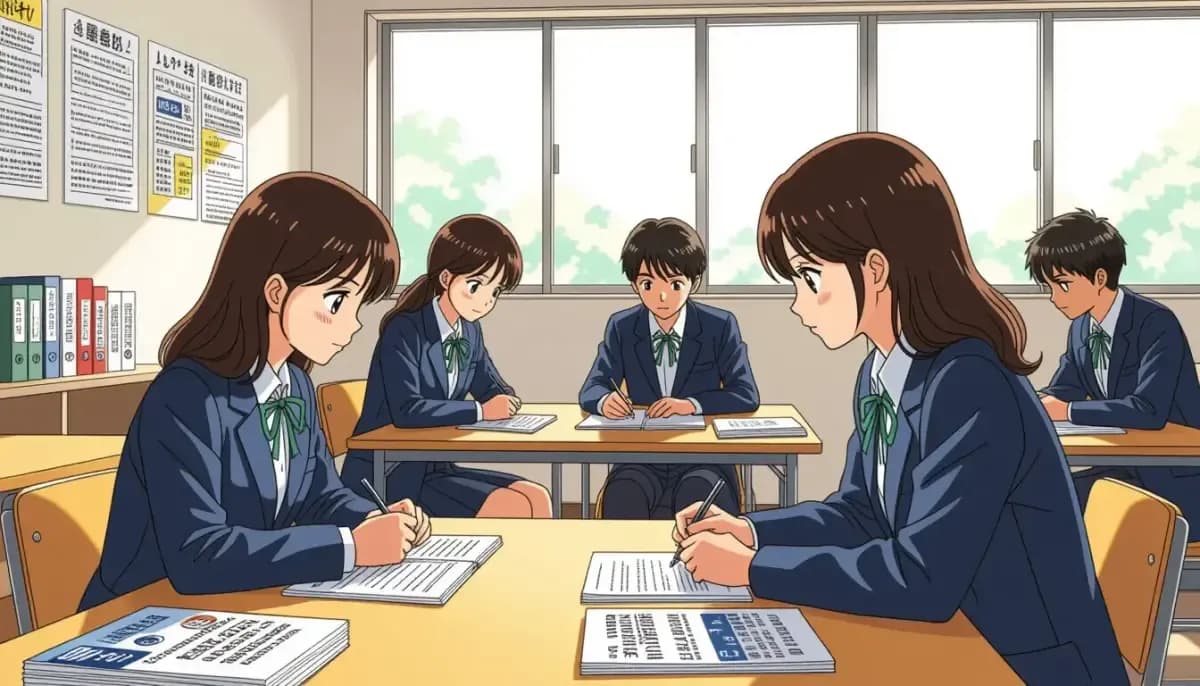
A complete guide to career guidance (shinro shidou) and high school course selection in Japanese junior high schools for foreign families — covering entrance exams, juku, and special admissions for international students.
Career Guidance and Course Selection in Japanese Junior High School
Navigating career guidance and course selection in Japanese junior high school can feel overwhelming for foreign families. Japan's education system places enormous emphasis on high school selection during the junior high years — these three years (grades 7–9, ages 12–15) are the foundation for your child's academic and career trajectory. This guide explains how Japan's career guidance system works, what the high school selection process looks like, and how foreign families can best support their children through this critical period.
Understanding Shinro Shidou: Japan's Career Guidance System
Japan has a structured, school-based career guidance framework called shinro shidou (進路指導), which translates roughly to "guidance on one's future path." Unlike Western career counseling that may begin in high school or college, shinro shidou starts actively in the final year of junior high.
At its core, shinro shidou in junior high focuses on:
- High school selection — identifying which type of high school best suits the student's abilities and interests
- Self-reflection exercises — essays, interviews, and discussions about personal strengths and career aspirations
- Academic goal-setting — working backward from high school requirements to set study targets
- Parent-teacher consultations (三者面談, sanshamandan) — critical three-way meetings between the student, parents, and homeroom teacher
The homeroom teacher (担任, tannin) plays a central role, acting as the primary career advisor for students. In grade 9, these consultations intensify, often happening two to three times per year. For foreign families, it's essential to request an interpreter for these meetings if Japanese language ability is limited.
For a broader overview of how Japan's educational stages connect, see our complete guide to the Japanese education system.
The Three Types of High Schools in Japan
The most consequential decision made during junior high is which type of high school to aim for. Japan's high schools fall into three main categories:
| High School Type | Japanese Name | % of Students | Focus |
|---|---|---|---|
| Academic | 普通科 (futsuka) | ~73% | University preparation, broad subjects |
| Vocational | 職業科 (shokugyoka) | ~25% | Technical, commercial, agricultural trades |
| Comprehensive | 総合学科 (sougougakka) | ~2.8% | Flexible credit-based curriculum |
| Evening/Correspondence | 定時制/通信制 | ~2.2% | Flexible scheduling for working students |
Academic high schools are the most common and prepare students primarily for university entrance exams. These are further ranked by competitiveness — top-tier public academic high schools require exceptionally high exam scores and are highly sought after.
Vocational high schools offer tracks in areas like engineering, commercial business, agriculture, fisheries, home economics, and nursing. They provide practical skills and often have strong connections to local employers.
Comprehensive high schools allow students to build their own credit-based curriculum, blending academic and vocational subjects. They're a newer innovation aimed at students who want flexibility.
There is also a growing number of integrated junior-senior high schools (中高一貫校, chuko ikkanko) that combine 6 years into one track, allowing students to skip the high school entrance exam entirely. Admission to these schools occurs at age 12 (before junior high), making them relevant to consider from elementary school.
For more on what comes after this decision, read our guide to high school in Japan for foreign families.
How the High School Entrance Exam Process Works
Almost all public and private high school admissions in Japan are based on entrance examination performance, typically held between January and March of grade 9. Here is how the process unfolds:
Grade 7–8 (First two years of junior high):
- Academic foundations are established across all core subjects
- Students begin attending juku (cram schools) to supplement school learning
- Initial career guidance discussions begin in homeroom
Grade 9 (Final year, the crucial year):
- September–October: Sanshamandan consultations narrow down target high schools based on practice test scores
- October–November: Final list of target high schools is confirmed
- December–January: Applications submitted (public: December–January; private: January–February)
- January–March: Entrance exams conducted
- March: Results announced; enrollment confirmed
The entrance exams typically test five subjects: Japanese, mathematics, science, social studies, and English. Some private schools add additional subjects or interviews. Students are evaluated on both exam scores and their middle school academic records (内申書, naishinshо — the official school transcript and conduct report).
The naishinshо is particularly important: it includes grades, attendance, and teacher evaluations of attitude and extracurricular participation. For foreign students, strong exam scores can sometimes compensate for lower naishinshо marks due to language barriers — but this depends heavily on the school.
For additional practical guidance, the E-Housing guide to Japanese high schools for foreign residents is an excellent resource on public vs. private applications, costs, and eligibility requirements.
The Role of Juku in Course Selection
Japan's juku (塾) system — private cram schools — is deeply integrated into the junior high career guidance process. Approximately 60% of all junior high students attend juku, with participation rates rising sharply in grade 9 as high school exams approach.
There are three main types of juku relevant to junior high students:
- Gakushu juku (学習塾) — academic tutoring that supplements school subjects, ideal for students who need extra support
- Shingaku juku (進学塾) — highly focused exam-preparation juku aimed at competitive high school entry; rigorous but effective
- Individual tutoring juku — one-on-one sessions, useful for foreign students who need personalized Japanese language support alongside academic content
The average family spends approximately ¥200,000 per year on juku for a junior high student, though costs can be significantly higher at prestigious exam-prep juku in major cities.
For foreign families, juku serves an additional function: it provides structured Japanese-language immersion in an academic context, helping children who entered Japan mid-education catch up on curriculum gaps.
Choosing the right juku:
- Look for juku that have experience working with international students (外国人対応, gaikokujin taiou)
- Some juku offer diagnostic tests to place students at the right level
- Many juku hold open days (体験授業, taiken jugyou) where students can try a free lesson before committing
For strategies on building your child's Japanese language skills outside of school, see our guide on teaching Japanese to foreign children.
Special Considerations for Foreign Families
Foreign families face unique challenges and also have specific options during the junior high career guidance process. Here is what to know:
Japanese language requirements for high school:
- Public high schools generally require JLPT N4 level or equivalent Japanese proficiency
- Private schools vary widely — some international programs accept students with basic Japanese
- Students who arrived in Japan recently may qualify for special admissions considerations at some schools
Foreign student statistics: In 2023, there were over 114,853 international students in Japanese public schools, a 23% increase year over year. Approximately 41.5% of these students require extra language instruction. This growing population has prompted many municipalities to expand support services.
Practical steps for foreign families in grade 9:
- Request an interpreter for all three-way consultations (sanshamandan) — contact your school's international education coordinator
- Explore tokubetsu nyushi (特別入試) — special admissions tracks for returnee and foreign students offered by many high schools
- Contact the Tokyo Metropolitan Education Consultation Center at 03-3360-4175 (English consultation available every Friday, 1–4 PM) or your regional equivalent
- Investigate international high schools as a parallel application track — they offer English-medium instruction and often more flexible admission criteria
For more on international school options, see our comprehensive guide to international schools in Japan.
Funding and costs:
- Public high school tuition after subsidies is essentially free (subsidies cover approximately ¥9,900/month)
- Private high schools cost ¥300,000–¥600,000+ annually; families earning under ¥5.9M may receive up to ¥396,000/year in subsidies
- Children under a valid long-term visa and registered in the school district are eligible for public high school application
For further support resources for expat parents navigating Japanese schools, Living in Nihon offers practical expat guides, and For Work in Japan provides broader context on life and education in Japan.
Extracurricular Activities and Their Role in Applications
One often-overlooked aspect of junior high career guidance is the role of club activities (部活動, bukatsudo) in high school applications. Japan's naishinshо includes extracurricular participation, and many high schools — particularly private ones — weigh it heavily.
Club activities in Japanese junior high schools fall into two categories:
- Sports clubs (運動部): Baseball, soccer, basketball, volleyball, judo, kendo, swimming, tennis, and more
- Cultural clubs (文化部): Calligraphy, drama, music band, art, science, English conversation, and others
Students who excel in a sport or cultural activity may qualify for special sports/cultural admissions (特待生制度) at some private high schools, which can include reduced tuition or full scholarships. This is worth discussing with the homeroom teacher during career guidance consultations.
For foreign children, club activities also serve a powerful social integration function — shared activities transcend language barriers and help build friendships. Encouraging participation from grade 7 pays dividends both socially and academically by grade 9.
Resources for Parents: Building a Support Network
Career guidance in Japan is not a process foreign families need to navigate alone. Here is a summary of key support channels:
| Resource | What It Offers | Language |
|---|---|---|
| School international coordinator | School-specific guidance, interpreter referrals | Japanese (ask for English support) |
| Tokyo Metropolitan Education Consultation Center (03-3360-4175) | Free consultation on high school pathways | English, Fridays 1–4 PM |
| Local Board of Education (kyoiku iinkai) | Official guidance for foreign residents | Japanese |
| NPO support groups | Peer support, translated materials | Varies by NPO |
| Juku with foreign student support | Academic catch-up and exam prep | Japanese + some English |
For comprehensive guidance on navigating junior high overall, our guide to junior high school in Japan for foreign families covers enrollment, daily life, and parent involvement in detail.
The MEXT (Ministry of Education) has also published multilingual guides for foreign residents on navigating the Japanese school system — available through Japan's official education travel portal.
Additionally, Savvy Tokyo's guide to Japanese high schools that accept foreign students provides a curated list of high schools with international-friendly admissions, useful for families beginning their research. The Chuukou Benkyou resource site also offers study guidance materials relevant to the junior-to-senior high school transition.
Summary: Your Action Plan for Junior High Career Guidance
Career guidance in Japanese junior high is a structured, school-led process that culminates in high school entrance exams at the end of grade 9. For foreign families, the key is to start early, communicate proactively with teachers, and explore the special admissions options that exist for international students.
Quick action checklist:
- [ ] Attend all sanshamandan (three-way) consultations — request an interpreter
- [ ] Research high school types and rankings in your area from grade 8
- [ ] Consider enrolling in juku from grade 8 at the latest
- [ ] Build Japanese language proficiency systematically — aim for JLPT N4 by grade 9
- [ ] Investigate tokubetsu nyushi (special foreign student admissions) at target high schools
- [ ] Encourage consistent club activity participation to strengthen the naishinshо
Japan's education system rewards preparation and persistence. With the right support network and an understanding of how shinro shidou works, foreign families can navigate the process successfully and help their children access the high school path that best matches their strengths and aspirations.

Originally from Vietnam, living in Japan for 16+ years. Graduated from Nagoya University, with 11 years of professional experience at Japanese and international companies. Sharing practical information for foreign parents raising children in Japan.
View Profile →Related Articles
Part-Time Rules and Responsibilities for Junior High Students
Can junior high school students work part-time in Japan? Learn the legal restrictions, school regulations, and what foreign families need to know about teen employment rules in Japan.
Read more →
Preparing for High School Entrance Exams in Japan
Complete guide for foreign families preparing for Japanese high school entrance exams (koukounyuushi). Covers special provisions for foreign students, naishinsho, juku, study strategies, and exam timeline.
Read more →
Student Council and Leadership in Japanese Junior High
A complete guide to student council (seitokai) in Japanese junior high schools — how elections work, leadership roles, responsibilities, and how foreign children can participate in school governance.
Read more →
Technology and Computer Education in Junior High Japan
Discover how technology and computer education works in Japanese junior high schools. Learn about Gijutsu Katei, the GIGA School Program, mandatory programming, and what foreign families can expect.
Read more →
English Education in Japanese Junior High Schools
Comprehensive guide to English education in Japanese junior high schools: curriculum, ALT teachers, proficiency data, tips for foreign families, and entrance exam preparation advice.
Read more →
Private Junior High School Entrance Exams in Japan
Everything foreign families need to know about private junior high school entrance exams in Japan: subjects, competition ratios, returnee pathways, costs, and how to prepare.
Read more →