Government Benefits and Subsidies for Families in Japan
Complete guide to government benefits and subsidies for families in Japan. Learn about child allowance, free preschool, childbirth lump sums, and more for foreign residents.
13 articles
Government Benefits and Subsidies for Families in Japan
Raising children in Japan comes with a surprisingly robust network of government support. Whether you are a foreign resident navigating the system for the first time or an expat who has recently welcomed a new family member, Japan offers meaningful financial assistance—from childbirth lump sums to monthly child allowances, free preschool, and medical subsidies. This guide covers all the major government benefits and subsidies available to families in Japan, including what changed with the landmark 2024 reforms.
Government benefits and subsidies for families in Japan
Child Allowance (児童手当, Jidō Teate): Japan's Core Family Benefit
The Child Allowance (jidō teate) is the cornerstone of Japan's family support system. It provides monthly cash payments to households raising children, and the 2024 reform dramatically expanded eligibility and amounts.
2024 Reform Key Changes:
Income restrictions completely removed: Previously, high-income households received a reduced "special allowance" of ¥5,000/month or nothing at all. As of October 2024, all families qualify regardless of income.
Age limit raised to 18: Coverage now extends through high school graduation (until March 31 after a child turns 18), up from the previous cutoff of junior high school.
Third-child bonus doubled: The allowance for a third child and beyond increased from ¥15,000/month to ¥30,000/month.
Payment frequency increased: Payments now go out six times per year (every even month), compared to three times per year previously.
Who is eligible? Foreign residents with a valid residency status and a resident registration (jūminhyō) at a Japanese municipal office are fully eligible. You must apply at your local city or ward office within 15 days of your child's birth or your arrival in Japan.
When a baby is born in Japan, families enrolled in the national health insurance system (Kokumin Kenkō Hoken) or an employer-sponsored health insurance plan receive a one-time payment of ¥500,000 per birth. This payment is typically made directly to the hospital (direct billing system), reducing out-of-pocket expenses at delivery. If the hospital costs are lower than ¥500,000, any remaining balance is paid to the parents.
Employed mothers who take maternity leave are entitled to a maternity allowance paid by their health insurance:
Pre-birth period: 42 days before the expected due date
Post-birth period: 56 days after delivery
Amount: Approximately 2/3 (67%) of standard daily wages during both periods
This benefit applies to employees enrolled in a company health insurance plan (shakai hoken). Self-employed individuals and freelancers under the National Health Insurance system are not eligible for this specific benefit, but may be eligible for other support.
Free Preschool and Childcare (幼児教育・保育の無償化)
Since October 2019, Japan has made early childhood education and care largely free for all children:
Ages 3–5: All children attending recognized preschools (yochien), nurseries (hoikuen), or certified childcare centers (ninteikodomo-en) receive free tuition regardless of household income.
Ages 0–2: Free childcare is provided for children from non-taxable households (jūminzei hi-kazei setai), meaning low-income families also benefit significantly.
Note that while tuition is covered, additional costs such as meals, transportation, and supplies may still apply. To understand how to enroll your child in a Japanese nursery, read our guide on daycare and hoikuen in Japan for foreign parents.
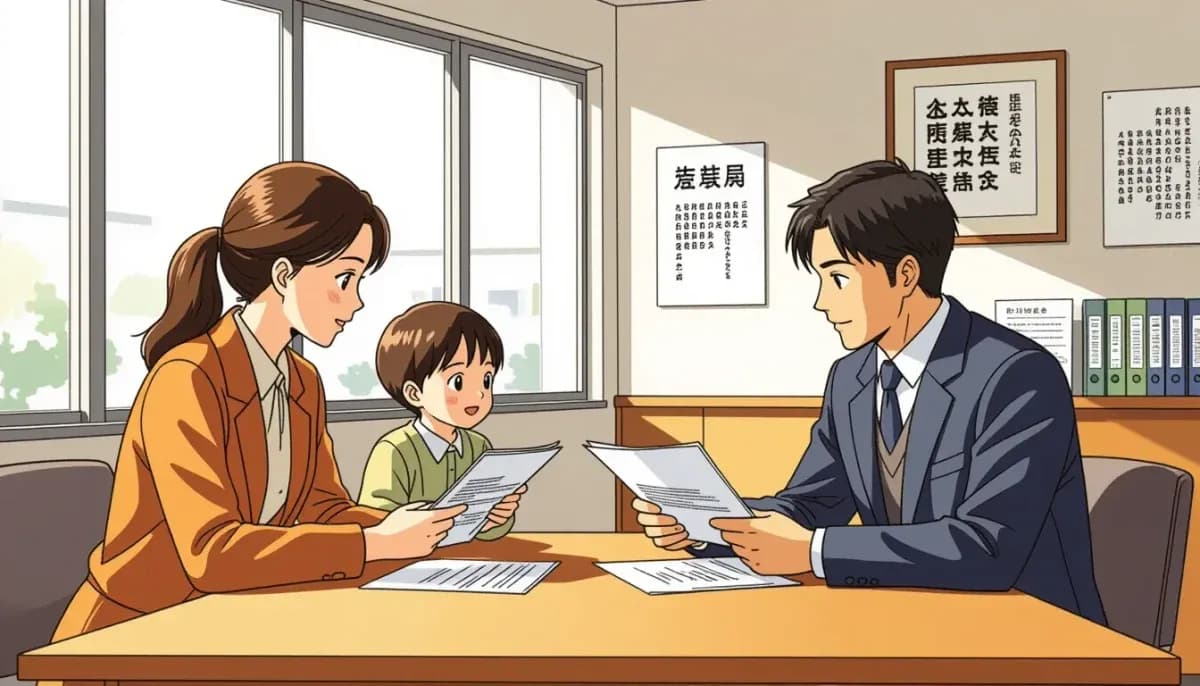
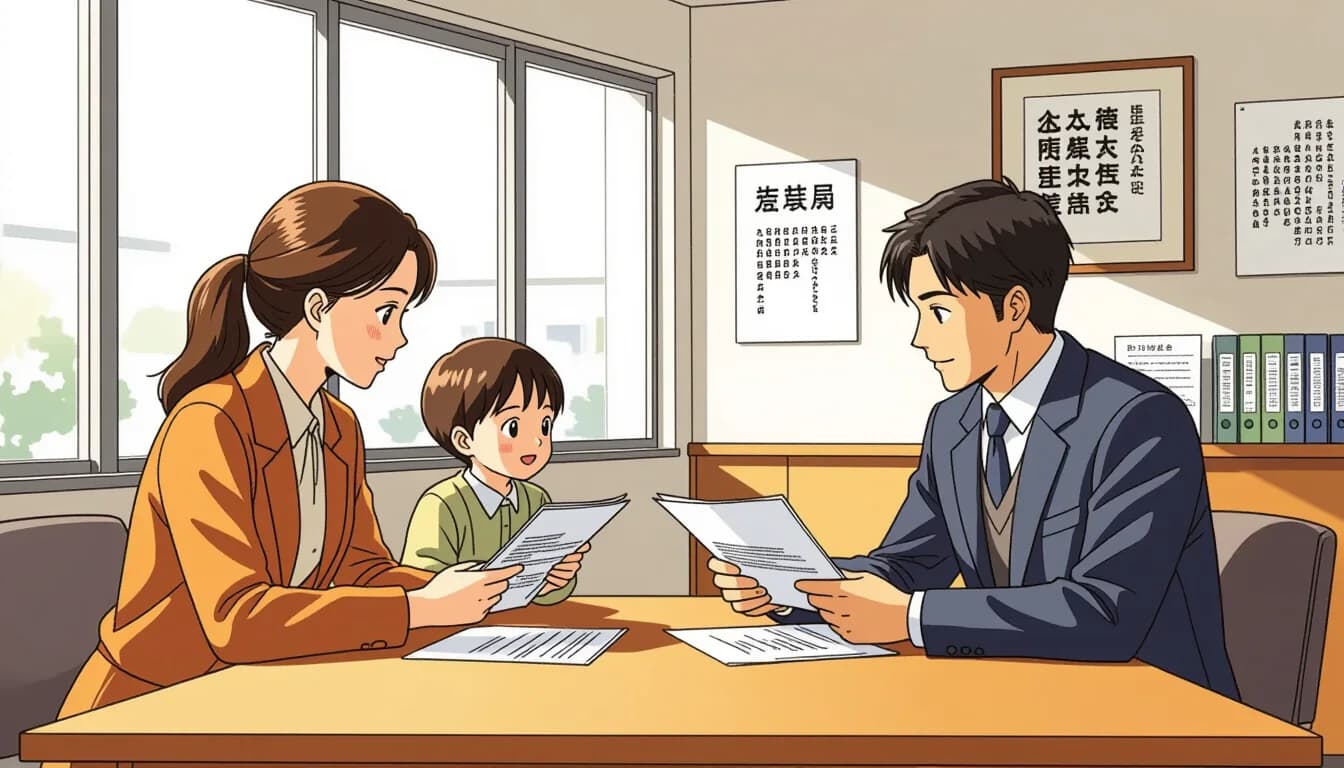
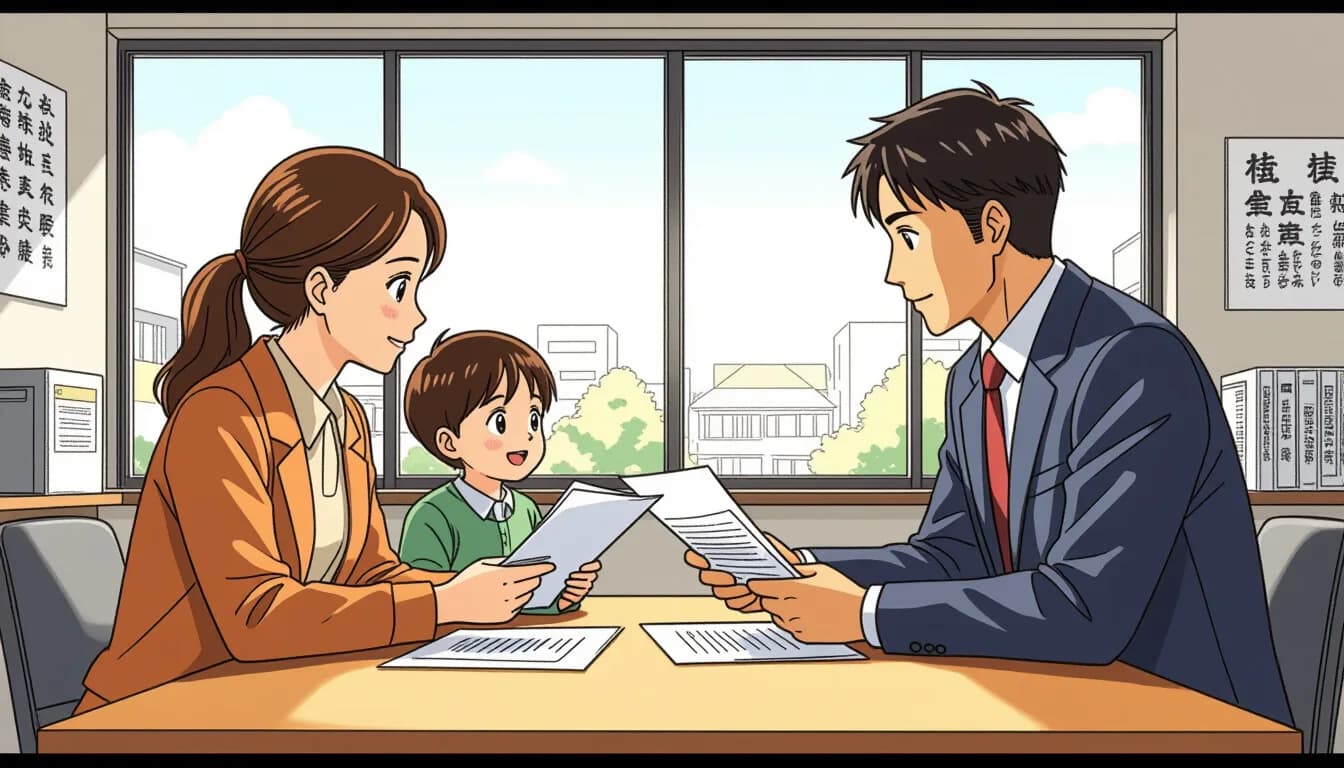
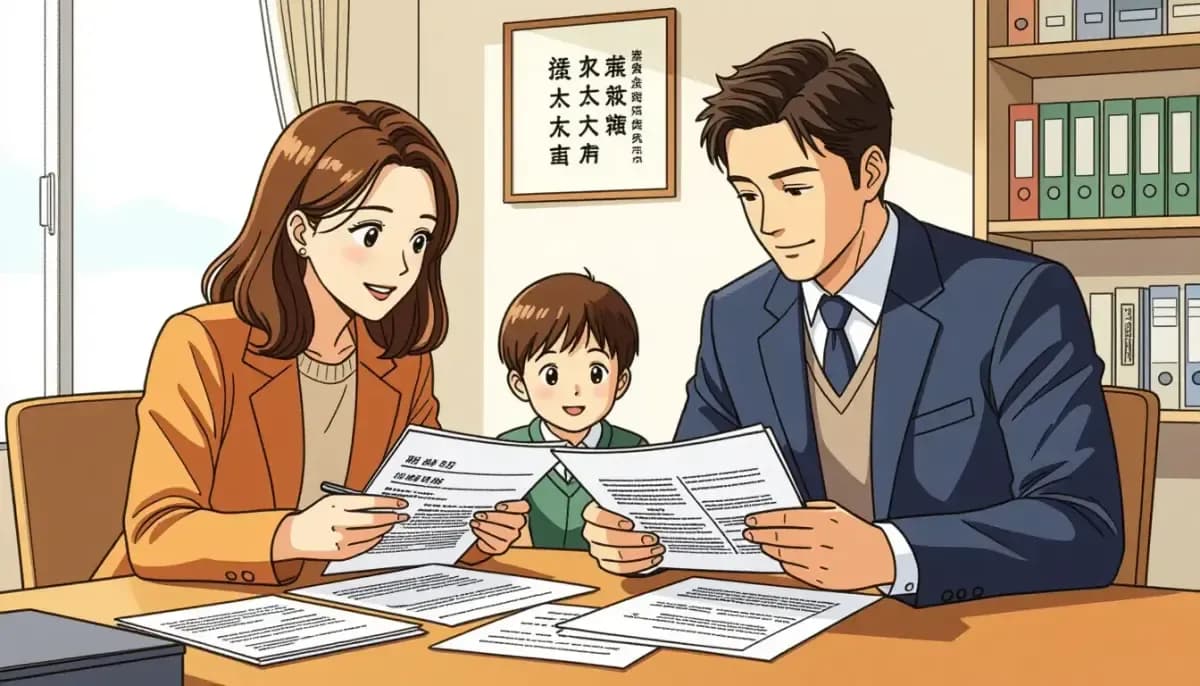
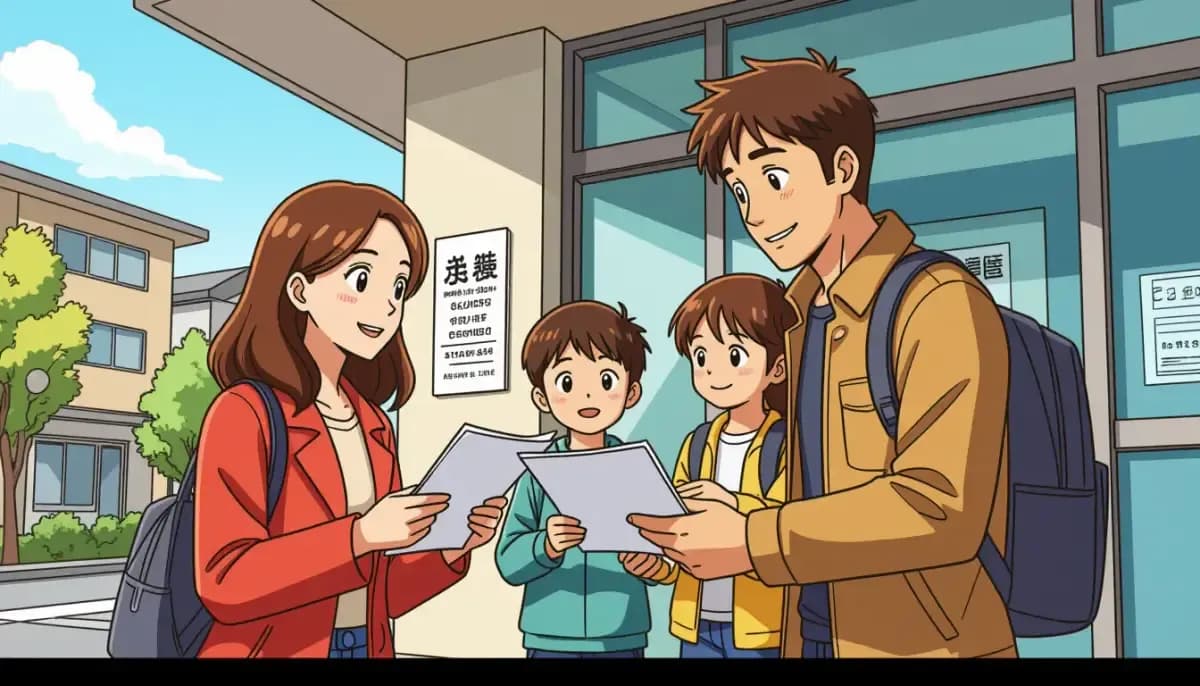
Japanese family consulting at city hall about child benefits
Children's Medical Expense Assistance (子ども医療費助成)
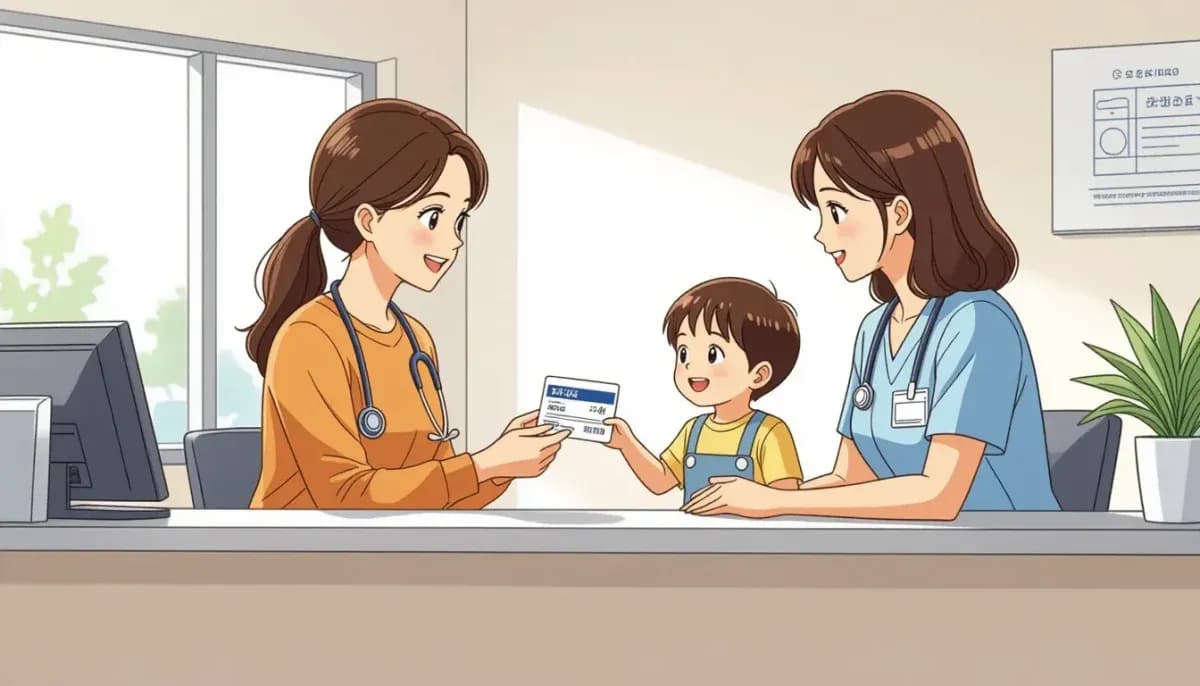
One of the most valuable benefits for families in Japan is the Child Healthcare Certificate (kodomo iryōshō or iryōsho), which significantly reduces medical costs for children:
Coverage: Valid until March 31 after a child turns 18 (in most municipalities)
Co-pay: Typically ¥500 per visit; free after two or more visits to the same clinic in a month
Prescriptions: Covered medications are generally free
Hospitalization: Free through high school in many prefectures
In Tokyo's 23 wards, medical expenses are fully waived through junior high school graduation, with many wards extending coverage through high school. Coverage varies by municipality, so always check with your local ward or city office.
Both mothers and fathers in Japan can take parental leave and receive government support:
Childcare Leave Allowance (育児休業給付金):
- First 180 days: 67% of pre-leave salary - From 181 days onward: 50% of pre-leave salary - Available until a child reaches 2 years of age (under certain conditions)
Dual-Parent Bonus (パパ・ママ育休プラス): If both parents take parental leave, the leave period can be extended from 12 months to 14 months per parent, giving families more flexibility.
2025 Update: The government has announced plans to increase parental leave benefits to 100% of salary for parents who both take 14–28 days of concurrent leave, encouraging fathers to participate more actively.
These benefits are administered through Hello Work (the national employment service) and apply to employees covered by employment insurance (koyō hoken). Foreign employees at Japanese companies are generally covered. For guidance on work-related issues and legal standing as a foreigner in Japan, see visa and legal issues for foreign families with children in Japan.
Single-Parent Benefits (児童扶養手当)
Japan provides additional support for single-parent households through the Child Support Allowance (jidō fuyō teate):
First child: Up to ¥50,000/month (income-tested; the amount decreases as income increases)
Second child: Additional ¥10,000/month
Each subsequent child: Additional ¥6,000/month
Eligibility: Continues until March 31 after the youngest child turns 18
Application: At the local municipal welfare office
Single parents may also qualify for reduced healthcare costs, public housing priority, and JR railway discount passes.
Relocation Subsidies for Families (地方移住支援金)
Japan's government is actively promoting migration from urban centers to rural and depopulated areas through generous relocation subsidies:
Single person: Up to ¥600,000
Household (two or more people): Up to ¥1,000,000
Each child under 18: Additional ¥1,000,000 per child
For a family with two children relocating from Tokyo to a qualifying rural prefecture, this can amount to ¥3,000,000 in one-time subsidies. Requirements include securing a job or starting a business in the destination area and committing to live there for at least five years.
Separately, a Housing Security Benefit (住居確保給付金) supports unemployed or low-income households with rent payments:
Duration: Up to 9 months (paid directly to landlords)
Monthly caps in Tokyo: ¥69,800 (single) to ¥86,000 (4-person household)
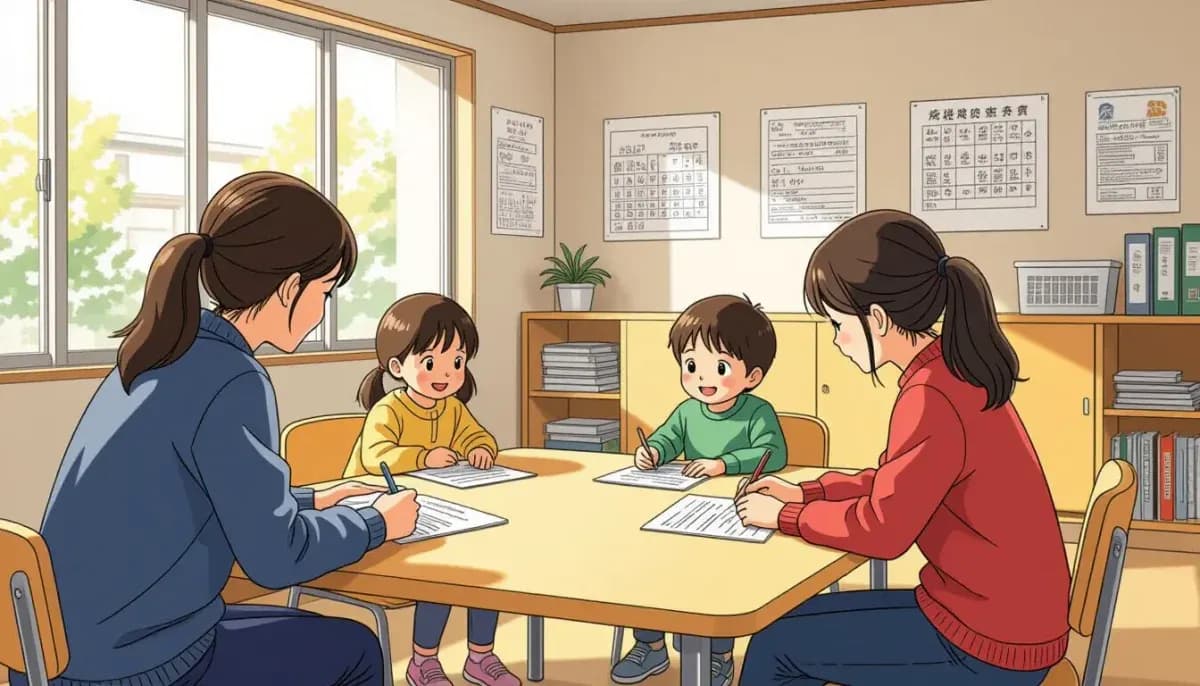
Most benefits require you to apply in person at your local municipal office (shiyakusho or kuyakusho). Here is a general checklist:
Register your address (jūmin-tōroku): This is mandatory for all foreign residents and activates your eligibility for most benefits.
Enroll in health insurance: Either through your employer (shakai hoken) or the National Health Insurance (kokumin kenkō hoken) at your municipal office.
Apply for child allowance within 15 days of birth or arrival.
Request a Child Healthcare Certificate immediately after birth or upon registering your child's address.
Apply for childcare subsidies when enrolling your child in nursery or preschool.
Many municipal offices now offer multilingual support or interpretation services. You can also contact local International Exchange Associations (kokusai kōryū kyōkai) for assistance in your language.
Japan's family support system is more extensive than many foreigners expect, and as a legal resident you are entitled to the same benefits as Japanese nationals in most categories. The 2024 reforms in particular represent a significant expansion of support, making Japan an increasingly family-friendly environment for both locals and international residents alike.
Understanding and accessing these benefits can make a meaningful difference in your family's financial wellbeing—so take the time to register at your local municipal office and ask about every benefit you may be eligible for.