
Municipal Family Support Programs Across Japan

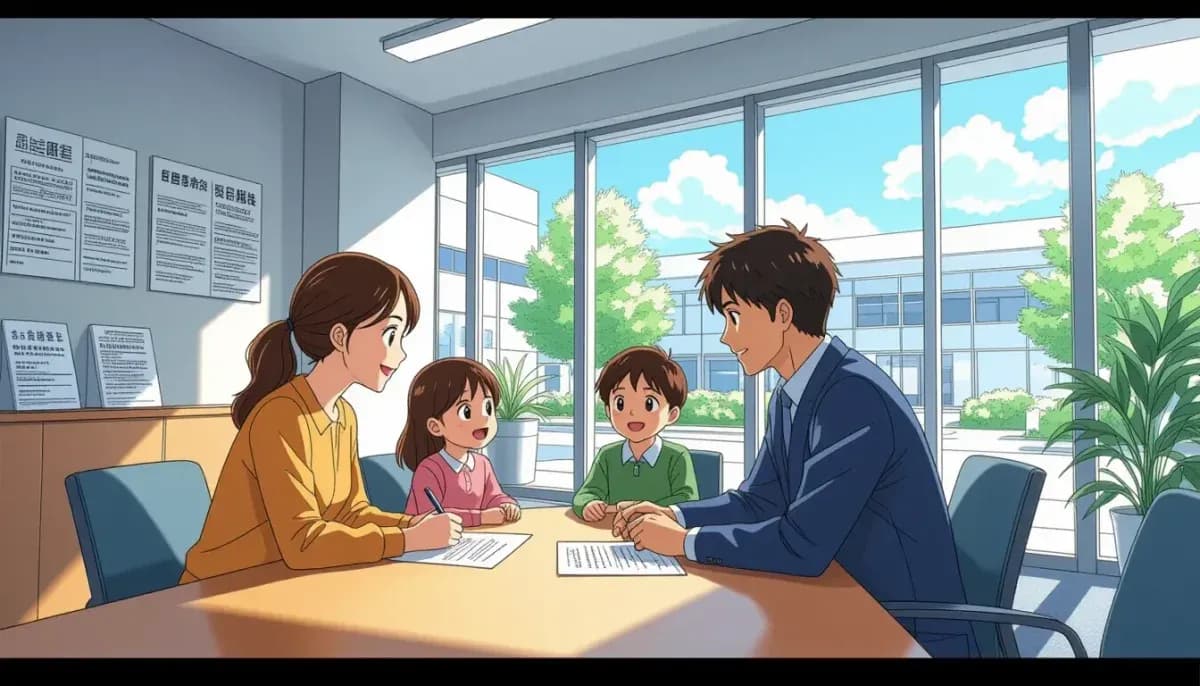
Complete guide to municipal family support programs in Japan for foreign residents. Learn about child allowances, free daycare, medical subsidies, and how to apply in 2025.
Municipal Family Support Programs Across Japan: A Complete Guide for Foreign Residents
Japan offers one of the most comprehensive family support systems in Asia, and the good news for foreign residents is that most programs are available to you regardless of nationality. With Japan's total fertility rate hitting a historic low of 1.2 in 2023, the government has aggressively expanded municipal and national family support programs to encourage and support families. If you're raising children in Japan as an expat or foreign resident, understanding these programs can save your family hundreds of thousands of yen each year.
This guide explains the key municipal family support programs available across Japan in 2025, how to apply as a foreign resident, and what to expect from different regions.
What Family Support Programs Are Available in Japan?
Japan's family support system operates at two levels: national programs that apply uniformly across the country, and municipal (city/ward/town) programs that vary significantly by location. As a foreign resident with valid residence status registered at your local municipal office, you are eligible for both.
The main categories of support include:
- Child allowances (児童手当 / Jidō Teate): Monthly cash payments per child
- Childbirth lump-sum payment (出産育児一時金): One-time payment at birth
- Childcare subsidies: Reduced or free licensed and unlicensed daycare
- Child medical care subsidies (子ども医療証): Free or low-cost healthcare for children
- Single-parent support (児童扶養手当): Enhanced benefits for single-parent households
- Education support: Free tuition from public elementary through high school
- Rural relocation subsidies: Cash incentives to move to less-populated regions
For a broader overview of all government benefits available to families in Japan, see our guide to government benefits and subsidies for families in Japan.
Child Allowance (Jidō Teate): Monthly Cash for Every Child
The Child Allowance (児童手当, Jidō Teate) is the cornerstone of Japan's family support system. In 2024, the program was significantly expanded and now covers children up to age 18.
Monthly Payment Amounts (2025)
| Age Group | First/Second Child | Third+ Child |
|---|---|---|
| Ages 0–2 | ¥15,000/month | ¥15,000/month |
| Ages 3 to end of primary school | ¥10,000/month | ¥15,000/month |
| Junior high school (ages 12–15) | ¥10,000/month | ¥10,000/month |
| High school age (ages 15–18) | ¥10,000/month | ¥30,000/month |
Payments are made three times a year: in June, October, and February, covering the preceding four-month periods.
Key points for foreign residents:
- You must register your child at your local municipal office to be eligible
- Apply within 15 days of birth or of registering at a new address to avoid losing retroactive benefits
- No income limit was removed in the 2024 reform — all families now receive the full amount
- Both the parent/guardian and child must be registered residents at the same address
Some municipalities, particularly in Tokyo, add a supplemental payment on top of the national amount. For example, Tokyo's "0 to 18 Support" program adds ¥5,000/month per child with no income limit, bringing total annual cash benefits to ¥180,000–¥240,000 per child.
For more information on applying for the child allowance and other financial benefits, see our financial planning guide for expat families in Japan.
Childbirth Lump-Sum Payment: ¥500,000 at Birth
When your child is born in Japan, you are entitled to a one-time lump-sum payment of ¥500,000 (出産育児一時金, Shussan Ikuji Ichiji-kin). This amount is paid directly to the hospital in most cases, covering the cost of delivery (typically ¥350,000–¥600,000 in Japan).
- If your delivery costs less than ¥500,000, the remainder is refunded to you
- If costs exceed ¥500,000, you pay only the difference
- Apply through your health insurance provider (company social insurance or National Health Insurance)
- Foreign residents enrolled in either insurance system are fully eligible
For detailed information on pregnancy and childbirth support, read our guide to pregnancy and giving birth in Japan as a foreign parent.
Free and Subsidized Childcare: Major Changes in 2025
One of the biggest changes in 2025 is the expansion of free childcare. Licensed daycare centers and kindergartens (hoikuen and yochien) are now free for all children ages 0–5 enrolled in a licensed facility. As of September 2025, the previous income-based sliding scale was eliminated entirely for children ages 0–2.
Childcare Cost Summary (2025)
| Type | Age | Cost |
|---|---|---|
| Licensed daycare (hoikuen) | 0–5 | ¥0 (free) |
| Licensed kindergarten (yochien) | 3–5 | ¥0 (free) |
| Unlicensed daycare (national subsidy) | 0–2 | ¥37,000–¥42,000/month subsidy |
| Unlicensed daycare (municipal supplement) | 0–5 | ¥40,000–¥100,000/month (varies by ward) |
| International school/kindergarten | Varies | Ward subsidies may apply |
The national unlicensed daycare subsidy covers a portion of fees at smaller, non-licensed facilities. Many municipalities, especially in Tokyo, layer additional subsidies on top. Minato Ward in Tokyo, for example, provides up to ¥100,000/month for unlicensed or international daycare.
For full details on navigating the daycare enrollment process as a foreign parent, see our comprehensive guide to daycare and hoikuen in Japan and our kindergarten guide for foreign parents.
For more information on family health insurance and how to cover your children under Japan's insurance system, see the detailed guide at For Work in Japan.
Child Medical Care Subsidies: Near-Free Healthcare to Age 18
One of the most valuable municipal benefits for families is the Child Medical Care Certificate (子ども医療証, Kodomo Iryōshō). This card dramatically reduces the cost of medical care for children.
Coverage:
- Most municipalities cover children up to age 18
- Typical co-pay: ¥500 per hospital visit
- Free after the second visit in the same month at the same clinic
- Prescriptions, dental care, and specialist visits are usually covered
- The card is linked to your health insurance (NHI or social insurance)
How to apply:
- Register your child at your local ward/city office immediately after birth
- The child medical care certificate is typically issued automatically or with a simple application
- Present the certificate alongside your health insurance card at every visit
Retroactive reimbursement: If you paid out-of-pocket before obtaining the certificate, you can apply for reimbursement for up to 5 years in most municipalities. Do not throw away medical receipts.
For comprehensive information on navigating healthcare for your children in Japan, see our children's healthcare and medical care guide.
How Programs Vary by Municipality: Tokyo vs. Rural Areas
Municipal family support programs vary enormously depending on where you live. Here is a comparison of programs in several representative areas:
Tokyo Ward Comparison
| Ward | Unlicensed Daycare Subsidy | Notable Extras |
|---|---|---|
| Minato | Up to ¥100,000/month | Taxi vouchers for families with 2+ young children; school lunch reimbursement; ¥30,000 kindergarten entrance subsidy |
| Chiyoda | Generous | Favorable child-to-caregiver ratios; easier daycare admissions |
| Shibuya | ~¥80,000/month | Fee reduction program (保育利用料軽減制度) |
| Shinjuku | ~¥60,000/month | Multilingual support in English, Chinese, Korean |
| Setagaya | Extensive network | Extended child allowance through high school; largest ward by population |
Rural Areas: Relocation Subsidies
Japan's depopulating rural regions offer substantial cash incentives for families willing to relocate. The national relocation subsidy program (地方移住支援金) provides:
- Single person: ¥600,000
- Household/couple: Up to ¥1,000,000
- Additional per child under 18: ¥1,000,000 per child (up to the maximum)
A family of four (two adults, two children) relocating to an eligible rural area could receive up to ¥3,000,000 in one-time subsidies. Many rural municipalities also offer additional local bonuses, free land, low-cost housing, and expanded childcare networks to attract young families.
For foreign residents: Most rural relocation subsidies are available to foreign nationals with permanent residency or long-term resident status. Some require a commitment to work locally or transfer to a rural branch of your employer.
For more general guidance on living in Japan as a foreigner, Living in Nihon offers helpful resources on settling into Japanese life, housing, and community support. For a detailed breakdown of Tokyo-specific childcare subsidies for expats in 2025, the E-Housing Tokyo childcare subsidy guide covers how families can save over ¥1.2 million annually.
Education Support: From Elementary School Through University
Japan's public education is free from elementary through junior high school. Recent policy changes have extended significant support further up the education ladder.
Education Support Summary
| Level | Cost | Notes |
|---|---|---|
| Public elementary school | Free | Includes textbooks |
| Public junior high school | Free | Includes textbooks |
| Public high school | ¥118,800/year support | Income cap eliminated April 2025 |
| Private high school | Higher support available | Based on income and tuition |
| University (3+ children) | ¥540,000–¥700,000/year | Income cap removed for large families |
As of April 2025, all students attending public high school receive ¥118,800/year in tuition support with no income limit. Families with three or more children also gained access to university tuition support regardless of income level.
School lunch (給食, kyūshoku) is typically charged separately at elementary and junior high schools, but many municipalities have introduced free school lunch programs. Check with your local board of education.
For guidance on navigating the Japanese school system from elementary through high school, see our guides for elementary school, junior high school, and high school in Japan.
For additional context on how local government programs support academic success, Chuukou Benkyou provides resources on Japanese middle and high school education pathways.
Single-Parent Family Support
Single-parent households in Japan receive enhanced municipal support. The Child Rearing Allowance (児童扶養手当, Jidō Fuyō Teate) provides:
- Up to ¥50,000/month for the first child
- Additional amounts for subsequent children
- Reduced based on income (phased out at higher income levels)
- Supplemental housing and utility support in many municipalities
Despite these programs, single-parent households — particularly mother-child households — face significant economic challenges. According to research, approximately 50% of single-parent households in Japan fall below the poverty line, and about 22.5% of mother-child households have zero savings. Knowing and applying for all available support is crucial.
For information on legal protections and custody arrangements that affect access to these benefits, see our guide on child custody and family law in Japan.
How to Apply: Step-by-Step for Foreign Residents
Applying for municipal family support programs in Japan is straightforward once you know the process. Here's a general guide:
Step 1: Register at your local ward/city office (市区町村役所)
- Bring your Residence Card (在留カード), passport, and My Number card (or notification letter)
- Register your address (住民登録) and your child's birth (出生届) within 14 days of birth
Step 2: Apply for Child Allowance (児童手当申請)
- File at the same office on the same day if possible
- Bring your health insurance certificate and bank account details
- The 15-day rule: if you apply within 15 days of birth, benefits are backdated to the birth month
Step 3: Obtain Child Medical Care Certificate (子ども医療証)
- Usually issued automatically in most wards upon child registration
- Some require a separate application form
Step 4: Apply for Daycare Subsidies
- Contact your ward's childcare division (保育課, Hoiku-ka)
- Inquire about both licensed and unlicensed daycare subsidies
- Ask specifically about international school or English-language facility subsidies
Step 5: Inquire About Municipality-Specific Programs
- Each ward/city has unique programs — always ask "Are there any other programs I should know about?"
- Many wards have multilingual support counters; call ahead to confirm
Important: Missing the 15-day application deadline for child allowance is the most common and costly mistake. Set a reminder on your phone before your expected due date.
For detailed guidance on visa status and how it affects eligibility, see our visa and legal issues guide for foreign families.
For more detailed tips on applying for government subsidies including housing, healthcare, and childcare support, see the comprehensive guide at GaijinPot.
Making the Most of Municipal Support as a Foreign Family
Japan's municipal family support system is genuinely generous, but it requires active engagement to access. Programs are rarely advertised proactively to foreign residents, and many families miss out simply by not knowing what to ask for.
Key takeaways:
- Register your child within 14 days of birth and apply for all programs simultaneously
- Nationality does not affect eligibility — valid residence status and ward registration are what matter
- Programs vary enormously by municipality; Minato Ward in Tokyo and similar high-support areas can save families ¥1–2 million per year
- The 2025 expansions (free daycare for all 0–5, no income cap on high school support) represent a historic increase in family benefits
- Single-parent families should apply for the full suite of enhanced support programs
- Retroactive reimbursement is available for up to 5 years in most municipalities for medical costs paid before obtaining the subsidy card
With Japan's fertility rate at 1.2 and household size averaging 2.2 persons, the government is strongly motivated to support families — including foreign residents raising the next generation in Japan. Take full advantage of the programs available to you.
For a complete picture of raising children in Japan, explore our complete guide to the Japanese education system for foreign families.

Originally from Vietnam, living in Japan for 16+ years. Graduated from Nagoya University, with 11 years of professional experience at Japanese and international companies. Sharing practical information for foreign parents raising children in Japan.
View Profile →Related Articles
Recent Policy Changes Affecting Foreign Families in Japan
Stay up to date on Japan's 2024–2025 immigration policy changes for foreign families, including PR language requirements, SSW2 family rules, My Number health card updates, childcare programs, and fee increases.
Read more →
Regional Differences in Family Support Programs in Japan
Discover how Japan's family support programs vary dramatically by region — from Tokyo's ¥5,000/month child supplements and free childcare to rural relocation bonuses of ¥1,000,000 per child. A complete guide for foreign families.
Read more →
How to Apply for Government Family Benefits in Japan
Complete guide for foreign residents on how to apply for Japan's government family benefits: child allowance, childbirth lump sum, medical subsidies, and more. Step-by-step application instructions.
Read more →
Housing Subsidies and Support for Families in Japan
A complete guide to housing subsidies, rent assistance, and support programs for families in Japan — including the Housing Security Benefit, relocation incentives, and home loan tax relief for foreigners.
Read more →
Education Subsidies and Free Textbooks in Japan
Complete guide to education subsidies in Japan for foreign families: free textbooks, high school tuition support, Shugakuhi Hojo, and early childhood care benefits. Who qualifies and how to apply.
Read more →
Child-Rearing Support Centers in Japan
Discover Japan's free child-rearing support centers (kosodate shien sentaa). Learn what services they offer, how to find one near you, and how foreign parents can access multilingual support.
Read more →