
How to Apply for Government Family Benefits in Japan

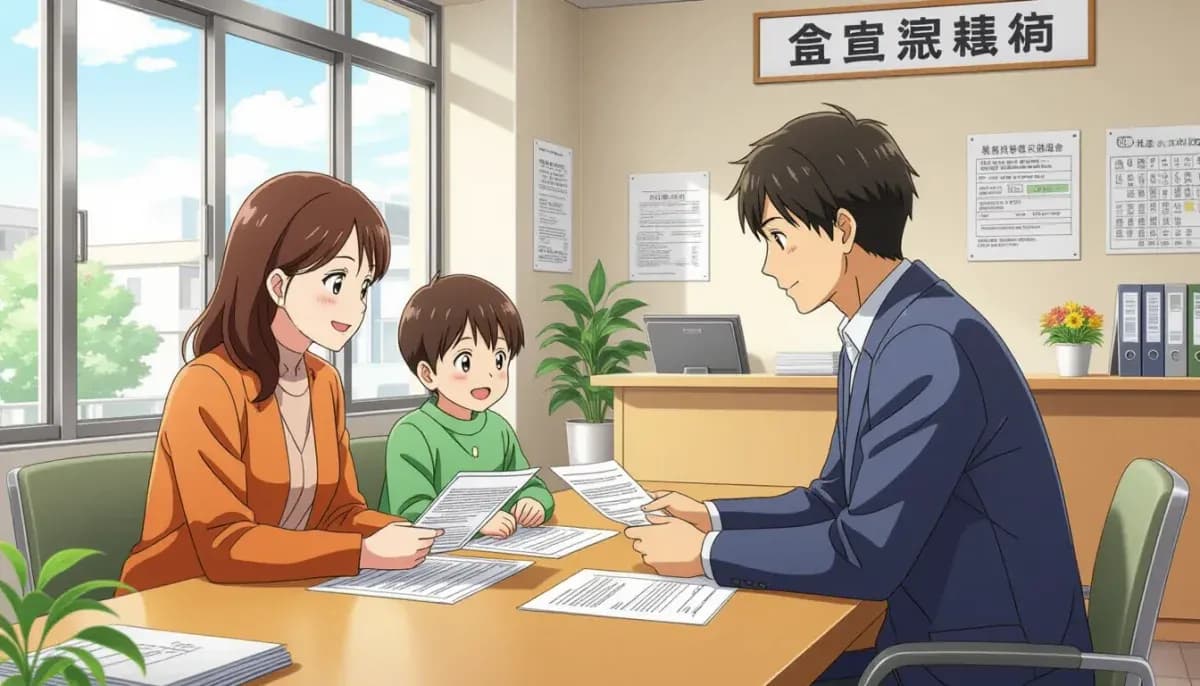
Complete guide for foreign residents on how to apply for Japan's government family benefits: child allowance, childbirth lump sum, medical subsidies, and more. Step-by-step application instructions.
How to Apply for Government Family Benefits in Japan: A Complete Guide for Foreign Residents
As a foreign resident raising children in Japan, you may be surprised to discover that you are entitled to many of the same government family benefits as Japanese citizens. Japan's social support system offers substantial financial assistance — from monthly child allowances to one-time childbirth payments — and most legal residents are fully eligible regardless of nationality.
This guide walks you through every major government family benefit available in Japan, explains who qualifies, what documents you need, and exactly how to apply at your local ward or municipal office.
Overview: What Government Family Benefits Are Available?
Japan offers a comprehensive range of family support benefits administered through local government offices. Understanding the full landscape before you start applying can save you considerable time and stress.
| Benefit Name | Japanese Name | Amount | Eligibility Age |
|---|---|---|---|
| Child Allowance | 児童手当 (Jidō Teate) | ¥10,000–¥30,000/month | Under 19 (from 2024) |
| Childbirth Lump Sum | 出産一時金 | ¥500,000 (one-time) | Per birth |
| Prenatal Support Allowance | 出産・子育て応援給付金 | ¥100,000 total | Pregnant to newborn |
| Children's Medical Subsidy | 子ども医療証 | ¥500/visit | Through age 18 |
| Single-Parent Allowance | 児童扶養手当 | Up to ¥50,000/month | Until child turns 18 |
| Childcare Fee Subsidy | 幼児教育・保育無償化 | Full/partial tuition coverage | Ages 3–5 (and some 0–2) |
All of these benefits are available to foreign residents who hold a valid residence card (在留カード) and are registered in the municipal system. Being a Japanese citizen is not a requirement for most family benefits.
Child Allowance (Jidō Teate): Monthly Payments for Every Child
The Child Allowance — called Jidō Teate (児童手当) — is the most widely used family benefit in Japan. Following reforms enacted in 2024, the program now covers children up to age 18 (previously age 15), with significantly expanded benefits for families with multiple children.
Payment amounts as of 2024:
- Children aged 3 and under: ¥15,000/month
- Children aged 3 to 12: ¥10,000/month (1st and 2nd child); ¥30,000/month (3rd child and beyond)
- Children aged 13 to 18: ¥10,000/month (1st and 2nd); ¥30,000/month (3rd and beyond)
Payments are deposited every four months — in February, June, and October — directly into the parent's Japanese bank account.
How to apply:
- Visit your local ward/municipal office (区役所 or 市役所) within 15 days of your child's birth or your arrival in Japan
- Submit the application form (児童手当認定請求書)
- Provide required documents (see document checklist below)
- Receive your "Certificate of Eligibility" (認定通知書) by mail within a few weeks
For a broader look at how to plan your child's education finances in Japan, Living in Nihon has an excellent guide on education fund planning that pairs well with this benefit.
Childbirth Support: Lump Sum Payment and Prenatal Allowance
Japan provides two distinct financial supports around pregnancy and birth:
Childbirth Lump Sum (Shussan Ichiji-kin)
The Childbirth Lump Sum (出産一時金) is a one-time payment of ¥500,000 per birth, designed to offset the cost of delivery. Since hospital births in Japan are not covered by standard health insurance (childbirth is not classified as an illness), this lump sum fills an important gap.
In most cases, the hospital will apply this payment directly on your behalf, so you only pay the difference if your delivery costs exceed ¥500,000. If your costs are lower, you receive the remaining amount in cash.
How to apply:
- Notify your hospital at registration that you want to use the direct payment system (直接支払制度)
- Your hospital handles the paperwork with your health insurance provider
- If your hospital does not use the direct system, apply yourself at your health insurance office after the birth
Prenatal Support Allowance (出産・子育て応援給付金)
This newer allowance provides ¥100,000 in two installments:
- ¥50,000 after registering your pregnancy at the municipal office (usually around 10–12 weeks)
- ¥50,000 after registering your newborn (within 14 days of birth)
To receive this, you must attend mandatory interview sessions at your ward office — these are designed to connect you with local parenting support services.
If you are navigating pregnancy as a foreign resident, our guide on pregnancy and giving birth in Japan as a foreign parent covers the full process in detail.
Children's Medical Care Subsidy: Affordable Healthcare for Kids
One of the most valuable yet underutilized benefits for foreign families is the Children's Medical Care Subsidy (子ども医療証), which dramatically reduces out-of-pocket healthcare costs for children up to age 18.
With this subsidy card:
- Each doctor or hospital visit costs only ¥500 (regardless of actual treatment cost)
- If your child visits the same type of facility more than twice in a calendar month, subsequent visits are free
- Prescribed medications are free
For a family with young children, this can represent savings of hundreds of thousands of yen per year, especially in the first few years when pediatrician visits are frequent.
How to apply:
- Apply at your ward or municipal office at the same time as registering your child's birth
- Present your child's residence registration and health insurance enrollment proof
- The subsidy card (医療証) is typically issued immediately or mailed within a week
For more on navigating the healthcare system for your children, visit our detailed guide on healthcare and medical care for children in Japan.
For comprehensive information about family health insurance procedures as a foreign resident, For Work in Japan has an in-depth breakdown of the two-tier insurance system — including critical information about the 2024 My Number Card transition.
Single-Parent Allowance (Jidō Fuyō Teate)
The Child Support Allowance (児童扶養手当) supports single-parent households, including foreign residents who qualify. This monthly benefit is income-tested and can provide up to ¥50,000 per month for the first child, with additional amounts for each subsequent child.
Eligibility requirements:
- You are a single parent (through divorce, death of spouse, or unmarried)
- Your child is under 18 (or under 20 if still in school)
- Your household income falls below the specified threshold
- You hold a valid residence card
Income thresholds (approximate):
- Full benefit: annual income under ¥490,000
- Partial benefit: annual income between ¥490,000 and ¥2,360,000
- No benefit: annual income over ¥2,360,000
Apply at your ward office with proof of your single-parent status (such as a divorce certificate or household registry showing your status).
Childcare and Kindergarten Fee Subsidies
Japan's Free Early Childhood Education and Care (幼児教育・保育の無償化) policy, implemented in 2019, makes preschool and daycare substantially more affordable:
- Ages 3 to 5: Tuition at licensed hoikuen (daycare), yochien (kindergarten), and nintei kodomoen is fully subsidized for all children, regardless of household income
- Ages 0 to 2: Children from low-income households receive full subsidy; others receive partial support
These subsidies apply to licensed facilities only. If your child attends an unlicensed facility or an international preschool, different rules apply and you may only receive a partial subsidy or none at all.
To understand your options for early childcare and how to navigate the enrollment process, see our guides on daycare and hoikuen in Japan for foreign parents and kindergarten in Japan.
For additional resources on government support for families, Chuukou Benkyou's website offers study guides and educational resources that can complement your children's learning journey in Japan.
Documents You Need: Complete Checklist
Gathering your documents before visiting the ward office will save you multiple trips. Here is a comprehensive checklist for the main family benefit applications:
Required for all applications:
- Your Residence Card (在留カード) — all applicants
- Your child's residence registration (住民票)
- Proof of health insurance enrollment (健康保険証 or My Number Insurance Card)
- Your Japanese bank account details (通帳 or bank card)
- Your My Number (Individual Number) notification or card
Additional documents by benefit:
| Benefit | Extra Documents Needed |
|---|---|
| Child Allowance | Application form from ward office; employer certificate if company-insured |
| Childbirth Lump Sum | Hospital's direct payment agreement form; your insurance card |
| Prenatal Allowance | Pregnancy booklet (母子手帳); issued at first prenatal registration |
| Medical Subsidy Card | Child's birth certificate; both parents' My Number if applicable |
| Single-Parent Allowance | Divorce decree, death certificate, or equivalent; income documentation |
Important note on My Number: Since December 2, 2024, Japan stopped issuing traditional health insurance cards. The system now uses a combined My Number Insurance Card. If you have not updated to this system, you can continue using your old card through December 2025, but you should apply for the new card as soon as possible. This affects benefit enrollment and health insurance proof across all applications.
How and Where to Apply: Step-by-Step
Step 1: Visit your local ward or municipal office All family benefit applications are handled at your local 区役所 (kuyakusho) or 市役所 (shiyakusho). Find yours by searching "[your city/ward name] 区役所" or checking your residence certificate for the relevant office.
Step 2: Go to the family support or children's section Most large ward offices have a dedicated "Children and Family" (子ども・家庭) counter. Staff at these counters are often accustomed to helping foreign residents and may have English-language forms or interpretation services available.
Step 3: Apply for all benefits at once When you register a newborn or newly arrive in Japan with children, ask specifically to apply for:
- Child Allowance (児童手当)
- Prenatal/Childbirth Allowance (出産・子育て応援給付金)
- Children's Medical Care Subsidy (子ども医療証)
- Childcare fee subsidy registration (if applicable)
This saves you multiple visits and ensures you don't miss any benefits.
Step 4: Register for your Boshi Techo (Mother and Child Health Handbook) The 母子手帳 (Boshi Techo) is a critical document given to all pregnant residents at their first prenatal registration. It tracks your child's health records and is required for multiple benefit applications. Many ward offices now offer versions in English, Chinese, Korean, Portuguese, and other languages.
Step 5: Follow up on approval notices Approval letters (認定通知書) for the Child Allowance and other benefits are sent by mail. Keep these records safe as they serve as proof of your enrollment.
For complete guidance on financial planning for your family in Japan, our article on financial planning for expat families raising children in Japan provides a holistic view of how to maximize all available benefits alongside savings and investment strategies.
For a detailed overview of all government subsidies available in Japan, GaijinPot's guide to Japan government subsidies for housing, healthcare and childcare is an excellent starting reference. You can also find detailed breakdowns of maternity and child care allowances at Japan Dev's complete guide to maternity and childcare allowance in Japan.
Summary: Maximize Your Family Benefits in Japan
Japan's family support system is far more generous than many foreign residents realize — and foreign nationals with valid residence status are fully entitled to participate. To maximize your benefits:
- Register promptly — Many benefits require application within 14–15 days of birth or arrival
- Apply for everything at once — Don't leave the ward office without checking all available programs
- Keep your documents current — A valid residence card and up-to-date municipal registration are prerequisites for all benefits
- Update to the My Number Insurance Card — This is now the primary system for health insurance and benefit verification
- Ask about local supplements — Many cities and wards offer additional benefits beyond the national programs, particularly for childcare and medical expenses
Together, these programs can represent substantial financial support — estimates suggest that Tokyo families actively claiming all available childcare subsidies can save ¥1–2 million yen per year compared to families who do not enroll.
For more on raising children in Japan as a foreign resident, explore our complete resources on the government benefits and subsidies available for families in Japan and the visa and legal issues for foreign families with children in Japan.

Originally from Vietnam, living in Japan for 16+ years. Graduated from Nagoya University, with 11 years of professional experience at Japanese and international companies. Sharing practical information for foreign parents raising children in Japan.
View Profile →Related Articles
Recent Policy Changes Affecting Foreign Families in Japan
Stay up to date on Japan's 2024–2025 immigration policy changes for foreign families, including PR language requirements, SSW2 family rules, My Number health card updates, childcare programs, and fee increases.
Read more →
Regional Differences in Family Support Programs in Japan
Discover how Japan's family support programs vary dramatically by region — from Tokyo's ¥5,000/month child supplements and free childcare to rural relocation bonuses of ¥1,000,000 per child. A complete guide for foreign families.
Read more →
Housing Subsidies and Support for Families in Japan
A complete guide to housing subsidies, rent assistance, and support programs for families in Japan — including the Housing Security Benefit, relocation incentives, and home loan tax relief for foreigners.
Read more →
Education Subsidies and Free Textbooks in Japan
Complete guide to education subsidies in Japan for foreign families: free textbooks, high school tuition support, Shugakuhi Hojo, and early childhood care benefits. Who qualifies and how to apply.
Read more →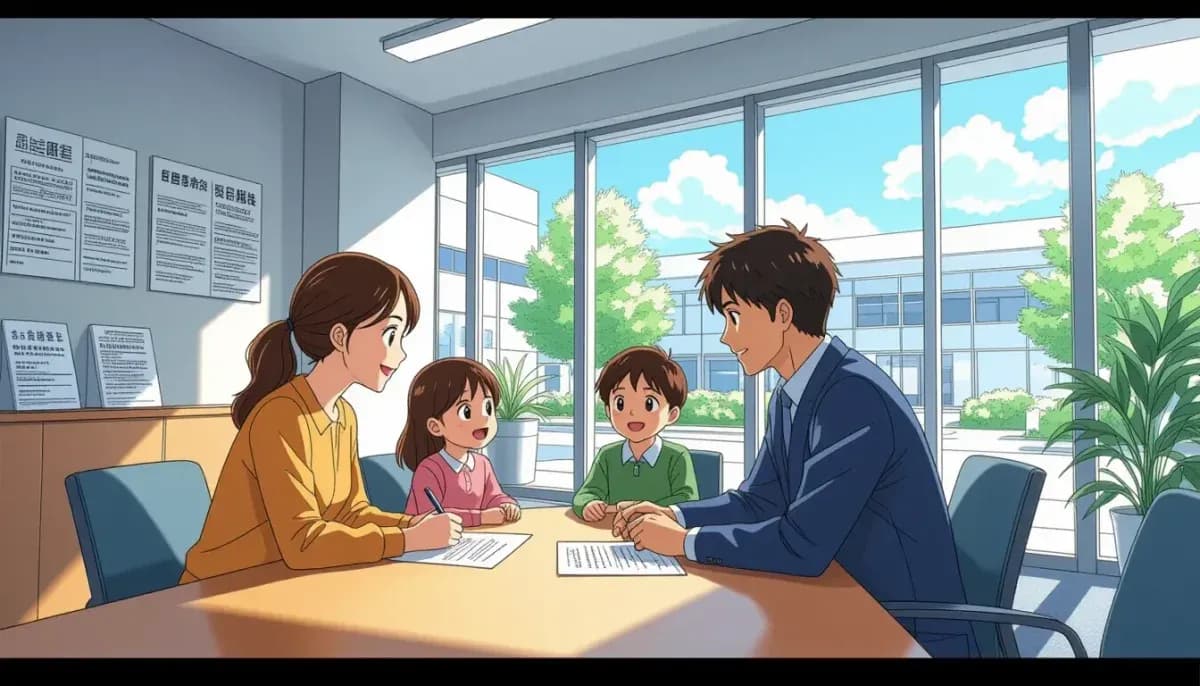
Municipal Family Support Programs Across Japan
Complete guide to municipal family support programs in Japan for foreign residents. Learn about child allowances, free daycare, medical subsidies, and how to apply in 2025.
Read more →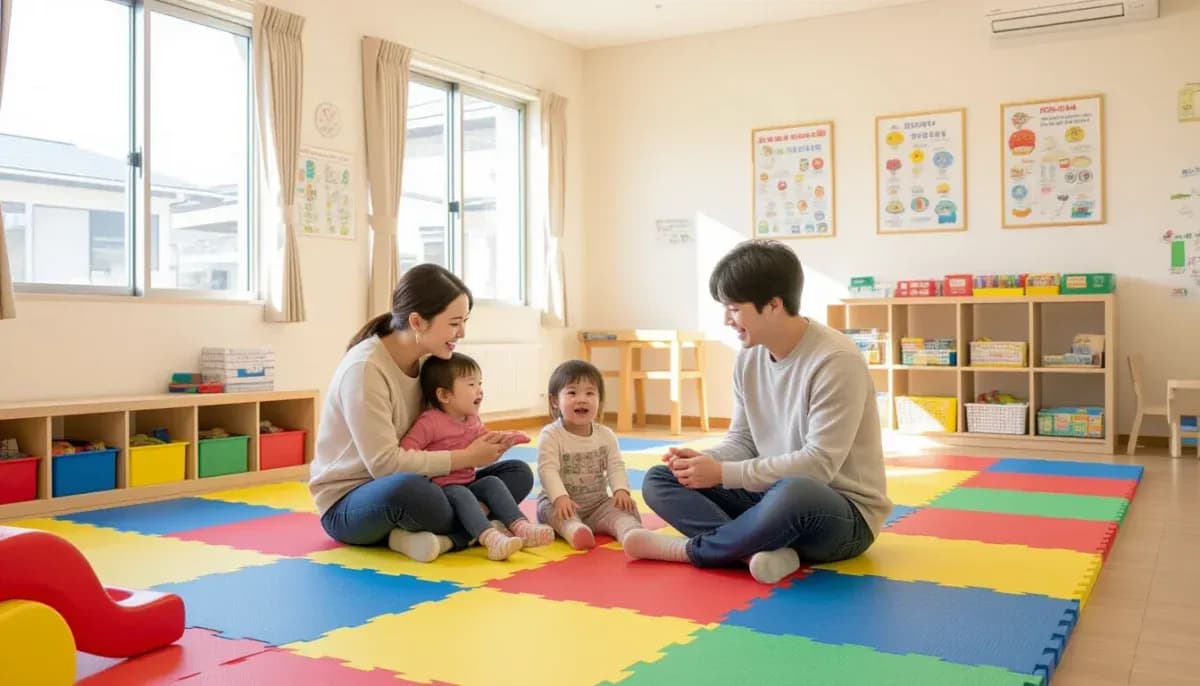
Child-Rearing Support Centers in Japan
Discover Japan's free child-rearing support centers (kosodate shien sentaa). Learn what services they offer, how to find one near you, and how foreign parents can access multilingual support.
Read more →