
Child-Rearing Support Centers in Japan

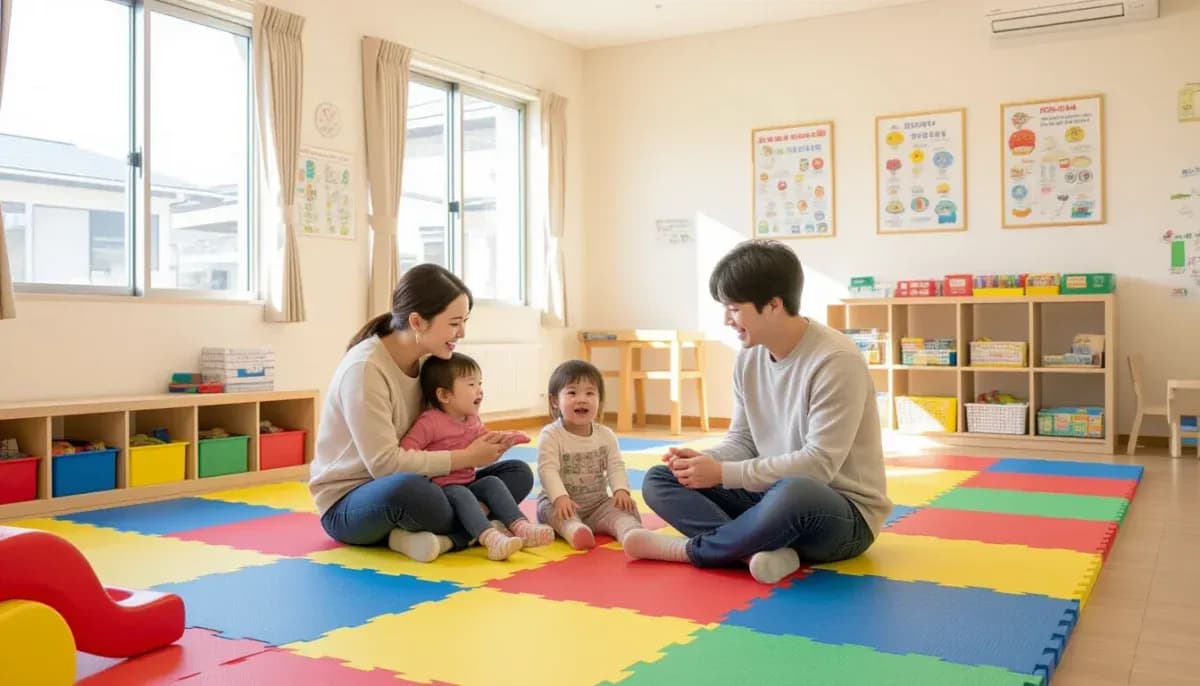
Discover Japan's free child-rearing support centers (kosodate shien sentaa). Learn what services they offer, how to find one near you, and how foreign parents can access multilingual support.
Child-Rearing Support Centers in Japan: A Complete Guide for Foreign Parents
Moving to Japan with young children brings many joys — and many questions. One of Japan's best-kept secrets for foreign parents is the nationwide network of child-rearing support centers (子育て支援センター, kosodate shien sentaa), also known as kosodate hiroba (子育て広場). These community hubs offer free playspaces, parenting consultations, and connections to local families. If you're raising a child in Japan, knowing how to find and use these centers can make a significant difference in your daily life.
This guide explains what child-rearing support centers are, what services they provide, how foreign parents can access them, and what to expect at your first visit.
What Are Child-Rearing Support Centers?
Child-rearing support centers are government-funded community facilities designed to support parents and caregivers of preschool-aged children (roughly ages 0–5). They go by several names depending on the municipality:
- 子育て支援センター (kosodate shien sentaa) — the most common official term
- 子育て広場 (kosodate hiroba) — an open-play version, often drop-in
- 子育てサロン (kosodate salon) — a more informal gathering space
- つどいの広場 (tsudoi no hiroba) — community gathering plaza for parents and children
The core mission of all these centers is the same: to reduce parental isolation, provide a safe play environment for young children, offer access to childcare advice, and connect families with local support services.
Japan's total fertility rate fell to 1.34 in 2020, the fifth consecutive year of decline, and the government has dramatically increased investment in child-rearing support as a result. As of March 2026, the national Child-Rearing Support Registry operated by Japan's Digital Agency covers 124 categories of support, connecting families with local services based on their child's age and location. For foreign residents, this expanding network is increasingly accessible.
Services Offered at Child-Rearing Support Centers
Child-rearing support centers typically offer a range of services at no cost. While specific offerings vary by location, most centers provide the following:
Free Drop-In Playrooms
The most widely available service is an open playroom where children can play freely with toys, books, and play equipment. Parents and caregivers stay with their children throughout. These spaces are especially valuable for families living in small apartments, giving children room to move and interact with peers.
Parenting Consultations
Most centers are staffed by trained nursery teachers (hoikushi), childcare advisors (hogo sha shien tantou), or nurses. Parents can ask questions about child development, feeding, sleep, behavioral concerns, or anything weighing on their minds. Consultations are typically informal and walk-in friendly.
Parenting Classes and Events
Many centers host regular programs such as baby massage workshops, music classes, seasonal craft activities, and parent networking sessions. These are designed to both enrich children's development and help parents build a local community.
Information on Local Services
Staff at support centers are often the best on-the-ground resource for information about local daycare (hoikuen), kindergarten (yochien), government subsidies, medical services, and other support programs in your ward or city. For a broader overview of available benefits, see our guide to Government Benefits and Subsidies for Families in Japan.
Emergency and Sick-Child Services (Select Locations)
Some municipalities offer extended services such as temporary childcare, sick-child care facilities, or emergency child supervision for when a parent is hospitalized. These services typically come with a small fee — for example, Gifu City charges approximately 2,000 yen per day for sick-child care, with waivers for low-income families.
How to Find a Child-Rearing Support Center Near You
Support centers are operated by local governments — meaning availability, language support, and specific services vary significantly depending on where you live in Japan.
Step 1: Contact Your Local Ward or Municipal Office
Your city hall (shiyakusho, 市役所) or ward office (kuyakusho, 区役所) is the first place to go. Ask specifically for the kosodate shien ka (子育て支援課) — the child-rearing support division — and they can point you to the nearest center and tell you what multilingual support is available.
Step 2: Use the Digital Agency Registry
Japan's Digital Agency launched the national Child-Rearing Support Registry in October 2025. It connects families to local support resources based on their location and child's age. You can access it through the Japan Digital Agency's childcare support page. As of March 2026, the registry is fully operational across all municipalities.
Step 3: Check Local International Associations
Many cities and wards have international associations that help foreign residents access services like child-rearing support centers. For example, the Musashino International Association (MIA) provides a full multilingual childcare support program including:
- Japanese language classes with on-site childcare
- Interpreter dispatch for parent consultations (approximately 5,000 yen per 2 hours)
- Translated materials on local childcare services
For a comprehensive guide specifically for foreign residents, MATCHA's guide to child care in Japan for foreign residents covers English-speaking facilities across major cities.
| City | Center Type | Languages Available | Website |
|---|---|---|---|
| Yokohama | Parent and Child Plazas, Hamakko Hiroba | English, Chinese, Korean | Yokohama City |
| Gifu City | Kosodate Hiroba | English | Gifu City |
| Musashino (Tokyo) | MIA Childcare Support | English, Spanish, Russian, and others | MIA |
| General (Major cities) | Varies by ward | Varies | Contact local ward office |
What to Expect at Your First Visit
If you've never visited a child-rearing support center before, here's what a typical visit looks like:
Registration
Most centers require a one-time registration with your name, child's name and age, address, and phone number. There is no fee. Some centers may ask about nationality or language for the purpose of connecting you with multilingual support.
Arrival and Shoe Removal
Like most indoor spaces in Japan, you'll remove your shoes at the entrance. Slippers or socks are worn inside. Most centers have cubbies for shoes and a small locker or shelf for bags.
Indoor Play Environment
Centers typically feature soft floor mats, age-appropriate toys, books, and sometimes a small climbing structure. Staff are present throughout and will often greet you and your child warmly.
At the End of Your Visit
You'll typically help tidy up the toys your child played with before leaving. This is standard practice and staff will guide you if it's your first time.
Child-Rearing Support for Foreign Parents: Language and Cultural Considerations
Language can feel like the biggest barrier to using these centers, but many municipalities have significantly expanded multilingual support in recent years. Here are some strategies for navigating the experience as a foreign parent:
Bring a translation app. Even basic Japanese phrases like "hajimete kimashita" (初めて来ました — "It's my first time here") and "eigo no shien wa arimasu ka?" (英語の支援はありますか? — "Is there English support?") go a long way. Staff are generally patient and welcoming.
Ask your ward office about interpretation services. Many wards partner with international associations to provide interpreter dispatch for childcare consultations. In Tokyo, the TSUNAGARI center provides multilingual support navigation for foreign residents.
Connect with expat parent communities. Online communities and expat-parent meetups often share which local centers are most foreigner-friendly. Apps like Joyn Tokyo or expat forums can connect you with parents in your neighborhood who have already navigated this process.
Use the Digital Agency registry. Japan's national childcare registry can help you locate services with multilingual access in your area.
For tips on raising children who will navigate both Japanese and your home culture's language, see our guide on Raising Bilingual Children in Japan: Strategies and Tips.
Child-Rearing Support Centers and Child Development: What the Research Says
Research consistently supports the value of community-based child-rearing support for both parents and children. A study published in PMC (available at PMC8090826) involving 523 Japanese couples found that:
- Community support for mothers reduced stress and depression, which in turn improved parenting quality and child outcomes
- Children whose mothers had stronger social networks showed better self-control and language development
- Non-kin social support was particularly important for mothers, who remain the primary caregivers in most Japanese households
Japan's tradition historically treated childcare as a private, family matter — meaning government and community support was comparatively underdeveloped. This has shifted dramatically in recent decades, with a rapidly expanding national network of support facilities and digital tools connecting families to resources.
For foreign parents specifically, this research underscores the value of proactively seeking out community connections — even if language is a barrier. The act of regularly visiting a support center, meeting other local parents, and consulting staff can substantially reduce the isolation that many expat parents feel in the early years of raising children abroad.
Current Policy and Funding Developments (2025–2026)
The Japanese government has significantly increased investment in child-rearing support in response to the country's falling birth rate. Key developments include:
- Free daycare for ages 0–2 in Tokyo (September 2025): Licensed daycare (hoikuen) became free for all first children aged 0–2 in Tokyo, expanding on the national policy that has covered ages 3–5 since 2019.
- National Child-Rearing Support Registry (October 2025 → March 2026): Japan's Digital Agency launched and expanded this registry to cover 124 support categories across all municipalities.
- Children and Families Agency guidance (December 2024): Policy direction through FY2028 shifts focus from quantitative expansion of childcare seats to qualitative improvement of services.
- PiyoLog app (January 2026): A parenting app partnering with the national registry to push relevant local support information to families.
For a comprehensive breakdown of financial subsidies and government benefits available to families in Japan, visit our article on Government Benefits and Subsidies for Families in Japan.
You can also find additional advice for foreign families in Japan from Living in Nihon, For Work in Japan, and Chuukou Benkyou, each of which provides useful resources for navigating life in Japan as a foreign resident.
Quick Reference: Child-Rearing Support in Japan
| Feature | Details |
|---|---|
| Japanese name | 子育て支援センター (kosodate shien sentaa) |
| Also known as | 子育て広場 (kosodate hiroba), 子育てサロン |
| Target age | 0–5 years (preschool) |
| Cost | Free (registration required, no fee) |
| Run by | Local municipality/ward government |
| Languages | Varies; English available in many major cities |
| Typical services | Playroom, parenting consultation, classes, local info |
| How to find | Ward/city office, Digital Agency registry |
| National registry | Digital Agency |
Final Thoughts
Child-rearing support centers are one of Japan's most accessible and underutilized resources for foreign parents. They're free, they're local, and they exist specifically to support families who may be navigating the sometimes-overwhelming task of raising young children. The language barrier is real, but it's not insurmountable — especially as more municipalities expand multilingual services and translation tools improve.
Make a point of visiting the nearest center in your first few months in Japan. Even a single visit can open doors to a local community of parents, a trusted source of childcare advice, and information about services you didn't know existed.
For more on the broader landscape of caring for children in Japan, explore our related guides: Daycare and Hoikuen in Japan for Foreign Parents, Baby and Infant Care in Japan, and Healthcare and Medical Care for Children in Japan.

Originally from Vietnam, living in Japan for 16+ years. Graduated from Nagoya University, with 11 years of professional experience at Japanese and international companies. Sharing practical information for foreign parents raising children in Japan.
View Profile →Related Articles
Recent Policy Changes Affecting Foreign Families in Japan
Stay up to date on Japan's 2024–2025 immigration policy changes for foreign families, including PR language requirements, SSW2 family rules, My Number health card updates, childcare programs, and fee increases.
Read more →
Regional Differences in Family Support Programs in Japan
Discover how Japan's family support programs vary dramatically by region — from Tokyo's ¥5,000/month child supplements and free childcare to rural relocation bonuses of ¥1,000,000 per child. A complete guide for foreign families.
Read more →
How to Apply for Government Family Benefits in Japan
Complete guide for foreign residents on how to apply for Japan's government family benefits: child allowance, childbirth lump sum, medical subsidies, and more. Step-by-step application instructions.
Read more →
Housing Subsidies and Support for Families in Japan
A complete guide to housing subsidies, rent assistance, and support programs for families in Japan — including the Housing Security Benefit, relocation incentives, and home loan tax relief for foreigners.
Read more →
Education Subsidies and Free Textbooks in Japan
Complete guide to education subsidies in Japan for foreign families: free textbooks, high school tuition support, Shugakuhi Hojo, and early childhood care benefits. Who qualifies and how to apply.
Read more →
Municipal Family Support Programs Across Japan
Complete guide to municipal family support programs in Japan for foreign residents. Learn about child allowances, free daycare, medical subsidies, and how to apply in 2025.
Read more →