
Medical Expense Subsidies for Children in Japan

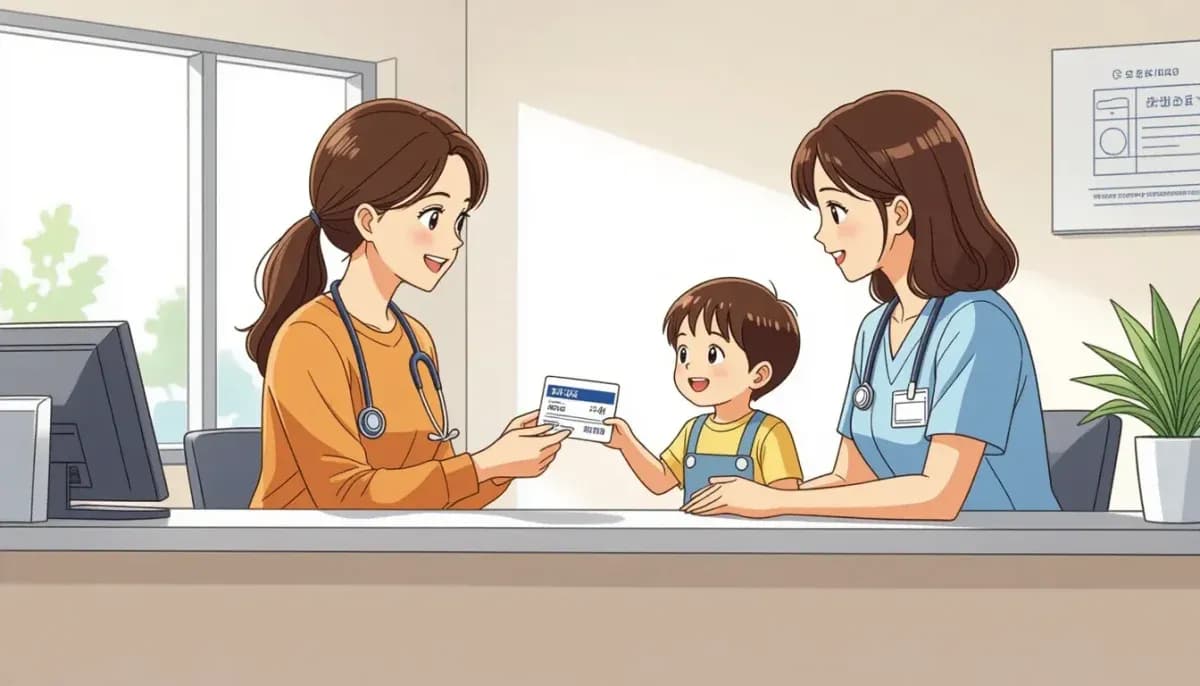
Learn how Japan's child medical expense subsidy (kodomo iryouhi josei) works for foreign families. Covers eligibility, application steps, copayment amounts by city, and retroactive reimbursement tips.
Medical Expense Subsidies for Children in Japan: A Complete Guide for Foreign Families
One of the most practical and valuable benefits available to families in Japan is the child medical expense subsidy program — known in Japanese as 子ども医療費助成 (kodomo no iryōhi josei). This government-funded program significantly reduces or even eliminates out-of-pocket medical costs for children, and it applies to foreign residents just as much as Japanese citizens. Yet many expat families in Japan have no idea it exists or don't realize they're eligible.
This guide covers everything you need to know: what the subsidy covers, who qualifies (including foreigners), how to apply, what your actual costs will be in different cities, and key tips to maximize your benefits.
What Is the Child Medical Expense Subsidy?
Japan's universal health insurance system already covers 70–80% of medical costs for children. The child medical expense subsidy (子ども医療費助成) goes one step further — it covers most or all of the remaining 20–30% copayment that families would otherwise pay.
The subsidy is administered and funded by individual prefectures and municipalities, not the national government. This means the exact benefits vary depending on where you live, but the core concept is the same everywhere: show your child's medical certificate card (子ども医療証, kodomo iryoushou) at the hospital or clinic, and your copayment is automatically reduced at the point of care.
The subsidy program exists in every single municipality across Japan — there is no place in the country where this benefit is unavailable. According to research published in Frontiers in Pharmacology, all prefectures have implemented the program, though age eligibility and copayment amounts differ significantly by region.
Are Foreign Residents Eligible?
Yes — absolutely. This is perhaps the single most important fact for expat families to know. There is no nationality requirement for the child medical expense subsidy. Eligibility is based entirely on:
- Residence registration — Your child must be registered at your local municipal office (住民票, jūminhyo)
- Health insurance enrollment — Your child must be enrolled in Japanese health insurance, either through national health insurance (kokumin kenkō hoken) or employer-based social insurance (shakai hoken)
- Valid residence status — The parent or guardian must hold a valid visa category and a Residence Card (在留カード)
Foreign children, dual nationals, and Japanese children living abroad (if registered in Japan) all qualify equally. Whether you are on a work visa, spouse visa, student visa, or have permanent residency, your children are covered.
For more information on navigating Japan's healthcare system as a foreign parent, see our comprehensive guide on healthcare and medical care for children in Japan.
How Much Will You Actually Pay?
Copayment amounts vary by municipality, but here is a snapshot of what families pay in major cities:
| City/Area | Age Coverage | Outpatient Copay | Prescription Copay | Hospitalization |
|---|---|---|---|---|
| Tokyo (most wards) | Birth–18 | ¥0 (through junior high) | ¥0 | ¥0 |
| Osaka | Birth–15 | ¥500/day (max ¥2,500/month) | ¥0 | ¥0 |
| Sapporo | Birth–18 | ¥580 (1st visit); ¥0 after | ¥0 | ¥0 |
| Hiroshima | Birth–15 (expanded 2025) | ¥500/day (up to 4 days) | ¥0 | ¥0 |
| Kyoto | Birth–15 | ¥500/visit | ¥0 | ¥0 |
| Nagoya | Birth–15 | ¥500/visit | ¥0 | ¥0 |
| General rural areas | Birth–12 (common) | ¥500–¥600/visit | ¥0 | ¥0–¥500/day |
Key patterns to understand:
- Prescription medications are almost universally free once you have the subsidy card
- Hospitalizations are typically free or heavily subsidized
- Repeated visits to the same clinic in one month are often cheaper — many municipalities waive the copay after the first 2–3 visits in a month
- Tokyo is the most generous: income limits were removed entirely, and most children pay nothing at all
For a broader overview of family financial benefits, our government benefits and subsidies guide for families in Japan covers related programs including child allowance and childcare subsidies.
What Age Groups Are Covered?
Age eligibility is one of the biggest variables between municipalities:
- Birth to age 12 (end of elementary school) — minimum standard in most areas
- Birth to age 15 (end of junior high) — common in mid-sized cities and most prefectures
- Birth to age 18 (end of high school) — increasingly common; mandatory in Tokyo, also available in Sapporo and growing number of areas
The national trend is toward expansion to age 18. As of 2025, the Japanese government has been encouraging municipalities to extend coverage through high school by providing additional subsidies to local governments that do so.
In Hiroshima, for example, the program was expanded in January 2025 from end of elementary school to end of junior high — meaning families who previously lost coverage at age 12 are now covered through age 15. Nationally, over 70% of municipalities now cover children at least through the end of junior high school.
If you are planning to move between cities in Japan, it is worth checking the subsidy rules at your destination — this can meaningfully affect your family budget.
How to Apply: Step-by-Step
⚠️ Critical point: The subsidy is NOT applied automatically. You must proactively apply for it at your local ward office or city hall. Many expat families miss out on benefits simply because they did not know to apply.
Where to apply: Visit your local municipal office (区役所 kuyakusho or 市役所 shiyakusho) — specifically the children's/family section (子ども家庭課 or こども支援課).
When to apply:
- For newborns: within 15 days of the birth registration (Tokyo guidance; other municipalities may differ slightly)
- If you are moving to a new municipality: apply promptly after completing your resident registration
- If your child is already older and you haven't applied yet: apply as soon as possible — you may be able to claim a retroactive reimbursement
Documents typically required:
- Child's health insurance card (健康保険証)
- Parent's ID / Residence Card (在留カード)
- Completed application form (provided at the office)
- My Number card or resident registration certificate (住民票)
- Parent's bank account information (for reimbursements)
After applying: Your child's medical certificate card (子ども医療証) will typically arrive by mail within 2–4 weeks.
In Tokyo, there are three card types named by age:
- マル乳 (Maru-nyu) — for infants/toddlers
- マル子 (Maru-ko) — for elementary and junior high school students
- マル青 (Maru-ao) — for high school students
In Sapporo, the card is commonly called the "pink card" and must be renewed every July, when the city conducts an annual income review.
Claiming Retroactive Reimbursement
If you paid medical bills before receiving your card (for example, in the weeks between birth registration and card arrival, or because you did not know about the program), you can claim a retroactive reimbursement.
Most municipalities allow retroactive claims going back up to 5 years. To claim:
- Gather all original medical receipts (領収書)
- Visit the children's section of your ward office
- Submit a reimbursement application with the receipts and your bank account details
- Payment is typically processed within 1–2 months
This is a significant money-saving opportunity for families who discovered the program late. Even if your child is now several years old, check your old receipts — you may be entitled to recover thousands of yen.
For detailed guidance on managing the financial side of raising children in Japan, see our financial planning guide for expat families with children in Japan.
What Is NOT Covered by the Subsidy
The subsidy applies only to treatments covered by Japan's national health insurance system. The following are not covered:
| Category | Examples |
|---|---|
| Non-insured treatments (自由診療) | Some alternative therapies, overseas hospital care |
| Cosmetic procedures | Anything for aesthetic purposes |
| Orthodontics | Braces, retainers (unless medically necessary for jaw function) |
| Preventive vaccinations | Routine vaccines (covered separately under municipality vaccination programs) |
| Hospital room upgrades | Private room surcharges (差額ベッド代) |
| Health checkups | Routine wellness checks not triggered by illness |
| Dental cosmetics | Teeth whitening, purely cosmetic work |
Note that medically necessary dental treatment for illness or injury IS covered. If your child has a cavity or needs a tooth extracted, that falls under health insurance and is subsidy-eligible. Routine cleanings and preventive dental care may or may not be covered depending on how they are coded by the dentist.
Regional Differences and What to Watch For
Because the subsidy is locally administered, families who move between municipalities may experience significant changes in their coverage. Key things to watch for:
Income limits: Some municipalities impose income thresholds above which the subsidy is reduced or eliminated. Tokyo has removed income limits entirely, making it one of the most generous cities. Other municipalities may have limits starting around ¥5–6 million household income. Always check your specific municipality's rules.
Card renewal: Many municipalities require periodic card renewal (often annually). In Sapporo, the pink card expires every July. Missing a renewal means your card will be rejected at the clinic — keep track of expiry dates and renewal notices sent by mail.
Moving between municipalities: Your old card becomes invalid the moment you change your registered address. Re-apply at your new ward office immediately after completing your resident registration.
Applying at birth: In Japan, it is common for newborns to be billed at the full insurance copayment rate in the hospital until the card arrives. Apply as soon as the birth is registered and keep your receipts — you'll get the overpayment back retroactively.
For broader guidance on navigating Japanese bureaucracy as a foreign parent, the comprehensive childcare guide at Living in Nihon is an excellent English-language resource covering healthcare, education, and parenting in Japan.
Why This Program Matters
Research consistently demonstrates that child medical expense subsidies have a measurable positive impact on children's health outcomes. A study published in ScienceDirect found that the introduction of free child healthcare subsidies in Japan significantly increased healthcare utilization among schoolchildren — meaning children who previously went without care were now receiving treatment.
Japan's infant mortality rate stands at 1.8 per 1,000 live births (2023 data), one of the lowest in the world and a figure partly attributable to the country's comprehensive approach to child healthcare access. With approximately 17,780 pediatricians working across Japan and around 2,500 hospitals with pediatrics departments, healthcare is accessible — and the subsidy makes it financially accessible too.
For foreign families who come from countries where healthcare costs can be significant burdens, Japan's child medical expense subsidy system is a genuine relief. A child who needs frequent pediatric visits, has a chronic condition, or requires dental care can cost very little compared to healthcare costs in many other countries.
For tips on finding English-speaking doctors and navigating pediatric care, check out resources from For Work in Japan which covers practical aspects of life in Japan for international residents.
Quick Reference: Key Terms
| Japanese | Romaji | Meaning |
|---|---|---|
| 子ども医療費助成 | Kodomo iryōhi josei | Child medical expense subsidy program |
| 子ども医療証 | Kodomo iryoushou | Child medical certificate card |
| 子ども家庭課 | Kodomo katei-ka | Children and Family Affairs Division (ward office) |
| 区役所 / 市役所 | Kuyakusho / Shiyakusho | Ward office / City hall |
| 住民票 | Jūminhyo | Resident registration record |
| 領収書 | Ryōshūsho | Receipt (needed for retroactive claims) |
| 自由診療 | Jiyū-shinryō | Non-insured (private pay) medical treatment |
| マル乳 / マル子 / マル青 | Maru-nyu / Maru-ko / Maru-ao | Tokyo card types by age group |
For those navigating the visa and legal aspects of raising children in Japan, our visa and legal guide for foreign families with children covers residence status, family registration, and related issues.
Frequently Asked Questions
Q: My child was born in Japan but holds foreign nationality. Are they eligible? Yes. Nationality is irrelevant. As long as your child is registered as a resident and enrolled in Japanese health insurance, they qualify fully.
Q: We just arrived in Japan and haven't applied yet. Can we still apply? Yes. Apply as soon as you have completed your resident registration (jūminhyo). You can also apply for retroactive reimbursement of medical expenses you paid before receiving the card (up to 5 years back).
Q: The clinic said our card is expired — what do we do? Go to your ward office and check if a renewal is required. Bring your current card, identification, and your child's health insurance card. Many municipalities send renewal notices by mail, so check your mailbox if you think you may have missed one.
Q: Our child needs orthodontic treatment. Is it covered? Standard cosmetic orthodontics (braces for aesthetic alignment) are not covered. However, if the treatment is medically necessary — for example, to correct a jaw misalignment causing pain or eating difficulties — it may be eligible. Ask your dentist how the treatment will be coded.
Q: We are moving to another city. What happens to our card? Your current card becomes invalid once you deregister from your current municipality. Apply for a new card at your new ward office after completing your resident registration. There may be a gap of a few weeks — keep receipts from this period and claim retroactively.
Q: Does the subsidy cover emergency room visits? Yes, emergency (救急) care at hospitals that accept health insurance is covered. If your child is taken to an emergency room, present the medical certificate card as you normally would.
For more on the full range of childcare options and parenting resources available to foreign families, our complete guide to daycare and hoikuen in Japan and kindergarten guide for foreign parents provide practical information for each stage of your child's early years.
Additional guidance on child medical subsidies from an expat perspective can be found via GaijinPot's Japan subsidies overview and the detailed Tokyo-specific guide at e-housing.jp, which breaks down the full range of childcare financial benefits available to Tokyo families. The comprehensive Japan Dev guide to maternity and child allowances is also worth bookmarking for a broader view of all child-related benefits in Japan.
You can also find official English-language information directly from municipal websites. Hiroshima City's official English page provides detailed guidance specific to that region. For study and school support resources in Japan, Chuukou Benkyou offers useful information for families navigating Japanese education.
The child medical expense subsidy is one of Japan's best-kept secrets for expat families. Once you have your card, medical care for your children becomes dramatically more affordable — and in many cases, essentially free. Apply early, keep your card current, and don't leave money on the table by forgetting retroactive claims.

Originally from Vietnam, living in Japan for 16+ years. Graduated from Nagoya University, with 11 years of professional experience at Japanese and international companies. Sharing practical information for foreign parents raising children in Japan.
View Profile →Related Articles
Recent Policy Changes Affecting Foreign Families in Japan
Stay up to date on Japan's 2024–2025 immigration policy changes for foreign families, including PR language requirements, SSW2 family rules, My Number health card updates, childcare programs, and fee increases.
Read more →
Regional Differences in Family Support Programs in Japan
Discover how Japan's family support programs vary dramatically by region — from Tokyo's ¥5,000/month child supplements and free childcare to rural relocation bonuses of ¥1,000,000 per child. A complete guide for foreign families.
Read more →
How to Apply for Government Family Benefits in Japan
Complete guide for foreign residents on how to apply for Japan's government family benefits: child allowance, childbirth lump sum, medical subsidies, and more. Step-by-step application instructions.
Read more →
Housing Subsidies and Support for Families in Japan
A complete guide to housing subsidies, rent assistance, and support programs for families in Japan — including the Housing Security Benefit, relocation incentives, and home loan tax relief for foreigners.
Read more →
Education Subsidies and Free Textbooks in Japan
Complete guide to education subsidies in Japan for foreign families: free textbooks, high school tuition support, Shugakuhi Hojo, and early childhood care benefits. Who qualifies and how to apply.
Read more →
Municipal Family Support Programs Across Japan
Complete guide to municipal family support programs in Japan for foreign residents. Learn about child allowances, free daycare, medical subsidies, and how to apply in 2025.
Read more →