
Tokyo Childcare Subsidies for Foreign Families

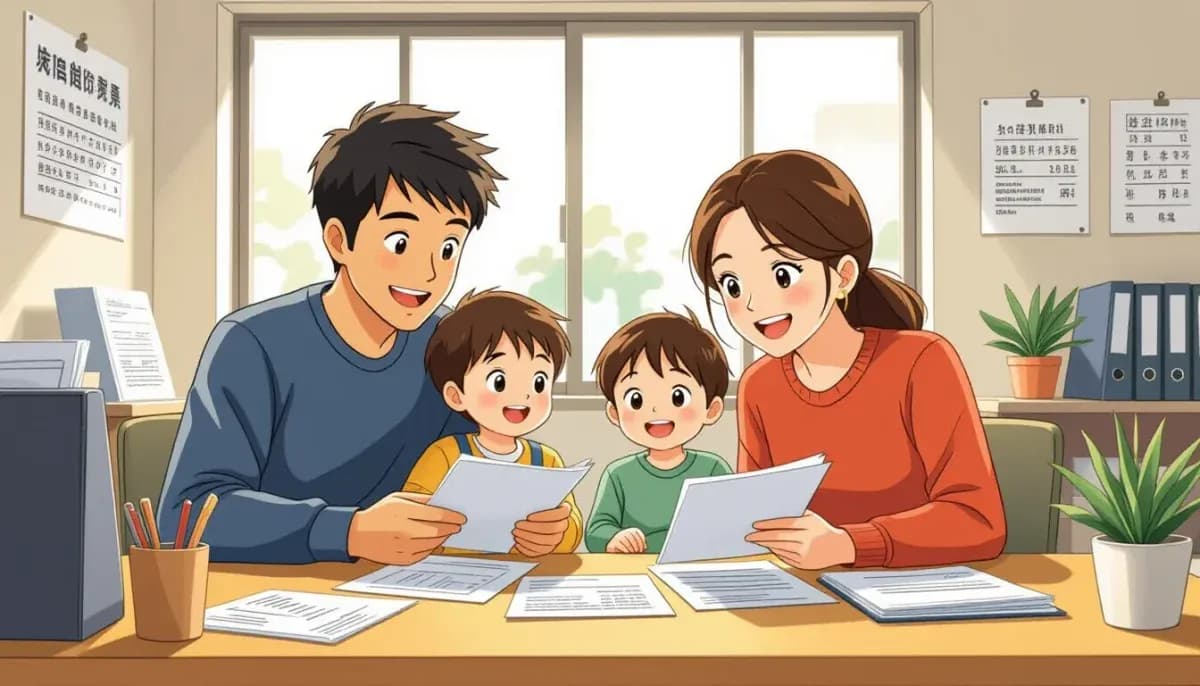
Complete guide to Tokyo childcare subsidies for foreign families in 2025. Child Allowance, free preschool ages 3-5, free medical care to age 18, and more. All expats with residence cards qualify.
Tokyo Childcare Subsidies for Foreign Families: Your Complete 2025 Guide
Raising children in Tokyo is expensive — but it doesn't have to be as costly as you might think. The Japanese government and Tokyo Metropolitan Government have created an extensive network of childcare subsidies, allowances, and support programs that are open to all foreign residents with a valid residence card. A typical expat family with two young children in Tokyo can save anywhere from ¥950,000 to ¥2,600,000 per year by taking full advantage of available benefits.
This guide explains every major subsidy and benefit available to foreign families in Tokyo, how to apply, and what documents you'll need.
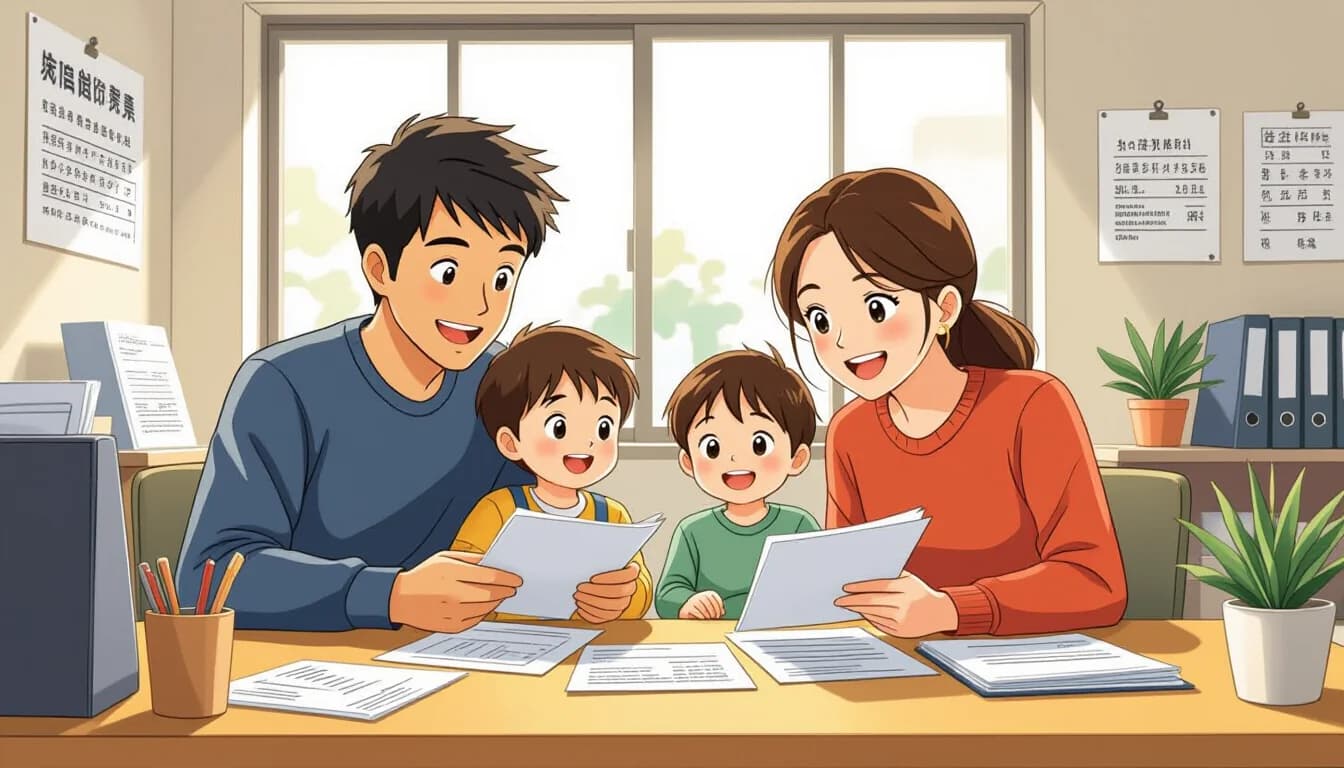
Who Qualifies? Foreign Families Are Fully Eligible
One of the most common misconceptions among expats in Tokyo is that childcare subsidies are "for Japanese people only." This is completely false. Any foreign resident who:
- Holds a valid residence status (work visa, spouse visa, student visa, permanent residency, etc.)
- Is registered at their local ward office (住民登録, jūmin tōroku)
- Has their child registered at the same address
...qualifies for the full range of national and Tokyo-specific childcare benefits. There is no minimum residency duration, no nationality requirement for the child, and — thanks to 2024 reforms — no income cap for most programs.
The only excluded groups are those on tourist visas and diplomatic visa holders. If you have a Residence Card (在留カード), you're in.
Your ward office is your starting point. Every subsidy described in this guide is administered at the ward (区, ku) level. When you register your child's birth (出生届, shussho-todoke) within 14 days, the ward office staff will typically walk you through initial benefits. However, each program requires a separate application, so don't assume automatic enrollment.
For a general overview of all government support available to expat families across Japan, see our guide on Government Benefits and Subsidies for Families in Japan.
Child Allowance (児童手当): Monthly Cash Payments Through Age 18
The Child Allowance (児童手当, jidō teate) is Japan's flagship family support program — and it was significantly expanded in October 2024. The income caps that previously excluded higher-earning families were completely removed, meaning all families with children now receive monthly payments.
2024 Child Allowance Rates
| Child's Age | Monthly Payment |
|---|---|
| Under 3 years | ¥15,000 per child |
| Age 3 to under 12 (elementary school) | ¥10,000 per child |
| Age 12 to 15 (junior high) | ¥10,000 per child |
| Age 15 to 18 (high school) | ¥10,000 per child |
| Third-born or later (any age) | ¥30,000 per child |
Coverage was also extended from age 15 to age 18, meaning families now receive support through the end of high school.
How to apply: Submit your application at your ward office within 15 days of your child's birth. You'll need your Residence Card, MyNumber Card, a Japanese bank account in your name, and your child's birth certificate. Payments are typically made three times per year (February, June, October).
For families planning finances over the long term, understanding this allowance is a key input into your overall plan — see Financial Planning for Expat Families Raising Children in Japan for a comprehensive framework.
Tokyo's Unique "0-18 Support" Top-Up Benefit
On top of the national Child Allowance, the Tokyo Metropolitan Government introduced a locally funded additional payment in 2023: ¥5,000 per child per month for every child under 18, regardless of household income.
This benefit is unique to Tokyo — families living in other prefectures do not receive this payment. It requires a separate application from the national Child Allowance, submitted at your ward office.
| Benefit | Amount | Who Pays | Income Cap |
|---|---|---|---|
| National Child Allowance | ¥10,000-¥30,000/month | National govt | None (since 2024) |
| Tokyo 0-18 Support | ¥5,000/month | Tokyo Metro Govt | None |
| Total | ¥15,000-¥35,000/month | Both | None |
For a family with two children under 3, this means ¥40,000/month (¥480,000/year) in direct cash payments before any childcare subsidies are applied.
Free Preschool and Daycare: The 2019 and 2025 Reforms
Ages 3-5: Tuition-Free Nationwide Since 2019
Japan's landmark 2019 childcare reform (幼児教育・保育の無償化, yōji kyōiku hoiku no mushōka) made early childhood education effectively free for all children aged 3 to 5, regardless of household income or nationality. This covers:
- Hoikuen (認可保育園, licensed daycare centers)
- Yōchien (幼稚園, kindergarten)
- Nintei kodomo-en (認定こども園, combined daycare/kindergarten centers)
- Certified childcare facilities (地域型保育, small licensed providers)
For families at public hoikuen, tuition is completely free. For private kindergarten, families receive a subsidy of up to ¥25,700/month, with an additional ¥11,300/month available for extended care hours. Most families pay nothing or minimal amounts.
To learn more about navigating the hoikuen and yōchien enrollment process as a foreign parent, see our comprehensive guides on Daycare and Hoikuen in Japan for Foreign Parents and Kindergarten in Japan: Everything Foreign Parents Need to Know.
Ages 0-2: Free Daycare Coming to Tokyo from September 2025
This is the biggest recent change for Tokyo expat families: from September 1, 2025, the Tokyo Metropolitan Government is introducing free daycare for all households with their first child aged 0-2 enrolled in a licensed daycare center. Previously, free care for the 0-2 age group was limited to very low-income (tax-exempt) households.
This is a major shift. Care for infants and toddlers in licensed Tokyo hoikuen typically costs ¥20,000-¥80,000 per month depending on ward and household income. From September 2025, that cost drops to zero for first children.
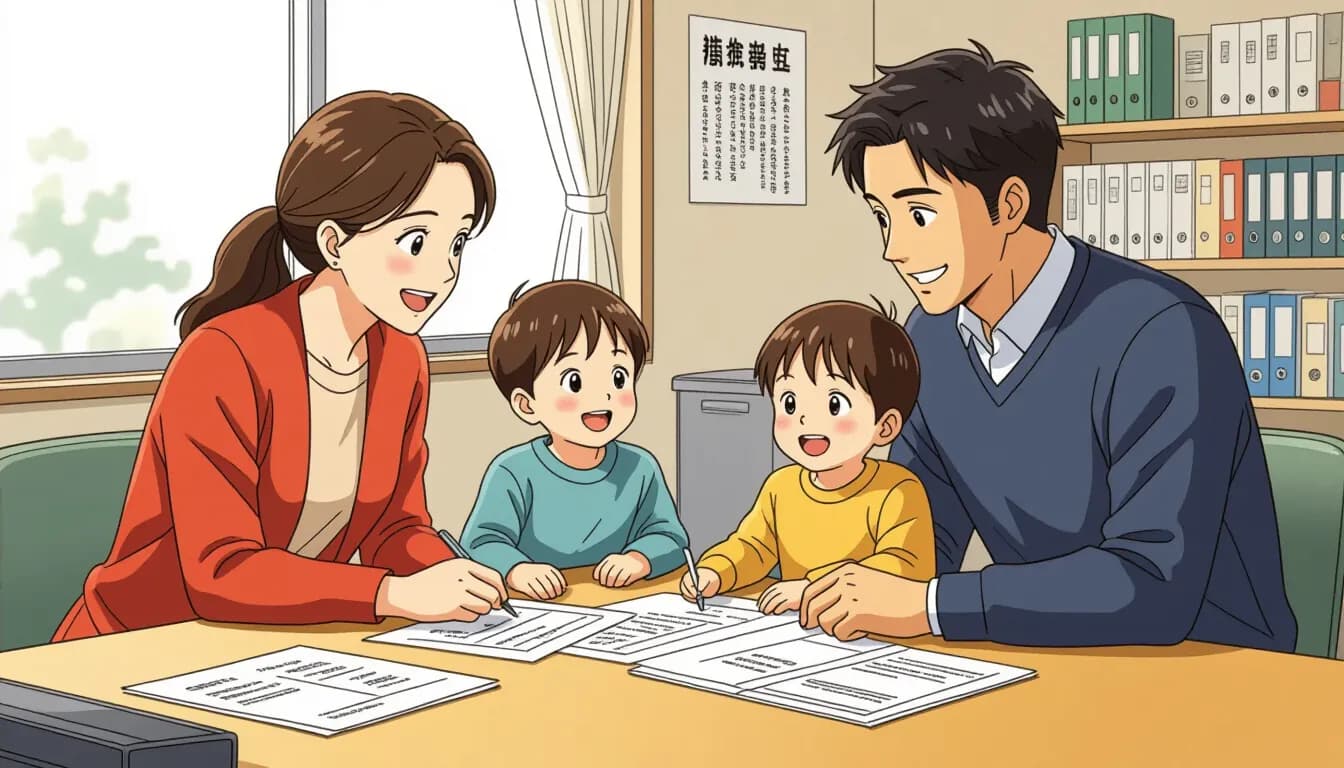
Ward-Specific Subsidies for Unlicensed and International Daycare
Many expat families — especially those who cannot secure a licensed hoikuen spot or who prefer an English-language international daycare — use unlicensed daycare (認可外保育施設) or private international childcare centers. These facilities are not covered by the 2019 free preschool policy for ages 0-2, but all wards in Tokyo offer substantial subsidies to offset the costs.
The amounts vary significantly by ward:
| Ward | Monthly Subsidy Cap (Ages 0-2) |
|---|---|
| Minato (港区) | Up to ¥100,000/month |
| Shibuya (渋谷区) | Up to ¥80,000/month |
| Chiyoda (千代田区) | Up to ¥77,000/month |
| Shinjuku (新宿区) | Up to ¥60,000/month |
| Other 23 wards | ¥40,000-¥77,000/month |
| National baseline (low income) | ¥42,000/month |
These subsidies make even expensive international daycare accessible for many families. For ages 3-5 at unlicensed facilities, the national government provides up to ¥37,000/month (up to ¥450,000/year).
Important: For ages 3-5, unlicensed daycare subsidies are capped at ¥37,000/month at the national level. Many wards add further top-ups. Check your specific ward office for current rates.
For information about how Japan's healthcare system works for children, including what's covered and how to use your health card, see our guide on Healthcare and Medical Care for Children in Japan.
Free Medical Care for Children Through Age 18
Tokyo's Pediatric Medical Expenses Assistance program (小児医療費助成, shōni iryōhi josō) is one of the most generous child health benefits in the developed world. In Tokyo, medical care for children is free through age 18, including:
- Doctor and clinic visits
- Prescriptions
- Dental care
- Hospitalizations
- Emergency room visits
This is funded by Tokyo Metropolitan Government. The national standard only covers up to age 3 (with income limits), but Tokyo has chosen to extend coverage through high school age for all residents.
How to apply: After registering your child's birth at the ward office, apply for the medical expense assistance program at the same time. You'll receive a Infant/Child Medical Certificate (乳幼児医療証 or 子ども医療証) — present this card at any hospital or clinic to receive free treatment.
Required documents:
- Health insurance card (健康保険証) for the child
- Your Residence Card
- MyNumber Cards (parent and child)
- Stamp or signature
Hoikuen (Licensed Daycare) Applications: A Guide for Foreign Families
Getting your child into a licensed hoikuen in Tokyo is notoriously competitive. The application process uses a priority point system where families are scored based on their circumstances, and spots go to the highest-scoring applicants.
How the Point System Works
Each ward calculates a score (typically 0-200+) based on:
- Work status: Number of hours both parents work per week (key factor)
- Single-parent bonus: +20 points
- Sibling already enrolled: Bonus points
- Other factors: Disability in household, parent in school, etc.
Typical cutoff scores for popular wards range from 160-240 points for infants. Families where both parents work full-time (8+ hours/day, 5 days/week) are usually competitive.
Application Timeline
| Step | Timing |
|---|---|
| Research wards and facilities | July-September |
| Main application window opens | October-November |
| Submit application | November deadline |
| Results notification | Late January |
| Enrollment begins | April 1 |
Required documents for foreign families:
- Residence Cards (両親 both parents)
- Employment Certificate (就労証明書, issued by employer within 3 months)
- MyNumber Cards
- Child's health report (健康診断書, from pediatrician)
- Bank account details
For a detailed walkthrough of the entire hoikuen enrollment process, including how to find facilities and navigate the point system, see our full guide on Daycare and Hoikuen in Japan for Foreign Parents.
For help understanding Japan's family health insurance enrollment — a prerequisite for the free medical care programs above — see the detailed guide at For Work in Japan: Family Medical and Health Insurance Procedures.
Childbirth Lump-Sum Grant (出産育児一時金)
If your child is born in Japan, you are entitled to the Childbirth Lump-Sum Grant (出産育児一時金, shussan ikuji ichijikkin) of ¥500,000 per birth, as long as you are enrolled in Japan's national or employer health insurance system.
The average cost of childbirth in Tokyo is approximately ¥605,000, so this grant covers the vast majority of birth costs. For families enrolled in employer insurance (社会保険), the grant is typically paid directly to the hospital, so you only pay the difference.
For foreign parents expecting a child or who recently gave birth, see our complete guide on Pregnancy and Giving Birth in Japan as a Foreign Parent.
Annual Savings Summary for a Tokyo Expat Family
Here is a realistic calculation of total annual benefits for a typical expat family with two children (ages 1 and 4) in Tokyo:
| Benefit | Annual Amount |
|---|---|
| Child Allowance — Child 1 (age 1, under 3) | ¥180,000 |
| Child Allowance — Child 2 (age 4) | ¥120,000 |
| Tokyo 0-18 Support (both children) | ¥120,000 |
| Free hoikuen for age 4 child | ¥240,000-¥600,000 |
| Free medical care (both children) | ¥50,000-¥200,000 |
| Age 0-2 daycare subsidy (age 1 child, from Sept 2025) | ¥240,000-¥960,000 |
| Total estimated annual savings | ¥950,000-¥2,180,000 |
These figures illustrate why Tokyo, despite its high cost of living, is actually a generous place to raise young children compared to many Western cities.
Practical Tips for Navigating the System
1. Register everything at the ward office on day one. When you register your newborn, bring your Residence Cards, MyNumber Cards, health insurance cards, and a Japanese bank account. Staff can process multiple applications in a single visit.
2. Apply for each benefit separately. The Child Allowance, Tokyo 0-18 Support, medical certificate, and daycare application are all separate processes. None are automatic.
3. Get an Employment Certificate early. The jusoro shōmeisho (就労証明書) must be issued by your employer. For hoikuen applications, it must be dated within 3 months of your application deadline. Ask HR well in advance.
4. Learn your ward's specific programs. Many wards (especially Minato, Shibuya, and Chiyoda) offer benefits beyond the national baseline. Check your ward's website or visit the family support counter (kodomo katei-ka, 子ども家庭課).
5. Find a bilingual support resource. Navigating Japanese bureaucracy in a second language is genuinely difficult. For English-language community support and guidance, Living in Nihon and Chuukou Benkyou are helpful resources for foreigners adjusting to life in Japan. The GaijinPot guide to government subsidies is also a solid starting reference for new arrivals.
For comprehensive data on childcare costs and subsidy calculations specific to your situation, the Savvy Tokyo childcare benefits guide is excellent.
Conclusion
Tokyo's childcare subsidy system is genuinely generous — and foreign families with valid residence status have full access to every benefit. From monthly cash payments through age 18, to free preschool from age 3, to free medical care through high school, to the upcoming 2025 expansion of free infant care, the financial support available to expat families is substantial.
The key is knowing what's available and applying for each program individually. Start at your ward office, bring all your documents, and don't be shy about asking questions — most ward offices have multilingual staff or can arrange translation assistance.
For more on raising children in Japan as a foreign family, explore our full range of guides starting with The Complete Guide to the Japanese Education System for Foreign Families.

Originally from Vietnam, living in Japan for 16+ years. Graduated from Nagoya University, with 11 years of professional experience at Japanese and international companies. Sharing practical information for foreign parents raising children in Japan.
View Profile →Related Articles
Recent Policy Changes Affecting Foreign Families in Japan
Stay up to date on Japan's 2024–2025 immigration policy changes for foreign families, including PR language requirements, SSW2 family rules, My Number health card updates, childcare programs, and fee increases.
Read more →
Regional Differences in Family Support Programs in Japan
Discover how Japan's family support programs vary dramatically by region — from Tokyo's ¥5,000/month child supplements and free childcare to rural relocation bonuses of ¥1,000,000 per child. A complete guide for foreign families.
Read more →
How to Apply for Government Family Benefits in Japan
Complete guide for foreign residents on how to apply for Japan's government family benefits: child allowance, childbirth lump sum, medical subsidies, and more. Step-by-step application instructions.
Read more →
Housing Subsidies and Support for Families in Japan
A complete guide to housing subsidies, rent assistance, and support programs for families in Japan — including the Housing Security Benefit, relocation incentives, and home loan tax relief for foreigners.
Read more →
Education Subsidies and Free Textbooks in Japan
Complete guide to education subsidies in Japan for foreign families: free textbooks, high school tuition support, Shugakuhi Hojo, and early childhood care benefits. Who qualifies and how to apply.
Read more →
Municipal Family Support Programs Across Japan
Complete guide to municipal family support programs in Japan for foreign residents. Learn about child allowances, free daycare, medical subsidies, and how to apply in 2025.
Read more →