
Free Childcare Policy in Japan: Eligibility and Application

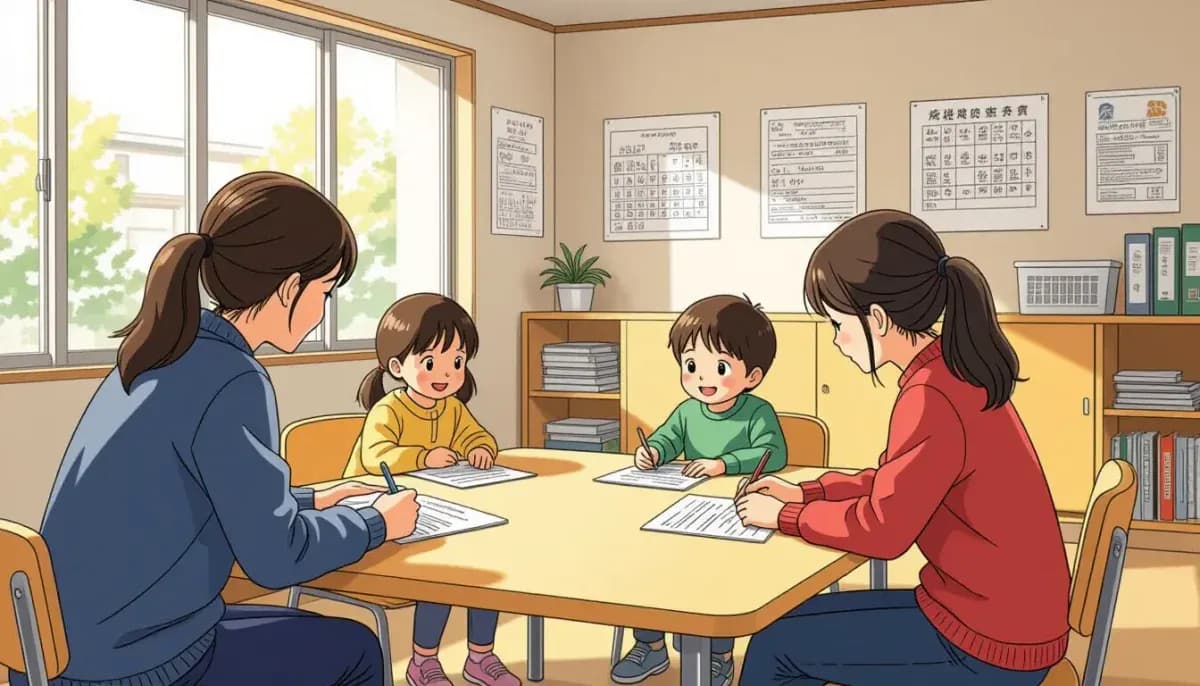
Japan's free childcare policy covers all children aged 3-5 at approved facilities. Learn eligibility rules for foreign families, how to apply, and what costs remain your responsibility.
Free Childcare Policy in Japan: Eligibility and Application Guide for Foreign Families
Japan's free childcare policy—officially known as 幼児教育・保育の無償化 (yōji kyōiku hoiku no mushōka)—is one of the most significant family support programs the government has introduced in recent years. Since its launch in October 2019, it has removed tuition costs for millions of children aged 3 to 5, and expanded support for younger children in lower-income households. If you are a foreign parent living in Japan, this guide covers everything you need to know: who qualifies, what facilities are covered, how to apply, and what costs remain your responsibility.
Understanding this policy can save your family hundreds of thousands of yen each year. For broader context on raising children in Japan as a foreigner, see our Complete Guide to the Japanese Education System.
What Is Japan's Free Childcare Policy?
In October 2019, the Japanese government implemented a nationwide policy making early childhood education and childcare free for all children aged 3 to 5 years old enrolled in approved facilities. For children aged 0 to 2, tuition subsidies are provided for households classified as non-taxable (低所得世帯, low-income families).
The policy was driven by Japan's acute demographic crisis—a falling birth rate and rapidly aging population—and aims to reduce the financial burden on families so more parents can afford to have children. Japan has committed approximately 3.5 trillion yen (roughly $25 billion) annually to child-rearing support as of 2024.
In 2024, the government also removed income caps for the 3–5 age group, ensuring that all children in this range qualify regardless of household income. Tokyo went even further in September 2025, expanding free licensed daycare to all children aged 0–2 (first child), regardless of income.
This is excellent news for foreign families. As long as you hold valid residency status in Japan, your children are equally eligible to benefit from this policy. Nationality does not matter—what matters is that your family is registered as living in Japan and your children attend an approved facility.
For an in-depth look at how childcare centers work in Japan, read our Complete Guide to Daycare and Hoikuen in Japan.
Who Is Eligible? Conditions for Foreign Families
Age Requirements
| Child's Age | Eligibility |
|---|---|
| 3–5 years old | Free tuition for ALL children (universal) |
| 0–2 years old (national) | Free tuition for non-taxable (low-income) households only |
| 0–2 years old (Tokyo, from Sep 2025) | Free tuition for first child, regardless of income |
| 0–2 years old (other cities) | Check with your local ward/city office |
Residency Requirements
Foreign residents are eligible if they meet the following conditions:
- Valid visa and residency status – You must hold a status of residence (在留資格) such as a work visa, spouse visa, permanent resident, or long-term resident visa.
- Registered in the local municipality – Your family must be registered at your local ward or city office (住民登録, jūmin tōroku).
- Child enrolled in an approved facility – The child must attend a recognized childcare institution (see below).
Temporary visitors, tourists, and those on short-stay visas do not qualify. However, the vast majority of foreign parents living and working in Japan will meet these criteria.
Your child's nationality is irrelevant. Whether your child is Japanese, your home country's citizen, or holds dual nationality, they qualify equally as long as the residency conditions above are met. For more on visa and legal matters for foreign families, see our guide on Visa and Legal Issues for Foreign Families with Children in Japan.
Which Facilities Are Covered?
Not every childcare facility qualifies under the free childcare policy. The subsidy applies to approved (認可, ninka) facilities only.
Covered Facility Types
| Facility Type | Japanese | Description |
|---|---|---|
| Yochien | 幼稚園 | Kindergarten for ages 3–5; open to all regardless of parents' work status |
| Hoikuen (authorized) | 認可保育園 | Licensed daycare for ages 0–5; requires proof of childcare need |
| Nintei Kodomo En | 認定こども園 | Certified combined kindergarten/daycare facility |
| Authorized Small-Scale Childcare | 小規模保育 | For ages 0–2; useful in areas with hoikuen shortages |
| Unauthorized facilities (認可外) | 認可外保育施設 | Partially covered with a subsidy cap (see below) |
International Preschools and Unauthorized Facilities
If your child attends an international preschool or an unauthorized (認可外) facility, they may still receive a subsidy—but it is capped:
- Ages 3–5: Up to ¥37,000 per month
- Ages 0–2 (low-income): Up to ¥42,000 per month
However, the school must be registered as an approved unauthorized facility (認可外保育施設の届出施設). Not all international schools qualify. Always confirm with your school and ward office before assuming the subsidy applies.
For more on choosing between yochien and hoikuen, read our Kindergarten in Japan (Yochien) Guide for Foreign Parents.
What Costs Are NOT Covered?
While tuition is free, families remain responsible for various additional costs. This is a common source of confusion. Here is what you will typically still pay:
| Cost Type | Average Monthly Amount |
|---|---|
| School meals (給食費) | ¥4,000–¥6,000 |
| Transportation (通園バス) | ¥3,000–¥5,000 |
| Uniforms and school supplies | ¥5,000–¥30,000 (one-time, enrollment) |
| Extended hours care (延長保育) | ¥5,000–¥15,000 |
| Event fees and excursion costs | ¥3,000–¥10,000 per year |
| Materials/activity fees | ¥1,000–¥3,000 per month |
For authorized unauthorized facilities (international preschools), anything exceeding the monthly subsidy cap is also your responsibility. In practice, international preschool tuition in Tokyo often runs ¥50,000–¥150,000/month, so the ¥37,000 cap helps but does not eliminate costs.
For a complete picture of financial support available to families in Japan, see our article on Government Benefits and Subsidies for Families in Japan.
How to Apply: Step-by-Step Process
Applying for the free childcare subsidy involves your local municipal office, the facility itself, and a certification process. Here is how it works:
Step 1: Obtain a Support Needs Certification (支給認定)
Before enrolling your child in a subsidized facility, you must receive an official certification from your ward or city office. There are three certification types:
- 1号認定 (Type 1): For children 3–5 attending yochien (kindergarten), no requirement to be working.
- 2号認定 (Type 2): For children 3–5 attending hoikuen; requires proof of childcare need (working, studying, illness, etc.).
- 3号認定 (Type 3): For children 0–2 attending hoikuen; requires both proof of childcare need and low-income status (for national subsidy).
Step 2: Submit Required Documents
Typically required documents include:
- Application form (申請書) from your ward office
- Copy of your residence card (在留カード)
- Proof of employment (在職証明書) or other proof of childcare need
- Income verification documents (non-taxable households for ages 0–2)
- Child's health record or immunization record
- Recent family photo (some offices require it)
Documents may need to be translated into Japanese if they are from overseas. Contact your ward office to confirm exact requirements.
Step 3: Enroll in the Facility
Once you receive certification, apply to the facility directly (for yochien) or through the municipal application system (for hoikuen). Hoikuen enrollment is competitive—especially in urban areas—so apply early. Many municipalities accept applications from October–November for the following April school year.
Step 4: Confirm the Subsidy
Once enrolled, confirm with the facility that the subsidy is being applied to your account. For yochien, this usually means the school bills you a reduced (or zero) tuition amount. For hoikuen, the ward office directly subsidizes the facility.
For additional guidance on the application process, Living in Nihon's guide to raising children and education in Japan provides helpful context for foreign families navigating the system.
Child Allowance (児童手当): Additional Financial Support
In addition to free childcare, families in Japan are also eligible for monthly child allowance payments (児童手当). As of 2024, the amounts are:
| Child's Age | Monthly Allowance |
|---|---|
| 0–2 years | ¥15,000 per child |
| 3 years – end of elementary school | ¥10,000 per child |
| Junior high school age | ¥10,000 per child |
| Third child and beyond | ¥30,000 per child |
Foreign parents with valid residency status are eligible. You apply at your local ward or city office when your child is born or when you move to Japan. The allowance continues as long as you maintain residency registration and your child lives with you in Japan.
For comprehensive financial planning advice, read our Financial Planning for Expat Families Raising Children in Japan.
Practical Tips for Foreign Families
Language Barriers
Most ward offices and childcare facilities operate in Japanese. If you are not yet fluent, consider:
- Bringing a bilingual friend or hiring a translator for key appointments
- Using free translation services offered by some ward offices (call ahead to ask)
- Preparing key phrases and questions in Japanese beforehand
- Asking your child's facility if they have staff who speak your language
Differences Between Municipalities
The national free childcare policy is a baseline, but individual cities and wards often offer additional subsidies. Tokyo's expanded 0–2 free daycare (from September 2025) is one example. Osaka, Kyoto, and other major cities also run their own supplemental programs. Always check with your specific municipal office for the full picture.
Waitlists for Hoikuen
Even with free tuition, getting into a hoikuen (licensed daycare) in major cities can be extremely competitive due to high demand. Your application is scored based on household circumstances (both parents working full-time, single parent, multiple children, etc.). Foreign families are scored the same as Japanese families. Start your research and application process early—at least six months in advance.
For insights from experienced expats, Real Life Japan's guide to free preschool in Japan offers practical perspectives from foreign families who have navigated this process. You can also read Expat.jp's childcare guide for more details on facility types.
Summary: Key Points for Foreign Families
Japan's free childcare policy is genuinely accessible to most foreign residents. Here is a quick recap:
- Ages 3–5: Tuition is free at all approved facilities, for all residents regardless of income or nationality.
- Ages 0–2: National subsidy applies to low-income households; Tokyo expanded this to all first children from September 2025.
- Approved facilities only: Yochien, authorized hoikuen, nintei kodomo en. International preschools get a capped subsidy.
- You still pay for meals, transport, uniforms, and extended care.
- Apply through your local ward/city office with residency proof and relevant documents.
- Child allowance provides additional monthly payments for all children up to junior high school age.
Japan's investment in early childhood education is substantial—and as a foreign resident, your family has equal access to these benefits. For a broader look at the support systems available to expat families, see our guide on Baby and Infant Care in Japan for Foreign Parents.
For more information on financial support beyond childcare, For Work in Japan covers employment and financial topics relevant to foreign residents. For Japanese-language educational resources on navigating Japan's education and school systems, Chuukou Benkyou is a helpful reference.

Originally from Vietnam, living in Japan for 16+ years. Graduated from Nagoya University, with 11 years of professional experience at Japanese and international companies. Sharing practical information for foreign parents raising children in Japan.
View Profile →Related Articles
Recent Policy Changes Affecting Foreign Families in Japan
Stay up to date on Japan's 2024–2025 immigration policy changes for foreign families, including PR language requirements, SSW2 family rules, My Number health card updates, childcare programs, and fee increases.
Read more →
Regional Differences in Family Support Programs in Japan
Discover how Japan's family support programs vary dramatically by region — from Tokyo's ¥5,000/month child supplements and free childcare to rural relocation bonuses of ¥1,000,000 per child. A complete guide for foreign families.
Read more →
How to Apply for Government Family Benefits in Japan
Complete guide for foreign residents on how to apply for Japan's government family benefits: child allowance, childbirth lump sum, medical subsidies, and more. Step-by-step application instructions.
Read more →
Housing Subsidies and Support for Families in Japan
A complete guide to housing subsidies, rent assistance, and support programs for families in Japan — including the Housing Security Benefit, relocation incentives, and home loan tax relief for foreigners.
Read more →
Education Subsidies and Free Textbooks in Japan
Complete guide to education subsidies in Japan for foreign families: free textbooks, high school tuition support, Shugakuhi Hojo, and early childhood care benefits. Who qualifies and how to apply.
Read more →
Municipal Family Support Programs Across Japan
Complete guide to municipal family support programs in Japan for foreign residents. Learn about child allowances, free daycare, medical subsidies, and how to apply in 2025.
Read more →