
English Education in Japanese Junior High Schools

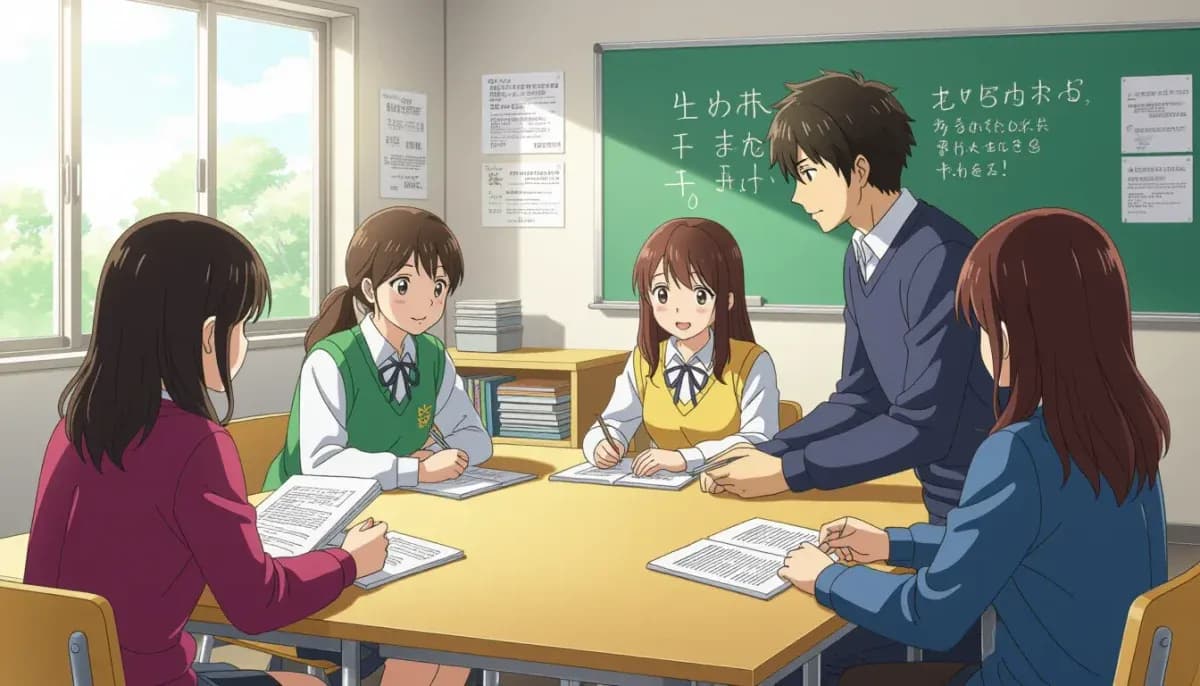
Comprehensive guide to English education in Japanese junior high schools: curriculum, ALT teachers, proficiency data, tips for foreign families, and entrance exam preparation advice.
English Education in Japanese Junior High Schools: A Complete Guide for Foreign Families
If your child is entering a Japanese junior high school, one of the first things you'll notice is how central English is to the curriculum. English is a compulsory, tested core subject — and it plays a significant role in high school entrance exams. Understanding how English is taught, what the curriculum looks like, and how your child can benefit or adapt is essential for any expat or foreign family navigating the Japanese school system.
This guide covers everything you need to know about English education in Japanese junior high schools (中学校, chūgakkō), from the curriculum structure and teaching methods to tips for foreign children and resources to help your family thrive.
English as a Core Subject in Junior High School
In Japan, junior high school spans grades 7 through 9 (ages 12–15). English is one of five core academic subjects, alongside Japanese, mathematics, science, and social studies. These five subjects are precisely the ones tested on high school entrance exams (高校入試, kōkō nyūshi), which makes English critically important for students aiming for top public high schools.
English is typically taught 4–5 periods per week, giving it substantial weight in the weekly schedule. For foreign families used to more casual English instruction abroad, the academic rigor here can be surprising. The focus is not just on communication — it's on exam performance.
Since the 2021 curriculum reform (Ministry of Education, Culture, Sports, Science and Technology — MEXT), the vocabulary requirement has roughly doubled: students are now expected to learn approximately 1,600–1,800 English words by the end of grade 9. Grammar has also been accelerated, with passive voice and present perfect introduced by Grade 8.
For more background on the broader educational system, see our guide: Junior High School in Japan: Guide for Foreign Families.
What the English Curriculum Looks Like Year by Year
Here is a breakdown of the English grammar and vocabulary progression through the three years of junior high:
| Grade | Year | Key Grammar Topics Introduced |
|---|---|---|
| Grade 7 (中1) | 1st Year | Basic sentence structure, present tense, past tense, progressive tense, questions |
| Grade 8 (中2) | 2nd Year | Passive voice, present perfect, comparative/superlative, infinitives |
| Grade 9 (中3) | 3rd Year | Relative clauses, complex sentences, review and exam preparation |
Each year, students also work on four core skills — reading, writing, listening, and speaking — though the balance historically tilts toward reading and writing, particularly in exam preparation.
Textbooks used in Japanese public schools are all vetted and approved by MEXT. Local boards of education choose from a list of authorized publishers. The 2021 reform textbooks contain considerably more communicative activities and authentic English content than their predecessors.
ALT Teachers: The Native English Speakers in the Classroom
One of the most visible features of English education in Japan is the ALT (Assistant Language Teacher) program. Remarkably, 98.4% of Japanese public junior high schools use ALTs in English classes. These are native or near-native English speakers, often young university graduates, who work alongside the main Japanese English teacher (JTE).
ALTs come from several sources:
- JET Program (28.5%) — the flagship government program placing ALTs from countries including the US, UK, Australia, Canada, Ireland, and New Zealand
- Dispatch companies like Interac (26%) — private companies contracted to provide ALTs to schools
- Direct hire (18.9%) — some boards of education or schools hire ALTs directly as full-time employees
- Worker dispatch contracts (18.6%) — another private-sector arrangement
For foreign children in particular, the presence of an ALT can be a welcome cultural bridge. If your child is English-speaking, they may feel an immediate connection with the ALT — and the ALT's presence in class can make English lessons feel more natural and less formulaic.
To understand how the wider school experience works for international children, visit Living in Nihon's resources for expat families in Japan for practical guidance on navigating public schools.
English Proficiency: How Are Japanese Students Actually Doing?
Japan has been on a long campaign to improve English proficiency, with mixed results. The government measures progress by tracking what percentage of grade 9 students can achieve CEFR A1 level (roughly equivalent to Eiken Grade 3).
Here is the trend over recent years:
| Survey Year | % of Grade 9 Students Meeting CEFR A1 Target | Government Target |
|---|---|---|
| FY2021 | 47.0% | 50% |
| FY2022 | 49.2% | 50% |
| FY2023 | ~50.0% | 50% |
| FY2024 | 52.4% | 60% (by 2027) |
The good news: scores are improving, and Japan just met its old 50% benchmark. The government has now raised the target to 60% by 2027 under the 4th Education Promotion Basic Plan.
The less encouraging reality: significant regional disparities persist. Saitama City has achieved 89.2% of students meeting the standard, while some rural prefectures hover around 30–35%. Where you live in Japan can significantly affect the English education environment your child enters.
For more detailed data and analysis, Nippon.com's report on English proficiency in Japanese schools offers an excellent overview.
Teaching Style and the "Japanese English" Problem
Foreign parents are often surprised by how English is taught in Japanese public schools. Traditional methods emphasize:
- Grammar-translation — explaining grammar rules in Japanese, translating sentences
- Rote memorization of vocabulary and grammar patterns
- Reading comprehension and written exercises over spoken fluency
In theory, MEXT guidelines now require that "English classes be held in English in principle". In practice, surveys have found that only about 20% of junior high English teachers conduct classes entirely in English. Many still use Japanese extensively to explain grammar.
Part of the challenge is teacher proficiency. Only 27.7% of junior high English teachers meet MEXT's target proficiency benchmarks (roughly TOEFL PBT 550 or TOEIC 730). This means students often don't hear fluent English from their main teacher — though the ALT partly compensates for this.
The result is that many Japanese students graduate junior high with a solid grammatical foundation but limited ability to hold a real English conversation. This phenomenon is sometimes called "examination English" — technically correct but communicatively passive.
For families with English-speaking children, this can actually be an advantage: your child may quickly stand out as linguistically strong, and teachers often welcome their participation in class discussions and ALT-led activities.
If you're thinking about alternatives to public school English instruction, see our guide on International Schools in Japan: The Definitive Guide for Families and Raising Bilingual Children in Japan.
How Foreign Children Experience English Class
For a child raised in an English-speaking household, junior high English class in Japan is a unique experience:
The upside: Your child will likely excel in English, which can boost their overall academic confidence. High marks in English can positively impact their naishi-ten (内申点) — the internal school grade that accounts for roughly 30–40% of high school admissions alongside entrance exam scores.
The challenge: English class may feel overly slow and grammar-focused compared to what your child is used to. Some native-English-speaking children find it frustrating to study a language they already speak at a pace designed for absolute beginners.
Opportunities to shine: Many schools hold English speech contests (英語スピーチコンテスト) or participate in interschool English debates. About 40.3% of junior high schools organize such events. These are excellent opportunities for foreign children to develop leadership and build relationships with classmates.
Working with the ALT: Encourage your child to build a relationship with the ALT. Some ALTs run English clubs (英語部, eigo-bu) or lunch-hour conversation sessions. These informal settings often let fluent English speakers contribute in more meaningful ways.
For families navigating public school enrollment as foreign nationals, the Tokyo Metropolitan Government offers a multilingual school enrollment guide in 8 languages including English, Korean, Vietnamese, and Portuguese. See the Tokyo Tabunka multilingual guide for details.
Entrance Exams and English: What Families Need to Know
The high school entrance exam in Japan is the defining academic milestone of junior high school. English is one of the five tested subjects, and it typically tests:
- Reading comprehension (dialogues, narratives, informational texts)
- Grammar and vocabulary (fill-in-the-blank, error correction)
- Writing (short sentences, sometimes short paragraphs)
- Listening (recorded dialogues with multiple-choice questions)
Speaking is generally not tested on public high school entrance exams, though some private schools and elite public schools include oral interviews.
For students attending cram schools (塾, juku), English is a popular subject — many juku focus specifically on the grammar and reading comprehension skills needed to score high on entrance exams.
Foreign students with strong English skills can often score well with targeted preparation on the grammar and reading format, even if the style feels unfamiliar at first. See our Elementary School in Japan guide for context on how students prepare academically from an early age.
Tips for Supporting Your Child's English Education in Japan
Whether your child is a native English speaker or a non-English speaker navigating both Japanese and English, here are practical steps to support their journey:
- Communicate with the homeroom teacher and English teacher early. Let them know your child's English background. This helps teachers calibrate assignments and identify opportunities for your child to contribute.
- Encourage participation in speech contests. Even if your child feels shy, these contests build skills, create memorable experiences, and look excellent on school records.
- Use the ALT as a resource. If your child has questions about English class or wants additional conversation practice, many ALTs are happy to help outside of formal class time.
- Supplement with English reading at home. Encourage your child to read English books, watch English-language content, or maintain a journal in English. This keeps advanced skills sharp even during formulaic grammar-focused classes.
- Consider English proficiency certifications. Eiken (英検), TOEFL Junior, and TOEIC Bridge are widely recognized in Japan. Earning a higher-level Eiken certificate can strengthen high school and even university applications.
For more resources on bilingual development and language maintenance strategies, visit For Work in Japan's language and education resources and check our guide on Teaching Japanese to Foreign Children.
For insight into navigating junior high cram schools and extracurriculars, see our article on After-School Activities, Juku, and Extracurriculars in Japan and Chuukou Benkyou's resources for middle school study in Japan.
Conclusion
English education in Japanese junior high schools is rigorous, exam-focused, and in the midst of ongoing reform. For foreign families, the system presents both challenges and opportunities. Children from English-speaking households have a natural advantage in one of the most important academic subjects — but they'll need guidance to channel that advantage into the grammar-and-reading format the exams demand.
Understanding the structure of the curriculum, the role of ALT teachers, and the realities of classroom instruction can help you support your child effectively through their three years of junior high English study.
For a broader overview of what to expect throughout the junior high years, revisit our main guide: Junior High School in Japan: Guide for Foreign Families. And for the full picture of Japan's educational journey, see The Complete Guide to the Japanese Education System for Foreign Families.

Originally from Vietnam, living in Japan for 16+ years. Graduated from Nagoya University, with 11 years of professional experience at Japanese and international companies. Sharing practical information for foreign parents raising children in Japan.
View Profile →Related Articles

Part-Time Rules and Responsibilities for Junior High Students
Can junior high school students work part-time in Japan? Learn the legal restrictions, school regulations, and what foreign families need to know about teen employment rules in Japan.
Read more →
Preparing for High School Entrance Exams in Japan
Complete guide for foreign families preparing for Japanese high school entrance exams (koukounyuushi). Covers special provisions for foreign students, naishinsho, juku, study strategies, and exam timeline.
Read more →
Student Council and Leadership in Japanese Junior High
A complete guide to student council (seitokai) in Japanese junior high schools — how elections work, leadership roles, responsibilities, and how foreign children can participate in school governance.
Read more →
Technology and Computer Education in Junior High Japan
Discover how technology and computer education works in Japanese junior high schools. Learn about Gijutsu Katei, the GIGA School Program, mandatory programming, and what foreign families can expect.
Read more →
Private Junior High School Entrance Exams in Japan
Everything foreign families need to know about private junior high school entrance exams in Japan: subjects, competition ratios, returnee pathways, costs, and how to prepare.
Read more →
Career Guidance and Course Selection in Japanese Junior High
A complete guide to career guidance (shinro shidou) and high school course selection in Japanese junior high schools for foreign families — covering entrance exams, juku, and special admissions for international students.
Read more →