
Domestic Violence Resources for Families in Japan

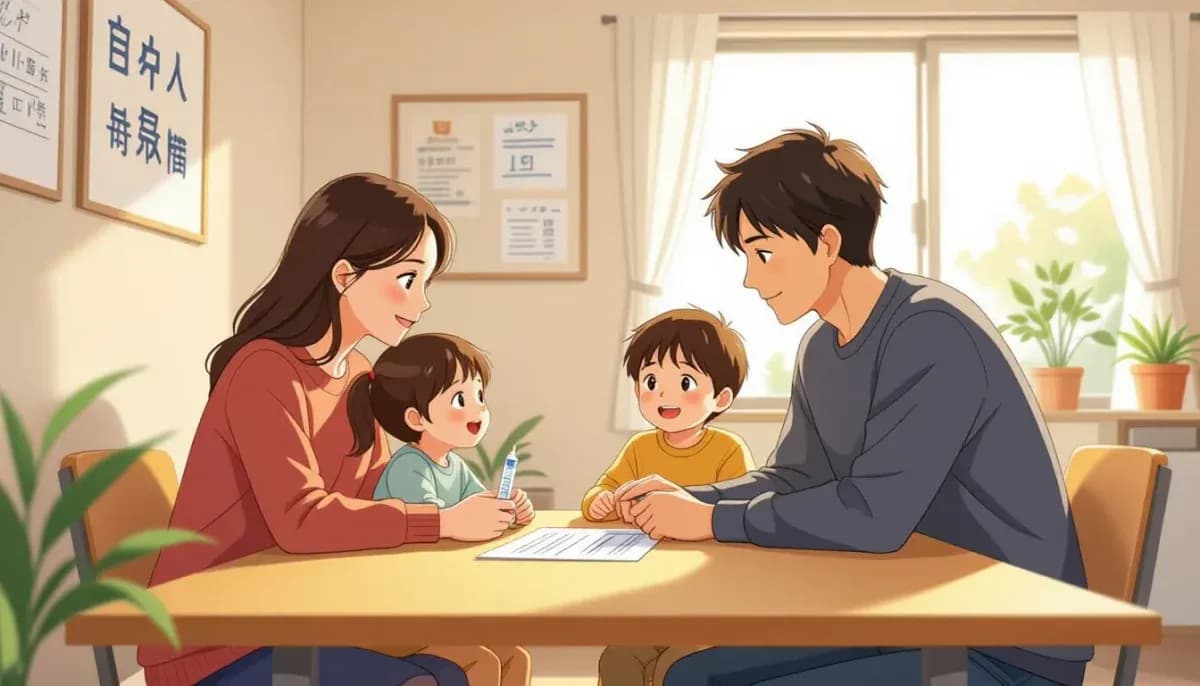
Complete guide to domestic violence resources in Japan for foreign families. Emergency hotlines, legal protections, shelters, and safety planning advice for expats experiencing abuse.
Domestic Violence Resources for Families in Japan: A Complete Guide
Domestic violence is a serious issue affecting families across Japan, and it impacts foreign residents just as much as Japanese nationals. If you or someone you know is experiencing abuse, it is critical to know that help is available — even for non-Japanese speakers. Japan has a growing network of support services, hotlines, shelters, and legal protections specifically designed to assist victims and their children.
This guide covers everything you need to know about domestic violence resources in Japan, how to access emergency help, what legal protections exist for foreign residents, and how to plan a safe exit from an abusive situation.
Understanding Domestic Violence in Japan
Domestic violence in Japan has been a growing public concern. According to a 2024 government survey reported by The Japan Times, a record 1 in 5 people in Japan reported experiencing partner abuse, and 1 in 4 reported spousal abuse. DV reports hit record highs for 16 consecutive years, with approximately 73.1% of victims being women. In 2022, Japan recorded yet another all-time high in reported cases.
Japan's Act on the Prevention of Spousal Violence and Protection of Victims (DV Prevention Act), first passed in 2001 and subsequently revised, provides the legal framework for protecting victims. Importantly, this law applies to all residents of Japan regardless of nationality or visa status.
Types of domestic violence recognized under Japanese law and support systems include:
- Physical violence — hitting, kicking, restraining
- Psychological/emotional abuse — threats, insults, isolation from family and friends
- Sexual violence — forced sexual acts, marital rape
- Economic abuse — controlling finances, preventing work, withholding money
- Cyber abuse — surveillance, monitoring devices, online harassment
- Child endangerment — violence in front of children, using children as tools of control
If you are a foreign family living in Japan, understanding your rights and available resources is the first step toward safety. For general legal guidance for foreign families, see our guide on Visa and Legal Issues for Foreign Families with Children in Japan.
Emergency Hotlines and Immediate Help
If you are in immediate danger, contact emergency services right away. Japan's emergency system is accessible to everyone, including foreigners.
| Service | Number | Hours | Languages |
|---|---|---|---|
| Police (Emergency) | 110 | 24/7 | Japanese (interpreters available) |
| Fire/Ambulance | 119 | 24/7 | Japanese |
| DV Consultation Navi | #8008 | 24/7 | Japanese (routes to local center) |
| DV Hotline Plus (Chat) | Online | 24/7 | 10 languages including English |
| TELL Lifeline (Tokyo) | 0800-300-8355 | 24/7 | English |
| Tokyo English Police Line | 03-3501-0110 | 24/7 | English |
| HELP Shelter (Tokyo) | 03-3368-8855 | 24/7 | Multiple languages |
| Child Guidance Center | 189 | 24/7 | Japanese |
| Yorisoi Hotline | 0120-279-338 | 24/7 | Japanese |
Key Numbers to Know
#8008 (DV Consultation Navi): Dial this number from anywhere in Japan to be automatically connected to your nearest Spousal Violence Counselling and Support Center. It uses an interactive voice response system to direct your call.
Domestic Violence Hotline Plus: Offers 24-hour phone and email counseling in Japanese, plus online chat in 10 languages: English, Tagalog, Thai, Spanish, Chinese, Korean, Portuguese, Nepali, Vietnamese, and Indonesian. This is extremely valuable for non-Japanese speakers.
TELL Lifeline (0800-300-8355): A free, anonymous English-language lifeline based in Tokyo. TELL can provide counseling, referrals, and guidance for foreigners experiencing abuse. Learn more at TELL Japan.
Legal Protections for Domestic Violence Victims in Japan
Japan's legal framework offers several important protections for DV victims, and these protections explicitly extend to foreign nationals.
Protection Orders
Under the DV Prevention Act, courts can issue protection orders against abusers. These orders can:
- Prohibit the abuser from approaching the victim or their children for 6 months
- Require the abuser to vacate the shared residence for 2 months
- Prohibit phone contact, emails, and social media contact with the victim
- Extend protection to children and other relatives of the victim
To apply for a protection order, contact your local women's consulting office or visit a Spousal Violence Counselling and Support Center.
Protections for Foreign Residents
One of the most important facts for foreign families to know: DV consultants and support centers are NOT required to report victims to immigration authorities. You can seek help without fear of deportation or negative impact on your visa status.
Additionally:
- Visa renewal is possible even without your spouse's cooperation if you are fleeing domestic violence
- The DV Prevention Act applies to all foreigners regardless of residence status, including undocumented residents
- You can file a "support measures application" (住民基本台帳事務における支援措置申出書) at your ward office to prevent your registered address from being disclosed to the abuser
- You can also file a "divorce opposition form" (離婚不受理申出書) to prevent your spouse from registering a divorce without your consent
For more on visa and residency issues affecting foreign families, see our article on Child Custody and Family Law in Japan for International Families.
For information about government support available to families in difficult situations, see Government Benefits and Subsidies for Families in Japan.
Support Organizations for Families in Japan
National Government Resources
The Gender Equality Bureau Cabinet Office maintains an online directory of all Spousal Violence Counselling and Support Centers across Japan. Their official information page provides guidance in English and links to multilingual resources. Visit Cabinet Office Gender Equality Bureau for the official directory.
Non-Profit Organizations
HELP (House in Emergency of Love and Peace) — Tokyo Phone: 03-3368-8855 HELP is one of Japan's most well-known shelters for women and children. It provides emergency accommodation, counseling, legal support, and assistance with daily living for women fleeing abuse.
Women's Net Saya Saya (WNSS) WNSS operates multiple programs including:
- Ring Program — supports mothers and children
- Sun Program — supports female victims toward self-reliance
- Change Program — trains young women to protect themselves
TELL Japan (Tokyo) Phone: 0800-300-8355 TELL offers free, anonymous English-language counseling through its lifeline. It also maintains a resource database for foreigners seeking specialized support.
Asian Women's Center Phone: 092-513-7333 Focuses on supporting Asian women in Japan, including foreign nationals facing abuse.
Prefectural Resources
Every prefecture in Japan has a Women's Consulting Office (女性相談センター) that can:
- Provide free counseling (in person and by phone)
- Arrange emergency temporary protection/shelters
- Connect victims with legal aid
- Assist with protection order applications
Contact your nearest prefectural Women's Consulting Office or dial #8008 to be connected. For reference, Gifu International Center provides an example of the kind of multilingual support available at regional international centers.
Protecting Children in Domestic Violence Situations
Children who witness or experience domestic violence suffer serious psychological harm. Japan recognizes this and has established specific protections for children in these situations.
Child Guidance Centers (児童相談所) handle cases involving child abuse and children in danger. The nationwide emergency hotline is 189 (dial three digits — ichihakyuu, "I want to save a child"). Available 24 hours a day.
Children in DV households may qualify for:
- Emergency placement in child welfare facilities
- Counseling and psychological support
- School enrollment assistance even during transitions between shelters
- Welfare benefits while in temporary housing
If you are worried about the mental health impact on your children, our guide on Mental Health and Emotional Wellbeing for Foreign Children in Japan provides additional context and resources.
For broader parenting support, see Baby and Infant Care in Japan: A Guide for Foreign Parents and Toddler Parenting in Japan: Ages 1 to 3.
Practical Steps: Safety Planning
If you are in an abusive situation, safety planning is essential. Here is a practical checklist for families:
Documents to Gather (Keep in a Safe Place Away from Home)
- Passports and residence cards (for yourself and children)
- Copies of birth certificates
- Your marriage certificate
- Bank account information (your own accounts)
- Insurance cards and medical records
- Children's school enrollment records
- Any documentation of abuse (photos, hospital records, police reports)
Emergency Actions
- Call #8008 to be connected to your nearest support center
- Contact TELL (0800-300-8355) if you need English-language guidance
- Contact your embassy — most embassies maintain lists of DV resources for their nationals. For example, the U.S. Embassy Japan maintains a dedicated DV resources page
- Go to your nearest police station to file a report and request emergency assistance
- Request temporary shelter through a Women's Consulting Office or HELP
Protecting Your Address
Once you are in a safe location, you can file a support measures application at your ward office so that your address cannot be provided to your abuser through the Basic Resident Register system.
Resources for Specific Communities
English-Speaking Expats and International Families
For English-speaking expats, the main resources are:
- TELL Lifeline (0800-300-8355) — free, anonymous, English-only
- DV Hotline Plus online chat — English available 24/7
- U.S. Embassy Tokyo — maintains DV resource lists for American citizens
- Living in Nihon — a comprehensive resource for foreigners living in Japan covering many legal and daily life topics: livinginnihon.com
Foreign Workers and Their Families
For foreign workers navigating family emergencies in Japan, For Work in Japan provides guidance on family-related procedures including insurance and medical care — important for families dealing with health impacts of DV.
Study Abroad and Younger Residents
For younger residents, students, or those enrolled in educational programs, Chuukou Benkyou is a resource covering education and life in Japan for non-native residents.
Breaking the Cycle: Long-Term Support
Leaving an abusive relationship is often the most dangerous time, and recovery is a long-term process. Japan's support systems extend beyond emergency intervention:
Legal Aid: The Japan Legal Support Center (Legal Aid) provides free or low-cost legal consultations. Call 0570-078377 (Mon–Fri 9am–9pm, Sat 9am–5pm).
Financial Support: Victims may qualify for welfare benefits (生活保護), child rearing allowance (児童扶養手当), and other subsidies while rebuilding their lives. See our guide to Financial Planning for Expat Families Raising Children in Japan for more on available financial support.
Counseling and Mental Health: Many women's centers offer free psychological counseling. Organizations like TELL also provide longer-term mental health support in English.
Children's Schooling: Schools in Japan are required to enroll children regardless of their parents' residential status during transitions. For guidance on schooling options, see Elementary School in Japan: A Complete Guide for Foreign Parents.
Summary: Key Resources at a Glance
| Resource | Contact | Language |
|---|---|---|
| DV Consultation Navi | #8008 | Japanese (nationwide routing) |
| DV Hotline Plus (Chat) | Online | 10 languages incl. English |
| TELL Lifeline | 0800-300-8355 | English |
| HELP Shelter Tokyo | 03-3368-8855 | Multiple |
| Police Emergency | 110 | Japanese (interpreter available) |
| Child Guidance Center | 189 | Japanese |
| Tokyo English Police | 03-3501-0110 | English |
| Japan Legal Support | 0570-078377 | Japanese |
| Gender Equality Bureau | gender.go.jp | English info available |
| U.S. Embassy Tokyo | jp.usembassy.gov | English |
You are not alone. Domestic violence affects people of all nationalities, backgrounds, and income levels. Japan has dedicated resources to help you and your children find safety and begin rebuilding. Reaching out to one of the hotlines above is the first step — and it is completely confidential.

Originally from Vietnam, living in Japan for 16+ years. Graduated from Nagoya University, with 11 years of professional experience at Japanese and international companies. Sharing practical information for foreign parents raising children in Japan.
View Profile →Related Articles
Changing Children's Names After Divorce in Japan
A complete guide for foreign parents on how to change your child's surname after divorce in Japan — covering koseki rules, family court petitions, dual nationality, and the 2024 custody reform.
Read more →
Legal Rights of Unmarried Foreign Parents in Japan
Complete guide to legal rights of unmarried foreign parents in Japan: recognition (ninchi), parental authority, child nationality, visa options, and the 2024 Civil Code reform explained.
Read more →
Protecting Children's Wellbeing During Divorce in Japan
A complete guide for foreign parents on protecting children's wellbeing during divorce in Japan — covering custody, child support, school continuity, visa issues, and emotional support strategies.
Read more →
Custody Battles Involving Foreign Parents in Japan
Foreign parents navigating custody battles in Japan face a unique legal system. Learn how sole custody works, what the 2024 reform means, Hague Convention rights, and practical steps to protect your parental rights.
Read more →
International Family Law Attorneys in Japan
Find the right international family law attorney in Japan. Learn about divorce, child custody, the 2025 joint custody reform, Hague Convention cases, and free legal resources for foreign nationals.
Read more →
Family Mediation Services in Japan for Disputes
Understand family mediation (choutei) in Japan as a foreigner — from mandatory court mediation to private English-language services, custody rules, and free legal support resources.
Read more →