
Family Mediation Services in Japan for Disputes

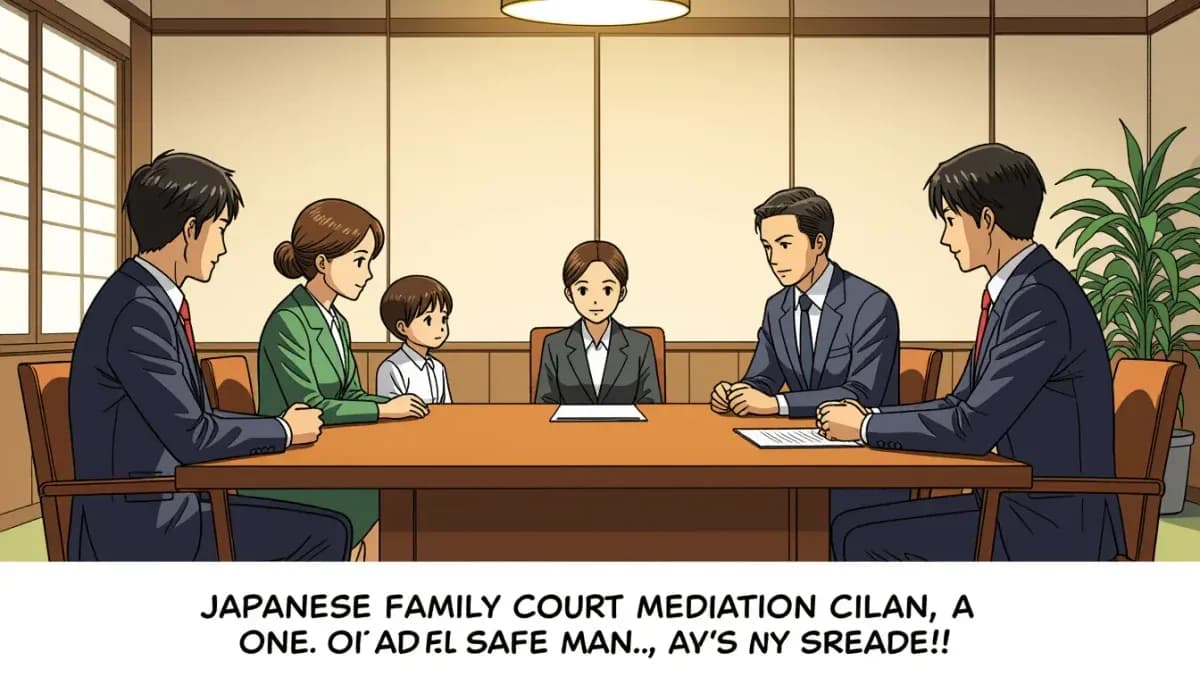
Understand family mediation (choutei) in Japan as a foreigner — from mandatory court mediation to private English-language services, custody rules, and free legal support resources.
Family Mediation Services in Japan for Disputes: A Complete Guide for Foreigners
Navigating family disputes as a foreigner in Japan can be an overwhelming experience. Whether you are dealing with a divorce, child custody disagreement, inheritance conflict, or other domestic legal matter, Japan's family mediation system works very differently from what most Westerners expect. Understanding how mediation (調停, choutei) functions — and where to find English-speaking support — is essential for protecting your rights and those of your children.
This guide covers everything foreign residents need to know about family mediation services in Japan, from the mandatory court mediation process to private services that operate in English.
What Is Family Mediation in Japan?
Family mediation in Japan is a court-supervised process in which a neutral panel helps disputing parties reach a voluntary agreement. Known as choutei (調停), it is administered by the Family Court (Katei Saibansho) and is fundamentally different from Western-style mediation in several key ways:
- It is mandatory before litigation. Japanese law requires all contested family disputes — including divorce, custody, visitation, and inheritance — to go through family court mediation before any lawsuit can be filed. You cannot bypass this step.
- Parties never face each other directly. The mediator alternates between separate rooms to speak with each side. This significantly reduces confrontation and emotional escalation.
- Sessions are led by trained mediators and a judge. Each mediation panel typically consists of two mediators (traditionally one man and one woman) supervised by a family court judge who can offer legal guidance.
- Outcomes are voluntary but court-enforceable. If both parties reach an agreement, it is recorded as a court settlement and carries the same legal weight as a court judgment.
For foreigners, understanding that mediation is not optional but legally required is often the first major surprise when facing a family legal dispute in Japan.
Types of Disputes Covered by Family Mediation
Japan's family courts handle a broad range of personal and domestic conflicts through the mediation process. The most common cases for foreign residents include:
| Type of Dispute | Japanese Term | Notes for Foreigners |
|---|---|---|
| Divorce | 離婚調停 (rikon choutei) | Required before contested divorce litigation |
| Child Custody | 親権 (shinken) | Only sole custody recognized until 2026 reform |
| Visitation Rights | 面会交流 (menkai kouryuu) | Weakly enforced; typically once/month |
| Child Support | 養育費 (youikuhi) | Amount set by national guidelines |
| Property Division | 財産分与 (zaisan bunyo) | Includes pension, real estate |
| Inheritance Disputes | 遺産分割調停 | Common in international marriages |
| Domestic Violence | DV cases | Separate protective order process available |
| International Child Abduction | 国際的な子の連れ去り | Hague Convention applies since 2014 |
For foreign families specifically, divorce and custody disputes are the most frequently mediated matters, and they come with unique complications related to international law, residency status, and cross-border enforcement.
How the Family Court Mediation Process Works
Understanding the step-by-step process helps you prepare mentally and logistically. Here is what to expect:
Step 1: Filing for Mediation
Either party can file a petition for mediation (調停申立書) at the Family Court with jurisdiction over the other party's registered address (jusho). The filing fee is modest — typically ¥1,200 to ¥2,000 in revenue stamps plus postage. You will need to submit the petition form, a copy of your family register (koseki tohon), and a statement of your claims.
For foreign nationals, additional documents such as certified translations of foreign birth certificates or marriage certificates may be required.
Step 2: Scheduling and Attendance
The court will schedule mediation sessions, typically six to eight weeks apart. Both parties are required to attend, though attendance by proxy (with an attorney) is permitted in some circumstances. Sessions generally last two to three hours.
Foreign residents who cannot speak Japanese should arrange for an interpreter. While family courts do not automatically provide professional interpretation services, you can bring your own interpreter or request assistance through certain NGOs and legal aid organizations.
Step 3: The Mediation Sessions
During each session, the mediators speak alternately with each party in separate rooms. They gather each side's position and concerns, relay proposals between parties, and help identify common ground. A family court judge oversees proceedings and may provide legal perspective on likely court outcomes if the case proceeds to trial.
The process typically takes 3 to 8 months and requires multiple sessions. Parties are free to bring an attorney (bengoshi) to assist them throughout.
Step 4: Agreement or Escalation
If both parties agree on all points, the agreement is formalized as a choutei seiristu (調停成立), a binding court settlement. If mediation fails, the case may proceed to:
- Shinpan (family court adjudication) — a judge makes a binding decision
- Rikon sosho (divorce litigation) — full courtroom trial
Statistically, about 9% of Japanese divorces are resolved through family court mediation, while roughly 90% are settled by mutual written consent (kyogi rikon) and only 1% reach courtroom judgment. However, foreigners often need the more formal routes because simple "stamp and signature" divorces may not be recognized in their home countries.
Child Custody and Visitation: What Foreigners Must Know
Child custody disputes are among the most emotional and legally complex issues that foreign families face in Japan. Here are the critical points:
Sole Custody Is the Current Rule
Japan currently only recognizes sole parental authority after divorce. Approximately 90% of sole custodians are mothers. The May 2026 Civil Code revision will introduce joint custody as an option for the first time in Japanese history — a landmark change long advocated by international advocacy groups and foreign governments.
Visitation Is Underenforceable
Unlike many Western countries, Japan has historically provided very weak enforcement of court-ordered visitation. Research shows:
- The most common mediated visitation arrangement is once per month (44% of agreements)
- Twice-monthly or more frequent contact is agreed in only 7.7% of cases
- Approximately 70% of divorced non-custodial parents have no ongoing visitation with their children at all
This reality is particularly difficult for foreign nationals, who may face the additional barrier of an international move disrupting all contact with their child.
Hague Convention Cases
Japan ratified the 1980 Hague Convention on International Child Abduction in April 2014. This means Japan now has international obligations to return children wrongfully removed from their country of habitual residence. The Ministry of Foreign Affairs (MOFA) serves as Japan's Central Authority and can facilitate mediation in Hague cases — often at no initial cost to the parties.
For more information on the legal aspects of custody disputes and international family law, see our detailed guide on Child Custody and Family Law in Japan for International Families.
Private English-Language Mediation Services
For foreigners who prefer private mediation outside the court system — or who need an English-speaking mediator for cross-cultural disputes — several services are available.
TCI Mediation Services (japanmediation.com)
One of the best-known private English-language mediation services in Japan, TCI Mediation Services is run by international lawyer Gerald Thomas and operates in Kobe, Osaka, and Tokyo. The service specializes in:
- Cross-cultural divorce and separation
- International custody and parenting agreements
- Inheritance and estate disputes
- Business and commercial family disputes
TCI is registered with the Japan International Mediation Center (JIMC-Kyoto) and the Mediation Center Osaka (Ministry of Justice recognized). Private mediation through services like this typically resolves within one to two days of sessions and reports a success rate of over 70%. Fees are charged per session or per day and are outlined on their website.
For more details on finding work and building a stable family life in Japan, visit For Work in Japan's Family Life Guide.
International Mediation Services via MOFA
The Ministry of Foreign Affairs coordinates specialized mediation for international family cases — particularly Hague Convention cases involving child abduction. MOFA-commissioned ADR institutions can provide initial sessions at no cost to parties in qualifying international disputes.
MIFA Project (Osaka University)
The Mediation in International Family Matters (MIFA) project at Osaka University trains mediators specifically for cross-border family disputes. They offer bilingual (Japanese/English) trained mediators and have been actively involved in developing Japan's international family mediation framework.
Free and Low-Cost Legal Support for Foreign Nationals
Not everyone can afford a private attorney or mediator. Japan has several systems to help:
Japan Legal Support Center (Houterasu / JLSC)
The Japan Legal Support Center (known as Houterasu) provides civil legal assistance — including family law consultations — to foreign nationals residing in Japan who meet income thresholds. Services include:
- Free legal consultation (up to three sessions on the same issue)
- Repayable attorney fee advances for ongoing legal matters
- Referrals to attorneys who handle family law
Houterasu operates across Japan and has multilingual phone support. This is often the best first step for foreigners who need guidance but cannot afford a private attorney.
International Social Service Japan (ISSJ)
The International Social Service Japan provides psycho-social casework support for foreign nationals in family crisis situations, including cross-border custody and separation cases. ISSJ can help coordinate communication between families across international borders.
Local Municipal Legal Consultations
Most city offices (shiyakusho) offer free legal consultation sessions (horitsu sodan) — typically 30 minutes with a licensed attorney — that are available regardless of nationality. These can help you understand your rights before filing for mediation.
For broader information about legal matters affecting foreign families in Japan, see our guide on Visa and Legal Issues for Foreign Families with Children in Japan.
Tips for Foreigners Navigating Family Mediation in Japan
Based on the experiences of expats and guidance from legal professionals, here are practical recommendations:
- Hire a bilingual attorney early. Having a bengoshi who speaks both Japanese and your language is invaluable. They can attend mediation sessions with you and ensure nothing is lost in translation.
- Bring a certified interpreter if needed. Court mediators are not responsible for translation. If you do not speak Japanese confidently, bring a certified interpreter to every session.
- Document everything. Keep records of all communications with your spouse or partner, especially regarding children. Court mediators and judges take documentation seriously.
- Understand the realistic outcomes. Visitation enforcement is weak in Japan. Entering mediation with realistic expectations — rather than assuming Japanese courts will mirror Western outcomes — helps reduce disappointment.
- Consult your country's embassy. Many embassies in Tokyo (including the US, UK, Australian, and European embassies) have consular services that can provide lists of bilingual attorneys and explain how Japanese family law decisions may be treated in your home country.
- Register your child's birth at your embassy. Children born in Japan to foreign nationals should be registered at both the Japanese city hall and the relevant foreign embassy. This is important for future custody or abduction prevention documentation.
For guidance on supporting children's emotional wellbeing during difficult family transitions, see our resource on Mental Health and Emotional Wellbeing for Foreign Children in Japan.
Comparison: Court Mediation vs. Private Mediation
| Feature | Family Court Mediation | Private Mediation |
|---|---|---|
| Cost | Low (court fees only) | Moderate to high (per session) |
| Language | Japanese (interpreter needed) | English available |
| Timeline | 3–8 months | 1–2 days of sessions |
| Mandatory | Yes (before litigation) | No (voluntary) |
| Enforcement | Court-backed | Requires separate court filing |
| Cross-cultural expertise | Limited | High (with right provider) |
| Success rate | ~50-60% | 70%+ (private services) |
For many foreign families, the ideal approach is to begin with private mediation to reach an agreement quickly, then have that agreement ratified by the family court for enforceability.
Additional Resources and Further Reading
- International Marriage and Partnership in Japan Guide — Living in Nihon's comprehensive guide on international marriage in Japan, covering legal registration, rights, and cultural considerations.
- Family Life in Japan for Foreigners — For Work in Japan's complete resource on family life, including practical guides for foreign residents.
- TCI Mediation Services Japan — Private English-language mediation for cross-cultural family disputes in Japan.
- ICLG Family Laws and Regulations — Japan — International Comparative Legal Guide's detailed breakdown of Japanese family law for 2026.
- Ministry of Foreign Affairs Japan — International Family Mediation — Official MOFA page on mediation services for international family matters.
- GaijinPot — Divorce in Japan: Custody, Property and Prenups Explained — Practical expat-focused overview of divorce in Japan.
- Chuukou Benkyou — Japanese educational resource for families navigating Japan's school system, useful for parents planning their children's future in Japan.
Conclusion
Family mediation in Japan is a structured, court-supervised process that differs significantly from what most foreigners are accustomed to. The mandatory nature of choutei, the sole custody framework, and the weak enforcement of visitation agreements can be deeply frustrating for foreign nationals. However, with the right preparation — a bilingual attorney, realistic expectations, and knowledge of available private services — it is possible to navigate the system effectively.
The upcoming joint custody reform in 2026 signals that Japan is beginning to align more closely with international family law norms. For foreign families currently dealing with disputes, understanding both the formal court process and the available private mediation alternatives is the most important first step.
If you have children in Japan and are dealing with related concerns about their education or wellbeing during family transitions, explore our guides on Elementary School in Japan for Foreign Parents and Healthcare and Medical Care for Children in Japan.

Originally from Vietnam, living in Japan for 16+ years. Graduated from Nagoya University, with 11 years of professional experience at Japanese and international companies. Sharing practical information for foreign parents raising children in Japan.
View Profile →Related Articles
Changing Children's Names After Divorce in Japan
A complete guide for foreign parents on how to change your child's surname after divorce in Japan — covering koseki rules, family court petitions, dual nationality, and the 2024 custody reform.
Read more →
Legal Rights of Unmarried Foreign Parents in Japan
Complete guide to legal rights of unmarried foreign parents in Japan: recognition (ninchi), parental authority, child nationality, visa options, and the 2024 Civil Code reform explained.
Read more →
Protecting Children's Wellbeing During Divorce in Japan
A complete guide for foreign parents on protecting children's wellbeing during divorce in Japan — covering custody, child support, school continuity, visa issues, and emotional support strategies.
Read more →
Custody Battles Involving Foreign Parents in Japan
Foreign parents navigating custody battles in Japan face a unique legal system. Learn how sole custody works, what the 2024 reform means, Hague Convention rights, and practical steps to protect your parental rights.
Read more →
International Family Law Attorneys in Japan
Find the right international family law attorney in Japan. Learn about divorce, child custody, the 2025 joint custody reform, Hague Convention cases, and free legal resources for foreign nationals.
Read more →
Domestic Violence Resources for Families in Japan
Complete guide to domestic violence resources in Japan for foreign families. Emergency hotlines, legal protections, shelters, and safety planning advice for expats experiencing abuse.
Read more →