
Understanding Hafu Identity in Modern Japan

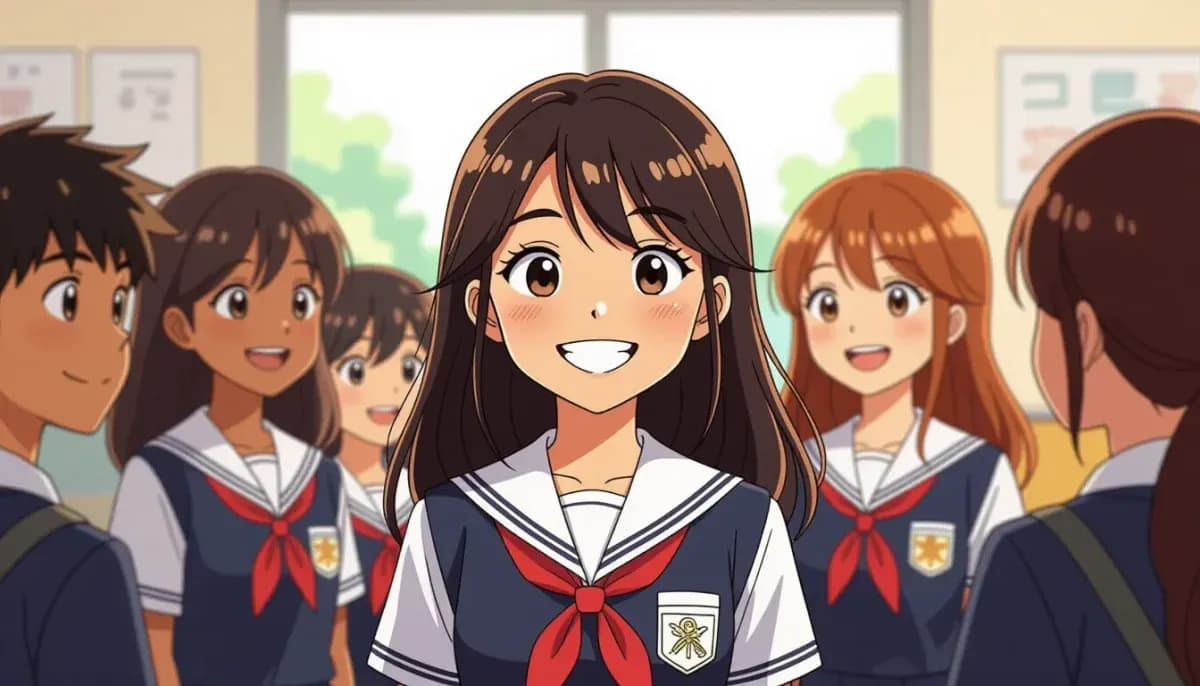
Explore what it means to be hafu in Japan today — the challenges of mixed-race identity, terminology debates, discrimination statistics, and practical tips for parents raising mixed-heritage children.
Understanding Hafu Identity in Modern Japan
Growing up as a hafu — a person of mixed Japanese and foreign heritage — is a uniquely complex experience that sits at the intersection of two or more cultures, languages, and social expectations. Whether you are raising a mixed-race child in Japan, are hafu yourself, or simply want to better understand the lives of Japan's growing mixed-heritage population, this guide offers a comprehensive look at what hafu identity means in modern Japan: the challenges, the opportunities, the terminology debates, and the shifting cultural landscape.
What Does "Hafu" Mean and Where Did the Word Come From?
The word "hafu" (ハーフ) is a Japanese rendering of the English word "half" and refers to a person who has one Japanese parent and one parent of a different nationality or ethnicity. The term became common in post-World War II Japan, partly as a result of interactions between Japanese citizens and American military personnel stationed in the country.
Before "hafu" entered common usage, mixed-heritage children were often referred to as konketsuji (混血児), meaning "mixed-blood child" — a term now widely considered derogatory and no longer used in polite discourse. The shift to "hafu" represented a linguistic softening, but the word itself remains controversial.
Critics of "hafu" argue that the term emphasizes incompleteness — being "only half" Japanese — rather than celebrating duality. This has given rise to alternative terms:
- Daburu (ダブル) — from the English "double," emphasizing that the person has two complete cultural heritages rather than being a fraction of one
- Kokusaiji (国際児) — "international child," a neutral bureaucratic term sometimes used in educational contexts
- Mikkusu (ミックス) — a direct transliteration of "mixed," often used informally
In Okinawa, where the legacy of the American military presence is especially pronounced, the term Amerajian (アメラジアン) — a portmanteau of "American" and "Asian" — has been used since the 1990s for children of Japanese-American parentage.
The terminology debate is more than semantic. Language shapes identity, and many hafu individuals describe choosing which word to use as a deeply personal act of self-definition. For parents raising mixed-heritage children in Japan, being thoughtful about the vocabulary used at home can have a lasting impact on how a child sees themselves.
How Many Hafu People Live in Japan?
Japan's population is often described as ethnically homogeneous, and statistically, this remains true — ethnic Japanese make up approximately 98.5% of the population. However, the mixed-heritage population is growing steadily and is more visible than ever.
According to Japan's Ministry of Health, Labor and Welfare, 1 in every 49 babies born in Japan has at least one non-Japanese parent, representing approximately 2.1% of all births as of 2023. Japan also records more than 30,000 international marriages per year, accounting for roughly 1 in 30 of all unions.
These numbers are likely undercounts. Official statistics only capture children born in Japan to registered international couples, missing hafu children born abroad, children of undocumented residents, and those whose foreign parentage isn't registered with local authorities.
| Metric | Data |
|---|---|
| Hafu births per year (approx.) | ~15,120 (2.1% of all births) |
| International marriages per year | ~30,000+ (1 in ~30 unions) |
| Japan's ethnic Japanese population | ~98.5% |
| Hafu runway models in Japan | 30–40% of runway models |
| Hafu students reporting bullying | 68% (2024 Asahi Shimbun poll) |
| Hafu experiencing microaggressions | 98% (2024 Hafu Talk survey) |
The entertainment and fashion industries are notable exceptions to hafu's demographic invisibility. An estimated 30–40% of runway models in Japanese fashion shows identify as hafu, and many of Japan's most internationally recognized celebrities — including tennis champion Naomi Osaka, singer Namie Amuro, and model Kiko Mizuhara — are of mixed heritage. This creates a paradox: hafu are simultaneously idealized for their appearance in popular culture and subjected to discrimination in everyday life.
The Real Challenges of Growing Up Hafu in Japan
For all the visibility hafu enjoy in entertainment, daily life for mixed-heritage children and adults in Japan is often far more complicated. Research and personal testimonies consistently document a range of challenges:
Microaggressions and Identity Questioning
A 2024 survey by the nonprofit organization Hafu Talk found that 98% of 183 respondents with mixed Japanese heritage had experienced microaggressions. These range from comments like "Your Japanese is so good!" (said to someone born and raised in Japan) to questions such as "Where are you really from?" or "You don't look Japanese."
These interactions, while often well-intentioned, carry an implicit message: that hafu people are not fully Japanese and can never be. For children, hearing these messages repeatedly can erode a sense of belonging and complicate the formation of a stable identity.
Bullying and School Discrimination
A September 2024 poll by the Asahi Shimbun of 448 multi-racial students found that 68% had experienced bullying or discrimination linked to their background. Hafu children who look visibly different — lighter hair, larger eyes, darker skin — are often subject to teasing, exclusion, or unwanted attention from peers.
Japan's school culture, with its strong emphasis on conformity and group belonging, can be particularly difficult to navigate for children who stand out physically. The proverb "the nail that sticks out gets hammered down" (出る釘は打たれる, deru kui wa utareru) captures something real about the social pressure Japanese children face to conform.
The Racial Hierarchy Within Hafu
Not all hafu experiences are equal. Research and community accounts document a clear hierarchy: children who appear white or European-Asian are more likely to be admired and treated favorably, while those of Japanese-Southeast Asian or Japanese-African heritage face greater prejudice. This reflects broader racial biases in Japanese society and can create painful divisions even within the hafu community itself.
Legal and Bureaucratic Challenges
Japanese law does not recognize dual nationality for adults. Children born to one Japanese and one foreign parent may hold dual citizenship until they turn 20, at which point they are legally required to choose a single nationality. This forced choice can feel like being asked to deny part of one's identity, and it has practical consequences: Japanese citizens living abroad may need to carefully plan for their children's nationality decision as the deadline approaches.
For more on visa and legal issues facing international families, see our guide on Visa and Legal Issues for Foreign Families with Children in Japan.
The Psychological Dimension: Building a Healthy Identity
One of the most important things parents of hafu children can do is support a positive, stable sense of identity. Research on children of mixed heritage globally suggests that the outcomes are best when children are encouraged to embrace — rather than choose between — their multiple heritages.
Affirm Both Sides
Make both cultural heritages present in your home. Celebrate Japanese holidays alongside the holidays of the non-Japanese parent's culture. Use both languages. Cook food from both culinary traditions. When children see both parts of their identity reflected and valued at home, they are better equipped to handle the outside world's questions.
Normalize Complexity
Help your child develop language to explain who they are. Practice responses to common questions like "Where are you from?" in ways that feel honest and empowering, not defensive. "I'm Japanese and [nationality]" is a complete and dignified answer.
Connect with Community
There is growing community infrastructure for hafu individuals and families in Japan. In Tokyo and Yokohama in particular, hafu meetup groups, Facebook communities, and advocacy organizations like Hafu Talk provide spaces where mixed-heritage people can share experiences, find solidarity, and receive support. Connecting your child with other hafu peers — whether in person or online — can be enormously beneficial.
For additional strategies on supporting multilingual and multicultural children, see our guides on Raising Bilingual Children in Japan and Heritage Language Maintenance for Children in Japan.
The Shifting Cultural Narrative: Signs of Change
While the challenges are real, there are also meaningful signs that Japan's relationship with hafu identity is evolving.
In 2025, a 14-year-old hafu student's essay titled "Hafu dakara nanda" (ハーフだからなんだ — "Hafu, so what?") won a national human rights prize in Japan. The essay argued that being hafu should be seen as a source of pride and richness, not otherness. The prize and the media attention it generated reflected a broader, generational shift in attitudes — particularly among younger Japanese people, who tend to be more comfortable with diversity.
High-profile hafu athletes and entertainers have also played a role in reshaping public perception. When Naomi Osaka carried the Olympic torch at the Tokyo 2020 Games, it was a highly visible statement about who counts as Japanese. Her openness about her identity struggles — including her complicated relationship with both Japanese and American cultures — has resonated deeply with many hafu people.
Urban-rural divides remain significant. Hafu children in major cities like Tokyo, Osaka, or Yokohama generally encounter more diverse peer groups and more accepting social environments than those in rural areas, where standing out physically can lead to more intense scrutiny.
Practical Tips for Parents Raising Hafu Children in Japan
If you are raising a mixed-heritage child in Japan, here are concrete steps you can take to support their wellbeing and identity development:
At home:
- Speak both languages consistently; consider a "one parent, one language" approach
- Display cultural artifacts, music, and art from both heritages
- Tell stories about family members from both sides
- Avoid framing either culture as superior or inferior
At school:
- Meet with teachers early in the year to flag potential issues
- Clarify how your child's name is pronounced and ask that it be used correctly
- If bullying occurs, document it and escalate through school administration — the guidance counselor (sukuuru kaaunsera) can be a key ally
- Consider whether the school's diversity experience matches your family's needs; international schools and multicultural schools exist as alternatives
In the community:
- Seek out playgroups, sports teams, or hobby classes where your child may meet other international or mixed-heritage children
- Look for hafu community organizations in your city
- Allow your child to identify themselves however feels right to them — and support that identity even if it shifts over time
For more on navigating Japan's school system as a foreign family, see our guides on Elementary School in Japan and Junior High School in Japan.
Resources and Further Reading
Understanding hafu identity is an ongoing conversation, and there are excellent resources available for families who want to learn more:
- Living in Nihon — Practical guides for foreigners living in Japan, including resources on daily life and community
- For Work in Japan — Information for foreign residents navigating work and life in Japan
- Chuukou Benkyou — Educational resources for families navigating Japan's school system
- Hafu: The Ups And Downs Of Being 'Half Japanese' In Japan — Savvy Tokyo's in-depth exploration of the hafu experience
- What's in a Name? Mixed Race and Identity in Japan — Nippon.com's academic overview of hafu terminology and demographics
- Hafu Life in Japan: Exploring Mixed-Race Identity and Cultural Experiences in 2025 — A current overview of hafu community life and identity
Conclusion
The hafu experience in Japan is not a single story. It encompasses immense diversity — of backgrounds, of appearances, of social environments, and of individual temperaments. Some hafu children will navigate their identity with relative ease; others will face real struggles. What is clear from both research and lived experience is that parental support, community connection, and cultural affirmation are among the most powerful factors in positive outcomes.
Japan is changing, slowly and unevenly. The generation now in schools is more globally oriented than any before it. The cultural narratives around hafu identity are shifting, even if the pace can feel frustratingly slow. As a parent, educator, or community member, your role in that shift — through the language you use, the attitudes you model, and the communities you build — is more important than you might think.
For a broader look at the cultural context in which hafu identity exists, explore our pillar guide on Cultural Identity for Hafu and Mixed-Race Children in Japan.

Originally from Vietnam, living in Japan for 16+ years. Graduated from Nagoya University, with 11 years of professional experience at Japanese and international companies. Sharing practical information for foreign parents raising children in Japan.
View Profile →Related Articles
Growing Up Bilingual and Bicultural as a Hafu in Japan
A comprehensive guide to raising hafu children in Japan — bilingual development strategies, cultural identity support, school life tips, and community resources for bicultural families.
Read more →
Books and Resources About Being Hafu for Children
A complete guide to the best books, films, communities, and resources to help hafu (mixed-heritage) children in Japan build a strong, positive identity. Includes recommended picture books, documentaries, and online support groups for parents.
Read more →
International Community Support for Hafu Families
Find community support for hafu and mixed-heritage families in Japan. Online groups, non-profits, school resources, and cultural events to help bicultural families thrive.
Read more →
Hafu Children's Experiences in Japanese Schools
Discover what hafu (mixed-race) children experience in Japanese schools — from identity challenges and bullying to bilingual expectations and practical tips for parents raising bicultural kids in Japan.
Read more →
How to Talk to Your Children About Race and Ethnicity
A practical guide for foreign parents and expat families in Japan on how to talk to children about race and ethnicity, mixed heritage identity, and building resilience in a multicultural family.
Read more →
Multicultural Identity Development Stages in Children
Understand the 5 stages of multicultural identity development for children raised in Japan. Practical guidance for expat and mixed-heritage families supporting their kids.
Read more →