
Hafu Children's Experiences in Japanese Schools

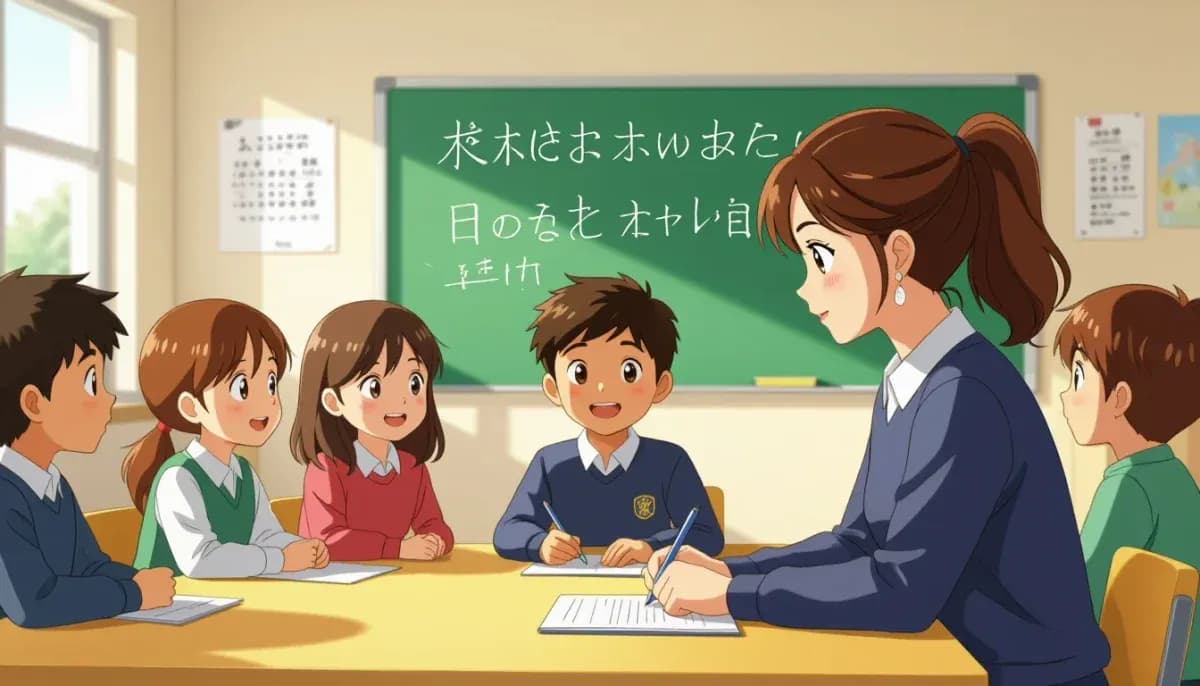
Discover what hafu (mixed-race) children experience in Japanese schools — from identity challenges and bullying to bilingual expectations and practical tips for parents raising bicultural kids in Japan.
Hafu Children's Experiences in Japanese Schools: A Complete Guide for Parents
If your child is hafu — born to one Japanese and one non-Japanese parent — navigating the Japanese school system comes with a unique set of challenges and rewards. Understanding what your child may experience, and how to support them, is one of the most important things you can do as a parent raising a bicultural child in Japan.
This guide covers the real experiences of hafu children in Japanese schools, from social dynamics and identity struggles to practical strategies that help your child thrive.
What Does "Hafu" Mean and How Common Are These Children?
The word hafu (ハーフ) comes from the English word "half" and refers to individuals born to one Japanese parent and one parent from another country. As of 2023, approximately 15,120 children (about 2.1%) were born in Japan to parents where one held foreign nationality. Japan now records more than 30,000 international marriages per year — roughly 1 in 30 of all marriages.
According to Japan's Ministry of Health, Labour and Welfare, 1 in 49 babies born in Japan today has at least one non-Japanese parent. While Japan remains one of the world's most ethnically homogeneous countries (approximately 98.5% Japanese as of recent estimates), the hafu population is quietly growing.
Some families and advocates prefer the term "double" (ダブル) over hafu. The argument is simple: calling a child "half" implies they are incomplete, whereas calling them "double" celebrates both cultural heritages as an asset. This terminology shift has gained traction in younger, urban communities.
The Social Landscape: What Hafu Children Face in Japanese Schools
Japanese schools are built on strong norms of conformity. The cultural saying "the nail that sticks out gets hammered down" (出る釘は打たれる) shapes much of the classroom dynamic. For hafu children who look or act differently, this can be particularly challenging.
Visibility and How It Shapes Experience
One of the most important factors affecting a hafu child's school experience is physical appearance. The way a child looks determines whether they visually "blend in" or stand out immediately:
| Appearance Type | Common Experience |
|---|---|
| Eurasian (Japanese + White/Western) | Often admired or exoticized; may receive comments on being "kawaii" or looking like a doll |
| Asian-heritage mix (Japanese + Chinese/Korean/Southeast Asian) | More likely to "pass" visually but may still face hidden biases |
| Dark-skinned hafu (Japanese + African/South Asian) | Report significantly higher rates of direct bullying and exclusion |
| Visually ambiguous | May avoid overt bullying but experience questions about identity |
This racial hierarchy within the hafu community reflects broader societal biases in Japan and can create painful dynamics even among mixed-race children themselves.
Bullying and Exclusion
Bullying (ijime) is a documented challenge in Japanese schools generally, and hafu children can be more vulnerable. Reported experiences include:
- Being teased about physical differences (hair color, eye shape, skin tone)
- Questions about food: "Why does your lunchbox smell different? Are you really Japanese?"
- Being called derogatory names or questioned about their nationality
- Exclusion from social groups because they are seen as "different"
Location matters significantly. Rural schools tend to have less exposure to diversity, meaning hafu children may be the only non-fully-Japanese student in their class. Urban areas — particularly Yokohama, Tokyo, and Fukuoka — generally offer more accepting environments, partly due to international school communities and greater cultural exposure.
For more on how bullying affects foreign children in Japan's schools, see our guide on mental health and emotional wellbeing for foreign children in Japan.
Identity Challenges: The "Between Two Worlds" Experience
Perhaps the most profound challenge for hafu children is not social exclusion, but the deeper question of identity. Many hafu children grow up feeling that they belong fully to neither Japan nor their other country of heritage.
This manifests in several ways:
- At Japanese school: They are treated as a foreigner, expected to know English (or another language) perfectly, and may be asked to perform their "foreignness" for classmates
- In their other heritage country: They may be seen as "Japanese" and struggle to connect with that culture
- At home: Navigating two sets of cultural expectations, languages, and family dynamics can be exhausting
Researchers describe this as a gap between self-identity (how the child sees themselves) and ascribed identity (how others categorize them). Children often spend years negotiating this gap, and without support, it can lead to anxiety, low self-esteem, and social withdrawal.
A powerful example of changing attitudes: in 2025, a 14-year-old hafu student's essay titled "Hafu dakara nanda" (Hafu, so what?) won a national human rights prize. Japanese commenters widely praised the essay's direct challenge to stereotypes — a sign that especially in younger generations, attitudes are shifting.
For deeper reading on cultural identity development for mixed-race children, visit our article on cultural identity for hafu and mixed-race children in Japan.
The Language Question: Bilingual Expectations and Reality
One of the most persistent assumptions hafu children face is that they are automatically bilingual. Teachers, classmates, and even well-meaning adults frequently assume that a child with a foreign parent speaks perfect English (or another language) — often regardless of whether that is true.
This creates pressure in several directions:
- A child who does not speak the other language feels shame or inadequacy
- A child who does speak another language may be singled out or treated as the class "translator"
- Parents may receive requests from teachers to help with English lessons, which can feel intrusive
The reality is that bilingualism requires deliberate effort — it does not happen automatically just because one parent speaks another language. Many hafu children raised in Japan with limited heritage language input end up fully Japanese-dominant.
For practical strategies on raising bilingual children in Japan, see our comprehensive guide on raising bilingual children in Japan and teaching Japanese to foreign children.
The Citizenship Question: An Important Legal Reality
Japan does not permit dual citizenship in adulthood. Hafu children who hold both Japanese citizenship and citizenship of another country must officially choose one nationality before their 22nd birthday. This is one of the most significant practical challenges facing hafu families:
- Children may feel forced to "choose" between identities
- Losing a passport can affect future travel, career, and family ties
- The process requires legal paperwork and often goes undiscussed until the deadline approaches
Parents should research this early and have open, age-appropriate conversations with their children about the decision. Consulting a lawyer who specializes in international family law in Japan is strongly recommended. See our guide on visa and legal issues for foreign families with children in Japan for more details.
How Schools Are Responding: Progress and Gaps
Japanese public schools (kokuritsu and koritsu schools) are slowly becoming more aware of the needs of multicultural students. Some positive developments:
- The Ministry of Education has issued guidance on supporting students with foreign backgrounds
- Some municipalities — especially those with large foreign resident populations — offer Japanese language support classes
- Diversity education (jinken kyoiku, or human rights education) is increasingly incorporated into school curricula
However, gaps remain. Many teachers have little training in supporting bicultural or multilingual children. Policies can vary enormously between prefectures, school districts, and even individual schools.
For more on navigating the Japanese school system as a foreign family, see our guides on elementary school in Japan and junior high school in Japan.
Practical Tips for Parents of Hafu Children
Supporting your hafu child in Japanese school requires a combination of practical preparation, emotional support, and community building.
Before school starts:
- Visit the school and meet the homeroom teacher (tantou sensei) early
- Explain your child's background and language situation honestly
- Ask about any available support programs for multicultural students
Ongoing support:
- Talk openly with your child about identity — validate both sides of their heritage
- Connect with hafu community groups (Facebook's Hafu Japanese group has 6,000+ members)
- Read books and watch media featuring mixed-race protagonists
- Consider supplementary Japanese language or heritage language classes
When problems arise:
- Document any bullying incidents and report them in writing to the school
- Request a meeting with the teacher and, if needed, the school principal (koucho sensei)
- Contact your local Board of Education (kyouiku iinkai) if issues persist
For general guidance on the full arc of education in Japan, the Japanese education system guide for foreign families is an excellent starting point.
Hafu Identity and the Path Forward
The experiences of hafu children in Japan are not defined by challenge alone. Many hafu adults look back on their bicultural upbringing as one of their greatest strengths — a perspective that bridges cultures, languages, and worldviews that most people never develop.
Notable figures who grew up as hafu in Japan include:
- Naomi Osaka — tennis champion, born to a Japanese mother and Haitian-American father
- Namie Amuro — iconic singer with Okinawan and American heritage
- Kiko Mizuhara — model and actress of Japanese-American background
Their success does not minimize the challenges, but it demonstrates that a bicultural childhood in Japan — with the right support — can become a foundation for exceptional achievement.
For additional resources on raising children in Japan as a foreign family, explore the comprehensive guide on raising children and education in Japan for foreigners at Living in Nihon, as well as resources at For Work in Japan and Chuukou Benkyou.
You may also find useful insights at This is Japan's hafu life guide and GaijinPot's article on living as hafu in Japan.
Final Thoughts
Raising a hafu child in Japan means navigating a school system that is becoming more aware of diversity, but is not always fully equipped to support it. The most powerful thing you can do is to give your child a strong sense of their full identity — not half of anything, but double the cultural richness of most of their classmates.
Open communication, community connections, and proactive engagement with their school will go a long way toward helping your child not just survive — but truly thrive — in the Japanese education system.

Originally from Vietnam, living in Japan for 16+ years. Graduated from Nagoya University, with 11 years of professional experience at Japanese and international companies. Sharing practical information for foreign parents raising children in Japan.
View Profile →Related Articles
Growing Up Bilingual and Bicultural as a Hafu in Japan
A comprehensive guide to raising hafu children in Japan — bilingual development strategies, cultural identity support, school life tips, and community resources for bicultural families.
Read more →
Books and Resources About Being Hafu for Children
A complete guide to the best books, films, communities, and resources to help hafu (mixed-heritage) children in Japan build a strong, positive identity. Includes recommended picture books, documentaries, and online support groups for parents.
Read more →
International Community Support for Hafu Families
Find community support for hafu and mixed-heritage families in Japan. Online groups, non-profits, school resources, and cultural events to help bicultural families thrive.
Read more →
How to Talk to Your Children About Race and Ethnicity
A practical guide for foreign parents and expat families in Japan on how to talk to children about race and ethnicity, mixed heritage identity, and building resilience in a multicultural family.
Read more →
Multicultural Identity Development Stages in Children
Understand the 5 stages of multicultural identity development for children raised in Japan. Practical guidance for expat and mixed-heritage families supporting their kids.
Read more →
Nationality Choices for Hafu Children in Japan
A complete guide for international families on nationality choices for hafu children in Japan — dual citizenship rules, the age 20 deadline, the critical 3-month rule for births abroad, and how to support your child's dual identity.
Read more →