
Nationality Choices for Hafu Children in Japan

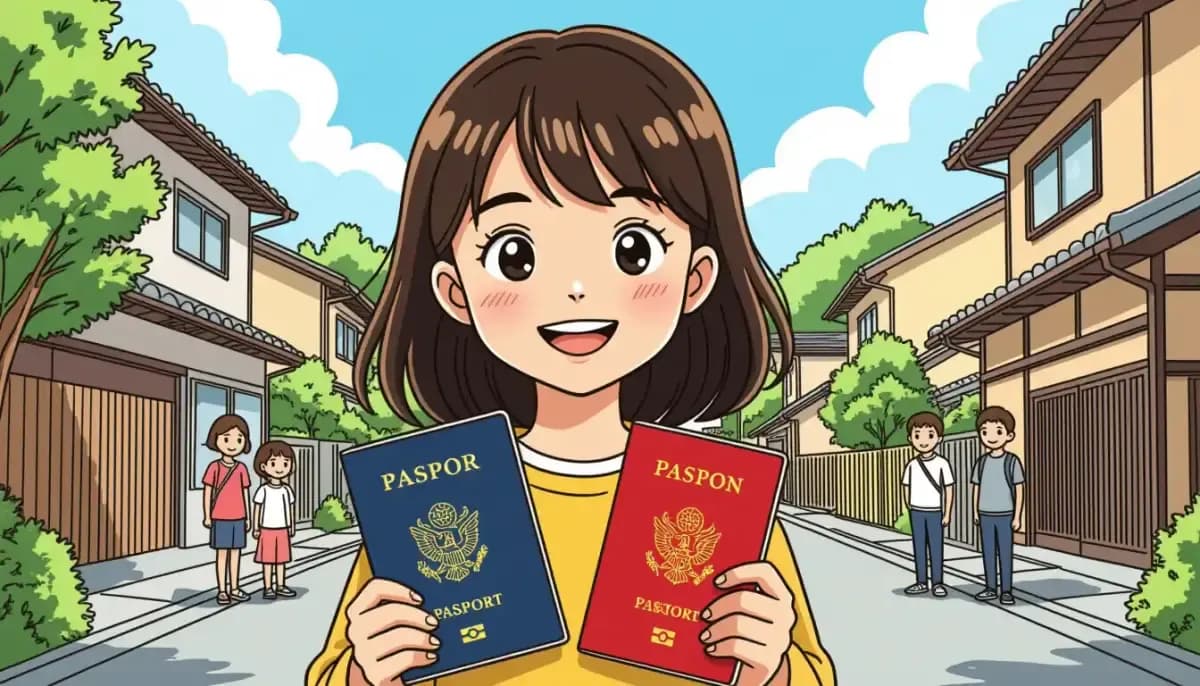
A complete guide for international families on nationality choices for hafu children in Japan — dual citizenship rules, the age 20 deadline, the critical 3-month rule for births abroad, and how to support your child's dual identity.
Nationality Choices for Hafu Children in Japan
For families raising children in Japan with one Japanese and one foreign parent, few decisions carry as much long-term weight as the question of nationality. Hafu children — those born to one Japanese and one non-Japanese parent — are granted a rare window in which they can hold two nationalities simultaneously. But that window closes, and the choices made (or not made) during childhood and young adulthood can shape a person's legal identity, travel options, and sense of belonging for decades.
This guide is written for expat and international parents navigating Japan's nationality law. Whether your child was born in Japan or abroad, here is everything you need to know about preserving, choosing, and managing nationality for hafu children.
Understanding Japan's Dual Nationality Policy
Japan does not officially recognize dual nationality for adults. Under the Nationality Act (国籍法), Japanese citizens who voluntarily acquire a foreign nationality lose their Japanese citizenship automatically. Conversely, Japanese nationals who reach adulthood while holding a second nationality are legally required to choose one.
However, there is an important exception for children. Children born with dual nationality — as most hafu children are — are permitted to hold both nationalities until they reach adulthood, at which point they must formally declare a choice.
In practice, Japan's enforcement of the dual nationality ban has been historically minimal. There are no criminal penalties for non-compliance, and Japan rarely revokes citizenship automatically. Many hafu adults remain de facto dual nationals throughout their lives. Nevertheless, understanding the legal framework is essential for families who want to ensure their children retain all available options.
Key statistic: In 2023, 15,120 children (approximately 2.1% of all births) were born in Japan to parents where one held foreign nationality — a reflection of Japan's growing international marriages. According to government data, 6.1% of Japanese marriages in 2006 were international unions, up from 3% in 1989.
The Nationality Choice Deadline: When Must Children Decide?
The legal deadline for nationality selection depends on when dual nationality was acquired:
| Situation | Deadline |
|---|---|
| Dual nationality acquired before age 18 | Must choose by age 20 |
| Dual nationality acquired at age 18 or older | Must choose within 2 years of acquisition |
| Japanese parent registers birth abroad (no reservation filed) | Japanese nationality may be lost at birth |
Important note: Due to a 2022 amendment to Japan's Civil Code (which lowered the age of adulthood to 18), these deadlines were adjusted from April 1, 2022. Families with older children should confirm which rules apply based on their child's birth date.
For most hafu children born to one Japanese parent, the practical deadline is age 20: they must submit a 選択届 (sentaku todoke — Nationality Selection Form) to a local government office or Japanese consulate.
The 3-Month Rule: Critical for Children Born Abroad
If you are a Japanese national living abroad and your child is born overseas with dual nationality, there is a critical 3-month deadline you must meet.
Japanese nationality law requires that when a child is born abroad to a Japanese parent, the Japanese parent must file a "reservation of Japanese nationality" (国籍留保) within 3 months of birth at the nearest Japanese consulate or embassy.
If this reservation is not filed in time, the child loses Japanese nationality retroactively from birth. This cannot easily be reversed — reclaiming Japanese nationality would require the full naturalization process, which demands 5+ consecutive years of residency in Japan, Japanese language ability, financial stability, and renunciation of other citizenships.
What to do immediately after birth abroad:
- Register the birth with local authorities in the country of birth
- File the birth registration (出生届) AND nationality reservation (国籍留保届) at your nearest Japanese consulate within 3 months
- Apply for a Japanese passport for your child without delay
This step is often overlooked by Japanese nationals living overseas who assume their child's Japanese nationality is automatic. It is not — and the consequences of missing the window are severe.
How the Nationality Selection Process Works at Age 20
When a hafu child approaches their 20th birthday (or the applicable deadline), they face a formal choice under Japanese law. The process works as follows:
Option 1: Select Japanese Nationality
The individual files a 選択届 (sentaku todoke) at:
- Their local ward office (区役所/市役所) in Japan
- A Japanese embassy or consulate if residing abroad
Filing this form satisfies Japan's legal requirement. However — and this is crucial — selecting Japanese nationality does not automatically cancel the other nationality. The individual must then take separate steps to formally renounce their other citizenship through that country's government and procedures.
Many hafu adults take this route: they file the Japanese selection form (satisfying Japan's requirement on paper) while quietly retaining their other passport in practice, since the other country never receives formal renunciation.
Option 2: Renounce Japanese Nationality
Alternatively, the individual may choose to renounce Japanese nationality and retain only their foreign citizenship. This is done by filing a 国籍離脱届 (kokuseki ridatsu todoke — Notification of Renunciation of Nationality) at a Japanese government office.
This option is typically chosen when someone has established a permanent life in another country and does not foresee needing Japanese nationality long-term.
What Happens If No Choice Is Made
If no selection is filed by the deadline:
- The Minister of Justice may issue a written demand to choose
- If the individual does not respond within one month, they risk losing Japanese nationality
- Japan rarely issues these demands in practice, but the legal risk remains
For more on Japan's permanent residency and naturalization options, see Living in Nihon's guide on permanent residency and naturalization.
Practical Realities: What Most Hafu Families Actually Do
Japan's dual nationality rules are among the more loosely enforced nationality laws in the developed world. Here is what actually happens for most hafu families:
Many retain both passports informally. Because Japan only tracks Japanese passports (not foreign ones), and foreign governments have no obligation to notify Japan of a Japanese citizen's foreign passport, many hafu adults simply keep both passports and use whichever is more convenient depending on where they are traveling.
The risk is real but low. Japan can technically revoke citizenship for failing to choose or for voluntarily acquiring a foreign nationality, but the practical risk of this happening to a typical hafu individual is low. However, it is not zero — and the consequences if it did happen would be significant.
Diplomatic and government positions may be affected. Hafu individuals wishing to work in sensitive government positions, the Self-Defense Forces, or roles requiring Japanese security clearance may face scrutiny over dual nationality status.
Travel between Japan and the other country. Hafu individuals holding both passports should use their Japanese passport to enter Japan and their other passport to enter their other home country. Using a foreign passport to enter Japan can create legal complications for Japanese nationals.
For legal guidance specific to your family's situation, resources like For Work in Japan's family guide can help you understand the broader legal landscape.
Identity Considerations Beyond the Legal Framework
The nationality question is not only a legal matter — it is deeply personal. Many hafu individuals in Japan describe their nationality choice as one of the most emotionally charged decisions of their young adult lives.
Research and surveys among hafu adults reveal:
- A significant percentage experienced bullying (いじめ) during childhood related to their mixed heritage
- Many describe feeling "between two worlds" — not fully accepted as Japanese, but not fully belonging to their other country either
- The forced choice of nationality at age 20 can amplify feelings of divided identity
As a parent, you can help your child develop a positive dual identity by:
- Maintaining both languages throughout childhood (see our guide on Heritage Language Maintenance for Children in Japan)
- Celebrating both cultural traditions at home
- Discussing the nationality choice openly before it becomes an urgent deadline
- Connecting with hafu communities — organizations like the Hafu community in Japan provide support networks
- Affirming that dual identity is a strength, not a problem to be resolved
For more on supporting your hafu child's cultural and emotional wellbeing, see our pillar guide on Cultural Identity for Hafu and Mixed-Race Children in Japan.
Comparison: Japan vs Other Countries on Dual Citizenship for Children
| Country | Allows Dual Nationality | Notes |
|---|---|---|
| Japan | Limited (until age 20 for hafu) | Must choose; enforcement is lax |
| USA | Yes | Fully recognized; no choice required |
| UK | Yes | Fully recognized |
| Australia | Yes | Fully recognized |
| Germany | Selective | Reforms ongoing as of 2024 |
| South Korea | Limited | Similar to Japan for adults |
| France | Yes | Fully recognized |
| Canada | Yes | Fully recognized |
Japan is notably restrictive compared to most Western countries. This can create complications for hafu children born to Japanese-American, Japanese-British, or Japanese-Australian parents, where the other country fully recognizes dual nationality but Japan does not.
Step-by-Step Action Plan for Hafu Families
If Your Child Was Born Abroad (Japanese Parent Living Overseas)
- ✅ Register birth with local authorities immediately
- ✅ File 出生届 + 国籍留保 at Japanese consulate within 3 months
- ✅ Apply for Japanese passport for your child
- ✅ Register child with your other country's authorities as a citizen
- ✅ Keep records of both passports and nationality documents
If Your Child Was Born in Japan (One Foreign Parent)
- ✅ File birth registration (出生届) at local ward office within 14 days
- ✅ Register child's foreign nationality with other country's embassy/consulate
- ✅ Obtain both a Japanese and foreign passport for your child
- ✅ Track the nationality choice deadline (before age 20)
As Your Child Approaches Age 20
- ✅ Discuss the choice openly with your child
- ✅ Consult a Japanese legal professional (行政書士 or 弁護士) if needed
- ✅ File 選択届 at local ward office or Japanese consulate
- ✅ If retaining Japanese nationality, decide whether to formally renounce other nationality or maintain it de facto
- ✅ Update passport documentation accordingly
For comprehensive guidance on visa and legal issues for international families in Japan, see our full guide: Visa and Legal Issues for Foreign Families with Children in Japan.
Where to Get Help and Official Information
- Japan Ministry of Justice (English): Official source for nationality law — www.moj.go.jp
- Japan Handbook Dual Citizenship Guide: Dual Citizenship in Japan: Rules for Foreign Nationals
- Metropolis Japan: Does Japan Allow Dual Citizenship? — practical overview for residents
- Chuukou Benkyou (中高勉強): For education-related guidance as your hafu child navigates Japanese school life, visit chuukoubenkyou.com
- Wikipedia - Japanese Nationality Law: Detailed legal overview
For legal advice specific to your situation, consult a Japanese 行政書士 (administrative scrivener) or 弁護士 (lawyer) who specializes in nationality and family law.
Frequently Asked Questions
Q: Will Japan automatically take away my child's Japanese nationality if they hold a foreign passport? A: No — Japan does not actively monitor foreign passport holdings of its citizens. The legal risk arises only if the individual voluntarily applies for foreign nationality (for an adult) or fails to file the nationality selection form by the deadline.
Q: Can my child hold both passports indefinitely? A: Legally, no — they must choose by age 20. In practice, many hafu adults hold both passports throughout their lives with no consequences, but the legal risk remains.
Q: What if my child was born in Japan but my spouse is not Japanese? A: Children born in Japan to one Japanese parent acquire Japanese nationality at birth. Birth in Japan alone does not grant Japanese nationality — Japan does not follow jus soli (birthright citizenship). The child may also qualify for their non-Japanese parent's nationality depending on that country's laws.
Q: We missed the 3-month consulate registration deadline for our child born abroad. What can we do? A: Consult a Japanese administrative scrivener or lawyer immediately. In some limited cases, late registration may be possible. However, the later you act, the more difficult the process becomes. Do not delay.
For more information on supporting your mixed-heritage child's development and wellbeing, explore our guide on Mental Health and Emotional Wellbeing for Foreign Children in Japan.
Navigating nationality law as an international family in Japan is complex — but it is manageable with the right information and timely action. The most important steps are acting early (especially the 3-month consulate rule for births abroad), tracking your child's deadline, and having open conversations about identity long before the formal choice must be made.

Originally from Vietnam, living in Japan for 16+ years. Graduated from Nagoya University, with 11 years of professional experience at Japanese and international companies. Sharing practical information for foreign parents raising children in Japan.
View Profile →Related Articles
Growing Up Bilingual and Bicultural as a Hafu in Japan
A comprehensive guide to raising hafu children in Japan — bilingual development strategies, cultural identity support, school life tips, and community resources for bicultural families.
Read more →
Books and Resources About Being Hafu for Children
A complete guide to the best books, films, communities, and resources to help hafu (mixed-heritage) children in Japan build a strong, positive identity. Includes recommended picture books, documentaries, and online support groups for parents.
Read more →
International Community Support for Hafu Families
Find community support for hafu and mixed-heritage families in Japan. Online groups, non-profits, school resources, and cultural events to help bicultural families thrive.
Read more →
Hafu Children's Experiences in Japanese Schools
Discover what hafu (mixed-race) children experience in Japanese schools — from identity challenges and bullying to bilingual expectations and practical tips for parents raising bicultural kids in Japan.
Read more →
How to Talk to Your Children About Race and Ethnicity
A practical guide for foreign parents and expat families in Japan on how to talk to children about race and ethnicity, mixed heritage identity, and building resilience in a multicultural family.
Read more →
Multicultural Identity Development Stages in Children
Understand the 5 stages of multicultural identity development for children raised in Japan. Practical guidance for expat and mixed-heritage families supporting their kids.
Read more →