
International Child Abduction and the Hague Convention in Japan

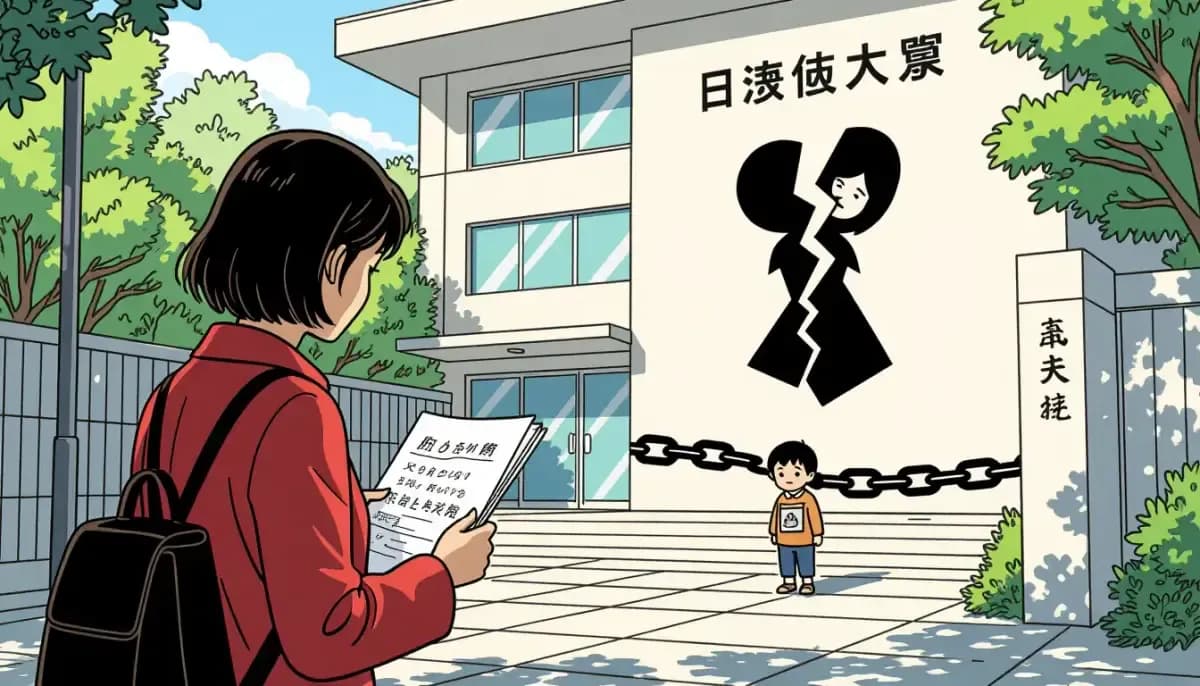
A complete guide to international child abduction and the Hague Convention in Japan. Understand Japan's sole custody system, how to file a Hague application, enforcement challenges, and what foreign parents can do to protect their children.
International Child Abduction and the Hague Convention in Japan
International child abduction — when one parent takes a child across international borders without the other parent's consent — is one of the most distressing and legally complex situations a foreign parent in Japan can face. Japan's unique legal framework around custody and its troubled history with the Hague Convention make this topic especially important for international families living in or connected to Japan. Whether you are a foreign parent concerned about your child being taken to Japan, or a parent already in Japan navigating a custody dispute, understanding how Japanese law and international treaties interact is critical.
This guide covers what the Hague Convention is, how Japan implements it (and where it falls short), what legal options are available, and what steps you can take to protect your rights as a parent.
What Is the Hague Convention on International Child Abduction?
The 1980 Hague Convention on the Civil Aspects of International Child Abduction is an international treaty designed to protect children from the harmful effects of international abduction and retention by ensuring their swift return to the country of their habitual residence. As of 2025, over 100 countries have ratified the Convention.
The treaty does not decide which parent should have custody — that is left to the courts of the child's home country. Instead, it provides a mechanism to return the child to their home country so that custody can be determined there. Key principles include:
- A child taken from their habitual residence must be promptly returned
- Courts should not rule on the merits of custody during return proceedings
- The process should be completed within six weeks
Japan ratified the Convention in 2013, with it entering into force on April 1, 2014 — making Japan the last G7 nation to join. This came after years of intense international pressure from the United States, France, Canada, Germany, Australia, and the United Kingdom.
For more general context on legal and visa issues affecting foreign families in Japan, see our guide on Visa and Legal Issues for Foreign Families with Children in Japan.
Japan's Sole Custody System: The Root of the Problem
To understand why child abduction is such a significant issue in Japan, you must first understand Japan's domestic custody law. Japan operates a sole custody (単独親権, tandoku shinken) system — one of the very few developed nations to do so.
When a couple divorces in Japan, only one parent receives legal custody. The other parent loses nearly all legal rights over the child. Japanese courts are not required to recognize foreign joint custody orders, and the non-custodial parent has no enforceable right to visitation under Japanese law.
This creates an environment in which:
- A Japanese parent returning to Japan with a child after a divorce or separation is rarely treated as an abductor under Japanese law
- Courts may side with the parent already in Japan, regardless of pre-existing foreign custody arrangements
- Foreign custody orders from countries like the US, UK, or Australia are often ignored by Japanese family courts
According to advocacy groups, approximately 3 million children in Japan have lost access to one parent following divorce over the past 20 years — roughly 150,000 per year. The non-custodial parent is frequently the foreign father in international divorce cases.
For related information on custody and divorce in Japan, see our article on Child Custody and Family Law in Japan for International Families.
How Japan Implements the Hague Convention — and Where It Fails
Since ratifying the Convention in 2014, Japan's implementation has been widely criticized by international legal scholars and foreign governments. Here is what the process looks like in theory and practice:
The Japanese Central Authority (JCA)
The Ministry of Foreign Affairs (MOFA) serves as Japan's Central Authority under the Convention. When a left-behind parent files an application, the JCA is supposed to:
- Attempt to locate the child
- Encourage voluntary return or mediation
- Facilitate legal proceedings if voluntary methods fail
The JCA strongly emphasizes mediation as the preferred resolution method. According to official statistics, as of January 2018, Japan had resolved 47 out of 69 return cases — approximately 70% through mediation rather than court-ordered enforcement. While mediation can work, critics argue it favors the abducting parent who has de facto control of the child.
Enforcement Problems
Japanese law contains significant barriers to enforcement of return orders:
- No use of force: Japanese law prohibits the use of physical force to retrieve a child. Enforcement officers may only attempt retrieval at the retaining parent's premises, and if the child is not present or the parent refuses, the officer cannot compel compliance.
- No exit controls: There is no legal mechanism to prevent a parent from taking a child out of Japan. No "stop orders" are available at borders, no exit visas are required, and departing parents are not asked for the other parent's consent.
- Expanded "grave risk" defense: Japan broadened the treaty's exception allowing non-return where returning the child would expose them to "grave risk of harm." Japanese courts have applied this exception broadly, sometimes finding "risk" where other countries would not.
The result: as of the time of writing, no child has been repatriated by Japanese authorities through forced enforcement. The few successful returns occurred only when the abducting parent voluntarily agreed.
The U.S. State Department has formally identified Japan as one of only two Convention countries that failed to comply with one or more treaty obligations, citing inadequate enforcement mechanisms and overly broad application of the grave risk defense. You can find the official U.S. State Department information on Japan at the U.S. State Department Japan Child Abduction page.
Japan's Ministry of Foreign Affairs provides official guidance at MOFA's Hague Convention page.
International Pressure and Legal Reforms
Japan's poor compliance record has drawn significant international condemnation:
- In 2019, the UN Human Rights Council formally complained about Japan's violations of international child rights conventions
- Germany, France, and Italy collectively condemned Japan's approach in diplomatic communications
- Australia has assisted in over 80 child custody cases involving Japan since 2004
- The US has raised the issue annually in bilateral discussions with Japan
In response to sustained pressure, Japan enacted a revised implementation law that came into force in April 2020, introducing some reforms:
| Reform | Previous Law | Post-2020 Law |
|---|---|---|
| Enforcement method | Only at retaining parent's home | Can be conducted at other locations (with restrictions) |
| Simultaneous enforcement | Not permitted | Permitted when child's return depends on it |
| Contempt penalties | Limited | Increased financial penalties for non-compliance |
| Mediation emphasis | Mandatory pre-trial | Maintained but with clearer timelines |
While these reforms were a step forward, critics argue they did not go far enough. Enforcement remains challenging, and Japan's fundamental sole-custody framework was not changed.
For a broader view of Japan's legal landscape for foreign families, the UK Government's guidance on child abduction in Japan provides useful information.
What Can Left-Behind Parents Do?
If your child has been taken to Japan or you are concerned about the risk, here are the key steps:
Immediate Actions (If Abduction Has Already Occurred)
- Contact your country's Central Authority immediately: Every Hague Convention country has a designated Central Authority. In the US, this is the Office of Children's Issues within the State Department. In the UK, it is the International Child Abduction and Contact Unit (ICACU).
- File a Hague Convention application: Your Central Authority will file an application with Japan's JCA (MOFA). This must be done as soon as possible — delays weaken your case.
- Hire a Japanese family law attorney: You will need a lawyer admitted to practice in Japan. Some attorneys specialize in international custody cases and are familiar with Hague proceedings. The JCA can provide a list of attorneys.
- Contact your country's embassy in Japan: The U.S. Embassy in Tokyo and other embassies can provide consular assistance and may be able to help locate your child.
- Document everything: Gather custody orders, communications, travel records, and anything showing the child's habitual residence was outside Japan.
Preventive Measures (Before Abduction)
If you are in an international relationship and concerned about the risk of abduction, consider these preventive steps:
- Include travel restrictions in your custody agreement: Require both parents' written consent for international travel
- Register your custody order: Some countries allow you to register custody orders with border agencies
- Monitor passport renewals: In some countries, you can request that your child's passport not be renewed without your consent
- Keep records: Maintain documentation of your child's habitual residence, schooling, medical care, and family life
Hague Convention Applications: What to Expect
The Hague Convention process in Japan typically unfolds as follows:
| Stage | Timeline | What Happens |
|---|---|---|
| Application filed | Day 1 | Left-behind parent files with home country Central Authority |
| Transmitted to Japan | 1-4 weeks | JCA receives and registers application |
| Location attempt | Ongoing | JCA tries to locate the child |
| Mediation offered | 4-8 weeks | JCA encourages voluntary resolution |
| Court proceedings initiated | If mediation fails | Family court hearing begins |
| Court decision | 6 weeks (target) | Often takes much longer in practice |
| Enforcement (if ordered) | After decision | Most problematic stage in Japan |
In practice, cases frequently take much longer than the treaty's six-week target. Some cases have dragged on for years. If mediation fails and the case goes to family court, the left-behind parent generally must be present or represented in Japan, which adds significant cost and complexity.
Resources and Support for Left-Behind Parents
Navigating the system alone is extremely difficult. Here are key resources:
- Japan's MOFA Hague Convention page: mofa.go.jp Hague Convention — Official guidance and contact information for the JCA
- U.S. Embassy Tokyo: jp.usembassy.gov — Consular services for US citizens
- Wikipedia overview of the issue: International child abduction in Japan — Useful background and history
- Humanium (child rights NGO): humanium.org — Independent analysis of Japan's custody laws
- Living in Nihon: livinginnihon.com — General resources for foreigners living in Japan
- For Work in Japan: forworkinjapan.com — Resources for expats navigating life in Japan
- Chuukou Benkyou: chuukoubenkyou.com — Additional support resources for families in Japan
Support organizations like Japan Child Abduction also provide advocacy and peer support for left-behind parents.
The Future: Japan's Move Toward Joint Custody
In a major development, Japan passed a law in May 2024 to allow joint custody (共同親権, kyōdō shinken) for divorced parents, with implementation scheduled for 2026. This would make Japan one of the later countries to recognize joint parental rights after divorce.
While this reform is significant, it raises new questions in the international context:
- Will Japanese courts apply joint custody in international divorce cases?
- How will this interact with Hague Convention proceedings?
- What protections will exist to prevent unilateral international relocation?
The full impact of this reform will take years to assess, but it represents a meaningful shift in Japan's approach to parental rights. Parents involved in international custody disputes should monitor these developments closely.
For context on Japan's broader family law framework, see our articles on Child Custody and Family Law in Japan for International Families and Mental Health and Emotional Wellbeing for Foreign Children in Japan.
Summary
International child abduction involving Japan is one of the most challenging areas of international family law. Japan's sole custody system, slow Hague Convention ratification, and persistent enforcement problems have made it a focal point of international concern. While reforms since 2014 — and especially the 2020 enforcement amendments and the upcoming 2026 joint custody change — represent progress, significant gaps remain.
If you are a foreign parent with children in Japan, or in a relationship that may involve international travel, understanding these issues in advance is essential. Consult with a qualified Japanese family law attorney, keep documentation of your children's habitual residence, and know your rights under the Hague Convention. Prevention is always easier than recovery after an abduction has occurred.
For further reading on raising children in Japan as a foreign parent, explore our guides on Visa and Legal Issues for Foreign Families with Children in Japan and Financial Planning for Expat Families Raising Children in Japan.

Originally from Vietnam, living in Japan for 16+ years. Graduated from Nagoya University, with 11 years of professional experience at Japanese and international companies. Sharing practical information for foreign parents raising children in Japan.
View Profile →Related Articles
Changing Children's Names After Divorce in Japan
A complete guide for foreign parents on how to change your child's surname after divorce in Japan — covering koseki rules, family court petitions, dual nationality, and the 2024 custody reform.
Read more →
Legal Rights of Unmarried Foreign Parents in Japan
Complete guide to legal rights of unmarried foreign parents in Japan: recognition (ninchi), parental authority, child nationality, visa options, and the 2024 Civil Code reform explained.
Read more →
Protecting Children's Wellbeing During Divorce in Japan
A complete guide for foreign parents on protecting children's wellbeing during divorce in Japan — covering custody, child support, school continuity, visa issues, and emotional support strategies.
Read more →
Custody Battles Involving Foreign Parents in Japan
Foreign parents navigating custody battles in Japan face a unique legal system. Learn how sole custody works, what the 2024 reform means, Hague Convention rights, and practical steps to protect your parental rights.
Read more →
International Family Law Attorneys in Japan
Find the right international family law attorney in Japan. Learn about divorce, child custody, the 2025 joint custody reform, Hague Convention cases, and free legal resources for foreign nationals.
Read more →
Family Mediation Services in Japan for Disputes
Understand family mediation (choutei) in Japan as a foreigner — from mandatory court mediation to private English-language services, custody rules, and free legal support resources.
Read more →