
Sole Custody vs Joint Custody in Japan Explained

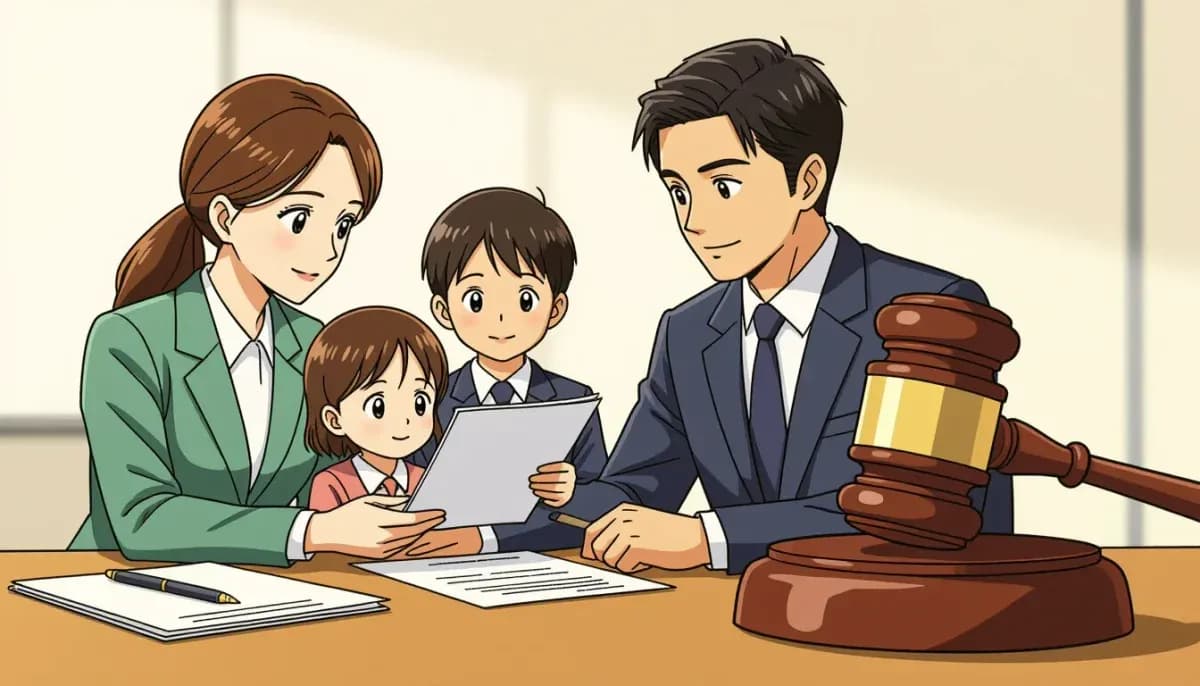
Japan's child custody laws changed in April 2026. Learn the key differences between sole custody (tandoku shinken) and joint custody (kyodo shinken) in Japan, and what it means for foreign parents and expats.
Sole Custody vs Joint Custody in Japan Explained
Japan's child custody laws are undergoing the most significant transformation in nearly a century. For decades, Japan operated under a strict sole custody system — one of the last developed nations to do so. But as of April 1, 2026, joint custody became a legal option for separating parents in Japan. Whether you're a foreign parent navigating a divorce, an expat trying to understand your rights, or simply curious about how Japan's family law works, this guide breaks down everything you need to know about sole custody vs joint custody in Japan.
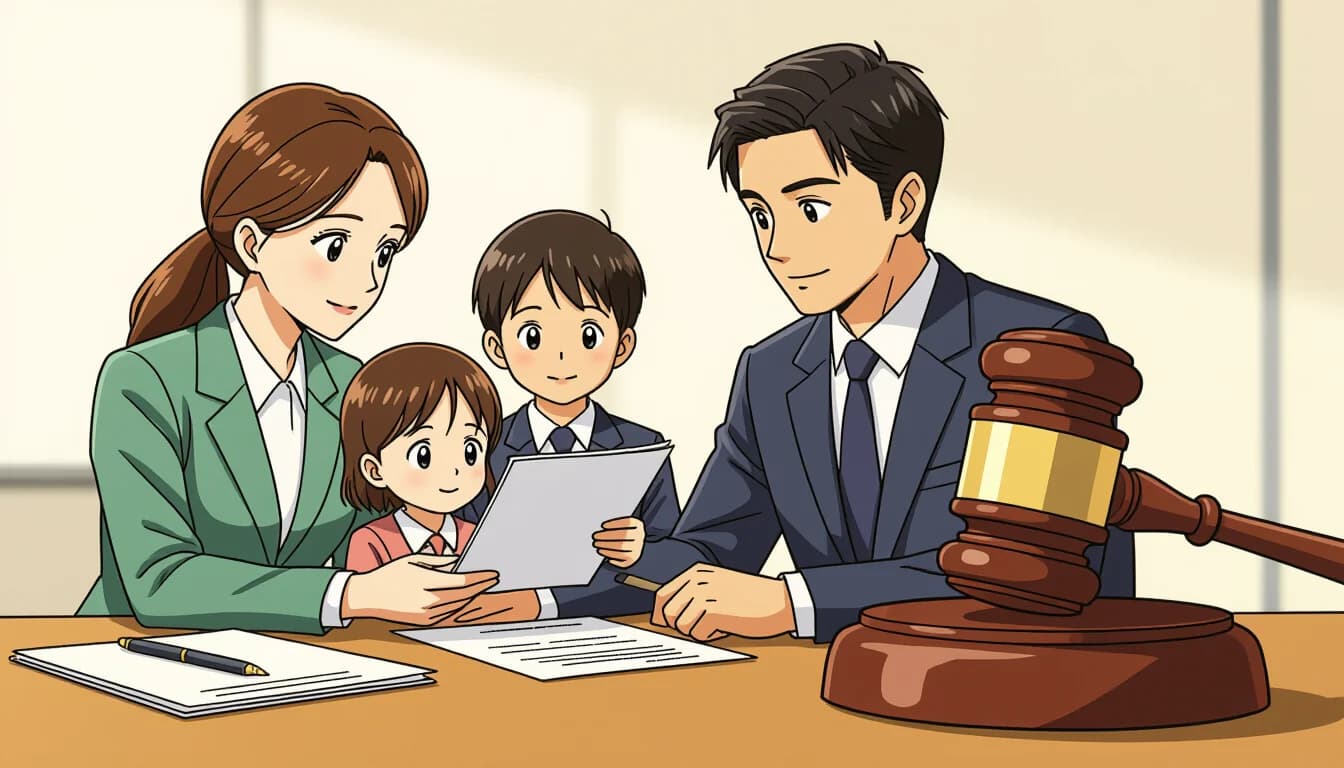
What Is Sole Custody (単独親権 / Tandoku Shinken)?
Sole custody — known in Japanese as tandoku shinken (単独親権) — means that after a divorce, only one parent holds full parental authority. This includes the legal right to make all major decisions about the child's:
- Education (which school they attend, academic decisions)
- Healthcare (medical treatments, surgeries, therapy)
- Residence (where the child lives)
- Passport and travel (applications, international travel)
- Legal matters (contracts, legal representation)
For over 80 years, sole custody was the only option in Japan. When parents divorced, they had to designate a single custodial parent — and that parent gained complete control over the child's upbringing. The non-custodial parent retained no formal parental authority, though they could arrange informal visitation.
Who Gets Sole Custody in Japan?
In practice, mothers receive custody in approximately 90% of cases in Japan (as of 2022 data). This is largely because Japanese courts apply a "primary caregiver" standard — meaning the parent who has most consistently handled day-to-day childcare is typically awarded custody. In many Japanese families, this role falls to the mother.
Statistics also reveal a troubling side effect of sole custody: approximately one-third of the 200,000+ children affected by divorce each year in Japan eventually lose all meaningful contact with their non-custodial parent. Around 70% of divorced parents in Japan have no functioning visitation arrangement in practice.
What Is Joint Custody (共同親権 / Kyodo Shinken)?
Joint custody — or kyodo shinken (共同親権) — means that both parents share parental authority after divorce. Both parents retain the legal right to participate in major decisions about the child's life.
Japan's National Diet (parliament) voted in May 2024 to revise the Civil Code to allow joint custody, with the new rules taking effect on April 1, 2026. This was the first major revision to this area of Japanese family law in approximately 80 years, and it represents a fundamental shift in how Japan approaches post-divorce parenting.
Under the new system, divorcing parents can:
- Mutually agree on joint custody during the divorce process
- Mutually agree on sole custody if both parents prefer it
- Have a family court decide if parents cannot reach agreement
For more context on Japan's broader legal landscape for international families, see our guide on Visa and Legal Issues for Foreign Families with Children in Japan.
Key Differences: Sole Custody vs Joint Custody in Japan
Understanding the practical differences between these two systems is essential for any parent navigating a divorce in Japan.
| Feature | Sole Custody (Tandoku Shinken) | Joint Custody (Kyodo Shinken) |
|---|---|---|
| Parental authority | One parent only | Both parents share |
| Decision-making | Custodial parent decides alone | Both parents must agree on major decisions |
| Daily care | Determined by custody arrangement | Can be flexible; residence arrangement separate |
| Legal availability | Always available (pre/post 2026) | Available from April 1, 2026 |
| Court intervention | Court assigns one parent | Court can order if parents disagree |
| Child's relationship | Risk of losing non-custodial parent | Both parents remain legally involved |
| Foreign parent impact | Historically disadvantageous | Potentially more equitable |
| Enforcement | Parent has full control | Both parents must cooperate |
The 2026 Reform: What Changed and What Didn't
The April 2026 reform is significant, but it's important to understand its limitations:
What Changed
- Joint custody is now legally possible. Before April 2026, Japanese law did not recognize joint custody — full stop. Now, parents have a choice.
- Courts can impose joint custody. If parents disagree, a family court judge can now order joint custody rather than defaulting entirely to sole custody.
- Pre-2026 sole custody arrangements can be revisited. Parents who divorced before April 2026 under a sole custody arrangement can petition a family court to switch to joint custody.
What Didn't Change
- Sole custody remains available and is still the default when parents cannot agree and sole custody is deemed in the child's best interest.
- The "child welfare override" still applies. Courts retain the power to award sole custody even if one parent requests joint custody — particularly in cases involving domestic violence, abuse, or situations where joint custody would endanger the child or the other parent.
- Enforcement mechanisms remain weak. Japan still lacks robust systems for ensuring visitation compliance or holding non-cooperative co-parents accountable.
- Foreign parents remain at a disadvantage. The 2026 reform does not automatically resolve the historical bias against foreign nationals in Japanese custody proceedings.
For a comprehensive overview of the legal framework affecting international families in Japan, visit our article on Child Custody and Family Law in Japan for International Families.
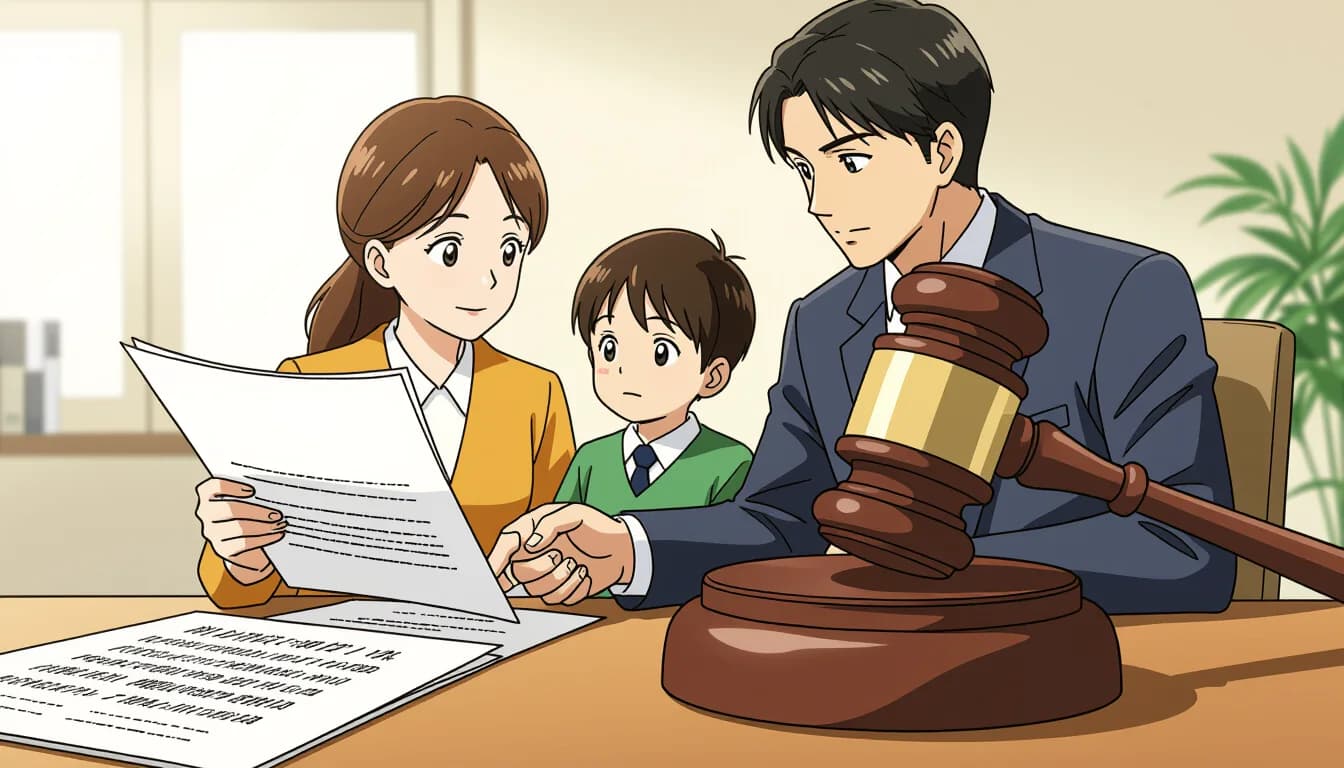
How Japanese Courts Decide: The Best Interest of the Child Standard
Whether a court is choosing between joint and sole custody, or deciding which parent receives sole custody, the guiding principle is always the best interest of the child (子の利益 / ko no rieki). Japanese family courts evaluate:
- Primary caregiver history: Who has been doing most of the daily childcare?
- Stability: Which arrangement offers more stability in terms of home, school, and social environment?
- Willingness to facilitate contact: Is the parent willing to support the child's relationship with the other parent?
- Domestic violence or abuse history: Any documented history of violence or abuse weighs heavily against the abusive parent.
- Child's wishes: Older children (generally teenagers) may be asked for their preferences.
- Parent's living conditions: Employment status, housing, and overall capacity to care for the child.
Courts do not automatically favor joint custody simply because it's now available. Judges carefully weigh whether shared parental authority serves the individual child's needs, and in contentious divorces — particularly where there's a history of conflict — sole custody may still be ordered.
Sole Custody vs Joint Custody: Which Is Better for Your Situation?
The right custody arrangement depends heavily on individual circumstances. Here's a practical breakdown:
Consider Sole Custody When:
- There is a history of domestic violence or abuse
- One parent is absent, unresponsive, or unwilling to co-parent
- High-conflict situations make co-decision-making harmful to the child
- One parent is relocating internationally and practical joint decision-making is impossible
- Both parents mutually agree that one parent should have full authority
Consider Joint Custody When:
- Both parents are committed to cooperative co-parenting
- There is no history of violence or abuse
- Both parents live reasonably close to each other
- The child has strong relationships with both parents
- Both parents can communicate effectively and make decisions without conflict
For foreign parents especially, joint custody may offer more protection — ensuring that both parents retain legal standing regardless of nationality. However, this only works if both parties are genuinely committed to collaboration.
Special Considerations for Foreign Parents and Expats
Foreign nationals in Japan face unique challenges in custody disputes:
Historical Disadvantages
Japanese courts have historically been less likely to award custody to foreign nationals, particularly when the Japanese parent can demonstrate stronger ties to Japan (language, family support network, job stability, etc.). This bias has been widely criticized internationally and is a key reason Japan became a signatory to the Hague Convention on International Child Abduction in April 2014.
The Hague Convention
If a child is taken to Japan without the consent of the foreign parent, the Hague Convention provides a legal mechanism to seek the child's return. However, enforcement remains inconsistent, and many foreign parents have struggled to reclaim their children even with legal rulings in their favor.
Bilateral Nationality and Passports
A critical practical issue: under sole custody, only the custodial parent can apply for the child's passport. If you are a foreign parent without custody, you may be legally blocked from renewing your child's foreign passport or facilitating international travel. Joint custody (post-2026) should, in theory, require both parents' consent for such decisions — though enforcement is still evolving.
Getting Legal Help
If you are a foreign parent facing a custody dispute in Japan, consult with a lawyer who specializes in international family law. Organizations like Japan Legal Support Center (Houterasu) offer referral services, and many international law firms in Tokyo have English-speaking family law specialists.
For additional resources on navigating life in Japan as a foreign parent, Living in Nihon provides practical guides for expats in Japan. Expats working in Japan can also find employment and legal support resources at For Work in Japan, and educational resources for children are available through Chuukou Benkyou.
Visitation Rights Under Both Systems
A common misconception is that the non-custodial parent has no rights under sole custody. In fact, visitation rights (面会交流 / menkai koryuu) are legally recognized regardless of the custody arrangement.
However, enforcement is a significant problem:
- Courts can set minimum visitation schedules, but few mechanisms exist to compel compliance
- Approximately 70% of divorced parents in Japan have no functioning visitation arrangement in practice
- Some custodial parents have withheld visitation to pressure child support payments
- Appeals through family court can take months
Under the new joint custody system, both parents theoretically have ongoing involvement — but day-to-day residence (with whom the child primarily lives) is still determined separately, and visitation enforcement issues are not automatically resolved.
Learn more about the emotional impact on children in our article on Mental Health and Emotional Wellbeing for Foreign Children in Japan.
Practical Steps If You're Facing a Custody Decision in Japan
- Consult a family law attorney immediately — custody decisions made during divorce are very difficult to change afterward
- Document your caregiving history — records of school pickups, medical appointments, daily routines can be crucial evidence
- Maintain communication records — keep records of all communication with your co-parent regarding the child
- Do not relocate the child internationally without written consent or court order — this could constitute international parental abduction under the Hague Convention
- Consider mediation (調停 / chotei) — Japanese family courts strongly encourage mediation before litigation; many custody disputes are resolved this way
- Stay informed about the 2026 changes — the new joint custody law is still being implemented, and court practices are evolving
For related financial planning considerations during and after divorce, see our guide on Financial Planning for Expat Families Raising Children in Japan.
For comprehensive international perspectives and current developments on Japan's custody law changes, visit GaijinPot's divorce guide and the detailed analysis at Nejihashi on Japan Joint Custody 2026.
Conclusion
Japan's shift from sole custody to allowing joint custody marks a historic turning point in the country's approach to family law. For the first time since Japan's modern legal system was established, both parents can legally share parental authority after divorce — a change driven by decades of international pressure, advocacy from non-custodial parents, and recognition that children benefit from relationships with both parents.
That said, the 2026 reform does not automatically make custody disputes easier. Sole custody remains common, enforcement mechanisms remain limited, and foreign parents still face structural disadvantages. Whether you're considering divorce in Japan, already in the midst of one, or trying to understand your rights as a foreign parent, the most important step you can take is to consult a qualified family law attorney and understand both systems thoroughly before making any decisions.
The best custody arrangement is always the one that serves your child's wellbeing — regardless of which legal category it falls under.

Originally from Vietnam, living in Japan for 16+ years. Graduated from Nagoya University, with 11 years of professional experience at Japanese and international companies. Sharing practical information for foreign parents raising children in Japan.
View Profile →Related Articles
Changing Children's Names After Divorce in Japan
A complete guide for foreign parents on how to change your child's surname after divorce in Japan — covering koseki rules, family court petitions, dual nationality, and the 2024 custody reform.
Read more →
Legal Rights of Unmarried Foreign Parents in Japan
Complete guide to legal rights of unmarried foreign parents in Japan: recognition (ninchi), parental authority, child nationality, visa options, and the 2024 Civil Code reform explained.
Read more →
Protecting Children's Wellbeing During Divorce in Japan
A complete guide for foreign parents on protecting children's wellbeing during divorce in Japan — covering custody, child support, school continuity, visa issues, and emotional support strategies.
Read more →
Custody Battles Involving Foreign Parents in Japan
Foreign parents navigating custody battles in Japan face a unique legal system. Learn how sole custody works, what the 2024 reform means, Hague Convention rights, and practical steps to protect your parental rights.
Read more →
International Family Law Attorneys in Japan
Find the right international family law attorney in Japan. Learn about divorce, child custody, the 2025 joint custody reform, Hague Convention cases, and free legal resources for foreign nationals.
Read more →
Family Mediation Services in Japan for Disputes
Understand family mediation (choutei) in Japan as a foreigner — from mandatory court mediation to private English-language services, custody rules, and free legal support resources.
Read more →