
Changing Visa Status When You Have Children

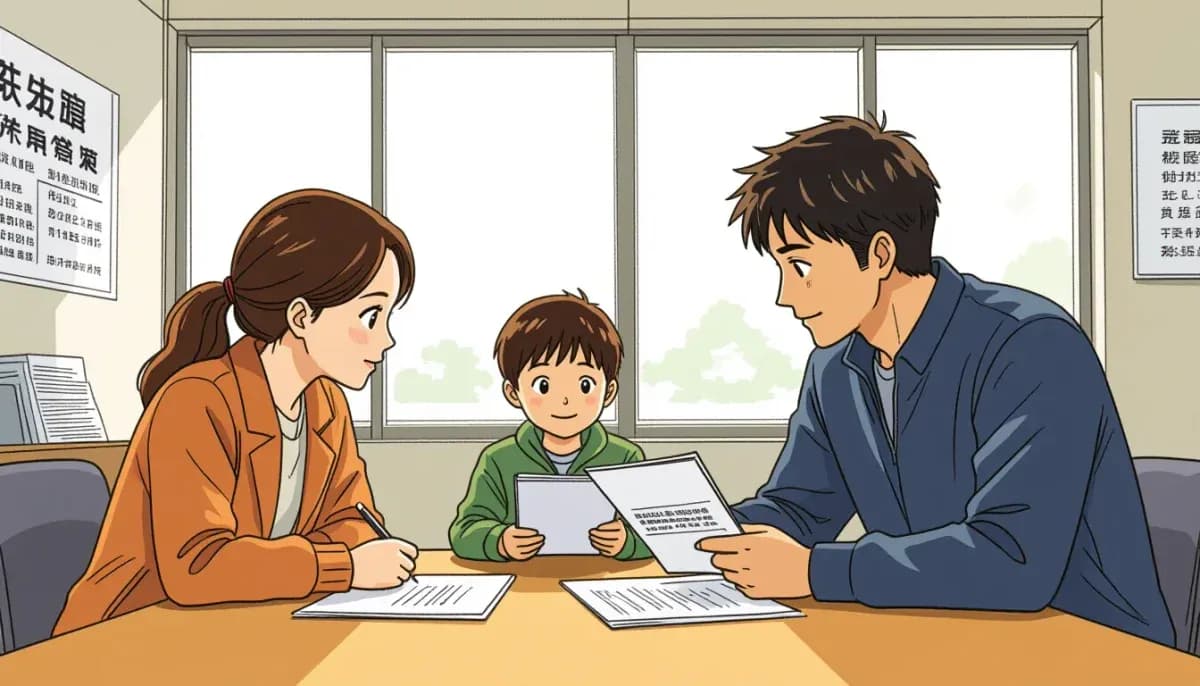
Complete guide to changing visa status for children in Japan: Family Stay visa eligibility, COE process, children born in Japan, 2025 fee updates, and common mistakes to avoid.
Changing Visa Status When You Have Children in Japan
Navigating Japan's immigration system is challenging enough on your own — but when children are involved, the stakes are higher and the paperwork more complex. Whether your child was born in Japan, joined you from abroad, or is now aging into a new visa category, understanding how to change visa status for children is essential for every foreign family living in Japan.
This guide walks you through the complete process: who qualifies, what documents you need, how to handle children born in Japan, and what recent policy changes mean for your family in 2025.
Who Qualifies for the Family Stay (Dependent) Visa?
Japan's dependent visa — officially called Family Stay (家族滞在) — is the primary visa category for children of foreign nationals living in Japan. However, eligibility rules are stricter than many families expect.
Eligible relationships:
- Biological children (unmarried, under 18 in most cases)
- Legally adopted children
- Children recognized through formal legal procedures in the home country
Who is NOT eligible:
- Stepchildren without legal adoption
- Children of unmarried partners (unless paternity/legal relationship is formally recognized)
- Adult children (generally 18+) — they must apply for their own appropriate visa
Which parent visas allow sponsoring children:
| Sponsor Visa Type | Can Sponsor Children? |
|---|---|
| Engineer / Specialist in Humanities | ✅ Yes |
| Highly Skilled Professional | ✅ Yes (+ parents under certain conditions) |
| Researcher | ✅ Yes |
| Professor / Artist / Business Manager | ✅ Yes |
| Student (University/Graduate) | ✅ Yes |
| Japanese Language School Student | ❌ Generally No |
| Technical Intern Training | ❌ No |
| Specified Skilled Worker No. 1 | ❌ No |
| Specified Skilled Worker No. 2 (post-2024) | ✅ Yes (new policy) |
| Diplomat / Official | ❌ Separate category applies |
Important 2024 update: Following immigration law reforms, holders of Specified Skilled Worker No. 2 in designated fields can now bring spouses and children to Japan — a significant expansion of family visa rights that took effect in 2024.
Path 1: Bringing Your Child to Japan from Abroad
If your child is currently outside Japan and you want them to join you, the standard process requires a Certificate of Eligibility (COE).
Step-by-Step COE Process
Step 1: Apply for the Certificate of Eligibility The sponsoring parent in Japan submits the COE application to their regional Immigration Services Agency (入国在留管理局). This is free of charge.
Documents typically required:
- COE application form
- Sponsor's residence card (在留カード)
- Sponsor's passport copy
- Child's birth certificate (with official translation if not in Japanese)
- Proof of family relationship (marriage certificate for parents, legal adoption papers, etc.)
- Sponsor's tax documents (resident tax certificate, income certificate)
- Sponsor's employment certificate or student enrollment proof
Step 2: Wait for Processing Processing typically takes 1 to 3 months, though Tokyo regional offices may take longer. You cannot expedite this process, so plan ahead.
Step 3: Send COE to Your Child Abroad Once issued, mail the original COE to the child's location. They must apply for a visa at the nearest Japanese embassy or consulate.
Step 4: Child Enters Japan The child must arrive within 3 months of the COE issuance date. After entry, register the child at your local city hall (市役所/区役所) within 14 days.
For a comprehensive overview of visa and legal issues for foreign families with children in Japan, including which documents to keep on hand, see our dedicated guide.
Path 2: Changing Visa Status for a Child Already in Japan
If your child is already in Japan — for example, on a Temporary Visitor (短期滞在) visa — they may be able to change their status without leaving the country.
Change of Status of Residence Application
The child (or their parent as representative) submits a Change of Status of Residence application at the local Immigration Services Agency office.
Required documents:
- Application for change of status of residence form
- Child's current passport
- Child's residence card (if already issued)
- Sponsor's residence card
- All family relationship documents (birth certificate with translation)
- Sponsor's recent tax and income documents
- Sponsor's employment or enrollment certificate
- Photos (4cm × 3cm)
- Revenue stamp (印紙) for the fee
Updated fees from April 1, 2025:
- In-person submission: ¥6,000
- Online submission (e-application): ¥5,500
(Previously ¥4,000 before April 2025.)
Processing time: Typically 2 to 8 weeks. Tokyo offices often take longer.
Important caution: Immigration officers may question why a child on a tourist visa didn't enter on a dependent visa from the start. If your child's tourist status is about to expire, act promptly. In some cases, officers may require the child to exit Japan and re-enter with a proper visa. Consider consulting an immigration specialist if your situation is complex.
For details on dependent visa requirements for children in Japan, including the full document checklist, see our complete guide.
Path 3: Children Born in Japan
Children born in Japan to foreign parents face their own distinct set of deadlines and requirements. Missing these can create serious immigration complications.
Immediate Steps After Birth
| Deadline | Action | Where |
|---|---|---|
| Within 14 days | Birth registration (出生届) | City Hall |
| ASAP | Resident registration (住民登録) | City Hall |
| Within 30 days | Obtain child's passport (from home country embassy) | Your country's embassy/consulate |
| Within 30 days | Apply for Dependent status (if staying 60+ days) | Immigration Services Agency |
| ASAP | Enroll in National Health Insurance | City Hall |
Why the 30-day deadline matters: If a child born in Japan does not have valid residence status established within 60 days, they may be considered to be without status. This can create significant complications for the family.
For full details on birth registration for babies of foreign parents in Japan, see our step-by-step walkthrough.
Getting the Child's Passport First
Japan does not issue passports to foreign children — the child needs a passport from their country of nationality. Visit your home country's embassy or consulate in Japan immediately after birth to register the child and begin passport processing. Some consulates offer expedited processing for newborns in this situation; inquire when you call.
Once the child has a passport, you apply for the Dependent visa (change of status or first-time application) at the Immigration Services Agency.
Financial Requirements: What You Need to Show
Japan does not publish a rigid income threshold for dependent visa approval, but immigration officers assess your ability to support your family. In practice:
General guidelines (widely referenced by immigration professionals):
| Family Composition | Estimated Monthly Income Needed |
|---|---|
| Sponsor alone | ¥80,000+ |
| Sponsor + spouse | ¥120,000+ |
| Sponsor + spouse + 1 child | ¥150,000–¥160,000+ |
| Sponsor + spouse + 2 children | ¥175,000–¥190,000+ |
These are estimates, not official minimums. Annual income of ¥3–4 million is often cited as sufficient for a family with one child. One documented case shows a scholarship stipend of ¥145,000/month supporting a spouse and two children successfully.
What you must submit:
- Resident tax certificate (住民税課税証明書) from the previous year
- Income certificate (所得証明書)
- Recent payslips (2–3 months)
- Employment certificate on company letterhead
If you are a student or your income is low, be prepared to show additional evidence like savings statements or guarantor documents.
For guidance on financial planning for expat families raising children in Japan, our dedicated article covers income planning and cost estimates in detail.
Visa Duration and Renewal
The Family Stay visa is issued in increments of 6 months, 1 year, 3 years, or 5 years — and generally matches the sponsor parent's visa period.
Renewal process:
- Apply at the Immigration Services Agency up to 2 months before expiry
- No new COE required — renewals are processed with a residence card update
- Fee: revenue stamp at the same updated rates (¥6,000 in-person from April 2025)
The child's visa will not automatically renew when the parent renews — you must renew each family member's status separately.
When the sponsor's status changes: If you change from one work visa to another (e.g., from Student to Engineer), your child's dependent visa status must also be updated. File a change of status application for the child when you change your own status.
Work Restrictions for Children on Family Stay Visa
Children on the Family Stay visa cannot work in Japan by default, regardless of age.
However, they can apply for Permission to Engage in Activity Other than Permitted Under Status of Residence (資格外活動許可), which allows:
- Up to 28 hours per week during school terms
- Full-time during designated vacation periods
If a child over 18 wants to work full-time, they must switch to an appropriate work visa. For information on permanent residency with children in Japan — an eventual pathway many long-term resident families pursue — see our dedicated guide.
Recent Policy Changes Affecting Families (2024–2025)
October 2024: Income restrictions for the Child Allowance (児童手当 / Jidou Teate) were removed. Foreign children with valid residency status in Japan now receive the same monthly allowance as Japanese children. This is a significant benefit for families — see our guide to government benefits and subsidies for families in Japan for how to apply.
April 2025: Immigration Services Agency increased change-of-status fees to ¥6,000 (in-person) and ¥5,500 (online).
2024 immigration reform: Specified Skilled Worker No. 2 designation was expanded to more industries, and these workers can now bring family members. If your visa changed from SSW No. 1 to No. 2, your family is now eligible for dependent visas.
Common Mistakes to Avoid
- Letting tourist visa expire before applying for change of status: Always apply well before expiry, not on the last day.
- Missing the 30-day window for Japan-born children: Set a reminder immediately after birth.
- Not updating children's status when your own visa changes: Each family member's status must be independently maintained.
- Using a child's tourist entry as a long-term stay strategy: Immigration officers are aware of this pattern and may deny change of status or require departure.
- Submitting incomplete translations: All foreign-language documents must include a complete Japanese or English translation done by a certified translator.
For guidance on common family visa complications and solutions, including what to do when applications are denied, see our troubleshooting guide.
Additional Resources
For comprehensive visa guidance, Living in Nihon's Japan Visa and Residency Status Guide covers residency categories in depth.
If you're navigating work visa transitions that affect your family, For Work in Japan's work visa types guide outlines the main work visa categories and their dependent provisions.
For families concerned about your child's educational path and registration, Chuukou Benkyou provides resources on middle and high school preparation in Japan.
Additional in-depth guidance:
- How to Apply for a Dependent Visa in Japan (Coto Academy) — comprehensive 2026 guide
- Dependent Visa: How to Bring Your Family to Japan (TranSenz) — detailed with income calculation examples
- Change of Visa Status Mechanics and Fees — fee schedule and procedure overview
If your situation involves complex legal questions — such as a change in marital status, custody arrangements, or an application that has been denied — consider consulting a licensed gyoseishoshi (行政書士) or immigration attorney. For more on when to hire an immigration lawyer for family matters in Japan, see our dedicated guidance article.

Originally from Vietnam, living in Japan for 16+ years. Graduated from Nagoya University, with 11 years of professional experience at Japanese and international companies. Sharing practical information for foreign parents raising children in Japan.
View Profile →Related Articles
Name Registration Rules for Mixed-Nationality Children
Complete guide to name registration rules for mixed-nationality children in Japan: birth notification deadline, koseki, dual nationality, residence status, and how to avoid statelessness.
Read more →
Consular Registration for Children Born in Japan
Complete guide for foreign parents on consular registration for children born in Japan. Learn deadlines, required documents, embassy procedures, and how to avoid statelessness.
Read more →
When to Hire an Immigration Lawyer for Family Matters
Learn when foreign families in Japan need an immigration lawyer for spousal visas, family status changes, custody disputes, and more. Includes 2025 fee breakdown and free consultation options.
Read more →
Common Family Visa Complications and Solutions
Struggling with Japan's dependent visa? Learn the most common family visa complications — income issues, document errors, rejection reasons — and practical solutions to resolve them.
Read more →
Residence Card (Zairyu Card) Guide for Children
Everything foreign parents need to know about the Zairyu Card (residence card) for children in Japan: how to get it, validity rules for under-16s, the age-16 renewal, carrying requirements, and what to do when a child is born in Japan.
Read more →
Re-Entry Permits for Children Leaving and Returning to Japan
Everything foreign families need to know about re-entry permits for children in Japan. Learn about special vs. standard permits, fees, application steps, and critical rules to protect your child's residency status when traveling abroad.
Read more →