
Residence Card (Zairyu Card) Guide for Children

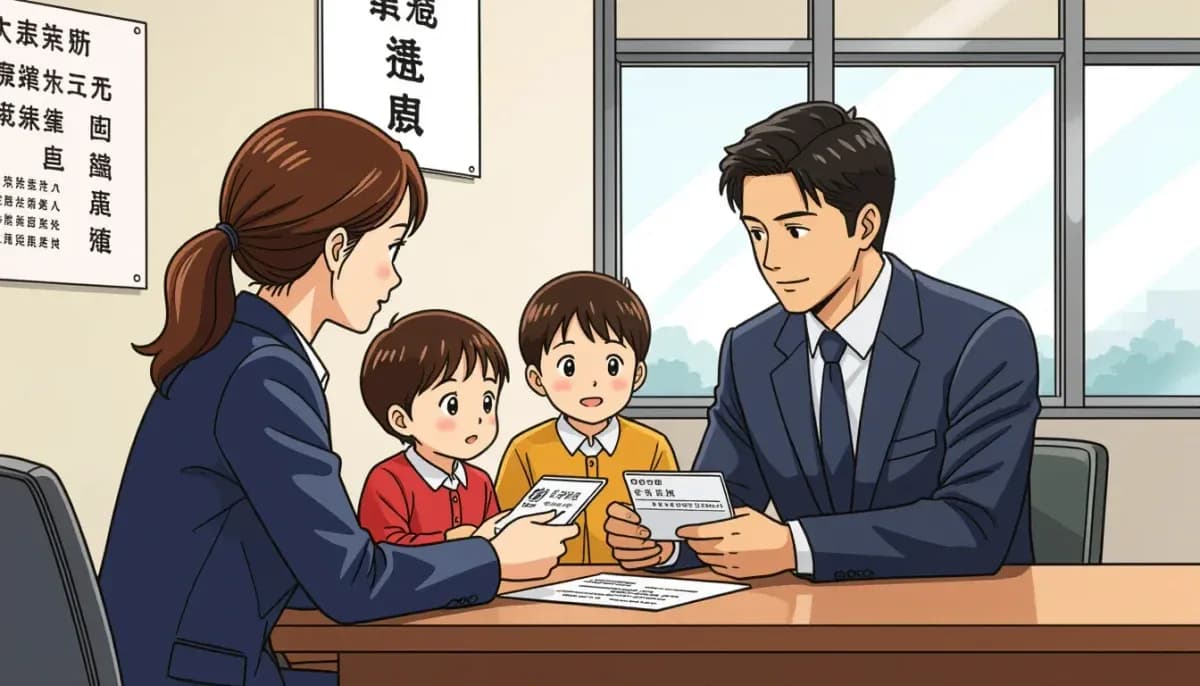
Everything foreign parents need to know about the Zairyu Card (residence card) for children in Japan: how to get it, validity rules for under-16s, the age-16 renewal, carrying requirements, and what to do when a child is born in Japan.
Residence Card (Zairyu Card) Guide for Children in Japan
If you are raising children in Japan as a foreign resident, understanding the Residence Card (在留カード, Zairyu Card) for children is essential. Japan requires all mid-to-long-term foreign residents — including children — to hold a valid residence card. However, the rules for children differ significantly from adults, especially for those under the age of 16. This guide explains everything you need to know: how to obtain a card for your child, validity periods, renewal requirements, carrying obligations, and critical procedures for children born in Japan.
Whether you just arrived in Japan with your family, recently had a baby here, or are approaching your child's 16th birthday, this guide has you covered.
What Is the Residence Card (Zairyu Card)?
The Residence Card (在留カード), commonly called the Zairyu Card, is an official document issued by the Japanese Ministry of Justice to all foreign nationals who are residing in Japan for more than 3 months under a mid-to-long-term residence status. It serves as the primary ID document for foreign residents and contains the following information:
- Full name and date of birth
- Nationality and gender
- Current home address in Japan
- Residence status (e.g., Dependent, Work, Student)
- Permitted period of stay
- Work permission status
The card is the size of a standard credit card and must be renewed whenever your residence status changes or expires. It is not the same as a visa — the visa permits you to enter Japan, while the Zairyu Card proves your legal status while residing there.
Who is exempt? Diplomats, officials of foreign governments, and people on short-term stays (under 90 days as a temporary visitor) are not required to hold a Zairyu Card.
| Feature | Details |
|---|---|
| Issued by | Ministry of Justice / Immigration Services Agency |
| Card size | Credit card size |
| Languages | Japanese (with some English) |
| Validity | Tied to residence status period (or age 16 for children) |
| Required for | All foreign nationals staying 3+ months |
Do Children Need a Residence Card?
Yes. All foreign children living in Japan for more than 3 months under an approved residence status are required to hold a valid Zairyu Card. There are no age exemptions for possessing the card — even infants and toddlers must have one.
Most foreign children in Japan are registered under Dependent (家族滞在) status, which is granted when a parent holds a valid work, student, or other long-term visa. Key points about Dependent status:
- Only spouses and children of the primary visa holder qualify for Dependent status — parents, siblings, and other relatives are not eligible.
- Children must be the biological or legally adopted children of the visa holder.
- Dependent status gives the child the legal right to live in Japan but does not automatically grant the right to work (relevant when the child becomes an adult).
For detailed information on visa status and legal considerations for your family, see our guide on Visa and Legal Issues for Foreign Families with Children in Japan.
How to Get a Residence Card for Your Child
Children Arriving from Abroad
If your child is entering Japan from overseas, the process depends on the port of entry:
Major International Airports (Narita, Haneda, Kansai, Chubu, New Chitose, Hiroshima, Fukuoka): The residence card is issued on the spot at the immigration counter, just like for adult residents. The card is handed to you before you leave the immigration hall.
Smaller Ports of Entry: Your child's passport will receive a stamp indicating residence status. The actual residence card is then mailed to your registered address after you complete address registration at the local city or ward office.
Required documents for address registration at city/ward office:
- Child's passport (with entry stamp)
- Child's residence card (or passport stamp if card is pending)
- Parent's residence card
- Family relationship documents (birth certificate with certified Japanese translation, if required)
Address registration must be completed within 14 days of arriving at your new residence in Japan.
Children Born in Japan
Children born in Japan require special procedures. Here is the complete checklist:
At the city/ward office within 14 days of birth:
- Submit the birth notification (出生届)
- Complete resident registration for the baby
- Enroll in National Health Insurance
- Apply for discounted medical treatment eligibility (乳幼児医療費助成)
- Apply for Child Allowance (児童手当)
Required items for city/ward office:
- Mother-Child Health Handbook (母子手帳)
- Hospital birth certificate
- Parents' residence cards and passports
- Personal seal (inkan) or signature
At the home country's embassy or consulate within 30 days:
- Report the birth to establish the child's nationality
- Apply for the child's passport from the home country
- Important: Failure to report to the home country's consulate may result in the child being stateless, even if they have a Japanese residence card.
At the Immigration Services Agency within 30 days of birth: If the child will remain in Japan for 60 days or more, parents must apply for a Certificate of Eligibility (CoE) for Dependent status on the child's behalf. Required documents include:
- Birth certificate (with certified Japanese translation)
- Parents' residence certificates (住民票)
- Parents' passports and residence cards
For more on the full birth process in Japan, see our guide on Pregnancy and Giving Birth in Japan as a Foreign Parent.
Validity Periods: The Critical Difference for Children Under 16
This is where children's Zairyu Cards differ most significantly from adults'. Children under 16 receive residence cards without photographs. Because of this, the validity rules are specially designed to ensure that every child gets a photo ID once they turn 16.
Key Rules for Children Under 16
| Card Issue Date | Expiry Rule |
|---|---|
| Issued on or after November 1, 2023 | Expires the day BEFORE the child's 16th birthday, OR when the residence period ends — whichever comes first |
| Issued on or before October 31, 2023 | Expires ON the child's 16th birthday, OR when the residence period ends — whichever comes first |
Why does this matter? Even if your child's visa or residence status is valid beyond age 16, their Zairyu Card automatically expires at age 16. If you do not renew the card before that date, your child technically becomes a status violator — which can have serious legal consequences.
This applies even to permanent residents. A child who holds permanent residency (永住者) still has their Zairyu Card expire at age 16 and must undergo the renewal process.
For detailed guidance on navigating Japan's legal system as a foreign family, check the resources at Living in Nihon and For Work in Japan.
Renewing Your Child's Card at Age 16
When your child approaches their 16th birthday, the following renewal process applies:
- Timing: Apply for renewal before the card's expiry date (i.e., before or on the day before the 16th birthday for cards issued after November 2023).
- Where to apply: Local Immigration Services Agency office or the relevant regional immigration bureau.
- What happens: The child receives their first residence card with a photograph. A photo must be submitted with the renewal application.
- Cost: There is no processing fee for the age-16 renewal. This is an exception to the standard renewal fee structure.
- New validity: The new card's expiry will follow standard adult rules — typically tied to the residence status period.
Documents typically required:
- Current (expiring) residence card
- Passport
- One passport-sized photo (4cm × 3cm, taken within 3 months)
- Application form (available at immigration offices)
After the age-16 renewal, normal adult rules apply for all future renewals. Learn more about the legal landscape for your family at Chuukou Benkyou.
Carrying Requirements for Children vs. Adults
One of the most misunderstood aspects of the Zairyu Card for families is the carrying requirement:
| Age | Carrying Requirement |
|---|---|
| 16 and older | Must carry the card at all times when outside. Failure to present on demand: fine up to ¥200,000. Refusal: up to 1 year imprisonment. |
| Under 16 | Exempt from the requirement to carry the card at all times. |
Even though young children are exempt from carrying their card, parents should still keep the card safe at home. You will need it for school enrollment, medical visits, and other administrative tasks. See our guide on Healthcare and Medical Care for Children in Japan for situations where your child's residence card may be requested.
Updating the Address on Your Child's Card
Whenever your family moves within Japan, you must update the address on all residence cards — including your children's.
Process:
- Move-out notice (転出届): File at the city/ward office of your current address before or soon after moving.
- Move-in notice (転入届): File at the city/ward office of the new address within 14 days of the move.
- The new address will be printed on the reverse side of each residence card.
Warning: Failing to update your address for 90 days without a valid reason can result in your residence status being revoked. This applies to the entire household, including children.
Travel Abroad and Re-Entry
When your family travels outside Japan temporarily, take care of the following to protect your children's residence status:
- Mark the Embarkation Card correctly: When departing Japan, check the box for "Departure With Special Re-Entry Permission" (みなし再入国許可). This allows you to return without obtaining a formal re-entry permit, as long as you return within 1 year.
- Stays abroad exceeding 1 year: You must apply for a formal re-entry permit at an immigration office before leaving Japan. Without it, your child's residence status will be lost and they will need to start the visa process from scratch.
- This applies to children equally. Parents often forget to handle this for each child individually when filling out embarkation cards.
For an overview of re-entry rules and travel considerations, the Japan Handbook provides a clear breakdown of the procedures.
Common Issues and the "Zairyu Card Wall"
Many foreign families encounter what is sometimes called the "Zairyu Card wall" — situations where the remaining validity on a residence card (including a child's card) creates administrative obstacles:
- Bank accounts: Banks in Japan often refuse to open accounts for individuals whose residence card has less than 6 months of validity remaining. If your child's card is nearing the age-16 expiry, renew it early to avoid this.
- Mobile phone contracts: Carriers may decline to offer multi-year contracts if the card validity does not cover the contract period.
- School enrollment: Some schools request to see residence cards; an expired card can cause complications.
The practical advice: always renew well in advance — ideally 2–3 months before expiry. For the age-16 renewal specifically, apply as soon as you notice the expiry date approaching.
For broader financial planning as an expat family in Japan, see our guide on Financial Planning for Expat Families Raising Children in Japan.
Lost or Damaged Residence Cards
If your child's residence card is lost, stolen, or damaged:
- Report the loss/theft to police first (get a written report number).
- Apply for reissuance at the Immigration Services Agency within 14 days of discovering the loss.
- Bring: passport, photo, police report (for lost/stolen cards), and application form.
- A fee is charged for reissuance (standard ¥1,600 revenue stamp, subject to change).
Children's cards without photos are reissued the same way, but no photo is required for children under 16.
Quick Reference Checklist
Use this checklist to ensure your child's Zairyu Card situation is always in order:
| Task | Timing |
|---|---|
| Register address at city/ward office | Within 14 days of arrival or moving |
| Apply for Dependent CoE (for Japan-born baby) | Within 30 days of birth |
| Report birth to home country embassy | Within 30 days of birth |
| Renew card as child approaches age 16 | Before card expiry date (before 16th birthday) |
| Update address on card after moving | Within 14 days of moving |
| Mark "Special Re-Entry Permission" when traveling abroad | At the time of departure |
| Apply for re-entry permit for stays over 1 year | Before leaving Japan |
| Reissue lost/damaged card | Within 14 days of discovery |
Summary
The Residence Card (Zairyu Card) for children in Japan has several important differences from the adult version. The most critical points to remember are:
- All foreign children staying in Japan for 3+ months need a Zairyu Card, regardless of age.
- Children under 16 receive cards without photos, and these cards expire at or just before the child's 16th birthday — no matter how long their visa is valid.
- The age-16 renewal is free and results in the child receiving their first photo-bearing residence card.
- Under-16 children are exempt from the daily carrying requirement, but parents should keep the card safe.
- Children born in Japan require a separate application for Dependent status within 30 days, and must be registered with the home country's embassy to avoid statelessness.
Keeping your child's Zairyu Card current is not just a formality — it is a legal requirement that underpins their right to remain in Japan. Stay proactive, mark your calendar for renewal dates, and keep copies of all documents in a safe place.
For comprehensive information on the legal and visa landscape for foreign families in Japan, see our full guide: Visa and Legal Issues for Foreign Families with Children in Japan.
For the most authoritative and up-to-date information, consult the Immigration Services Agency of Japan or visit your regional immigration bureau.
Additional resources:

Originally from Vietnam, living in Japan for 16+ years. Graduated from Nagoya University, with 11 years of professional experience at Japanese and international companies. Sharing practical information for foreign parents raising children in Japan.
View Profile →Related Articles
Name Registration Rules for Mixed-Nationality Children
Complete guide to name registration rules for mixed-nationality children in Japan: birth notification deadline, koseki, dual nationality, residence status, and how to avoid statelessness.
Read more →
Consular Registration for Children Born in Japan
Complete guide for foreign parents on consular registration for children born in Japan. Learn deadlines, required documents, embassy procedures, and how to avoid statelessness.
Read more →
When to Hire an Immigration Lawyer for Family Matters
Learn when foreign families in Japan need an immigration lawyer for spousal visas, family status changes, custody disputes, and more. Includes 2025 fee breakdown and free consultation options.
Read more →
Common Family Visa Complications and Solutions
Struggling with Japan's dependent visa? Learn the most common family visa complications — income issues, document errors, rejection reasons — and practical solutions to resolve them.
Read more →
Changing Visa Status When You Have Children
Complete guide to changing visa status for children in Japan: Family Stay visa eligibility, COE process, children born in Japan, 2025 fee updates, and common mistakes to avoid.
Read more →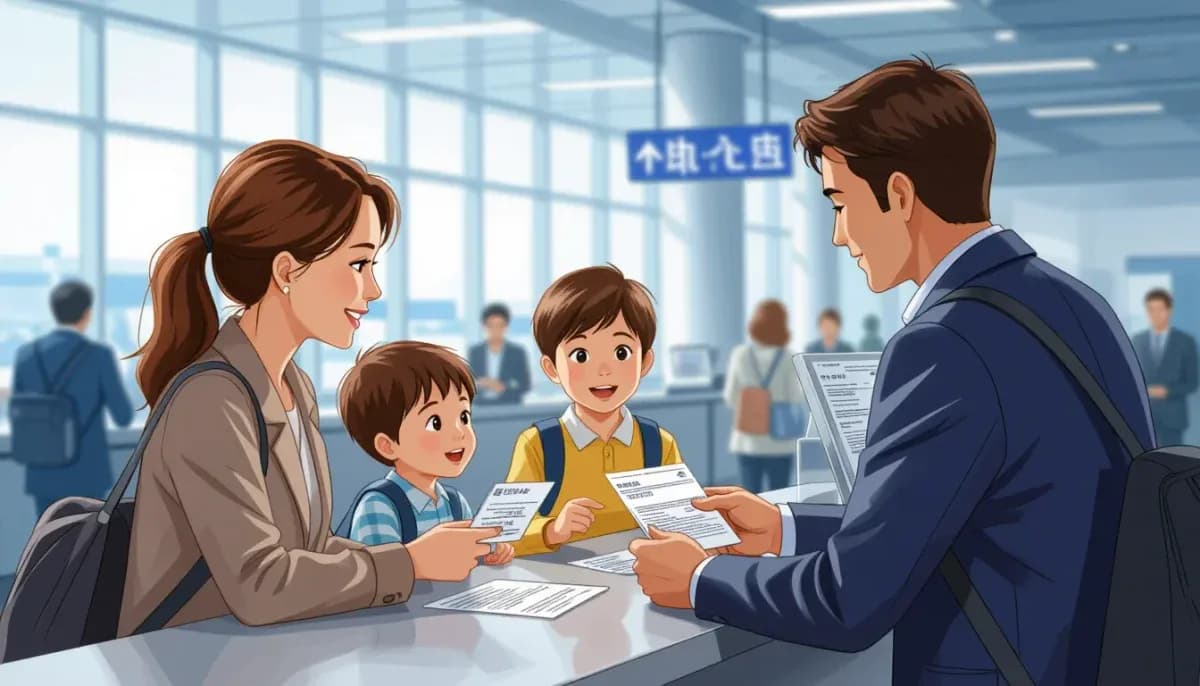
Re-Entry Permits for Children Leaving and Returning to Japan
Everything foreign families need to know about re-entry permits for children in Japan. Learn about special vs. standard permits, fees, application steps, and critical rules to protect your child's residency status when traveling abroad.
Read more →