
Re-Entry Permits for Children Leaving and Returning to Japan

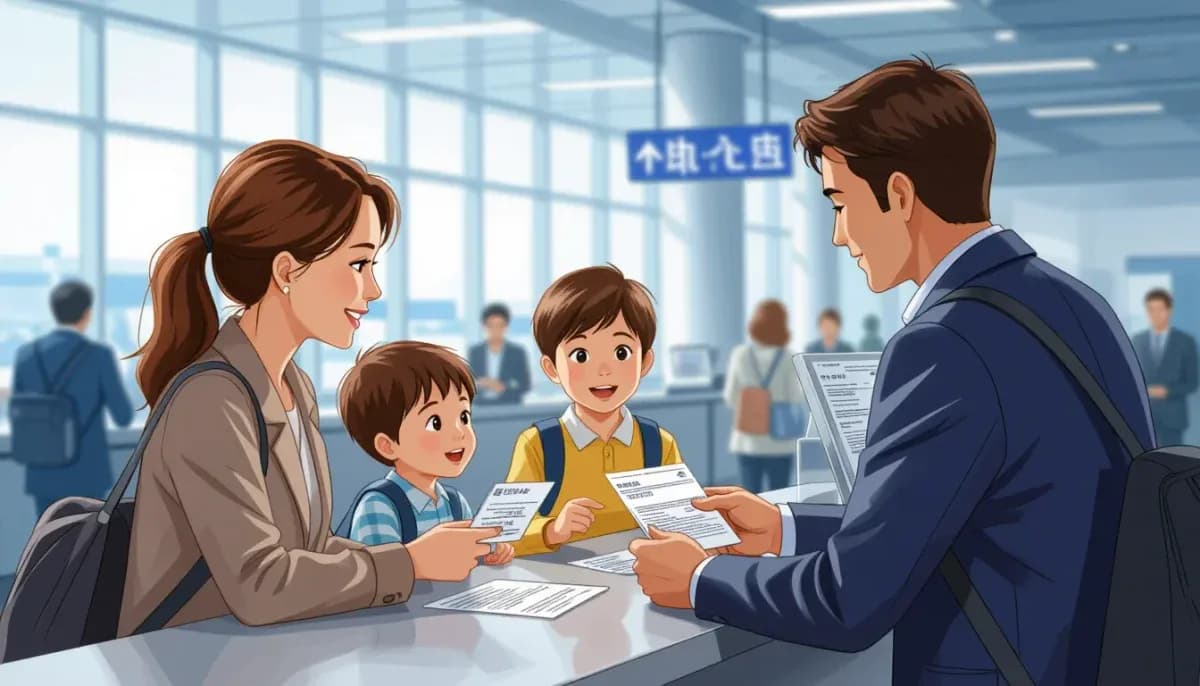
Everything foreign families need to know about re-entry permits for children in Japan. Learn about special vs. standard permits, fees, application steps, and critical rules to protect your child's residency status when traveling abroad.
Re-Entry Permits for Children Leaving and Returning to Japan
If you're a foreign parent living in Japan and planning to travel abroad with your children, understanding re-entry permits is absolutely essential. Failing to secure the correct permit before leaving can result in your child permanently losing their visa status — forcing you to start the entire residency application process from scratch. This guide explains everything you need to know about re-entry permits for children in Japan, including the two main types, how to apply, fees, and critical rules that apply specifically to minors.
What Is a Re-Entry Permit and Why Does Your Child Need One?
A re-entry permit (再入国許可) is an authorization that allows a foreign national with Japanese residency status to leave Japan and return without losing their visa status. Without one, departing Japan automatically voids your child's status of residence — even if they were born in Japan or have lived there for years.
Any child who holds a Japanese residence card (在留カード) and plans to travel abroad, whether for a family vacation, a visit to grandparents, or an extended stay overseas, must use one of the two types of re-entry permits available. This applies regardless of the child's age — even infants need proper re-entry authorization.
The good news is that for most short trips, the process is simple and free. For longer absences, however, more preparation is required.
Two Types of Re-Entry Permits: Special vs. Standard
Understanding the difference between the two types of re-entry permits is the first step in planning international travel with your children.
| Feature | Special Re-Entry Permit | Standard Re-Entry Permit |
|---|---|---|
| Japanese Name | みなし再入国許可 | 再入国許可書 |
| Fee | Free | ¥4,000 (single) / ¥7,000 (multiple) |
| Where to Apply | At airport on departure day | Immigration bureau before departure |
| Maximum Validity | 1 year from departure | Up to 5 years |
| Can Be Extended Abroad | No | Yes (at Japanese embassy) |
| Application Required | No advance application | Must apply in person before leaving |
| Introduced | July 9, 2012 | Long-standing system |
The Special Re-Entry Permit (みなし再入国許可, or "deemed re-entry permit") was introduced on July 9, 2012. It is the most commonly used option for families taking short vacations or trips abroad. It requires no advance application — your child simply presents their valid passport and residence card at the airport departure counter and ticks the correct box on the Embarkation/Disembarkation (ED) Card for Re-entrants. The immigration officer stamps the card, and the permit is automatically applied.
The Standard Re-Entry Permit is for families planning to stay abroad longer than one year, or for those who want the security of a longer-validity permit. It must be applied for in person at the Regional Immigration Bureau before departure.
For more guidance on visa and residency issues for foreign families in Japan, see our comprehensive guide on visa and legal issues for foreign families.
How the Special Re-Entry Permit Works for Children
The Special Re-Entry Permit is straightforward, but there are a few important rules to keep in mind, especially for families with children.
At Departure:
- Bring your child's valid passport and valid residence card.
- At the departure immigration counter, fill out the ED Card for Re-entrants (there is a special card for those re-entering — make sure you use the correct form).
- Tick the box declaring your intention to return to Japan.
- The immigration officer will stamp the card and your child's passport, confirming the special re-entry permit is applied.
- Keep the stamped ED card — it will be needed upon return to Japan.
Validity: The Special Re-Entry Permit is valid for one year from the date of departure, or until your child's authorized period of stay expires — whichever comes first. This is a critical point for families with children whose visas expire soon.
For example, if your child's authorized stay expires in 8 months and you leave Japan today, they must return within 8 months — not one year. The one-year rule is the maximum, but it cannot override the visa expiration date.
Who is NOT eligible for the Special Re-Entry Permit:
- Children on temporary visitor (短期滞在) status
- Those with pending visa revocation proceedings
- Those with departure confirmation holds
- Individuals deemed a security risk
For detailed information on visa procedures, Living in Nihon has extensive resources for foreigners navigating Japanese immigration.
How to Apply for a Standard Re-Entry Permit for Your Child
If you plan to keep your child abroad for more than one year, or want the flexibility of a longer-validity permit, you'll need to apply for a Standard Re-Entry Permit before leaving Japan.
Key rules for children:
- Children under 16 do not need to appear in person at the immigration bureau. A parent or legal guardian may apply on their behalf.
- The application must be submitted before departure — you cannot apply while outside Japan.
- Applications are typically processed the same day.
Required Documents:
- Completed re-entry permit application form (available at the immigration bureau)
- Child's valid passport
- Child's Residence Card (在留カード)
- Revenue stamps (収入印紙) for the applicable fee
Fees (as of April 1, 2025):
| Permit Type | In-Person (Counter) | Online Application |
|---|---|---|
| Single re-entry | ¥4,000 | ¥3,500 |
| Multiple re-entry | ¥7,000 | ¥6,500 |
The multiple re-entry permit allows your child to make unlimited trips back and forth until the permit expires, which is valuable for families who travel frequently between Japan and their home country.
Validity: Standard Re-Entry Permits are valid for up to 5 years from the date of issue, or until the underlying visa expires — whichever comes first. For Special Permanent Residents (特別永住者), the validity extends to 6 years, with the possibility of a 7-year extension.
Extending a Standard Re-Entry Permit Abroad: Unlike the Special Re-Entry Permit, the Standard Re-Entry Permit can be extended at a Japanese embassy or consulate overseas before it expires, as long as the underlying visa remains valid. This is an important safety net for families whose plans change while abroad.
If you're also thinking about the long-term financial implications of raising children in Japan, see our guide on financial planning for expat families.
Critical Warnings: What Happens If You Leave Without a Permit
This is arguably the most important section of this guide. The consequences of leaving Japan without a valid re-entry permit are severe and permanent.
Permanent loss of residency status: If your child departs Japan without either a Special Re-Entry Permit or a Standard Re-Entry Permit, their status of residence is immediately and irrevocably voided at the moment of departure. This applies regardless of how long they have lived in Japan, whether they were born there, or how strong their ties to the country are.
Starting from zero: Your child would need to apply for a new visa from scratch at a Japanese embassy or consulate abroad, going through the full initial application process. Depending on the visa type, this could take considerable time and may not be guaranteed.
Risk of entry refusal: In some cases, the child may face complications re-entering Japan at all, depending on their visa category and circumstances.
Permanent residents face additional risk: For children with permanent resident status (永住者), remaining abroad for more than one year — even with a Special Re-Entry Permit — can jeopardize their permanent resident status entirely. If you are traveling long-term with a permanent resident child, the Standard Re-Entry Permit with its longer validity is strongly recommended.
For support resources and community advice on navigating these situations, For Work in Japan offers practical guidance for foreigners managing life in Japan.
Special Considerations for Permanent Resident Children
Children who hold permanent resident status (永住者) in Japan have some of the strongest residency rights available to foreign nationals, but they are not immune from re-entry permit requirements.
The one-year rule for permanent residents: If a permanent resident child uses the Special Re-Entry Permit and stays abroad for more than one year, their permanent resident status is automatically lost. This is a hard deadline with no exceptions. If you're planning an extended trip — for example, spending a year in your home country for language learning or family reasons — you must use the Standard Re-Entry Permit, which allows up to 5 years abroad.
COVID-19 exception: During the COVID-19 pandemic, the Japanese Ministry of Foreign Affairs (MOFA) implemented special provisions to extend the validity of re-entry permits for those who were unable to return to Japan due to border closures. While these emergency measures are no longer in effect, they demonstrate that in truly exceptional circumstances, the government has been willing to accommodate foreign residents.
Applying for a standard permit for permanent resident children: The same rules apply as for other visa categories — apply at the immigration bureau before departure, a parent can apply for children under 16, and fees are ¥4,000 (single) or ¥7,000 (multiple).
For information on child healthcare and welfare while your children are based in Japan, our guide on healthcare and medical care for children in Japan covers everything from insurance to hospital procedures.
Practical Tips for Families Traveling with Children
Managing re-entry permits for the whole family can feel overwhelming, but with the right preparation, it is manageable. Here are some practical tips:
Before you book flights:
- Check every family member's residence card expiration date. If anyone's card expires within a year of your planned departure, either renew the card first or ensure they return before the expiration.
- Decide whether the Special Re-Entry Permit (free, good for trips under one year) or Standard Re-Entry Permit (paid, up to 5 years) is right for your family's trip.
At the airport:
- Arrive early. Families with multiple children may take longer at the immigration counter.
- Make sure each child's residence card is valid and in their possession (or yours, for young children).
- Fill out the ED Cards for Re-entrants carefully. Using the wrong form means the Special Re-Entry Permit may not be applied correctly.
- Keep all stamped ED Cards safe — you'll need them upon return.
If plans change while abroad:
- If your trip extends beyond one year, contact a Japanese embassy or consulate immediately about extending a Standard Re-Entry Permit. You cannot extend a Special Re-Entry Permit from abroad.
- If a child's visa is expiring and you're overseas, consult the embassy about applying for a new visa category.
Delegating to a representative:
- If you cannot apply in person (for example, due to illness), authorized attorneys (弁護士) or administrative scriveners (行政書士) can apply for Standard Re-Entry Permits on behalf of your family.
For a broader look at how to raise children well in Japan as a foreign family, check out our overview of the Japanese education system for foreign families.
Frequently Asked Questions
Q: Does my newborn need a re-entry permit? Yes. All foreign nationals with Japanese residency status, including infants, must have a valid re-entry permit when leaving Japan. For babies, the parent applies on their behalf.
Q: Can I apply for a re-entry permit at the airport on the day of departure? You can use the Special Re-Entry Permit at the airport — this requires no advance application. However, you cannot apply for a Standard Re-Entry Permit at the airport; this must be done at the Regional Immigration Bureau before your travel date.
Q: What if my child's residence card expires while we are abroad? Both types of re-entry permits become invalid once the underlying visa expires, regardless of the permit's stated validity. If your child's visa expires while abroad, you cannot use the re-entry permit to return. You would need to apply for a new visa at a Japanese embassy.
Q: Do Japanese-national children need re-entry permits? No. Re-entry permits only apply to foreign nationals. Japanese citizens can enter and exit Japan freely using their Japanese passport.
Q: Can we extend our stay abroad if we used the Special Re-Entry Permit? No. The Special Re-Entry Permit cannot be extended while abroad. If you need more time overseas, you needed to apply for a Standard Re-Entry Permit before leaving Japan. If your Special Re-Entry Permit is about to expire while abroad, you will need to return to Japan before it does.
For additional community insights on navigating school re-entry and educational transitions for returnee children, Chuukou Benkyou provides resources on examination systems relevant to returnee (kikokushijo) students.
Summary: Re-Entry Permit Quick Reference
Understanding re-entry permits doesn't have to be complicated. Here's a quick-reference table for families:
| Situation | Recommended Permit | Action Required |
|---|---|---|
| Trip under 1 year | Special Re-Entry Permit | Nothing in advance — fill ED Card at airport |
| Trip 1–5 years | Standard Multiple Re-Entry | Apply at immigration bureau before departure |
| Permanent resident child | Standard Re-Entry (if >1 yr) | Apply in advance; Special only for <1 year trips |
| Child under 16 applying | Standard Re-Entry | Parent applies on behalf |
| Plans may change | Standard Multiple Re-Entry | Provides flexibility; can extend at embassy |
Re-entry permits are a non-negotiable part of international travel for foreign families in Japan. With proper preparation — checking visa expiry dates, choosing the right permit type, and keeping documents safe — you can travel with confidence knowing your child's residency status is protected. For more detailed guidance, resources like ACROSEED's re-entry permit guide and JETRO's official information are excellent starting points.

Originally from Vietnam, living in Japan for 16+ years. Graduated from Nagoya University, with 11 years of professional experience at Japanese and international companies. Sharing practical information for foreign parents raising children in Japan.
View Profile →Related Articles
Name Registration Rules for Mixed-Nationality Children
Complete guide to name registration rules for mixed-nationality children in Japan: birth notification deadline, koseki, dual nationality, residence status, and how to avoid statelessness.
Read more →
Consular Registration for Children Born in Japan
Complete guide for foreign parents on consular registration for children born in Japan. Learn deadlines, required documents, embassy procedures, and how to avoid statelessness.
Read more →
When to Hire an Immigration Lawyer for Family Matters
Learn when foreign families in Japan need an immigration lawyer for spousal visas, family status changes, custody disputes, and more. Includes 2025 fee breakdown and free consultation options.
Read more →
Common Family Visa Complications and Solutions
Struggling with Japan's dependent visa? Learn the most common family visa complications — income issues, document errors, rejection reasons — and practical solutions to resolve them.
Read more →
Residence Card (Zairyu Card) Guide for Children
Everything foreign parents need to know about the Zairyu Card (residence card) for children in Japan: how to get it, validity rules for under-16s, the age-16 renewal, carrying requirements, and what to do when a child is born in Japan.
Read more →
Changing Visa Status When You Have Children
Complete guide to changing visa status for children in Japan: Family Stay visa eligibility, COE process, children born in Japan, 2025 fee updates, and common mistakes to avoid.
Read more →