
Registering Children at City Hall: Juminhyo Guide

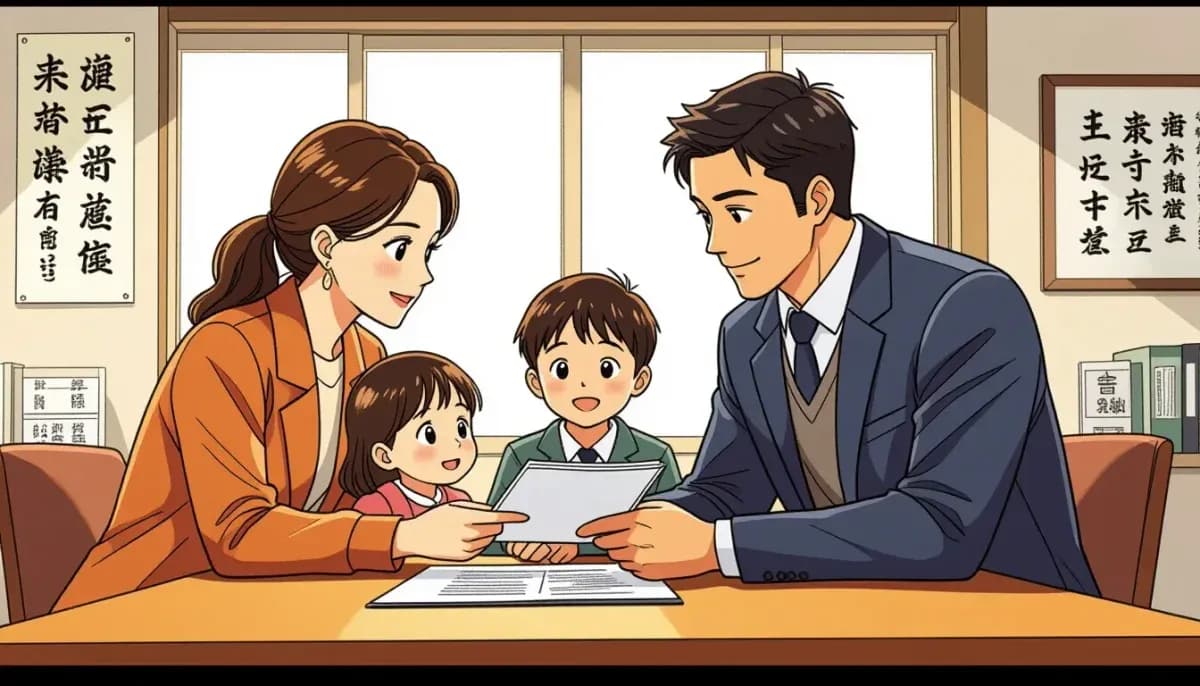
Complete guide to registering your children at Japanese city hall and managing the Juminhyo residence certificate. Step-by-step process for foreign parents, including newborn registration, required documents, and how to use it for school enrollment and child benefits.
Registering Children at City Hall: A Complete Juminhyo Guide for Foreign Parents in Japan
If you have children in Japan — whether born here or brought from abroad — one of the first and most important administrative tasks you'll face is registering them at your local city hall and ensuring their Juminhyo (住民票), or residence certificate, is properly set up. For foreign families, the process can feel daunting, but it's essential: without a correct Juminhyo for your child, you cannot enroll them in school, apply for the Child Allowance, or access national health insurance.
This guide walks foreign parents through every step of the process: what the Juminhyo is, how to register a child, what documents you'll need, and how to use it in day-to-day life in Japan.
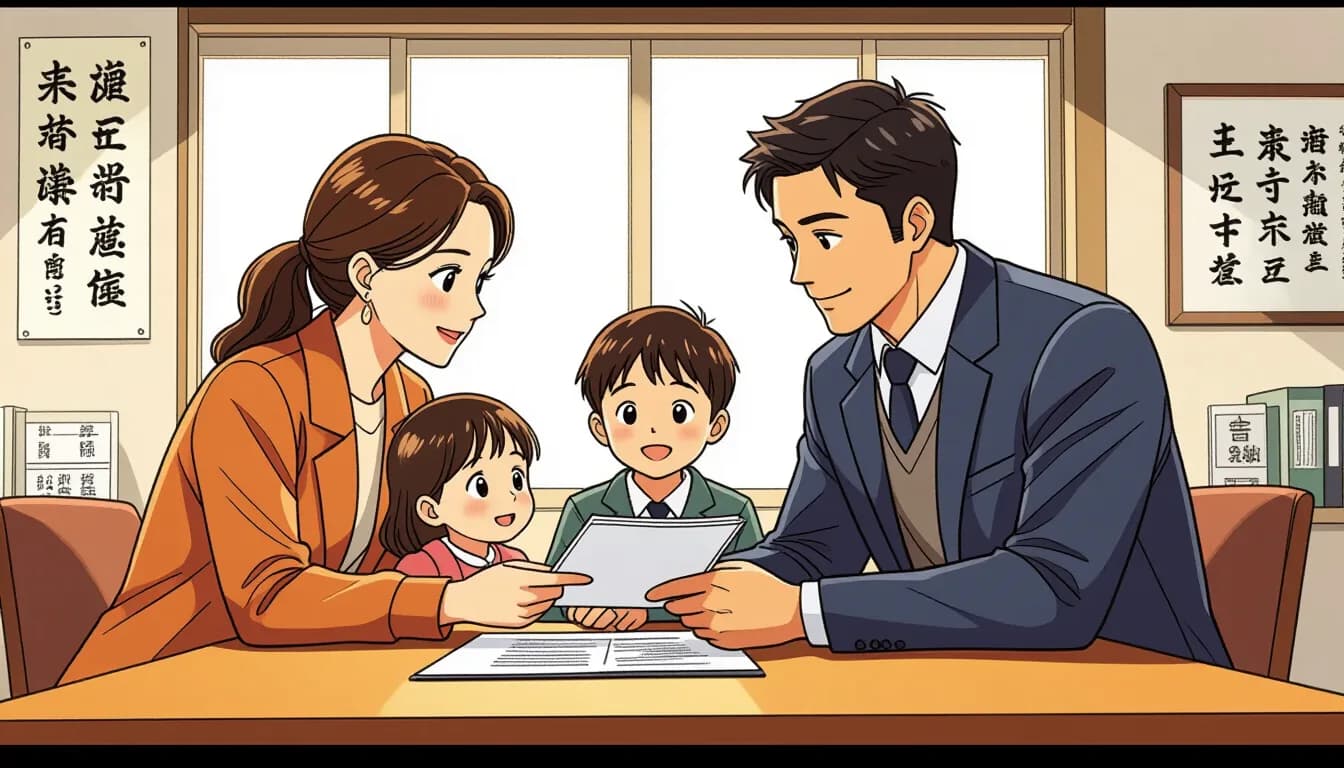
What Is a Juminhyo (住民票)?
A Juminhyo is Japan's official residence certificate, issued by your local municipal government (city, ward, town, or village office). It serves as proof of your current address and identity in Japan, and is used across a huge range of administrative, educational, and social services.
Since July 9, 2012, foreign residents have been fully integrated into the same Basic Resident Registration system that Japanese nationals use. Before that date, foreigners were tracked under a separate alien registration system. Today, all residents — regardless of nationality — are registered and can obtain a Juminhyo from their local city hall.
What a Juminhyo Contains
| Field | Japanese Residents | Foreign Residents |
|---|---|---|
| Full Name | ✅ | ✅ |
| Date of Birth | ✅ | ✅ |
| Gender | ✅ | ✅ |
| Current Address | ✅ | ✅ |
| My Number (Individual Number) | ✅ | ✅ |
| Health Insurance Details | ✅ | ✅ |
| Pension Information | ✅ | ✅ |
| Nationality | ❌ | ✅ |
| Status of Residence (Visa Type) | ❌ | ✅ |
| Visa Expiration Date | ❌ | ✅ |
| Residence Card Number | ❌ | ✅ |
For foreign children, the Juminhyo also displays their visa status and any applicable period of stay — a critical piece of information often needed during school enrollment or child allowance applications.
Juminhyo vs. Koseki: Key Difference for Foreign Families
It's important to understand that the Koseki (戸籍) — Japan's Family Register system — applies exclusively to Japanese citizens. Foreign residents and their children, even those born in Japan, are not entered into the Koseki. The Juminhyo is your family's primary official document.
This means if you are a non-Japanese parent with a child born in Japan, the Juminhyo is the only Japanese official record documenting your child's residence. For more background on navigating legal paperwork in Japan, see our guide on Visa and Legal Issues for Foreign Families with Children in Japan.
Registering a Newborn at City Hall
When a child is born in Japan to foreign parents, a specific sequence of registrations must be completed — and the clock starts ticking immediately.
Step 1: File a Birth Notification (Shussei Todoke — 出生届)
Within 14 days of the birth, you must file a Birth Notification at your city hall. This is the foundational document that initiates all subsequent registrations.
Documents required:
- Birth Certificate issued by the hospital (医師の出生証明書)
- Passport of both parents
- Residence Card(s) of both parents
This notification covers you for Japanese administrative purposes. However, you should also report the birth to your home country's embassy or consulate within their required timeframe to register nationality.
Step 2: Add the Child to the Household Juminhyo (転入届 / 変更届)
Once the birth notification is filed, you need to formally add the newborn to your household's Juminhyo record. Bring:
- Your own Juminhyo or Residence Card
- The completed birth notification receipt from the hospital
- Passport
The child will be classified under the category "transitional resident due to birth" until their residence status is formally determined. They must be added to the household record within 14 days of birth.
Step 3: Apply for the Child's Residence Card
For most non-Japanese children born in Japan, you will also need to apply for a Residence Card (在留カード) at the Immigration Bureau. This is separate from the city hall registration. Consult your nearest Regional Immigration Services Bureau for the current procedure, as it varies by the parents' visa status.
For a broader look at what's involved in having a baby in Japan as a foreigner, see our guide on Pregnancy and Giving Birth in Japan as a Foreign Parent.
Registering Children Who Move to Japan from Abroad
If you are relocating to Japan and bringing children who were born or raised abroad, you'll register them as part of your household's move-in (転入届, tennyuu todoke) process at city hall.
Required Documents
- Passports for all family members
- Residence Cards for all family members (or proof of Residence Card application)
- Certified family relationship documents (birth certificate, marriage certificate) with Japanese translation
- Proof of residence (rental agreement, employer letter, etc.)
The requirement for certified translations of foreign birth and marriage certificates is often the most time-consuming part of the process for international families. Have these prepared well in advance. Once registered, all children will be issued a My Number — Japan's Individual Number — mailed separately after registration.
The 14-Day Rule: When You Must Notify City Hall
Japan has a strict 14-day window for most residential notifications. You must notify your city hall within 14 days of:
- Arriving in Japan and establishing a home address for the first time
- Moving from one municipality to another (within Japan)
- Moving within the same municipality
- Adding a new household member (including a newborn)
- A household member leaving Japan permanently
Failure to register within 14 days may result in administrative penalties, though enforcement is inconsistent. More practically, you cannot access school enrollment, health insurance, or childcare benefits until the registration is complete.
Why Juminhyo Matters for Your Children's Lives in Japan
A correctly registered Juminhyo for your child is the gateway to virtually every aspect of Japanese society. Here's what it unlocks:
Education
Enrollment in elementary and junior high school (which is compulsory in Japan) requires proof of residency through the Juminhyo. Schools will request a copy showing all household members before accepting your child. For a full overview, see our Complete Guide to the Japanese Education System for Foreign Families and our guide on Elementary School in Japan for Foreign Parents.
Daycare and Kindergarten
Applications for hoikuen (保育園, daycare) and yochien (幼稚園, kindergarten) both require a household Juminhyo. The waitlist system for hoikuen in particular is notoriously competitive in urban areas, and applications cannot be submitted without registration documentation. Read more in our guide to Daycare and Hoikuen in Japan for Foreign Parents.
Child Allowance (Jidou Teate — 児童手当)
Japan offers a monthly Child Allowance for children up to age 15. To apply, you must be registered in the city and have a Juminhyo for each child. The allowance amounts are:
| Child's Age | Monthly Amount |
|---|---|
| Under 3 years | ¥15,000 per child |
| 3 years to elementary school graduation | ¥10,000 per child (3rd child+: ¥15,000) |
| Junior high school age (13–15) | ¥10,000 per child |
For more on financial support available to families, see our guide on Government Benefits and Subsidies for Families in Japan.
National Health Insurance
Children must be enrolled in Japan's national health insurance system. Registration requires the household Juminhyo. See our guide on Healthcare and Medical Care for Children in Japan for full details on how the system works.
How to Get a Copy of Your Child's Juminhyo
You'll need certified copies of the Juminhyo regularly — they typically need to be issued within the past 3 months to be accepted by schools, banks, and government offices. Here are the three main ways to obtain a copy:
Method 1: In-Person at City Hall (Most Reliable)
Visit your local city, ward, or town office during business hours (typically 8:30 AM–5:00 PM on weekdays, some offer Saturday hours).
Process:
- Fill out the application form at the registration counter
- Present ID (Residence Card, My Number Card, driver's license, or health insurance card)
- Pay the fee (typically ¥300 per copy)
- Receive your Juminhyo on the spot
You can request a copy showing only your child, or the entire household — most institutions will request the "all household members" version.
Method 2: Convenience Store Kiosk (Fastest)
Available at 7-Eleven, Lawson, FamilyMart, and Mini-Stop kiosks in participating municipalities:
- Hours: 6:30 AM–11:00 PM daily
- Requirement: My Number Card with active IC chip and PIN code set up
- Fee: ¥200–¥300
- Processing time: About 5 minutes
This is ideal for busy parents. Note that your municipality must participate in the service — most major cities do.
Method 3: By Mail (Slowest)
Download your municipality's application form, enclose a photocopy of ID, a postal money order, and a self-addressed stamped return envelope. Processing takes 1–2 weeks. This is best for requests when you cannot visit in person.
For more guidance on navigating Japanese administrative systems as a foreigner, Living in Nihon offers helpful resources in English for daily life in Japan.
Common Pitfalls and Tips for Foreign Parents
Don't confuse the Koseki with the Juminhyo. Schools and city offices may ask for either, but foreign families are never issued a Koseki. A Juminhyo is your equivalent document.
Translations take time. If you're registering foreign-born children or need to prove family relationships, budget at least 1–2 weeks for certified translations of foreign documents. Registered translators are available through services found via For Work in Japan, which also provides practical relocation support for foreign residents.
Keep multiple recent copies. The 3-month validity rule means you'll need fresh copies frequently. Get 3–4 copies each time you visit city hall — it saves extra trips.
My Number cards speed everything up. Once your child is assigned a My Number (which happens automatically after registration), getting a My Number Card for them enables convenience store kiosk access for all future document needs.
Language support is available. Many city halls in urban areas offer multilingual staff or written guides. For dedicated study support and educational navigation as a family in Japan, Chuukou Benkyou offers resources specifically aimed at foreign students and families navigating the Japanese school system.
For a complete step-by-step guide to the juminhyo system and other useful documentation tips, MailMate's juminhyo guide is an excellent English-language resource, as is GaijinPot's overview.
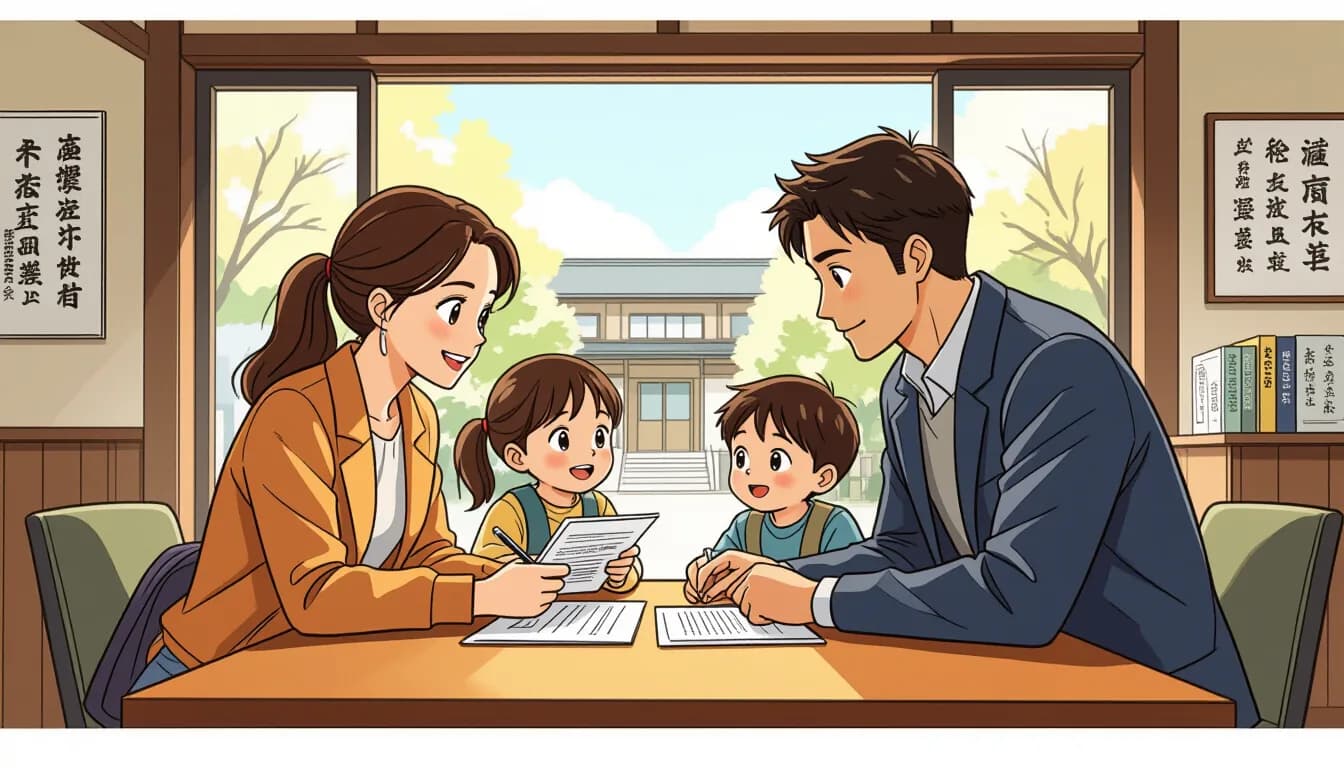
Summary Checklist for Foreign Parents
Here's a quick reference checklist to keep things organized:
| Task | When | Documents Needed |
|---|---|---|
| File Birth Notification | Within 14 days of birth | Hospital birth certificate, passports |
| Add child to household Juminhyo | Within 14 days of birth | Residence Card, birth notification receipt |
| Apply for child's Residence Card | As soon as possible after birth | Passports, birth notification |
| Enroll in National Health Insurance | At registration | Juminhyo, Residence Card |
| Apply for Child Allowance | After registration | Juminhyo, bank details, Residence Card |
| Enroll in daycare/kindergarten | Per facility deadline | Juminhyo (household copy), employment certificates |
| Enroll in elementary school | Before April enrollment | Juminhyo (household copy) |
Final Thoughts
Registering your children at city hall and managing their Juminhyo may seem like bureaucratic red tape, but in Japan it is the foundation of everything: education, healthcare, financial support, and your child's official identity within the country. The good news is that once the initial registration is done, the ongoing process of maintaining and updating the Juminhyo is relatively straightforward.
Start early, gather your translated documents in advance, and don't hesitate to ask for language assistance at the city hall counter. Japan's administrative system is designed to support residents — including foreign ones — and city hall staff are generally helpful once you're there.
For more guidance on raising children in Japan as a foreigner, explore our related guides on Baby and Infant Care in Japan, Toddler Parenting in Japan, and Financial Planning for Expat Families.

Originally from Vietnam, living in Japan for 16+ years. Graduated from Nagoya University, with 11 years of professional experience at Japanese and international companies. Sharing practical information for foreign parents raising children in Japan.
View Profile →Related Articles

Name Registration Rules for Mixed-Nationality Children
Complete guide to name registration rules for mixed-nationality children in Japan: birth notification deadline, koseki, dual nationality, residence status, and how to avoid statelessness.
Read more →
Consular Registration for Children Born in Japan
Complete guide for foreign parents on consular registration for children born in Japan. Learn deadlines, required documents, embassy procedures, and how to avoid statelessness.
Read more →
When to Hire an Immigration Lawyer for Family Matters
Learn when foreign families in Japan need an immigration lawyer for spousal visas, family status changes, custody disputes, and more. Includes 2025 fee breakdown and free consultation options.
Read more →
Common Family Visa Complications and Solutions
Struggling with Japan's dependent visa? Learn the most common family visa complications — income issues, document errors, rejection reasons — and practical solutions to resolve them.
Read more →
Residence Card (Zairyu Card) Guide for Children
Everything foreign parents need to know about the Zairyu Card (residence card) for children in Japan: how to get it, validity rules for under-16s, the age-16 renewal, carrying requirements, and what to do when a child is born in Japan.
Read more →
Changing Visa Status When You Have Children
Complete guide to changing visa status for children in Japan: Family Stay visa eligibility, COE process, children born in Japan, 2025 fee updates, and common mistakes to avoid.
Read more →