
Dual Nationality Rules and Deadlines for Children in Japan

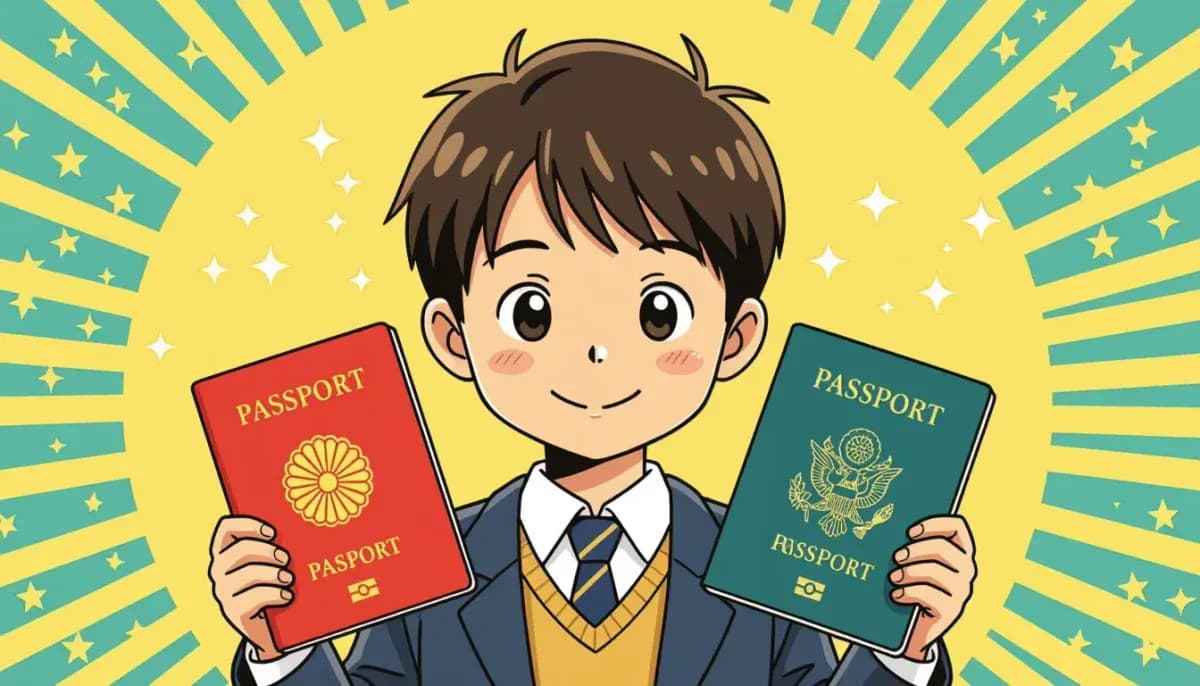
Learn the key deadlines and rules for dual nationality children in Japan — from the 3-month birth registration to the age-22 nationality selection requirement. Practical guide for foreign families.
Dual Nationality Rules and Deadlines for Children in Japan
If your child was born in Japan or abroad with Japanese and another nationality, you are navigating one of the most misunderstood areas of Japanese law. Japan officially requires dual nationals to choose one nationality — but the reality is far more nuanced. This guide explains the exact rules, deadlines, and practical realities for foreign families raising children with dual nationality in Japan.
Does Japan Allow Dual Nationality?
Japan officially does not recognize dual nationality. Under the Japanese Nationality Act, Japanese citizens who voluntarily acquire a foreign nationality lose Japanese citizenship automatically. Conversely, those who are born with two nationalities (for example, a child born to a Japanese mother and an American father) are required by law to select one nationality by a specific deadline.
However, Japan stands somewhat alone on this position. Japan is the only G7 nation that officially bans dual nationality, while more than 80% of countries worldwide permit it as of 2023. This creates a complex situation for children born into international families.
Despite the official stance, enforcement is virtually nonexistent. Japan's Ministry of Justice has never exercised its legal right to formally warn a dual national to choose a nationality. In practice, a well-documented "don't ask, don't tell" policy applies. A Japan Times survey found that of an estimated 890,000 people in a dual nationality position between 1985 and 2016, 76.8% maintained both passports — only 23.2% voluntarily relinquished one.
For families living in Japan, this means the practical day-to-day reality is typically that your child can hold both nationalities without immediate consequences. But understanding the legal deadlines and paperwork remains essential.
Key Deadlines: What You Must Know
There are two critical deadlines every dual-national family must understand.
Deadline 1: The 3-Month Birth Registration for Children Born Abroad
If a Japanese parent's child is born outside Japan, Japanese nationality does not automatically apply unless the parent takes action within a strict window:
- The parent must submit a Birth Registration (出生届, shusshou todoke) to a Japanese consulate or municipal office within 3 months of the child's birth
- The registration must include a declaration of intent to retain Japanese nationality (国籍留保の意思表示)
- Missing this 3-month deadline means the child loses Japanese nationality retroactively from birth — there is no grace period and no appeal under normal circumstances
This is one of the hardest deadlines in Japanese family law. Even one day late can cost your child their Japanese nationality. If you are a Japanese parent living abroad, this must be your top priority after your child is born.
Deadline 2: The Nationality Selection by Age 22
Children who are born with dual nationality (regardless of whether they were born in Japan or abroad) must formally select one nationality by the time they turn 22 years old.
There is a secondary rule: if a person acquires a second nationality after age 20, they must make the selection within 2 years of acquiring it — not by age 22.
| Situation | Deadline |
|---|---|
| Born with dual nationality | Select by age 22 |
| Second nationality acquired between ages 20–22 | Select within 2 years of acquisition |
| Formal demand issued by Ministry of Justice | Select within 1 month of demand |
| Birth registration (child born abroad) | Within 3 months of birth |
How to Select Japanese Nationality
If your child (or you, on their behalf) chooses to select Japanese nationality, the process involves filing a 選択届 (sentaku todoke) — a Nationality Selection Form — at a municipal office or Japanese consulate.
However, there is an important nuance: filing this form does not automatically cancel the other nationality. A separate renunciation must be made with the other country's government. Japan's form simply records your declaration that you are selecting Japanese nationality — it does not coordinate with or notify any foreign government.
This means, in practice, many people file the Japanese Nationality Selection Form and continue to hold their other passport because they never formally renounce it with the foreign country. Japanese law prohibits this, but enforcement remains nonexistent.
For families who want to genuinely comply with the law:
- File the 選択届 at your local municipal office (役所) or Japanese embassy/consulate
- Contact the embassy or government of the other country to formally renounce that nationality
- Keep copies of all paperwork
For more guidance on visa and legal status for foreign families in Japan, see our article on Visa and Legal Issues for Foreign Families with Children in Japan.
Practical Considerations for Raising Dual Nationals
Using Two Passports
Many families with dual-national children use both passports strategically — entering Japan on the Japanese passport and entering the other country on the foreign passport. This is common, practical, and generally unproblematic in day-to-day life.
Japan does not have exit records, so using a Japanese passport to enter and depart Japan while also holding a foreign passport is technically not something the government can easily detect or act upon.
School Registration and Family Documents
At Japanese public schools, your child will be registered using their Japanese family register (戸籍, koseki). Their foreign nationality is not recorded in this system. Foreign families navigating the education system should review our guide on the Elementary School in Japan: A Complete Guide for Foreign Parents for more on school registration.
When Your Child Turns 20 (or 22)
As your child approaches adulthood, they need to make an informed decision. Some considerations:
- Career goals: Certain Japanese government jobs require single nationality. However, private sector employment rarely cares.
- Military obligations: Some countries require military service from their citizens. Holding that country's passport means potentially being subject to those obligations.
- Tax implications: Some countries (notably the United States) tax their citizens on worldwide income regardless of residence. Renouncing US citizenship, for example, is a significant financial and legal decision.
- Travel flexibility: Two passports may allow visa-free access to a broader range of countries.
For broader planning around your family's future in Japan, see our Financial Planning for Expat Families Raising Children in Japan guide.
The Reality of Enforcement (and Non-Enforcement)
Japan's official position has never matched its practice. The Japanese government estimates that hundreds of thousands of children are born with multiple nationalities each year — unofficial estimates placed the figure at approximately 530,000 as of 2006, and the number has grown significantly since.
Given these numbers, strict enforcement would be both administratively impossible and politically toxic. The Ministry of Justice has never issued a formal demand to choose nationality in recorded history. Several prominent Japanese politicians, athletes, and public figures are known or believed to hold dual nationality, and these situations rarely result in legal action.
That said, the law is still the law. Your child could technically lose Japanese nationality if they are formally warned and do not comply within one month. And while this scenario is extremely unlikely, it is worth understanding to make an informed choice.
For more on cultural identity and what it means to grow up as a mixed-nationality child in Japan, see our guide on Cultural Identity for Hafu and Mixed-Race Children in Japan.
Resources for Dual-Nationality Families
When navigating these complex legal waters, use reliable resources and if needed, consult a certified administrative scrivener (行政書士, gyouseishoushi) who specializes in nationality law.
Helpful external resources:
- Living in Nihon — Expat Living Guide for Japan — general expat living resources including immigration topics
- For Work in Japan — Employment and Visa Resources — work visa and immigration guides for foreigners
- Chuukou Benkyou — Study and Life in Japan — educational and lifestyle resources for families in Japan
- Metropolis Japan: Does Japan Allow Dual Citizenship? — English-language overview
- Japan Times: Dual Citizenship Feature — in-depth reporting on dual nationality debates in Japan
Summary: What Dual-Nationality Families Should Do
If you have a child with dual nationality in Japan, here is a practical action plan:
- If your child was born abroad to a Japanese parent: File the birth registration with the Japanese consulate within 3 months of birth. Do not wait.
- Keep records: Store copies of both passports, birth certificates, and any registration documents.
- Understand the age-22 deadline: Your child will theoretically need to choose, but enforcement has never occurred.
- Make an informed choice: When your child approaches adulthood, consult with a specialist about the implications of each nationality for their specific situation.
- Don't panic: The legal framework is strict on paper but essentially unenforced in practice. Hundreds of thousands of Japanese dual nationals live normal lives without incident.
Raising children across cultures and legal systems is challenging but manageable with the right information. For a broader overview of all legal and administrative challenges for foreign families in Japan, see our guide on Visa and Legal Issues for Foreign Families with Children in Japan.

Originally from Vietnam, living in Japan for 16+ years. Graduated from Nagoya University, with 11 years of professional experience at Japanese and international companies. Sharing practical information for foreign parents raising children in Japan.
View Profile →Related Articles
Name Registration Rules for Mixed-Nationality Children
Complete guide to name registration rules for mixed-nationality children in Japan: birth notification deadline, koseki, dual nationality, residence status, and how to avoid statelessness.
Read more →
Consular Registration for Children Born in Japan
Complete guide for foreign parents on consular registration for children born in Japan. Learn deadlines, required documents, embassy procedures, and how to avoid statelessness.
Read more →
When to Hire an Immigration Lawyer for Family Matters
Learn when foreign families in Japan need an immigration lawyer for spousal visas, family status changes, custody disputes, and more. Includes 2025 fee breakdown and free consultation options.
Read more →
Common Family Visa Complications and Solutions
Struggling with Japan's dependent visa? Learn the most common family visa complications — income issues, document errors, rejection reasons — and practical solutions to resolve them.
Read more →
Residence Card (Zairyu Card) Guide for Children
Everything foreign parents need to know about the Zairyu Card (residence card) for children in Japan: how to get it, validity rules for under-16s, the age-16 renewal, carrying requirements, and what to do when a child is born in Japan.
Read more →
Changing Visa Status When You Have Children
Complete guide to changing visa status for children in Japan: Family Stay visa eligibility, COE process, children born in Japan, 2025 fee updates, and common mistakes to avoid.
Read more →