
Ninka vs Ninkagai Daycare in Japan: Key Differences Explained

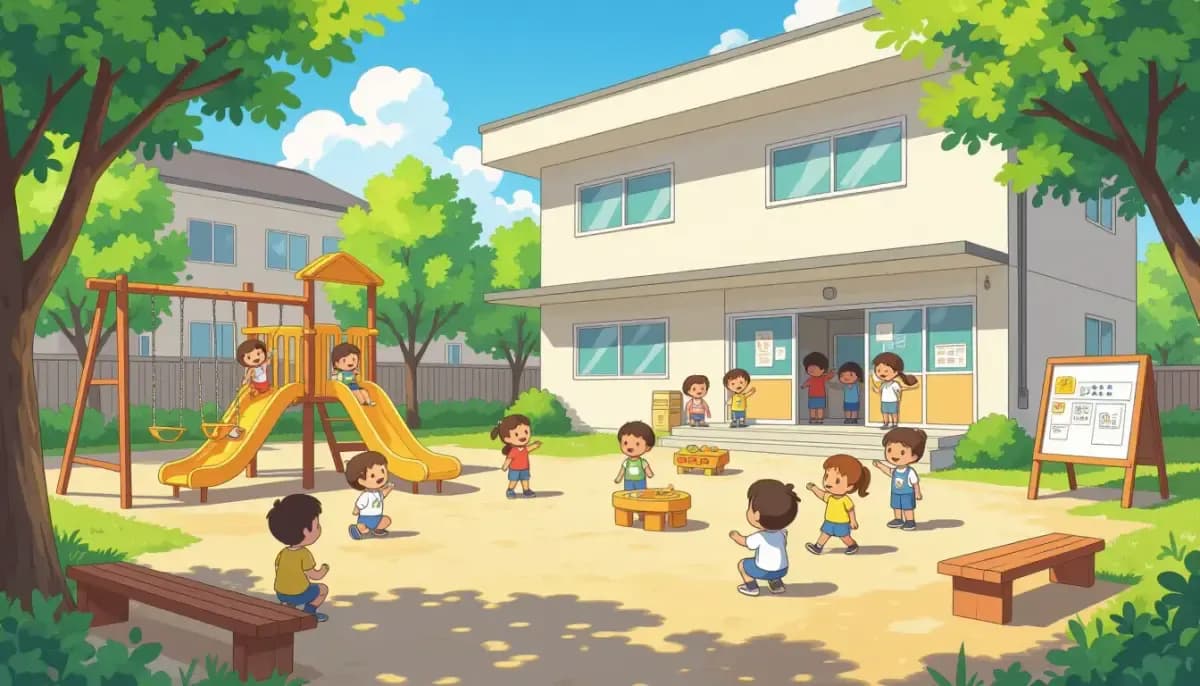
Understand the key differences between ninka (licensed) and ninkagai (unlicensed) daycare in Japan. Compare costs, application processes, hours, and find the best option for your foreign family.
Ninka vs Ninkagai Daycare in Japan: Key Differences Explained
Choosing daycare in Japan can be overwhelming for foreign parents, especially when terms like ninka hoikuen (認可保育園) and ninkagai hoikuen (認可外保育園) come into play. These two categories represent the licensed and unlicensed tiers of Japan's daycare system, and the differences between them affect everything from cost and quality to flexibility and availability. This guide breaks down exactly what sets them apart so you can make the best choice for your family.
If you are new to the Japanese education and childcare landscape, our Complete Guide to Daycare and Hoikuen in Japan provides a broader overview of how the entire system works.
What Is Ninka Hoikuen (Licensed Daycare)?
Ninka hoikuen (認可保育園) are daycare facilities officially authorized by the Japanese government. They are accredited by the Ministry of Health, Labour and Welfare and must meet strict national standards covering:
- Staff-to-child ratios (e.g., 1:3 for infants under age 1, 1:6 for ages 1-2)
- Minimum floor space per child
- Emergency exits and safety equipment
- Qualified, licensed childcare workers (hoikushi)
- Nutritional meal programs supervised by dietitians
These facilities can be either publicly run (by the municipality) or privately operated, but all must satisfy the same government requirements to receive their ninka designation.
Most ninka hoikuen accept children from around 2 months old up to age 5, and typically operate from approximately 7:30 AM to 6:30 PM on weekdays. Extended hours (延長保育) may be available for an additional fee.
What Is Ninkagai Hoikuen (Unlicensed Daycare)?
Ninkagai hoikuen (認可外保育園), sometimes called muninka hoikuen (無認可保育園), are daycare centers that operate without official government accreditation. This does not necessarily mean they are unsafe or low quality — many ninkagai facilities provide excellent care. They simply have not met, or have chosen not to pursue, the specific criteria required for government licensing.
Common reasons a daycare might be ninkagai include:
- Smaller facility size that doesn't meet minimum space requirements
- Fewer staff than the mandated ratios
- Non-standard operating hours (night care, weekend care)
- Specialized programs (bilingual, Montessori, international)
Ninkagai facilities include a wide range of options, from small home-based daycares to large international preschools. Some are operated by corporations, while others are run by individuals. For more on how these fit into the broader picture, see our guide to kindergarten and yochien options.
Side-by-Side Comparison: Ninka vs Ninkagai
| Feature | Ninka Hoikuen (Licensed) | Ninkagai Hoikuen (Unlicensed) |
|---|---|---|
| Government accreditation | Yes (Ministry of Health, Labour and Welfare) | No |
| Staff qualifications | All staff must be licensed hoikushi | Varies; may include unlicensed staff |
| Fees | Income-based: ¥5,000–¥70,000/month | Fixed rate: avg. ¥45,000/month (under 3) |
| Free for ages 3–5 | Yes (since Oct 2019) | Partially subsidized (up to ¥37,000/month) |
| Operating hours | ~7:30–18:30 weekdays | Flexible; may include nights/weekends |
| Application process | Point system through municipality | Direct application to facility |
| Enrollment timing | Primarily April (main intake) | Year-round, often same-day possible |
| Language support | Japanese only (usually) | May offer bilingual/English programs |
| Wait times | Can be very long (taikijidou problem) | Usually shorter or no wait |
| Facility size | Larger, meets space standards | Varies; often smaller |
Costs and Fees: What You Will Actually Pay
Ninka Hoikuen Fees
Fees at licensed daycares are calculated based on your household income from the previous year. This means higher-earning families pay more. Monthly fees typically range from ¥5,000 to ¥70,000, with most families paying between ¥10,000 and ¥20,000 per month.
Since October 2019, Japan's free preschool education policy means all children ages 3 to 5 attend ninka hoikuen for free. For children ages 0 to 2 from low-income households (those exempt from residential tax), the government covers up to ¥42,000 per month.
Keep in mind that transportation fees, meal costs, and activity fees are not covered by the free policy and remain the parents' responsibility.
Ninkagai Hoikuen Fees
Fees at unlicensed daycares are set independently by each facility and are not income-based. For children under age 3, the average monthly fee is approximately ¥45,000, though prices can range from ¥40,000 to ¥80,000 or higher depending on location and services offered.
For children ages 3 to 5 in ninkagai facilities, the government provides a subsidy of up to ¥37,000 per month toward fees. For ages 0 to 2 from qualifying low-income households, the subsidy is up to ¥42,000 per month.
For a deeper look at government financial support, read our article on government benefits and subsidies for families in Japan. You can also find practical budgeting advice in our financial planning guide for expat families.
The Application Process: Point System vs Direct Enrollment
Applying to Ninka Hoikuen
Getting into a licensed daycare in Japan involves the municipal point system (指数制度). Each family is assigned points based on factors such as:
- Both parents working full-time (highest points)
- Single-parent household
- Illness or disability of a parent
- Siblings already enrolled at the same facility
- Whether the family is currently using alternative childcare
The main enrollment period is April (the start of the Japanese school year). Applications are typically submitted between October and January for the following April. Competition can be fierce, especially in urban areas like Tokyo and Osaka, where wait-listed children (待機児童, taikijidou) remain a persistent issue.
You apply through your local ward or city office (kuyakusho / shiyakusho), not directly to the daycare. You can list multiple preferred facilities, and the municipality assigns placements based on your point total.
Applying to Ninkagai Hoikuen
The process for unlicensed daycares is far simpler. You apply directly to the facility — no point system, no municipal office involvement. Many ninkagai daycares accept applications year-round and can enroll children with minimal wait times, sometimes even on the same day.
This flexibility makes ninkagai hoikuen particularly attractive for families who:
- Arrive in Japan mid-year
- Cannot secure a spot in a ninka facility
- Need non-standard hours
- Prefer a specific educational approach (bilingual, Montessori, etc.)
For more on navigating the system as a foreign parent, see our Complete Guide to the Japanese Education System for Foreign Families.
Why Foreign Families Often Choose Ninkagai
While ninka hoikuen are generally considered the "standard" choice, many expatriate and international families find that ninkagai facilities better suit their needs. Here is why:
Language support: Some ninkagai daycares employ bilingual or English-speaking staff, which can ease the transition for children who do not yet speak Japanese. Licensed daycares almost exclusively operate in Japanese.
Flexible schedules: Foreign parents working irregular hours, freelancing, or in industries with non-standard schedules benefit from the extended and weekend hours that many ninkagai facilities offer.
Easier enrollment: Without the point system, foreign families who may not score highly (for example, if one parent is not working) can still secure a daycare spot.
Cultural bridge: International ninkagai preschools often incorporate multicultural activities that can help mixed-heritage or foreign children feel more comfortable. Learn more about supporting your child's cultural identity in our article on cultural identity for hafu and mixed-race children in Japan.
For a comprehensive overview of raising children across cultures in Japan, Living in Nihon's guide to raising children and education offers valuable Japanese-language resources. Additionally, For Work in Japan's family life guide covers broader family adjustment topics.
Quality and Safety Considerations
A common concern is whether ninkagai means lower quality. The reality is more nuanced:
Government oversight: Ninka facilities undergo regular inspections and must maintain standards. Ninkagai facilities are subject to fewer mandatory checks, though many prefectures do conduct voluntary inspections.
Staff qualifications: All staff at ninka hoikuen must hold a hoikushi license. Ninkagai facilities may employ a mix of licensed and unlicensed staff, though reputable ones prioritize qualified caregivers.
What to check when visiting: Regardless of type, look for clean facilities, engaged staff, age-appropriate activities, secure entry systems, and a clear daily schedule. Ask about staff turnover, emergency procedures, and meal programs.
Accreditation alternatives: Some ninkagai facilities hold certifications from private organizations or international accreditation bodies (such as ECERS or Montessori accreditation), which can provide additional quality assurance.
For parents thinking ahead to elementary school, our elementary school guide for foreign parents explains the next step in Japan's education journey.
Tips for Making Your Decision
- Visit both types before deciding. Many parents are surprised by the quality of ninkagai options.
- Check subsidy eligibility — your municipality may offer additional support for ninkagai fees.
- Consider your timeline — if you need a spot immediately, ninkagai is usually faster.
- Ask about the point system at your local ward office to understand your realistic chances at ninka placement.
- Think about language needs — if your child needs bilingual support, ninkagai may be your only option.
- Factor in commute — a nearby ninkagai might be more practical than a distant ninka with availability.
For additional context on preparing education funds for your children, Chuukou Benkyou provides detailed guides on Japanese exam preparation and educational planning.
Frequently Asked Questions
Can I use both ninka and ninkagai at the same time? Generally no. If you have a ninka placement, you are expected to use it. However, some parents use ninkagai for supplementary care (such as evening hours) while their child attends ninka during the day.
Is ninkagai safe? Most ninkagai facilities provide safe, quality care. However, since oversight is less strict, it is important to visit in person, ask questions, and check for any prefectural inspection reports.
What happens when my child turns 3? At age 3, the free preschool policy kicks in for both ninka and ninkagai (with subsidies). This is a good time to reassess your options, as more ninka spots typically open up at this age.
Can foreign parents apply for ninka hoikuen? Yes, as long as you have a valid residence card and meet the eligibility requirements (typically that both parents work or have other qualifying circumstances). Note that visa status may affect eligibility — families on dependent visas should confirm with their local municipality, as policies vary. See our visa and legal issues guide for more details.
Understanding the differences between ninka and ninkagai daycare is the first step toward finding the right childcare solution for your family in Japan. Both options have genuine strengths, and the best choice depends on your specific situation, budget, schedule, and language needs. For a comprehensive look at childcare costs and free preschool options, additional resources are available to help you plan. Start by visiting facilities, talking to other parents, and connecting with your local ward office — you will find the right fit.

Originally from Vietnam, living in Japan for 16+ years. Graduated from Nagoya University, with 11 years of professional experience at Japanese and international companies. Sharing practical information for foreign parents raising children in Japan.
View Profile →Related Articles
Extended Hours and Overnight Daycare Services in Japan
Complete guide to extended hours daycare (encho hoiku), overnight childcare (yakan hoiku), baby hotels, and 24-hour babysitter services in Japan for foreign parents with non-standard work schedules.
Read more →
Daycare Meals and Nutrition Standards in Japan
Complete guide to daycare meals and nutrition standards in Japan for foreign parents. Learn about meal structure, shokuiku food education, allergy management, and tips for helping your child adjust to Japanese nursery school food.
Read more →
How to Choose the Best Daycare in Your Area of Japan
A complete guide for foreign parents on choosing the best daycare in Japan. Learn about hoikuen, yochien, the point system, costs, subsidies, and application tips for your area.
Read more →
Home-Based and Family Daycare in Japan Explained
Everything foreign parents need to know about hoiku mama and family daycare in Japan, including costs, how to apply, pros and cons, and tips for finding the right home-based childcare provider.
Read more →
Corporate and Workplace Daycare Options in Japan
Discover corporate daycare and workplace nursery options in Japan including jigyosho nai hoikuen, kigyou shudougata hoiku, costs, eligibility, and tips for foreign families navigating company-sponsored childcare.
Read more →
Free Daycare in Japan: Eligibility and How to Apply
Complete guide to Japan's free daycare policy for foreign families. Learn about eligibility for ages 0-5, the hoikuen application process, points system, required documents, and costs covered under the muenshouka program.
Read more →