
Home-Based and Family Daycare in Japan Explained


Everything foreign parents need to know about hoiku mama and family daycare in Japan, including costs, how to apply, pros and cons, and tips for finding the right home-based childcare provider.
Home-Based and Family Daycare in Japan Explained
Finding childcare in Japan can be overwhelming for foreign parents, especially when you discover options beyond the standard hoikuen (nursery) system. Home-based and family daycare — known as hoiku mama (保育ママ) and kateiteki hoiku jigyou (家庭的保育事業) — offer a more intimate, personalized childcare experience for infants and toddlers. This guide breaks down everything you need to know about these lesser-known but highly valued childcare options.
If you are still exploring all your options, check out our complete guide to daycare and hoikuen in Japan for a broader overview of the childcare landscape.
What Is Hoiku Mama (保育ママ) — Family Daycare in Japan?
Hoiku mama, literally meaning "childcare mama," is a publicly subsidized home-based daycare service where a certified individual cares for a small number of children in a residential setting. These providers are approved by their local municipality in accordance with the Child Welfare Act.
Unlike large institutional daycares, hoiku mama providers typically operate from their own homes or small dedicated spaces. The atmosphere is warm and home-like, giving young children a sense of security that larger facilities sometimes cannot replicate.
Key characteristics of hoiku mama include:
- Age range: Children aged 0 to 2 years old only
- Group size: Maximum of 3 children per caregiver (facilities typically accept 3 to 6 children total)
- Setting: Residential home or small dedicated childcare room
- Subsidized: Falls under the municipal government's public childcare system
For more about navigating early parenthood in Japan, see our guide on baby and infant care for foreign parents.
Types of Home-Based Childcare in Japan
Japan offers several categories of small-scale and home-based childcare beyond the traditional hoikuen. Understanding these distinctions helps you find the best fit for your family.
| Type | Japanese Name | Age Range | Capacity | Licensing |
|---|---|---|---|---|
| Hoiku Mama (Family Daycare) | 保育ママ / 家庭的保育事業 | 0–2 years | 3–5 children | Municipal authorization |
| Small-Scale Nursery (Type A) | 小規模保育事業 A型 | 0–2 years | 6–19 children | Prefectural/municipal license |
| Small-Scale Nursery (Type B) | 小規模保育事業 B型 | 0–2 years | 6–19 children | Prefectural/municipal license |
| Small-Scale Nursery (Type C) | 小規模保育事業 C型 | 0–2 years | 6–10 children | Municipal authorization |
| In-Home Childcare Provider | 居宅訪問型保育事業 | 0–2 years | 1 child | Municipal authorization |
Small-scale nurseries (小規模保育) were formally recognized in 2008 when 1,655 existing facilities were authorized, representing a 7% increase from approximately 24,000 nurseries nationwide. These nurseries often operate in vacant apartment rooms or small commercial spaces, keeping startup costs low while addressing the chronic shortage of childcare slots in urban areas.
Type A facilities must employ all qualified nursery teachers, Type B requires at least half to be qualified, and Type C operates similarly to hoiku mama with home-based caregivers. For a deeper look at raising your toddler in Japan, we have a dedicated guide.
How to Apply for Family Daycare as a Foreign Parent
The application process for hoiku mama and small-scale nurseries follows the same municipal system as regular public daycares. Here is a step-by-step overview:
1. Visit your local ward or city office (市区町村役所) Go to the childcare support section (保育課 or 子育て支援課). Staff can provide a list of registered hoiku mama providers and small-scale nurseries in your area. Some offices have multilingual support — ask about this when you visit.
2. Attend information sessions and facility tours Many municipalities hold briefing sessions between September and November. Visiting a hoiku mama's home lets you observe the environment, meet the caregiver, and ask questions directly.
3. Submit your application during the enrollment window The standard application period runs from October to February for April enrollment. You can list hoiku mama alongside regular hoikuen choices on the same application form.
4. Prepare required documents You will need proof of employment or job-seeking status for both parents, residence cards, your child's health records, and tax documents. Foreign parents should ensure all documents are translated or submitted in the required format.
5. Wait for placement results Results are typically announced in February. If placed with a hoiku mama, you will receive details about orientation and what items to prepare.
The process can feel complex, especially in a foreign language. Our guide on visa and legal issues for foreign families covers residency-related requirements that may affect your application. You can also find helpful resources at Living in Nihon's guide to raising children and education in Japan.
Costs and Subsidies for Home-Based Daycare
One of the biggest advantages of choosing a municipally authorized hoiku mama or small-scale nursery is the cost structure, which mirrors that of regular public daycares.
Fee structure by age:
- Ages 0–2: Fees are income-based, ranging from ¥0 to approximately ¥70,000 per month. Households exempt from residence tax pay nothing.
- Ages 3–5: Free under the national early childhood education subsidy (up to ¥37,000/month covered by the government) — though hoiku mama and most small-scale nurseries only serve children up to age 2.
Tokyo special subsidy: As of September 2025, the Tokyo Metropolitan Government made licensed daycare completely free for all children aged 0–2 (first child), regardless of household income. This applies to hoiku mama and small-scale nurseries within the authorized system.
Additional costs parents should budget for:
| Expense | Estimated Cost |
|---|---|
| Diapers and supplies | ¥3,000–¥5,000/month |
| Meals/snacks (if not provided) | ¥3,000–¥8,000/month |
| Futon/bedding set | ¥3,000–¥5,000 (one-time) |
| Emergency contact phone | May be required |
Some hoiku mama providers require parents to supply breast milk for infants or prepare specific lunch items. Be sure to confirm these details during your facility visit.
For a comprehensive look at financial support available to families, read our guide on government benefits and subsidies for families in Japan. You can also explore family life planning resources at For Work in Japan for additional financial guidance.
Advantages of Choosing Family Daycare Over Regular Hoikuen
Many parents who secure a spot with a hoiku mama find the experience superior to larger facilities in several important ways:
Individualized attention: With a maximum ratio of 1 caregiver to 3 children, your child receives far more personal care than in a standard hoikuen where ratios can be 1:6 for infants.
Home-like environment: The residential setting provides a calm, familiar atmosphere. Children eat meals at a family table, nap in a quiet room, and play in a space that feels like home rather than an institution.
Flexibility in daily routine: Hoiku mama providers can often be more flexible with feeding schedules, nap times, and activities compared to the rigid timetables of larger facilities.
Stronger caregiver bond: With so few children, the caregiver develops a deep understanding of each child's personality, needs, and developmental milestones.
More outdoor time: Research shows that children in smaller home-based settings often spend more time outdoors at local parks and play areas compared to those in facility-based care.
Smoother transition for anxious children: For toddlers who struggle with separation anxiety or overstimulation, the quiet, small-group environment of a hoiku mama can make the transition to childcare much easier.
These benefits are especially valuable during the early years. Learn more in our guide about toddler parenting in Japan from ages 1 to 3.
Potential Drawbacks and Things to Consider
While family daycare has many strengths, it is important to understand the limitations before committing:
Limited availability: Hoiku mama spots are extremely popular and difficult to secure, particularly in urban areas like Tokyo, Yokohama, and Osaka. Competition is fierce.
Age restriction: Services end at age 2 (or 3 in some cases), meaning you will need to find a new placement for your child when they age out. Municipalities typically give priority placement to children transitioning from small-scale care.
Single-point dependency: If the hoiku mama provider falls ill, there may be no backup caregiver. Some municipalities arrange substitute coverage, but this varies.
Space limitations: The minimum space requirement is approximately 9 square meters (about 98 square feet), which means facilities can feel cramped, especially with 5–6 children.
Less structured curriculum: Unlike hoikuen with detailed educational programs, hoiku mama care tends to be less formally structured. If you prioritize early education curricula, a regular licensed daycare or kindergarten (yochien) may be a better fit.
Language barrier: Communication with a home-based provider who speaks only Japanese may be more challenging than at international or larger facilities that sometimes have multilingual staff. Check out strategies in our guide on teaching Japanese to foreign children.
For additional insights into Japan's education system and childcare landscape, Chuukou Benkyou provides resources on children's education planning in Japan.
How to Find the Right Home-Based Daycare for Your Family
Choosing the right hoiku mama requires research and, ideally, personal visits. Here are practical tips:
- Start early: Begin researching at least 6 months before you need care. Visit your municipal office as soon as possible to get the current list of providers.
- Visit multiple providers: Schedule tours of at least 2–3 hoiku mama homes. Observe how the caregiver interacts with children already in their care.
- Ask about daily routines: Request a sample daily schedule. Good providers will share details about meals, nap times, outdoor play, and activities.
- Check qualifications: Hoiku mama providers must hold a nursery teacher qualification (保育士資格) or have completed municipal training. Ask about their experience and certifications.
- Discuss emergency procedures: Ask what happens if your child gets sick, if the provider is ill, and how they handle medical emergencies.
- Inquire about transition support: Since your child will need to move to a new facility at age 2–3, ask whether the municipality provides priority placement for transitioning children.
- Connect with other parents: Local parent groups, international community forums, and social media groups for expat parents can provide firsthand reviews. The 10 Japanese daycare options guide by Coto Academy is also an excellent resource for comparing different childcare types.
- Consider location: A provider close to home or your commute route makes daily drop-off and pick-up much more manageable, especially during Japan's rainy season or hot summers.
For broader guidance on navigating family life in Japan as a foreigner, explore the Japan Living Guide's daycare overview and our own complete guide to the Japanese education system.
Frequently Asked Questions About Family Daycare in Japan
Can foreigners use hoiku mama services? Yes. Any resident of the municipality with a valid visa and proof of employment or job-seeking status can apply. The system does not discriminate by nationality.
Is hoiku mama cheaper than regular daycare? Fees are calculated the same way — based on household income and municipality. In many cases, the cost is identical to a public hoikuen placement.
What happens when my child turns 3? Your child will need to transition to a regular hoikuen, yochien, or international school. Most municipalities give priority to children aging out of small-scale care.
Can I choose a specific hoiku mama provider? You can list preferences on your application, but final placement is determined by the municipality based on a points system. Listing a hoiku mama alongside regular daycares can increase your chances of getting placed somewhere.
Are meals provided? This varies by provider. Some hoiku mama offer full meals and snacks, while others require parents to send lunch. Always confirm during your visit.
How is the quality regulated? Municipal governments conduct regular inspections of hoiku mama providers. They must meet standards for space, safety, hygiene, and caregiver qualifications set by the Child Welfare Act.
Home-based and family daycare in Japan offers a wonderful alternative for parents seeking a nurturing, small-group environment for their youngest children. While spots are competitive, the personalized care and strong caregiver bonds make it well worth the effort to explore this option as part of your childcare planning in Japan. For additional perspectives on managing family finances while raising children abroad, visit the financial planning guide for expat families.

Originally from Vietnam, living in Japan for 16+ years. Graduated from Nagoya University, with 11 years of professional experience at Japanese and international companies. Sharing practical information for foreign parents raising children in Japan.
View Profile →Related Articles
Extended Hours and Overnight Daycare Services in Japan
Complete guide to extended hours daycare (encho hoiku), overnight childcare (yakan hoiku), baby hotels, and 24-hour babysitter services in Japan for foreign parents with non-standard work schedules.
Read more →
Daycare Meals and Nutrition Standards in Japan
Complete guide to daycare meals and nutrition standards in Japan for foreign parents. Learn about meal structure, shokuiku food education, allergy management, and tips for helping your child adjust to Japanese nursery school food.
Read more →
How to Choose the Best Daycare in Your Area of Japan
A complete guide for foreign parents on choosing the best daycare in Japan. Learn about hoikuen, yochien, the point system, costs, subsidies, and application tips for your area.
Read more →
Corporate and Workplace Daycare Options in Japan
Discover corporate daycare and workplace nursery options in Japan including jigyosho nai hoikuen, kigyou shudougata hoiku, costs, eligibility, and tips for foreign families navigating company-sponsored childcare.
Read more →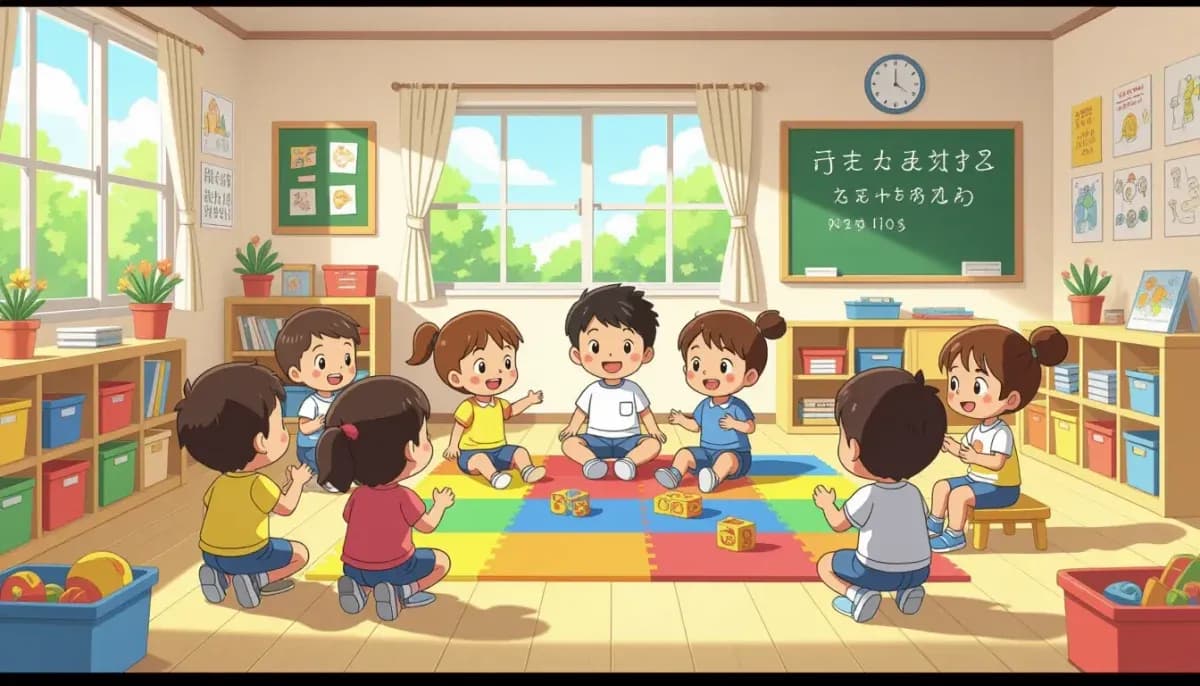
Free Daycare in Japan: Eligibility and How to Apply
Complete guide to Japan's free daycare policy for foreign families. Learn about eligibility for ages 0-5, the hoikuen application process, points system, required documents, and costs covered under the muenshouka program.
Read more →
Communicating with Daycare Teachers as a Non-Japanese Parent
Practical guide for non-Japanese parents on communicating with daycare teachers in Japan, including renrakucho tips, essential Japanese phrases, and technology tools to bridge the language barrier.
Read more →