
Corporate and Workplace Daycare Options in Japan

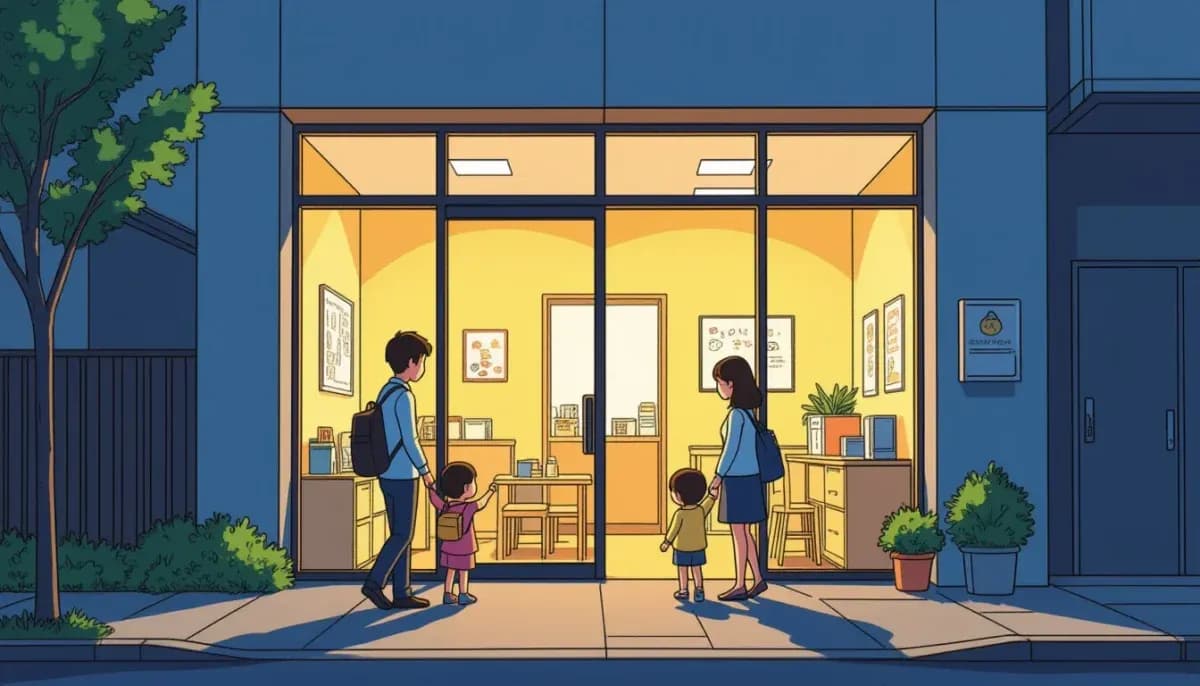
Discover corporate daycare and workplace nursery options in Japan including jigyosho nai hoikuen, kigyou shudougata hoiku, costs, eligibility, and tips for foreign families navigating company-sponsored childcare.
Corporate and Workplace Daycare Options in Japan
Finding reliable childcare is one of the biggest challenges for working parents in Japan, especially for foreign families navigating an unfamiliar system. While most people know about public hoikuen and private nurseries, fewer are aware that many Japanese companies now offer on-site or company-sponsored daycare. These corporate childcare options — known as jigyosho nai hoikuen (事業所内保育所) — can be a lifeline for dual-income households struggling to secure a spot in overcrowded municipal daycare centers.
In this guide, we cover everything you need to know about corporate and workplace daycare in Japan, including how these facilities work, eligibility requirements, costs, and how to find one near you.
What Is Corporate Daycare in Japan?
Corporate daycare, or jigyosho nai hoikusho (事業所内保育所), refers to childcare facilities established within or near a company's premises to serve the children of its employees. As of a 2021 government report, there were approximately 7,906 workplace childcare facilities operating across Japan.
These facilities fall under several categories:
- Jigyosho nai hoikuen (事業所内保育園): On-site nurseries located inside company offices, factories, or hospitals
- Kigyou shudougata hoiku (企業主導型保育): Company-led childcare programs that qualify for government subsidies
- In-hospital daycare: Common in the healthcare sector, these serve children of nurses and doctors
Unlike standard daycare (hoikuen) which is managed by municipal governments, corporate daycare is primarily arranged through employers. However, many company-led facilities also accept children from the local community when spaces are available.
Types of Workplace Childcare Facilities
Understanding the different types of corporate childcare helps you determine which option fits your family best.
| Type | Description | Managed By | Government Subsidized | Open to Public |
|---|---|---|---|---|
| Jigyosho Nai Hoikuen | On-site nursery within a company | Employer | Partially | Sometimes |
| Kigyou Shudougata Hoiku | Company-led childcare program | Employer + certified operator | Yes | Yes (community slots) |
| In-Hospital Daycare | Nursery inside a hospital | Hospital administration | Partially | Rarely |
| Corporate Partnership Nursery | Shared facility for multiple companies | Third-party childcare provider | Varies | Yes |
| Temporary Employee Daycare | Short-term care during busy seasons | Employer | No | No |
Kigyou shudougata hoiku has grown rapidly since the Japanese government introduced subsidies to encourage companies to set up childcare. Over 7,500 business establishments now offer community-based childcare services, primarily for children aged zero to two years.
How to Find Corporate Daycare
If you are an employee at a Japanese company, your first step should be contacting your HR department. Many larger companies, particularly in tech, finance, and healthcare, either operate their own nurseries or have partnerships with nearby childcare providers.
Here are the main ways to find corporate daycare:
- Ask your employer's HR department — They can tell you if the company has on-site childcare or subsidies
- Check your municipality's childcare portal — Many cities list kigyou shudougata hoiku facilities alongside public options
- Search the Cabinet Office database — The government maintains a list of subsidized company-led childcare facilities
- Contact Poppins or similar providers — Poppins is one of Japan's most established corporate childcare companies
- Ask at your ward office (kuyakusho) — Staff can direct you to nearby workplace nurseries that accept community children
For a broader overview of all daycare types available in Japan, see our complete guide to daycare and hoikuen. You can also find helpful information about childcare and education for foreign families at Living in Nihon.
Eligibility and Enrollment Requirements
Eligibility for corporate daycare depends on the type of facility:
For employee-only facilities (jigyosho nai hoikuen):
- You must be an employee of the company operating the facility
- Both parents typically need to be working (same as public hoikuen)
- Priority is given to full-time employees over part-time or contract workers
For community-open facilities (kigyou shudougata hoiku):
- Employee children receive priority enrollment
- Remaining slots are open to local residents
- You apply through the facility directly, not through the municipality
- An employment certificate (就労証明書 / shuro shomeisho) is required
Documents typically needed:
- Employment certificate from your company
- Proof of residence (juminhyo)
- Child's health insurance card
- My Number notification card
- Vaccination records
Foreign families should note that applications are generally in Japanese. If your Japanese is limited, ask your company's HR department for assistance, or consider bringing a Japanese-speaking friend. For more on navigating legal requirements as a foreign family, check our guide on visa and legal issues for families.
Costs and Government Subsidies
The cost of corporate daycare varies significantly depending on the facility type and your household income.
| Factor | Details |
|---|---|
| Monthly fees (employee facility) | ¥20,000 – ¥60,000 depending on company subsidies |
| Monthly fees (community slots) | ¥30,000 – ¥80,000 similar to private hoikuen |
| Free childcare policy | Children aged 3–5 at authorized facilities are free since October 2019 |
| Children aged 0–2 | Free for tax-exempt households at authorized facilities |
| Meals and supplies | Additional ¥3,000 – ¥8,000/month at most facilities |
| Registration fees | ¥0 – ¥30,000 (one-time) |
Many companies subsidize a significant portion of the daycare fees for their employees, sometimes covering 50–100% of the cost. This makes corporate daycare substantially cheaper than private unregulated nurseries (ninkagai hoikuen), which can cost ¥100,000 or more per month in Tokyo.
The Japanese government's free childcare policy (幼児教育・保育の無償化), introduced in October 2019, covers children aged 3 to 5 at authorized childcare facilities. For children aged 0 to 2, the policy applies only to households exempt from resident tax. Some kigyou shudougata hoiku facilities qualify for this program if they meet certification standards.
For guidance on managing childcare expenses alongside other family costs, see our article on financial planning for expat families. Additional tips on family finances in Japan can be found at For Work in Japan.
Benefits and Drawbacks of Corporate Daycare
Benefits
- Convenience: Having your child in the same building or nearby your workplace reduces commuting stress
- Shorter waitlists: Corporate facilities often have shorter waiting lists than popular public hoikuen
- Employer subsidies: Many companies cover part or all of the fees
- Flexible hours: Workplace nurseries often align their hours with company schedules, including early drop-off and late pickup
- Peace of mind: Being close to your child during the workday provides reassurance, especially for parents of infants
Drawbacks
- Limited availability: Not all companies offer this benefit — it is more common at large corporations
- Job dependency: If you change jobs, your child loses their daycare spot
- Smaller facilities: Company nurseries tend to be smaller than public centers, with fewer outdoor play areas
- Commuting with children: If your workplace is far from home, bringing your child on a crowded train can be challenging
- Age restrictions: Many corporate facilities only accept children aged 0 to 2, requiring a transition to another facility at age 3
Tips for Foreign Families
Navigating corporate daycare as a foreign parent comes with unique challenges. Here are practical tips to help:
- Negotiate during hiring: If childcare is important to you, ask about daycare benefits during the job interview or salary negotiation. Some companies may not actively advertise this perk.
- Learn key vocabulary: Familiarize yourself with terms like 保育園 (hoikuen), 事業所内保育 (jigyosho nai hoiku), and 企業主導型保育 (kigyou shudougata hoiku) to navigate Japanese-language resources.
- Start searching early: Begin looking for childcare at least six months before you need it. April intake deadlines typically close months in advance.
- Have backup options: Register for multiple facilities simultaneously. Consider ichiji hoiku (temporary daycare) as a short-term solution while waiting for a spot.
- Connect with other foreign parents: Online communities and local international parent groups can share firsthand experiences with specific corporate daycare facilities.
- Check company reviews: Sites like OpenWork (Vorkers) and GlassDoor Japan sometimes mention childcare benefits in employee reviews.
For more about raising children in Japan as a foreigner, explore resources at Chuukou Benkyou, which offers education-focused content for families.
The Future of Corporate Childcare in Japan
Japan's corporate childcare landscape is evolving rapidly. The government continues to expand subsidies for kigyou shudougata hoiku, and more companies are recognizing that on-site daycare helps attract and retain talent — especially women returning to the workforce after maternity leave.
In 2024, the center-based childcare segment accounted for approximately 71% of the total childcare market revenue in Japan, with corporate facilities representing a growing share. The total number of daycare centers reached approximately 23,600 nationwide.
Several trends are shaping the future:
- Remote work integration: Some companies now offer hybrid daycare arrangements, with facilities near satellite offices rather than just headquarters
- Multilingual programs: A small but growing number of corporate nurseries offer bilingual (Japanese-English) programs to attract international employees
- Extended hours: More facilities are offering evening and weekend care to accommodate non-standard work schedules
- Inter-company partnerships: Smaller companies are pooling resources to create shared daycare facilities in business districts
These developments are encouraging for foreign families who often face additional barriers in the traditional daycare enrollment process. As Japan's workforce becomes more diverse, corporate childcare options are likely to become more accessible and foreigner-friendly.
Conclusion
Corporate and workplace daycare is an increasingly viable option for working parents in Japan, offering convenience, cost savings, and shorter waitlists compared to the highly competitive public hoikuen system. While availability depends heavily on your employer, the rapid growth of government-subsidized kigyou shudougata hoiku facilities means more families — including foreign residents — can access these programs.
Start by checking with your HR department, exploring your local municipality's childcare resources, and keeping backup options ready. With early planning and the right information, you can find a childcare solution that works for your family's needs.
For a comprehensive overview of all childcare types in Japan, visit our daycare and hoikuen guide. To learn more about the broader Japanese education system, explore our pillar guide for foreign families.

Originally from Vietnam, living in Japan for 16+ years. Graduated from Nagoya University, with 11 years of professional experience at Japanese and international companies. Sharing practical information for foreign parents raising children in Japan.
View Profile →Related Articles

Extended Hours and Overnight Daycare Services in Japan
Complete guide to extended hours daycare (encho hoiku), overnight childcare (yakan hoiku), baby hotels, and 24-hour babysitter services in Japan for foreign parents with non-standard work schedules.
Read more →
Daycare Meals and Nutrition Standards in Japan
Complete guide to daycare meals and nutrition standards in Japan for foreign parents. Learn about meal structure, shokuiku food education, allergy management, and tips for helping your child adjust to Japanese nursery school food.
Read more →
How to Choose the Best Daycare in Your Area of Japan
A complete guide for foreign parents on choosing the best daycare in Japan. Learn about hoikuen, yochien, the point system, costs, subsidies, and application tips for your area.
Read more →
Home-Based and Family Daycare in Japan Explained
Everything foreign parents need to know about hoiku mama and family daycare in Japan, including costs, how to apply, pros and cons, and tips for finding the right home-based childcare provider.
Read more →
Free Daycare in Japan: Eligibility and How to Apply
Complete guide to Japan's free daycare policy for foreign families. Learn about eligibility for ages 0-5, the hoikuen application process, points system, required documents, and costs covered under the muenshouka program.
Read more →
Communicating with Daycare Teachers as a Non-Japanese Parent
Practical guide for non-Japanese parents on communicating with daycare teachers in Japan, including renrakucho tips, essential Japanese phrases, and technology tools to bridge the language barrier.
Read more →