
Cost Comparison: Urban vs Rural Family Life in Japan

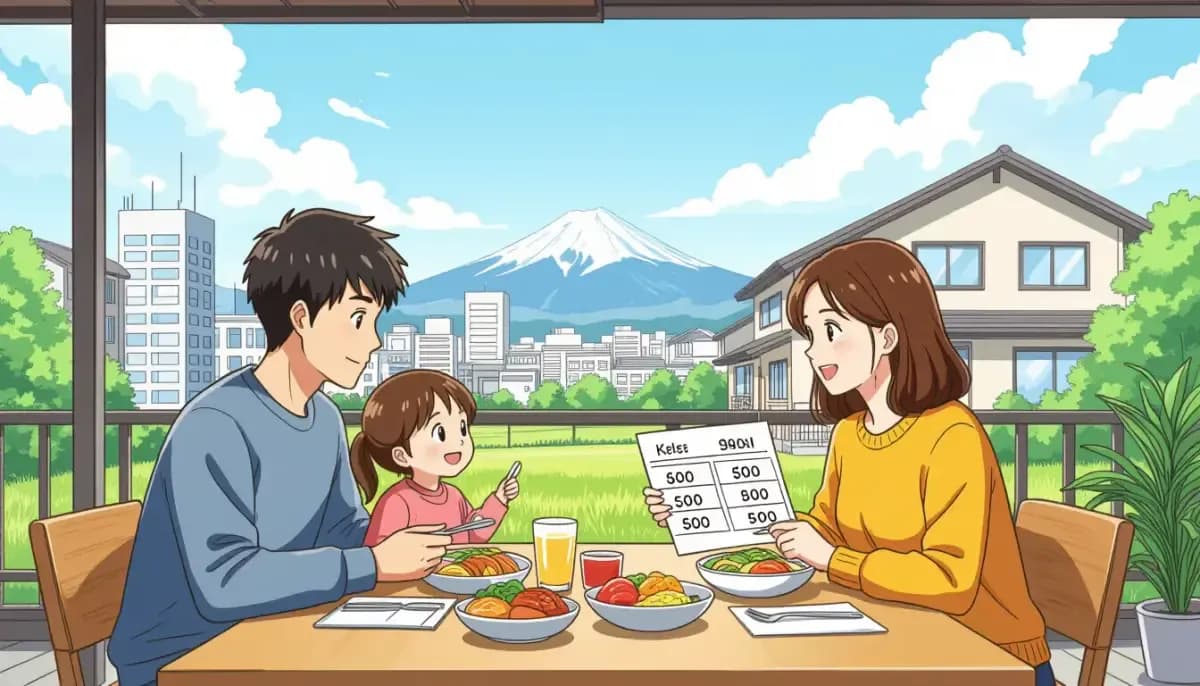
Compare the real costs of urban vs rural family life in Japan. From rent and transportation to education and food — find out which lifestyle suits your family's budget and needs.
Cost Comparison: Urban vs Rural Family Life in Japan
One of the biggest decisions facing foreign families in Japan is where to live. Should you stay in a major city like Tokyo or Osaka — with all the career opportunities, English-language infrastructure, and international schools — or should you consider a quieter life in Japan's countryside, where housing is dramatically cheaper and space is abundant? This guide breaks down the real costs of urban versus rural family life in Japan so you can make an informed decision.
Whether you're a newcomer still choosing where to settle or a long-term expat wondering if a move to the inaka (countryside) makes financial sense, the numbers may surprise you.
The Housing Cost Gap: Where the Biggest Difference Lies
Housing is where the urban-rural cost gap is most dramatic, and for families needing multiple bedrooms, the difference can be life-changing.
In Tokyo, a family-sized 3LDK apartment (three bedrooms plus living, dining, and kitchen area) typically costs between ¥144,000 and ¥200,000+ per month in rent. In popular neighborhoods like Minato-ku or Shibuya, expect to pay significantly more. Even in outer Tokyo wards or nearby Kanagawa, a comfortable family apartment rarely drops below ¥120,000/month.
Compare this with provincial cities and rural areas. In Toyama Prefecture — consistently ranked among Japan's most affordable — a comparable 3LDK costs around ¥57,000/month. That's an annual saving of approximately ¥1.04 million (about $7,000 USD) just on rent alone. In truly rural areas, detached houses with gardens sometimes rent for ¥30,000–¥50,000/month, and akiya (abandoned rural homes) can be purchased outright for as little as ¥500,000–¥1,000,000.
For detailed regional housing cost data, Living in Nihon's cost of living comparison provides an excellent breakdown by prefecture and city type.
Monthly Budget Comparison: Urban vs Rural Family of Four
Understanding how costs stack up across all categories helps paint a complete picture. Here is a typical monthly budget for a family of four across three living scenarios:
| Category | Tokyo (Urban) | Regional City (e.g., Fukuoka) | Rural Town |
|---|---|---|---|
| Rent (3LDK) | ¥144,000–¥200,000 | ¥70,000–¥100,000 | ¥30,000–¥60,000 |
| Food & Groceries | ¥60,000–¥80,000 | ¥40,000–¥55,000 | ¥25,000–¥40,000 |
| Transportation | ¥20,000–¥30,000 | ¥15,000–¥25,000 | ¥30,000–¥60,000 (car) |
| Utilities | ¥15,000–¥25,000 | ¥10,000–¥18,000 | ¥15,000–¥30,000 |
| Education (public) | Free + ¥10,000–¥30,000 extras | Free + extras | Free + extras |
| Healthcare | ¥5,000–¥15,000 | ¥5,000–¥12,000 | ¥5,000–¥12,000 |
| Miscellaneous | ¥30,000–¥50,000 | ¥20,000–¥35,000 | ¥15,000–¥30,000 |
| Total Estimate | ¥284,000–¥430,000 | ¥160,000–¥245,000 | ¥120,000–¥232,000 |
Note: The rural transportation column assumes at least one car, often two for families, which can significantly close the gap with urban costs.
For a comprehensive overview of housing and living costs for foreigners across Japan, see For Work in Japan's housing and living infrastructure guide.
Transportation: The Rural Family's Hidden Cost
One of the most important factors that narrows the rural cost advantage is transportation. In Tokyo and other major cities, you rarely need a car. Public transit is world-class, affordable, and frequent. A family's monthly train/bus commuting costs in Tokyo might run ¥10,000–¥20,000, with no parking fees required.
In rural Japan, a car is not optional — it's a necessity. And not just one car. Most rural families with two working adults need two cars. When you factor in:
- Car loan or purchase cost (amortized monthly)
- Automobile tax: ¥29,500–¥50,000/year per car
- Mandatory insurance (jibaiseki): ~¥10,000–¥15,000/year
- Optional insurance: ¥40,000–¥80,000/year
- Fuel: ¥10,000–¥20,000/month per car
- Shaaken (bi-annual inspection): ¥100,000–¥200,000 every two years
- Parking: Usually free in rural areas (unlike city parking at ¥30,000–¥50,000/month)
Total car ownership costs can easily reach ¥25,000–¥50,000/month per vehicle. For two cars, that's ¥50,000–¥100,000/month in transportation costs — potentially eliminating much of the housing savings.
This is one of the most commonly underestimated costs by families considering a rural move.
Food, Education, and Quality of Life Differences
Food Costs
Rural areas generally offer cheaper access to fresh produce, often through local farmers' markets, roadside stalls (michi-no-eki), and community agricultural programs. Families who cook at home can reduce food bills significantly compared to urban counterparts. However, imported goods, specialty Western foods, and international supermarket items are harder to find and often more expensive in rural areas.
Urban families have more dining-out options at all price points, from ¥400 bento boxes to conveyor-belt sushi. But convenience eating adds up quickly, especially with children.
Education Costs
Public schooling is free throughout Japan, both urban and rural. The key differences emerge in supplementary education. Urban areas — especially Tokyo and Osaka — have a competitive exam culture requiring costly juku (cram school) attendance for children whose parents want to access top middle or high schools. According to Chuukou Benkyou's guide on middle school exam costs, total preparation costs for competitive middle school entrance exams can reach ¥3–5 million over three years, covering cram school fees, mock exams, and materials.
Rural families face less intense educational competition and lower supplementary education costs, though they may also have fewer schooling options overall.
For families considering international schools — mainly available in major cities — costs range from ¥2–3 million per year per child, a major budget factor that heavily favors urban living if this is a priority. See our guide to international schools in Japan for a full breakdown.
Lifestyle and Quality of Life
Urban life offers proximity to hospitals (including international clinics), English-speaking doctors, international supermarkets, and foreign embassies. For families with young children, this English-language infrastructure can dramatically reduce stress. See our articles on healthcare and medical care for children in Japan and mental health and emotional wellbeing for foreign children.
Rural life offers space, nature, cleaner air, and a stronger community feel. Children can play outside more freely, and housing space is no longer a constant constraint. Many foreign families in rural Japan report a higher quality of life despite — or because of — the slower pace.
Income Considerations: The Urban Salary Premium
No cost comparison is complete without factoring in income. Urban salaries — particularly in Tokyo — are typically 20–30% higher than rural equivalents for equivalent roles. This salary premium helps offset higher urban costs. For foreign professionals in industries like finance, technology, education, or international business, the best-paying opportunities are almost exclusively in urban centers.
The calculus changes significantly depending on your career situation:
- Remote workers: If your income is location-independent (especially in foreign currency), rural Japan can offer dramatically lower expenses while maintaining high income
- Japan-based employees: Urban salaries typically justify higher urban costs; rural jobs often pay less
- Self-employed or entrepreneurs: Cost base matters more than location; rural Japan can be highly attractive
For foreign families managing income across countries, see our guide on international money transfers for families in Japan and financial planning for expat families.
Making the Right Choice for Your Family
The right answer depends on your family's specific circumstances. Here are the key questions to ask:
Choose Urban If:
- You need career access and networking opportunities
- You have (or plan to have) children in international schools
- Your family needs regular access to English-language medical care
- One or both parents do not drive or cannot obtain a Japanese license
- Your children benefit from diverse activities, international peers, and city amenities
Choose Rural If:
- You work remotely or have location-independent income
- You prioritize space, nature, and lower stress over urban amenities
- You are comfortable with Japanese language (or willing to become so)
- You can manage car dependency (including the costs)
- You want to significantly reduce your monthly expenses and increase financial flexibility
Many families also consider a middle path: regional cities like Fukuoka, Sendai, or Hiroshima. These offer urban amenities and reasonable public transit while being 20–40% cheaper than Tokyo. Fukuoka, for instance, has been praised by many foreign families for its livability, international community, and relatively affordable costs. More on comparing these options in our family budgeting guide for Japan.
For additional perspectives from foreigners living outside Japan's major cities, this guide to rural cost of living in Japan offers practical firsthand insights. For a broader regional comparison, Wakoku's cost of living by region provides useful data on Japan's diverse cost landscape.
Final Thoughts
Urban Japan offers unmatched convenience, career opportunities, and English-language support — at a steep price. Rural Japan offers affordability, space, and a slower pace — with real tradeoffs in income, services, and transportation costs. Neither is universally better; the right choice is deeply personal.
For most foreign families in Japan, the decision comes down to career situation, language ability, and how much they value urban conveniences versus financial savings. Running your own numbers — including realistic transportation costs, education plans, and salary expectations — is essential before making the move.
For help building your full family financial picture in Japan, see our guides on cost of raising a child in Japan, tax benefits and deductions for families, and education savings plans in Japan.

Originally from Vietnam, living in Japan for 16+ years. Graduated from Nagoya University, with 11 years of professional experience at Japanese and international companies. Sharing practical information for foreign parents raising children in Japan.
View Profile →Related Articles

Financial Impact of Choosing International Schooling
Discover the real financial impact of international schooling in Japan. Compare tuition tiers from JPY 1.2M to 10M+, one-time fees, employer allowances, government subsidies, and long-term planning strategies for expat families.
Read more →
College Fund Planning for Children in Japan
Learn how to plan a college fund for your children in Japan. Compare education savings options including gakushihoken, NISA, and government subsidies. Costs, strategies, and tips for foreign families.
Read more →
Childcare Costs and Affordability in Different Regions of Japan
A complete guide to childcare costs across Japan's regions — Tokyo, Osaka, rural areas — including subsidies, free preschool, and tips for expat families to save money.
Read more →
Managing Finances Across Two Countries as a Family
A complete guide for expat families in Japan on managing money across two countries: dual taxes, cross-border banking, international transfers, budgeting, and investments.
Read more →
Estate Planning for International Families in Japan
Complete guide to estate planning for expat families in Japan: inheritance tax rates, will writing requirements, the 2024 gift tax reform, cross-border strategies, and what to do now to protect your children and spouse.
Read more →
Children's Savings Accounts and Financial Literacy in Japan
Complete guide to opening children's savings accounts in Japan, the new Kodomo NISA, Junior NISA, and teaching financial literacy to expat kids. Practical tips for foreign families.
Read more →