
Childcare Costs and Affordability in Different Regions of Japan

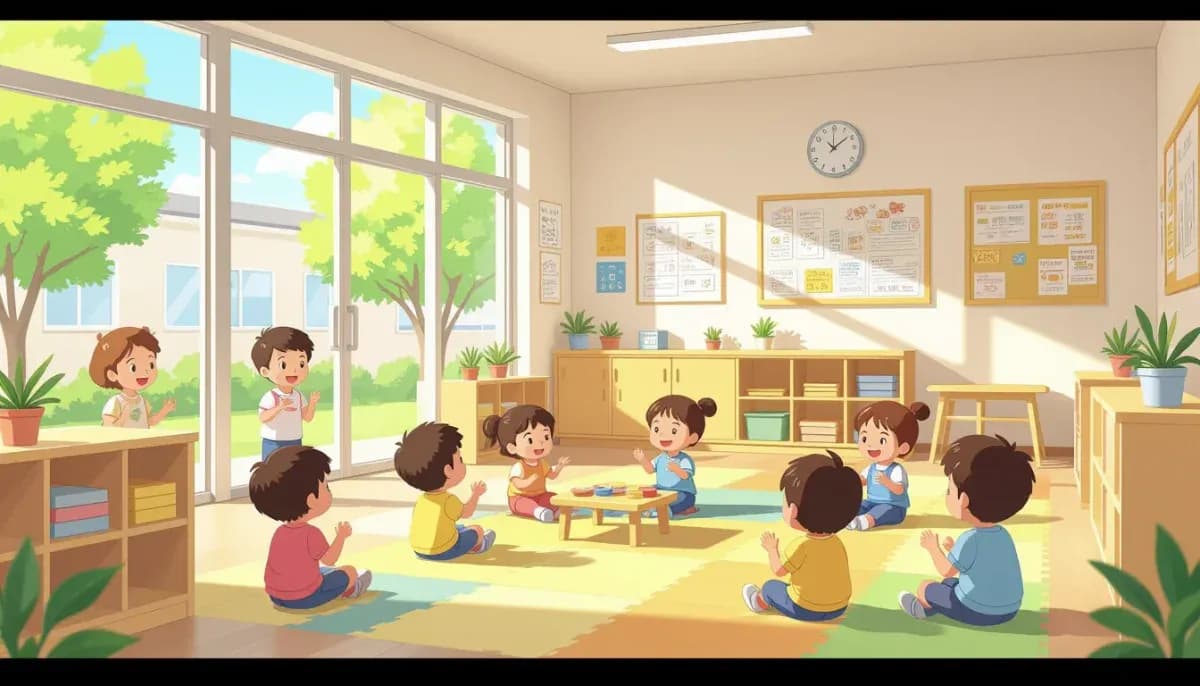
A complete guide to childcare costs across Japan's regions — Tokyo, Osaka, rural areas — including subsidies, free preschool, and tips for expat families to save money.
Childcare Costs and Affordability in Different Regions of Japan
Raising children in Japan as a foreign resident comes with an important financial reality check: childcare costs vary enormously depending on where you live. A family in central Tokyo may pay very different rates than one in rural Tohoku or suburban Osaka — and understanding these regional differences, combined with Japan's generous subsidy system, can save you hundreds of thousands of yen per year.
This guide breaks down what you can actually expect to pay for childcare across Japan's major regions, how the government subsidy system works for foreign families, and practical strategies to make childcare more affordable wherever you settle.
Understanding Japan's Childcare Facility Types and Their Costs
Before diving into regional differences, it helps to understand the main types of childcare facilities in Japan, as costs differ significantly between them.
Japan's primary licensed options are hoikuen (認可保育園, daycare centers run by local governments), yochien (幼稚園, kindergartens), and nintei kodomo-en (認定こども園, combined daycare-kindergarten centers). These licensed facilities are heavily subsidized and form the backbone of Japan's childcare system.
For a detailed breakdown of hoikuen enrollment and daily life, see our guide on daycare and hoikuen in Japan for foreign parents.
Unlicensed facilities (認可外保育施設) include private daycare centers, company-run daycares, and international nurseries. These follow their own fee structures and are far more expensive — but some wards actively subsidize them for residents.
| Facility Type | Age Range | Typical Monthly Cost | Notes |
|---|---|---|---|
| Licensed hoikuen (0-2 yrs) | 0–2 | ¥0–¥57,000 (income-based) | Free in Tokyo from Sept 2025 |
| Licensed hoikuen/yochien (3-5 yrs) | 3–5 | ¥0 (free) | National policy since 2019 |
| Nintei kodomo-en | 0–5 | Same as above by age | Hybrid facility |
| Unlicensed daycare | 0–5 | ¥40,000–¥100,000+ | Some wards subsidize |
| International preschool | 2–6 | ¥60,000–¥150,000 | English-language environments |
One important rule applies everywhere in Japan: children aged 3 to 5 attend licensed facilities for free, regardless of household income or nationality. This national policy, introduced in 2019, is a game-changer for foreign families who qualify as legal residents.
For families with babies and toddlers under age 3, fees at licensed facilities are calculated on a sliding scale based on your household's local tax contribution. The higher your income, the higher your monthly fee — up to a capped maximum that varies by municipality.
Regional Breakdown: What Childcare Costs Across Japan
Tokyo
Tokyo represents one of Japan's most complex childcare landscapes. Fees historically varied dramatically between the 23 special wards — Minato Ward charged up to ¥83,800/month for 160 hours of licensed infant care, while Nerima Ward ranged from ¥10,100 to ¥51,600/month. As of September 2025, the Tokyo Metropolitan Government eliminated income-based fees for licensed childcare entirely for children aged 0-2 (first child). This makes licensed daycare in Tokyo effectively free for most families — a major policy shift.
For unlicensed and international facilities, some wards remain particularly generous. Minato Ward subsidizes up to ¥100,000/month toward unlicensed daycare; Shibuya Ward covers approximately ¥80,000/month. Expat families concentrated in these wards — and who often prefer English-language nurseries — benefit significantly.
The practical trade-off in Tokyo is waitlists. Licensed facilities fill up fast, especially for infants. Many families spend 6–18 months on waiting lists and use unlicensed daycare in the meantime. Understanding the enrollment process is critical; our complete guide to daycare in Japan covers the application timeline in detail.
Osaka and the Kansai Region
Osaka operates a similar income-based sliding scale for infant care. Licensed daycare fees in Osaka City average around ¥30,000–¥50,000/month for infants, somewhat lower than central Tokyo wards. Osaka Prefecture has also made strides in reducing childcare costs, and as of 2024, Osaka began expanding free daycare to ages 0-2 for second and subsequent children in certified facilities.
Surrounding Kansai cities — Kyoto, Kobe, and Nara — generally have lower childcare costs than Osaka's city center, with more availability at licensed facilities due to lower population density. The Kansai region is generally seen as more affordable for family life than greater Tokyo.
Nagoya and the Chubu Region
Nagoya (Aichi Prefecture) historically had some of Japan's longest daycare waitlists despite high demand. However, Aichi has invested heavily in expanding capacity, and average licensed daycare fees range from ¥20,000–¥45,000/month for infants under 3. The city has been working to reduce the "daycare waiting list" (待機児童, taiki jidou) problem that has plagued major urban areas.
Rural Japan: The Hidden Bargain
Rural prefectures — particularly in Tohoku, Chugoku, and Kyushu — offer a surprisingly attractive proposition for families concerned about childcare costs. Many rural municipalities offer free or heavily discounted daycare for all ages as part of depopulation-reversal incentive programs. In some areas, prefectural or municipal governments cover all daycare costs for children under 3, regardless of household income.
The trade-off is fewer facilities (especially English-language options), longer commutes, and potentially less specialized support for foreign families. But for remote workers or those in positions that don't require a major urban presence, rural Japan can dramatically cut childcare expenses.
Government Subsidies and Benefits Every Foreign Family Should Know
Japan's childcare support system extends well beyond subsidized daycare fees. Foreign residents with legal residency status are eligible for the same benefits as Japanese citizens — a point many newly arrived expats miss.
Child Allowance (児童手当, Jidou Teate): Every registered foreign resident with a child qualifies for this monthly payment:
- Ages 0–3: ¥15,000/month per child
- Ages 3–15: ¥10,000/month (¥15,000 for third and subsequent children)
- Ages 12–15: ¥10,000/month
Tokyo adds a supplemental payment of ¥5,000/month per child from ages 0–18. Combined with the national allowance, a family with two young children in Tokyo receives over ¥40,000/month in child-related cash benefits.
Free Children's Healthcare: In Tokyo's 23 wards, medical care for children is fully subsidized through the end of junior high school (age 15), with many wards extending this through high school (age 18). This benefit applies to foreign residents. Other major cities have similar programs covering children through elementary school age at minimum.
For a comprehensive breakdown of all available government programs, see our dedicated guide on government benefits and subsidies for families in Japan.
Birth Lump Sum: Health insurance members receive a ¥500,000 one-time payment per child born. This applies to foreign residents enrolled in Japan's national health insurance system.
For more on this and related financial planning, the team at For Work in Japan has a comprehensive family life guide covering costs from birth through school age.
How Much Can Expat Families Actually Save?
When you combine subsidized daycare, free children's healthcare, and child allowances, the actual financial picture is often much better than newcomers expect. According to research by E-Housing Japan, a typical expat family with two young children in Tokyo can save ¥1,000,000–¥2,000,000 per year compared to paying full private rates — provided they enroll in licensed facilities and register properly with their ward office.
The key word is properly. Many foreign families miss out on benefits simply because they don't know to register, or they delay registration after arriving in Japan. Benefits like child allowances are not automatic — you must apply at your local ward office (区役所, kuyakusho) with your residency documentation.
For a practical overview of how foreign families can navigate these programs, Living in Nihon's raising children guide is an excellent starting point that covers eligibility and the application process in plain English.
Planning for Long-Term Education Costs
Childcare is just the beginning. Families planning to raise children through Japan's school system should budget ahead for escalating costs as children grow.
Public elementary and junior high schools charge no tuition — just modest fees for school lunches, field trips, and materials. For full details on what to expect, see our elementary school guide for foreign parents and junior high school guide.
High school introduces tuition even at public schools, and private high schools run ¥500,000–¥1,500,000/year. International schools, common among expat families who may relocate again, cost ¥2,000,000–¥3,000,000 or more per year.
For families considering Japanese junior high school entrance exams (中学受験, chuukou juken), costs can be substantial. Cram school preparation alone averages ¥1.84 million over three years, with total costs reaching ¥3–5 million by exam time. Chuukou Benkyou's guide on middle school exam costs provides a detailed budget breakdown for families weighing this path.
For comprehensive financial planning guidance covering all stages of your children's education in Japan, see our article on financial planning for expat families.
Practical Tips for Managing Childcare Costs
Register early and apply everywhere. Daycare waitlists in major cities mean you should apply as soon as possible — often well before your child turns one. Apply to multiple facilities simultaneously.
Get registered at your ward office immediately. Benefits like child allowances, free healthcare cards, and daycare subsidy eligibility all start from your residency registration date. Don't wait.
Consider your ward carefully in Tokyo. The subsidy differences between Tokyo wards — especially for unlicensed facility users — are significant. Minato and Shibuya wards are particularly generous for families using private or international nurseries.
Explore rural relocation incentives. If your work allows flexibility, rural municipalities actively recruit families with children through childcare subsidies, housing support, and relocation grants. Some prefectures offer packages worth ¥1,000,000 or more for families willing to move.
Plan ahead for language support. Foreign children may need additional Japanese language support as they enter the school system. See our guides on raising bilingual children in Japan and teaching Japanese to foreign children for strategies that start in the preschool years.
For a broader picture of how Japan's childcare system fits into the overall education journey, our complete guide to the Japanese education system for foreign families provides an essential overview. You can also find useful region-specific information and expat community resources at Japan Dev's childcare guide for international families and Real Life Japan's free preschool guide.
Japan's childcare system, while sometimes complex to navigate, is genuinely supportive of families — and foreign residents have full access to its benefits. Understanding the regional landscape and getting registered properly puts your family in a strong position to make the most of what's available.

Originally from Vietnam, living in Japan for 16+ years. Graduated from Nagoya University, with 11 years of professional experience at Japanese and international companies. Sharing practical information for foreign parents raising children in Japan.
View Profile →Related Articles

Financial Impact of Choosing International Schooling
Discover the real financial impact of international schooling in Japan. Compare tuition tiers from JPY 1.2M to 10M+, one-time fees, employer allowances, government subsidies, and long-term planning strategies for expat families.
Read more →
College Fund Planning for Children in Japan
Learn how to plan a college fund for your children in Japan. Compare education savings options including gakushihoken, NISA, and government subsidies. Costs, strategies, and tips for foreign families.
Read more →
Managing Finances Across Two Countries as a Family
A complete guide for expat families in Japan on managing money across two countries: dual taxes, cross-border banking, international transfers, budgeting, and investments.
Read more →
Cost Comparison: Urban vs Rural Family Life in Japan
Compare the real costs of urban vs rural family life in Japan. From rent and transportation to education and food — find out which lifestyle suits your family's budget and needs.
Read more →
Estate Planning for International Families in Japan
Complete guide to estate planning for expat families in Japan: inheritance tax rates, will writing requirements, the 2024 gift tax reform, cross-border strategies, and what to do now to protect your children and spouse.
Read more →
Children's Savings Accounts and Financial Literacy in Japan
Complete guide to opening children's savings accounts in Japan, the new Kodomo NISA, Junior NISA, and teaching financial literacy to expat kids. Practical tips for foreign families.
Read more →