
High School Graduation Requirements in Japan

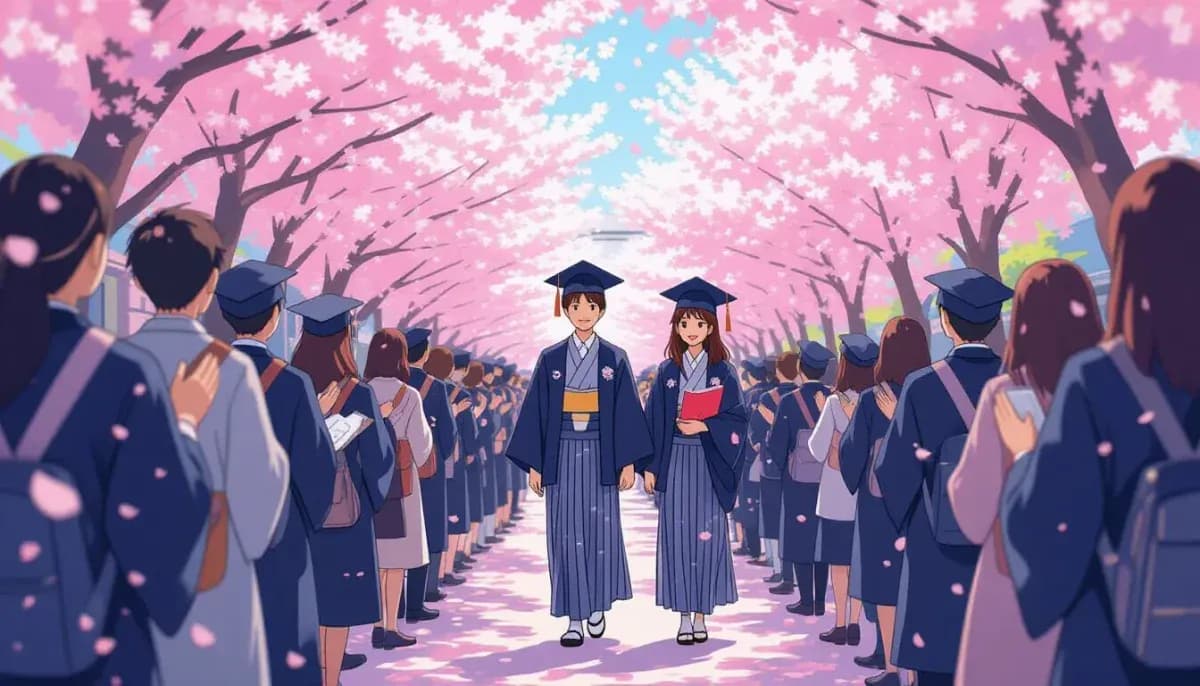
Complete guide to high school graduation requirements in Japan for foreign families. Learn about the 74-credit system, 2023 reforms for foreign students, costs, and support resources.
High School Graduation Requirements in Japan: A Complete Guide for Foreign Families
Navigating the Japanese high school graduation system as a foreign family can feel overwhelming. Between understanding credit requirements, language hurdles, and the unique needs of students who didn't grow up in Japan, there's a lot to unpack. This guide breaks down everything you need to know about high school graduation requirements in Japan — from mandatory credits to special policies for foreign students introduced in recent years.
Whether your child is already enrolled in a Japanese public high school or you're planning ahead, this article will help you understand what it takes to graduate, what support is available, and how to maximize your child's chances of success.
Understanding the Credit System in Japanese High Schools
Japanese high school graduation is based on a credit (単位, tan'i) system rather than purely time-served. Each credit corresponds to completing a set number of class hours in a specific subject, with one credit unit based on 50-minute class sessions.
How Credits Work
A standard credit in Japan requires attending a subject for 35 class hours per academic year (one hour = 50 minutes). Schools typically run about 30 units of classes per week over 35 weeks per year.
For standard (full-time) high schools, students must accumulate a minimum of 74 credits to graduate — a requirement that was updated and reduced from the previous 80 credits under curriculum reforms. Of these:
- At least 31 credits must come from required subjects
- At least 25 credits must come from elective subjects
- Additional credits come from homeroom, extracurricular activities, and integrated learning
Credit-based high schools (信用制高校, singyo-sei koko) operate differently: students graduate by accumulating 62 or more credits over a minimum of three years, regardless of grade level. There are approximately 170 such schools across Japan, both public and private, and they are particularly popular among students who work, have health issues, or need a more flexible schedule.
Required Subjects for Graduation
Japanese high schools follow a national curriculum set by the Ministry of Education, Culture, Sports, Science and Technology (MEXT). All students — including foreign students — must complete coursework in the following mandatory subject areas:
| Subject Area | Examples of Required Courses |
|---|---|
| Japanese Language | Modern Japanese, Classical Japanese |
| Geography & History | Modern History, World History, Geography |
| Civics | Public, Ethics, Political Economy |
| Mathematics | Math I, Math A |
| Science | Basic Science, Physics, Chemistry, Biology |
| Health & PE | Physical Education, Health |
| Arts | Music, Fine Arts, Craft, or Calligraphy |
| Foreign Language | English (or another approved language) |
| Home Economics | Home Economics, Lifestyle Design |
| Information | Information I |
| Integrated Learning | School-determined themes |
| Extracurricular Activities | Club activities, homeroom, school events |
The specific required credit hours for each subject area vary by school and prefecture, but the national minimums must be met for graduation eligibility.
Special Policies for Foreign Students (2023 Reform)
One of the most significant recent changes for foreign high school students in Japan came into effect in fiscal year 2023. Under the new policy, Japanese language instruction classes — previously offered only as after-school tutoring that did not count toward graduation — can now count toward graduation credits.
This reform allows foreign students to apply up to approximately 30% of their total required credits through Japanese language classes. This is a major improvement because previously, foreign students who needed intensive Japanese support were essentially carrying an extra burden: attending mandatory Japanese language tutoring on top of their regular coursework, but receiving no graduation credit for that effort.
What This Means in Practice
- Students needing Japanese language support can take certified courses that contribute to their 74-credit graduation requirement
- Schools must formally offer these courses as credited electives, not just supplementary help
- Students still need to meet minimum requirements in core subjects, but have more flexibility in elective credits
This change was driven partly by the rapid increase in international students: there were 114,853 international students in Japanese public schools in 2023, up 23% from the previous year, and approximately 41.5% required extra Japanese language instruction.
For more context on the general high school system and how foreign families can navigate admissions, see our complete guide to high school in Japan for foreign families.
Graduation Rates and Challenges for Foreign Students
Despite Japan's high overall graduation rate, foreign students face unique challenges. The overall student dropout rate is approximately 2.6%, but for non-native Japanese speakers it rises to 9.6% — more than seven times the rate for the general student population.
Even more concerning is the university advancement gap: only 42% of non-native Japanese speakers go on to universities or vocational schools after high school, compared to 71.1% of all students. This gap reflects not just language barriers but also differences in access to exam preparation resources, limited understanding of the university application system, and sometimes inadequate academic support within schools.
Common Challenges Foreign Students Face
- Language barrier in academic subjects — Math and science classes are taught entirely in Japanese, which means foreign students must master technical vocabulary quickly
- Attendance requirements — Most schools require students to attend at least two-thirds of class sessions in each subject to receive credit
- Different educational backgrounds — Students from countries with different curriculum structures may have gaps in required subject areas
- Evening and correspondence options — Some foreign students attend evening high schools or correspondence (tsushin) high schools, which have slightly different credit structures
If your child is struggling with Japanese language skills in school, our guide on teaching Japanese to foreign children offers practical methods and resources.
Types of High Schools and Their Graduation Paths
Japan offers several types of high schools, each with different approaches to meeting graduation requirements:
Full-Time Academic High Schools (全日制, Zennichi-sei)
The most common type. Students attend school during regular daytime hours, complete a standard 3-year program, and graduate upon accumulating the required 74 credits. About 73% of high school students attend academic-track schools.
Vocational High Schools (職業高校, Shokugyou Koukou)
Around 25% of students attend vocational schools focusing on agriculture, commerce, industry, fishery, home economics, or nursing. These schools have the same 74-credit graduation requirement but with subject areas tailored to the vocational track.
Evening High Schools (定時制, Teiji-sei)
Evening schools allow students to attend classes in the afternoon or evening. They typically require 4 years to complete instead of 3, but have the same credit requirements. These can be a good option for students who work part-time or have other daytime obligations.
Correspondence High Schools (通信制, Tsushin-sei)
Students complete most coursework independently at home, attending school periodically for face-to-face sessions (usually a few days per week or per month). In 2003 around 190,000 students attended correspondence high schools, and this number has grown significantly. These schools require the same 74 credits but offer the most flexibility in how and when you earn them.
Credit-Based High Schools (単位制, Tan'i-sei)
About 170 schools across Japan offer a credit-based system without fixed grade levels. Students can enroll at any point and graduate when they accumulate enough credits (62+) over a minimum three-year period. These schools are popular among students re-entering after dropping out or those with irregular schedules.
Costs and Financial Support for Foreign Families
Understanding the cost side of high school graduation is essential for planning. Here's a breakdown of what foreign families can expect:
| School Type | Annual Cost (Before Subsidies) | After Government Subsidies |
|---|---|---|
| Public High School | ~¥118,800 | Effectively ¥0 (subsidized ~¥9,900/month) |
| Private High School | ¥300,000–¥600,000+ | Reduced by up to ¥396,000/year for eligible families |
| Evening/Correspondence | Lower than full-time | Subsidies also apply |
The High School Tuition Support Fund (高等学校等就学支援金) covers tuition for families meeting income thresholds — generally those earning under approximately ¥5.9 million annually receive the maximum support. Foreign families with legal residency status are eligible for these subsidies just like Japanese families.
For detailed financial planning, our financial planning guide for expat families in Japan covers scholarships, subsidies, and budgeting strategies in depth.
Preparing Your Child for Graduation Success
Here are practical steps foreign families can take to support their child's path to graduation:
Start Early with Japanese Language Support
The earlier your child begins serious Japanese language study, the better positioned they will be for high school success. Schools are now required to offer credited Japanese language support, so make sure your child's school is utilizing the 2023 policy reform.
See raising bilingual children in Japan for strategies on building Japanese proficiency alongside your home language.
Understand the Attendance Rules
High school credit in Japan requires attending at least two-thirds of class hours for each subject. Missing too many days — whether due to illness, family travel, or adjustment difficulties — can result in failing to receive credit for a course, which means retaking it the following year.
Connect with Support Networks
Many schools have international student coordinators or links to local NPOs that support foreign families. Tokyo, Osaka, Kanagawa, and other prefectures with large foreign populations often have dedicated programs. The MIEF (Multicultural Integration Education Foundation) publishes annual guidebooks in multiple languages for foreign residents applying to high schools.
Plan for University in Advance
Given that only 42% of non-native Japanese speakers advance to universities or vocational schools, planning ahead is critical. Start discussing higher education goals in your child's first year of high school. Some universities have special entrance paths for students educated abroad.
For more information on life in Japan as a foreign family, Living in Nihon offers useful expat lifestyle guides. For work and career considerations as your child looks toward the future, For Work in Japan covers employment pathways in detail. Additionally, Chuukou Benkyou provides resources specifically aimed at middle and high school study in Japan.
Key Takeaways
High school graduation in Japan is achievable for foreign students, but it requires awareness of the system and proactive planning. Here's a quick summary:
- Minimum 74 credits required for standard full-time high school graduation
- A 2023 reform now allows Japanese language classes to count toward graduation credits (up to ~30%)
- Foreign students have a dropout rate of 9.6% — nearly 7x the national average — highlighting the importance of early support
- Financial subsidies make public high school effectively free and significantly reduce private school costs
- Alternative school types (evening, correspondence, credit-based) offer flexible paths to graduation for students who need them
For a broader understanding of how the Japanese education system works from elementary through high school, read our complete guide to the Japanese education system.
You can also find detailed information about the transition from junior high school in our junior high school guide for foreign families.
Additional resources:

Originally from Vietnam, living in Japan for 16+ years. Graduated from Nagoya University, with 11 years of professional experience at Japanese and international companies. Sharing practical information for foreign parents raising children in Japan.
View Profile →Related Articles
High School Tuition Costs and Financial Aid in Japan
Complete guide to high school tuition costs and financial aid in Japan for foreign families. Learn about public vs private school costs, the 2025 free tuition program, government subsidies, and eligibility for foreign residents.
Read more →
Dropping Out of High School in Japan: Alternatives and Support
Foreign students drop out of Japanese high schools at 7x the national rate. Learn about correspondence school, free schools, the equivalency exam, and support systems available to foreign families in Japan.
Read more →
Night School and Correspondence High Schools in Japan
A complete guide to night school (定時制) and correspondence high school (通信制) in Japan for foreign families — enrollment, costs, language support, and tips.
Read more →
International Baccalaureate High Schools in Japan
Complete guide to IB high schools in Japan for foreign families. Learn about costs (¥1.5M-3M/year), top schools, admission process, and how the IB Diploma opens doors to universities worldwide.
Read more →
Ronin Year: When Students Retake University Entrance Exams
Learn what the ronin year means in Japan, how yobiko prep schools work, what it costs, the mental health impact, and how foreign students navigate university entrance exam retakes.
Read more →
Study Abroad Programs from Japanese High Schools
Everything foreign families need to know about study abroad programs from Japanese high schools — types, costs, destinations, scholarships, and how to apply.
Read more →