High School in Japan: Options and Guidance for Foreign Families
A complete guide to high school options in Japan for foreign families — public schools, private schools, international schools, returnee exam tracks, costs, language support, and enrollment tips.
13 articles
High School in Japan: Options and Guidance for Foreign Families
Navigating the Japanese high school system as a foreign family can feel overwhelming. Unlike compulsory education, high school (高校, koko) in Japan is not mandatory — but it is attended by over 98% of students, and the path your child takes at this stage will shape their university options, career trajectory, and sense of belonging in Japan. This comprehensive guide walks foreign families through every major option, from public Japanese high schools to international schools, covering admissions, costs, language support, and practical tips for a successful transition.
Understanding the Japanese High School Landscape
Japan's high school system is highly competitive and entrance-exam-driven. Most students spend their third year of junior high (中学三年生) intensively preparing for high school entrance exams. For foreign students, this system can seem daunting — but there are multiple pathways designed to accommodate non-native speakers and returnee students.
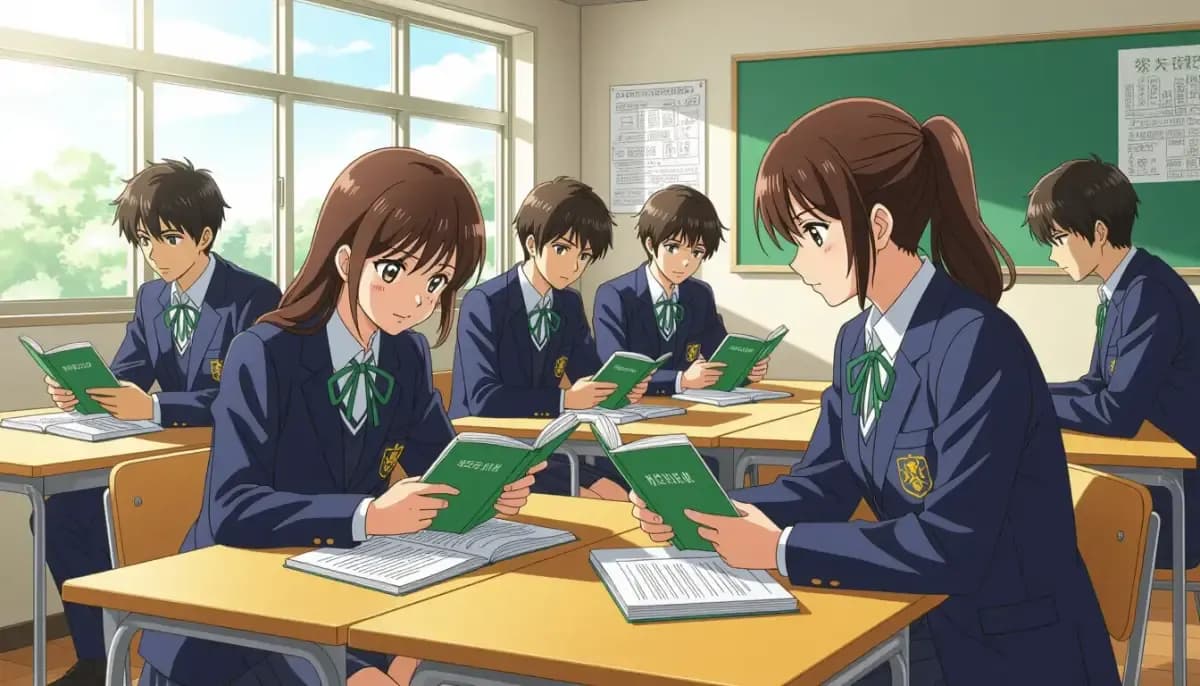
Understanding the Japanese High School Landscape - illustration for High School in Japan: Options and Guidance for Foreign Families
High school in Japan typically runs for three years, from age 15 to 18 (grades 10–12 in Western terms). Schools are broadly divided into:
Public (prefectural/municipal) high schools — subsidized by the government, lower cost
Private high schools — independently run, often with unique programs and facilities
International schools — instruction primarily in English or another foreign language
Correspondence and evening schools (通信制・定時制) — flexible schedules for students with work or special circumstances
As of 2024, total foreign students in Japan across all educational levels reached 336,708 — a record high, up 21% year-on-year. At the high school level, the number of foreign students requiring Japanese language support grew from 2,224 in 2010 to 5,573 in 2023, a 150% increase that reflects the growing diversity of Japan's student population.
Public high schools are the most cost-effective option for foreign families planning a long-term stay in Japan. Thanks to the High School Tuition Support Fund (高等学校等就学支援金制度), tuition is effectively covered — families typically pay only around ¥9,900/month in incidental fees rather than full tuition. Families earning under ¥5.9 million per year can also qualify for up to ¥396,000 in additional annual assistance even at private schools.
Public High Schools: The Most Affordable Path - illustration for High School in Japan: Options and Guidance for Foreign Families
Admission Requirements for Foreign Students
Admission to public high schools generally requires:
Residency — the student must live within the school's catchment area (prefecture or municipality)
Prior education — completion of nine years of compulsory education (or equivalent overseas)
Entrance examination — written tests in Japanese, math, science, social studies, and English
Interview — often conducted in Japanese
Foreign students who have recently arrived in Japan (typically within three years) may be eligible for special accommodations, including:
Extended exam time
Furigana (phonetic guides) printed on exam materials
Permission to use a dictionary during the exam
Separate scoring rubrics for the Japanese-language section
Each prefecture sets its own rules, so check with your local Board of Education (教育委員会) for the specific policies in your area.
Spotlight: Tokyo Metropolitan Kokusai High School
One of Japan's most foreigner-friendly public high schools is Tokyo Metropolitan Kokusai High School (都立国際高等学校), located in Komaba, Meguro Ward. It:
Accepts approximately 25 foreign students in April admissions, with additional intake in September
Ranks in the top 10% of Tokyo public high schools academically
Operates a full English-language website — rare among public schools
Requires applicants to be registered foreign nationals living with parents in Tokyo and to enroll within three years of arriving in Japan
Charges approximately ¥118,800/year in tuition (effectively reduced by subsidies)
Many other prefectures have similar schools with international programs. Contact your prefectural Board of Education to learn what's available locally.
Private High Schools: More Flexibility, Higher Costs
Private high schools offer more varied curricula, smaller class sizes, and often more support for foreign students — but at a significantly higher price. Annual costs range from ¥600,000 to ¥1,500,000 or more, compared to near-zero public school tuition.
School Type
Annual Tuition (approx.)
Govt Subsidy Available
Language of Instruction
Public high school
¥0–¥120,000
Yes (up to ¥118,800)
Japanese
Private Japanese high school
¥500,000–¥1,000,000
Yes (income-based, up to ¥396,000)
Japanese
Bilingual private high school
¥800,000–¥1,500,000
Partial
Japanese + English
International school (accredited)
¥1,500,000–¥3,000,000+
No
English or other
Correspondence school (通信制)
¥200,000–¥500,000
Yes
Japanese
Notable private high schools popular with foreign and returnee families include:
International Christian University High School (ICU高校) — Over 65% returnee/international students, Super Global High School designation, ¥330,000 entrance fee + ¥591,000/year tuition
Kanto International High School — Actively recruits foreign students, strong English program
International Schools: Full English-Language Education
For families who plan to return to their home country or want their children to pursue university abroad, international schools offer curriculum continuity. Options include:
IB (International Baccalaureate) — globally recognized, university-prep focused
American curriculum — U.S.-accredited schools following state or Common Core standards
National-curriculum schools — Korean, Chinese, Brazilian, etc., for specific diaspora communities
International schools are concentrated in Tokyo, Osaka, Nagoya, and Yokohama, with fewer options in rural prefectures. Annual tuition frequently exceeds ¥2,000,000–¥3,000,000 and most do not qualify for Japanese government tuition subsidies.
The Returnee and Foreign Student Exam Track (帰国・外国人入試)
One of the most important pathways for foreign families is the returnee/foreign student exam system (帰国・外国人入試). This separate admission track exists at many private high schools and some public schools, and is designed specifically for students who have spent significant time abroad.
Typical eligibility criteria:
2+ continuous years of overseas residence
Return to Japan within 2–3 years of the application date
For foreign nationals: valid residence in Japan with a parent or guardian
What the exam emphasizes:
Overseas school transcripts
English proficiency scores (TOEFL iBT, EIKEN Grade Pre-1 or above)
Japanese-language essay (often at a lower difficulty than standard exams)
Bilingual interview
Foreign nationals who are not Japanese citizens may also apply through special foreign national selection (外国人特別選抜) or international student exams (留学生入試) using the Examination for Japanese University Admission for International Students (EJU). Some schools have also introduced グローバル入試 (global admission tracks) that welcome students with international profiles regardless of returnee status.
Correspondence and Evening Schools: Flexible Alternatives
Japan's correspondence high schools (通信制高校) and evening high schools (定時制高校) provide recognized diplomas on flexible schedules. These can be excellent options for:
Students who arrived in Japan mid-year and missed regular entrance exam windows
Students recovering from school refusal (不登校) or health issues
Students who need to work part-time alongside studying
Students who need more time to develop Japanese language skills
Correspondence schools typically require students to attend on-site classes a few days per week (スクーリング) and submit regular assignments. Costs are lower than standard private schools, and government subsidies apply.
Language Support Programs in Japanese High Schools
Foreign students needing Japanese language assistance (日本語指導が必要な生徒) can access dedicated support at schools with appropriate resources. The number of high school-level students receiving this support has grown dramatically:
Year
Students Receiving Japanese Language Support (HS Level)
2010
2,224
2016
3,751
2019
4,785
2023
5,573
Support may include:
Withdrawal classes (取り出し授業) — Japanese instruction in small groups outside regular class
In-class support — a Japanese language assistant works alongside the student in regular lessons
After-school tutoring — volunteer or paid programs through NPOs or local government
The availability and quality of support varies significantly by school and prefecture. Urban areas like Tokyo, Kanagawa, Aichi, and Osaka tend to have more robust programs. Ask each school directly about their 日本語指導体制 (Japanese language instruction structure) before enrolling.
Practical Tips for Foreign Families Choosing a High School
Start early. Entrance exam season runs from November through February for April entry. Many schools hold open houses (説明会) in October–November that are essential for understanding each school's culture and requirements.
Visit multiple schools. Each school has a distinct culture (校風). Some are sports-oriented, others academically elite, others arts-focused. Your child's happiness and motivation will depend as much on the school culture as the curriculum.
Get your documents translated and certified. You'll need Japanese translations of overseas school records, birth certificate, and residence card. Some schools require notarization or apostille depending on the country.
Check the school's foreigner enrollment history. Schools that have successfully enrolled foreign students before will have better support structures. Ask: "How many foreign students are currently enrolled?" and "What language support do you offer?"
Leverage your city/ward's international education coordinator. Most municipal offices have a staff member (often called 国際教育コーディネーター or similar) who can guide you through local options and paperwork.
For expats working in Japan and raising children:For Work in Japan offers resources on visas, employment, and life in Japan for foreign residents — useful background for families navigating long-term residency decisions.
Resources and Next Steps
Navigating high school admissions as a foreign family in Japan requires persistence, but the system has more entry points than it might initially appear. Whether you choose a public school for affordability and immersion, a private school with returnee tracks, an international school for curriculum continuity, or a flexible correspondence school, the key is matching your child's language level, future goals, and family situation to the right option.
For detailed cost comparisons and application advice, the guides at E-Housing Japan and Savvy Tokyo provide excellent practical breakdowns.
For families considering entrance exam strategies for foreign and returnee students, Chuukou Benkyou offers detailed information on how the returnee exam system works.
If your child is also looking ahead to university, begin researching Japan's university admissions pathways early — many high schools are chosen precisely for their university pipeline. See related guidance in our Financial Planning for Expat Families Raising Children in Japan article for budgeting high school and university costs together.