
High School Club Activities (Bukatsu): Choosing the Right One

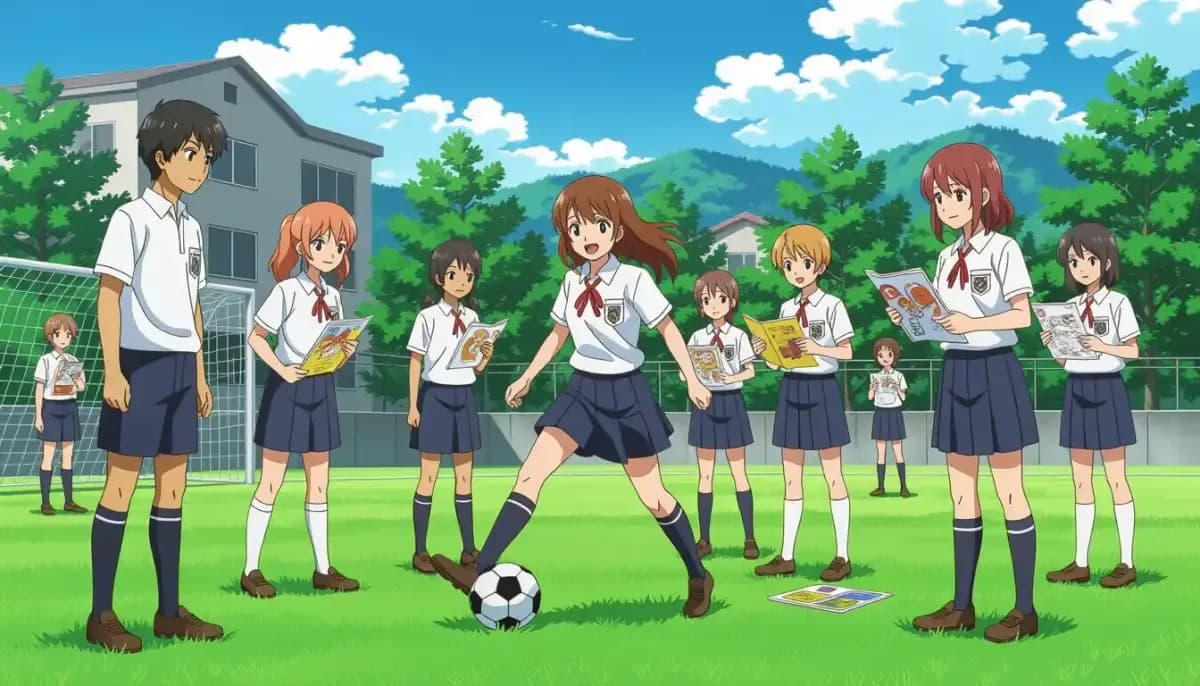
A complete guide to Japanese high school bukatsu (club activities) for foreign families. Learn about sports vs. cultural clubs, time commitments, the senpai-kohai system, and how to choose the right club for your child.
High School Club Activities (Bukatsu): Choosing the Right One for Your Child in Japan
If your child is entering a Japanese high school, one of the most important decisions they'll make isn't academic — it's which bukatsu (部活動) to join. Club activities are deeply woven into the fabric of Japanese school life, shaping friendships, daily schedules, and even future career paths. For foreign families unfamiliar with the culture, bukatsu can feel overwhelming or confusing. This guide breaks down everything you need to know about choosing the right club activity for your child.
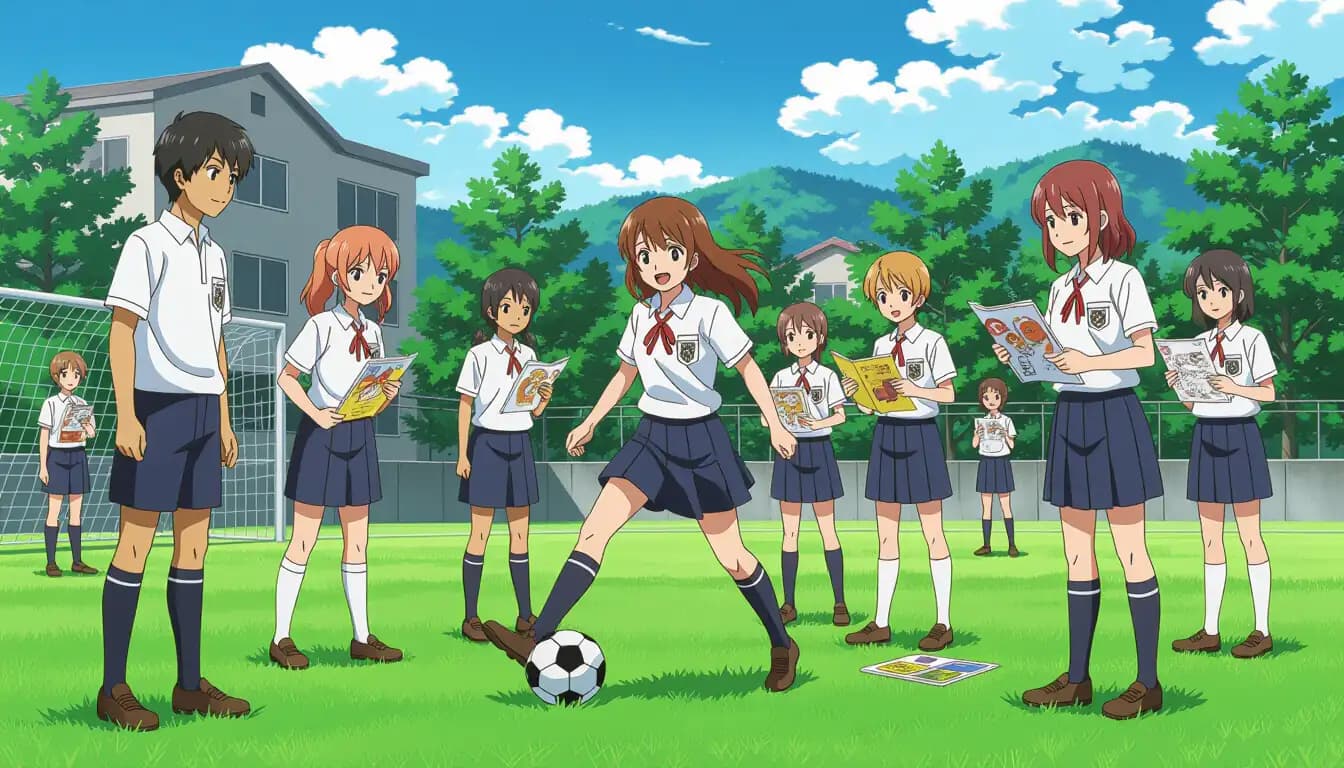
What Is Bukatsu? Understanding Japanese School Club Culture
Bukatsu (部活 or 部活動, bukatsudō) refers to extracurricular club activities held after school — and often on weekends — at Japanese junior and senior high schools. Unlike many Western countries where clubs are optional enrichment activities, bukatsu in Japan is practically a social institution.
According to the Japan National Tourism Organization (JNTO), 81% of Japanese high school students participate in at least one club activity. At the junior high level, that number rises to 92%. Participation is technically voluntary, but in many schools — especially public ones — there is strong social and institutional pressure to join.
Clubs fall into two broad categories:
- Sports clubs (運動部, undō-bu): Soccer, baseball, basketball, tennis, volleyball, swimming, kendo, judo, track and field, and more. There are approximately 47 recognized sports club types across Japan.
- Cultural clubs (文化部, bunka-bu): Brass band, art, choir, drama, tea ceremony, calligraphy, anime/manga, photography, and more. There are approximately 26 recognized cultural club types.
At the senior high school level, roughly 50% of students belong to sports clubs, 25% to cultural clubs, and about 20% belong to no club — a group students jokingly refer to as the kitakubu (帰宅部, "go-home club").
For more context on Japanese high school life overall, see our guide: High School in Japan: Options and Guidance for Foreign Families.
The Time Commitment: What Parents Need to Know
One of the most critical factors when choosing a bukatsu is understanding the time commitment involved. Unlike casual after-school activities in many countries, Japanese school clubs are serious commitments.
| Club Type | Typical Schedule | Weekend Practice | Best For |
|---|---|---|---|
| Competitive sports (baseball, soccer) | 6 days/week, 2-3 hrs/day | Yes, matches & training | Highly motivated athletes |
| Traditional martial arts (kendo, judo) | 5-6 days/week | Occasional | Students interested in Japanese culture |
| Light sports (table tennis, badminton) | 4-5 days/week | Occasional | Moderate commitment seekers |
| Music/Brass band | 5-6 days/week (competitions) | Yes during festival season | Passionate musicians |
| Art/Calligraphy | 2-3 days/week | Rarely | Students wanting balance |
| Tea ceremony/Traditional culture | 2-3 days/week | Rarely | Cultural interest & relaxed pace |
| Drama/Theater | 3-4 days/week | Before performances | Creative students |
According to national surveys, 41.2% of high school clubs meet 6 days a week, and 63.9% of clubs require 2–3 hours of practice per weekday. This means that for a student in a competitive sports club, bukatsu can consume 12–18 hours per week during the school term — plus additional time during tournaments and festivals.
Key point for foreign families: Before committing, ask specifically about the club's schedule, not just the category. A "tennis club" at one school may be casual; at another, it may be nearly professional in intensity.
Sports Clubs: High Intensity, High Reward
For athletically inclined students, Japan's sports bukatsu system is unparalleled in its depth and seriousness. High school baseball, for example, is a national phenomenon — the summer Kōshien tournament is broadcast nationwide and draws millions of viewers.
Popular sports clubs for foreign students:
- Soccer (サッカー部): One of the most internationally accessible clubs. Foreign students often integrate quickly if they have prior experience.
- Basketball (バスケットボール部): Growing in popularity thanks to NBA interest; welcoming to taller foreign students.
- Tennis (テニス部): Available at nearly every school, ranging from casual to competitive.
- Track and Field (陸上部): Individual-focused, suitable for students who prefer personal achievement over team dynamics.
- Martial Arts (kendo, judo, karate): A unique opportunity to learn traditional Japanese martial arts in an authentic setting.
Things to consider:
- Sports clubs often practice year-round with no off-season
- Missing practice without a valid reason is frowned upon
- Students are expected to "retire" from bukatsu in their 3rd year to focus on university entrance exams
For context on how sports fit into Japanese education overall, visit Living in Nihon's education guide.
Cultural Clubs: A More Relaxed Pace with Deep Cultural Value
Not every student wants — or can handle — the grueling schedule of a competitive sports club. Cultural clubs offer a meaningful alternative that still provides the social integration benefits of bukatsu without the extreme time demands.
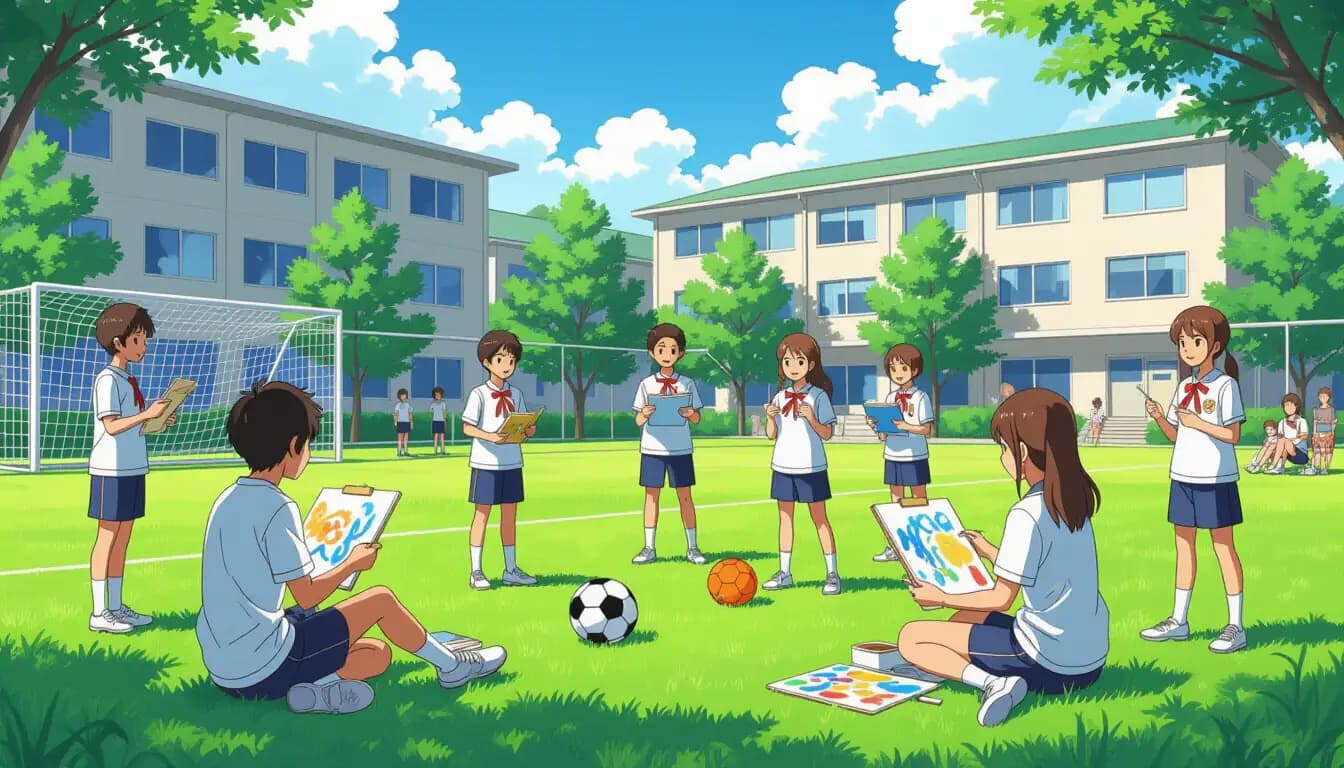
Top cultural clubs for foreign students:
Brass Band / Music Club (吹奏楽部): One of Japan's most prestigious cultural clubs. Competitions are fierce, and the commitment can rival sports clubs — but the musical experience is outstanding.
Art Club (美術部): Typically one of the most relaxed clubs, meeting 2–3 times per week. Great for creative students who want time to pursue other activities.
Tea Ceremony Club (茶道部): A deeply Japanese experience that offers insight into traditional culture. Meetings are calm and structured.
Manga/Anime Club (漫画・アニメ部): Common at many schools. A fun, low-pressure environment where students bond over shared interests.
English/Language Exchange Club (英語部): Perfect for foreign students! Many schools have clubs where students practice conversational English — your child will immediately have something valuable to contribute.
Calligraphy Club (書道部): Beautiful, meditative, and uniquely Japanese. Meeting frequency is usually moderate.
For foreign families navigating language barriers, cultural clubs often provide a gentler entry point into Japanese school social life. See also: Teaching Japanese to Foreign Children: Methods and Resources.
The Senpai-Kōhai System: A Cultural Cornerstone of Bukatsu
One aspect of bukatsu that surprises many foreign families is the senpai-kōhai (先輩・後輩) system — the strict hierarchical relationship between senior (senpai) and junior (kōhai) students.
In bukatsu:
- 1st-year students (kōhai) are expected to do more menial tasks: cleaning equipment, setting up courts, carrying bags for seniors
- 3rd-year students (senpai) lead practice, mentor juniors, and hold decision-making authority
- Respect is shown through specific language (keigo/honorifics) and body language
- Challenging or ignoring a senpai's authority is considered deeply disrespectful
For foreign students unfamiliar with this system, it can initially feel confusing or even unfair. However, it also means that your child will have senior students looking out for them once they understand the system — the senpai takes responsibility for teaching and integrating kōhai members.
This hierarchy is one reason bukatsu is considered part of Japan's educational system, not just recreation. It teaches social skills and professional norms valued throughout Japanese society. For more on cultural dynamics facing foreign children, see: Cultural Identity for Hafu and Mixed-Race Children in Japan.
How to Choose the Right Bukatsu: A Step-by-Step Guide
Choosing the right club activity is a significant decision. Here's how to approach it:
Step 1: Assess your child's interests and goals List the top 3 activities your child genuinely enjoys. Bukatsu requires real commitment — forced participation in an uninteresting club leads to burnout and resentment.
Step 2: Research the specific club at your child's school The same club type can vary enormously between schools. Visit the school's open house (体験入部, taiken nyūbu) — a trial participation period — to get a firsthand sense of the club's culture and intensity.
Step 3: Evaluate the time commitment against family priorities If your family values weekend trips, language learning at home, or other activities, a 6-day-per-week sports club may not be compatible. Cultural clubs or lighter sports may work better.
Step 4: Consider the language factor For students still developing Japanese proficiency, clubs with more physical or non-verbal communication (sports, art, music) may be more immediately accessible than debate clubs or drama.
Step 5: Talk to current club members Before committing, encourage your child to speak with current members — particularly those who joined the club as 1st-years. They'll give honest insight into the day-to-day reality.
Step 6: Understand the exit options In Japan, it's considered poor form to quit a bukatsu mid-year. Understand what commitment you're making before joining. That said, changing clubs is possible — it simply requires a respectful conversation with the club teacher/advisor (顧問, komon).
For additional resources on navigating Japanese school culture, For Work in Japan's education resources offer helpful perspectives from an expat lens.
Private School vs. Public School: Different Bukatsu Cultures
The type of school your child attends significantly affects the bukatsu experience:
| Factor | Public Schools | Private Schools |
|---|---|---|
| Participation pressure | Often stronger | Usually more relaxed |
| Club variety | Standard national curriculum | Often more diverse/specialized |
| Competition level | Varies by region | Often higher at elite schools |
| Flexibility to opt out | Less common | More accepted |
| International environment | Rare | More common |
Private schools — particularly those catering to international or bicultural families — often take a more flexible approach to bukatsu. Some even offer unique clubs not found in public schools, such as international exchange clubs, debate in English, or globally-minded STEM teams.
Public schools, on the other hand, often have stronger cultural traditions around bukatsu, including more rigid hierarchies and expectations. This isn't necessarily negative — many foreign students find the discipline and structure valuable — but it's important to know what you're entering.
For a broader comparison of school types, see: International Schools in Japan: The Definitive Guide for Families.
Tips for Foreign Students Joining Bukatsu
Foreign students often worry about language barriers or cultural missteps when joining a Japanese club. Here's what works:
- Show up consistently — Reliability is more valued than skill in Japanese club culture. A foreign student who shows up every day will earn respect faster than one who plays brilliantly but misses practice.
- Learn club-specific vocabulary — Even 20–30 sport-specific Japanese words can dramatically smooth your child's integration. Coaches and senpai will notice and appreciate the effort.
- Participate in cleaning duties (sōji) — Every club member cleans the practice space after activities. Foreign students who enthusiastically participate in this — rather than standing aside — are immediately seen as serious members.
- Bring the right equipment — Club equipment standards in Japan are taken seriously. Check what's required and ensure your child arrives properly prepared.
- Be patient with the hierarchy — The first year is often about observation and support roles. This is normal and temporary.
For more on building your child's Japanese language skills for school success, see: Raising Bilingual Children in Japan: Strategies and Tips.
Additionally, Chuukou Benkyou offers useful academic preparation resources for students navigating the Japanese education system, which can complement bukatsu participation by helping students manage their academic workload effectively.
Making the Final Decision
Bukatsu is ultimately one of the most memorable parts of Japanese school life. Former students — foreign and Japanese alike — consistently cite their club activities as among their most formative experiences. The discipline, friendships, and skills developed through bukatsu extend far beyond the school gate.
The right club isn't necessarily the most prestigious or the one your child's friends are joining. It's the one where they'll grow, feel welcomed, and genuinely want to show up — even on cold winter mornings or hot summer afternoons.
Take the trial participation period seriously. Let your child explore 2–3 clubs before committing. And trust that even an imperfect choice will teach valuable life lessons that no classroom can fully replicate.
For more on your child's overall journey through Japanese education, read our complete guide: The Complete Guide to the Japanese Education System for Foreign Families.
Sources & Further Reading:

Originally from Vietnam, living in Japan for 16+ years. Graduated from Nagoya University, with 11 years of professional experience at Japanese and international companies. Sharing practical information for foreign parents raising children in Japan.
View Profile →Related Articles
High School Tuition Costs and Financial Aid in Japan
Complete guide to high school tuition costs and financial aid in Japan for foreign families. Learn about public vs private school costs, the 2025 free tuition program, government subsidies, and eligibility for foreign residents.
Read more →
Dropping Out of High School in Japan: Alternatives and Support
Foreign students drop out of Japanese high schools at 7x the national rate. Learn about correspondence school, free schools, the equivalency exam, and support systems available to foreign families in Japan.
Read more →
Night School and Correspondence High Schools in Japan
A complete guide to night school (定時制) and correspondence high school (通信制) in Japan for foreign families — enrollment, costs, language support, and tips.
Read more →
International Baccalaureate High Schools in Japan
Complete guide to IB high schools in Japan for foreign families. Learn about costs (¥1.5M-3M/year), top schools, admission process, and how the IB Diploma opens doors to universities worldwide.
Read more →
Ronin Year: When Students Retake University Entrance Exams
Learn what the ronin year means in Japan, how yobiko prep schools work, what it costs, the mental health impact, and how foreign students navigate university entrance exam retakes.
Read more →
High School Graduation Requirements in Japan
Complete guide to high school graduation requirements in Japan for foreign families. Learn about the 74-credit system, 2023 reforms for foreign students, costs, and support resources.
Read more →