
Public vs Private High Schools in Japan Compared

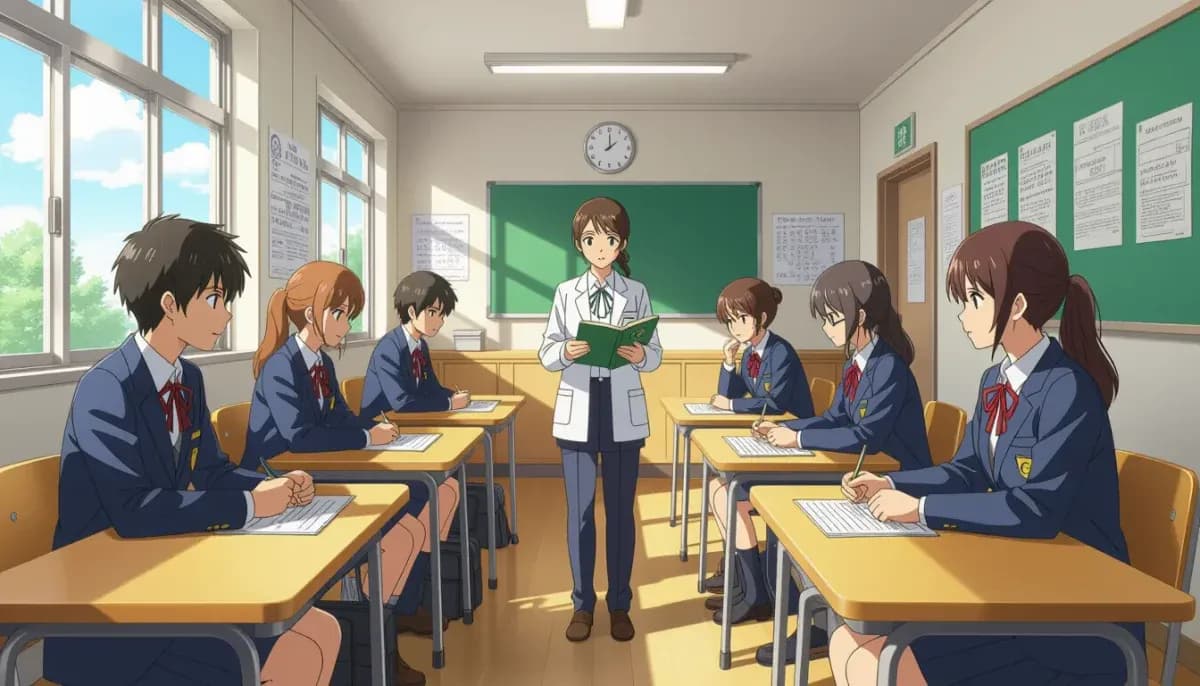
Compare public and private high schools in Japan on cost, admissions, curriculum, and options for foreign students. Find out which is the better choice for expat families.
Public vs Private High Schools in Japan: A Complete Comparison for Foreign Families
Choosing between a public or private high school in Japan is one of the most important educational decisions foreign families will face. With nearly 98.8% of Japanese junior high graduates advancing to high school — even though it's not compulsory — the stakes are high and the options are varied. This guide breaks down the key differences between public and private high schools in Japan, with a focus on what matters most for expat and international families.
Whether you're weighing tuition costs, entrance exam difficulty, curriculum flexibility, or the likelihood of acceptance as a foreign student, this comprehensive comparison will help you make an informed choice.
Overview: Japan's High School Landscape
Japan has approximately 4,800 upper-secondary schools in operation, the majority of which are publicly funded. Nationally, around 65% of high school students attend public schools and 35% attend private schools. However, in major metropolitan areas like Tokyo, the balance shifts significantly — private school students make up more than half of all high schoolers.
High school in Japan is not compulsory, yet participation is nearly universal. As of 2022, 98.5% of junior high graduates go on to high school. For foreign families, understanding the structural differences between public and private institutions is critical for planning applications, managing costs, and setting realistic expectations.
For a broader overview of the entire Japanese education system, see our guide: The Complete Guide to the Japanese Education System for Foreign Families.
Cost Comparison: Public vs Private High Schools
Cost is often the deciding factor for families. Here's a clear breakdown:
| Category | Public High School | Private High School |
|---|---|---|
| Annual Tuition | ¥9,900/month (government subsidy makes it free for most) | ¥300,000–¥600,000/year |
| Entrance Fee | ¥0–¥30,000 | ¥100,000–¥300,000 |
| School Fees (uniforms, materials) | ¥100,000–¥200,000/year | ¥150,000–¥300,000/year |
| Total 3-Year Cost (est.) | ~¥1.78 million (~$11,900 USD) | ~¥3.08 million (~$20,500 USD) |
| Government Subsidy Available | Yes (就学支援金制度) | Yes, income-dependent |
The Japanese government's tuition support system (就学支援金制度) means that public high school is effectively free for most families. For private schools, families earning under ¥5.9 million per year receive up to ¥396,000 annually in subsidies, while those earning ¥5.9–¥9.1 million receive up to ¥118,800 per year.
A major policy change is coming: from April 2026, the income cap will be removed for private high school support funds, with subsidies of up to ¥457,000/year becoming available to all families. This change could make private high school a financially viable option for far more families.
For more on managing education costs as an expat, see Financial Planning for Expat Families Raising Children in Japan.
Admissions Process: How Each System Works
Public High School Admissions
Public high schools in Japan use a prefecture-wide unified entrance examination system. Key features include:
- One exam per prefecture, held between late January and early March
- District-based assignment — students are generally limited to schools within their catchment area
- Internal assessment scores (内申点) from junior high school carry significant weight (in Tokyo, a 7:3 ratio of exam score to internal assessment is commonly used)
- One to two chances to sit the exam per season
- Results are typically announced in March, ahead of the April school start
Private High School Admissions
Private schools operate independently and set their own admissions criteria:
- No geographic restrictions — students can apply from anywhere in Japan (or internationally)
- Multiple exam opportunities: recommendation rounds (推薦入試) in December–January, plus general entrance exams (一般入試) in mid-January to early February
- Each school designs its own entrance exam, which may include written tests, interviews, and/or essays
- Schools with international programs may accept English-language applications or EIKEN/TOEFL scores
- Some private schools offer conditional acceptance based on grades alone (without entrance exams) through recommendation pathways
For a detailed guide to the high school entrance exam process, see High School in Japan: Options and Guidance for Foreign Families.
Read more on Living in Nihon's guide to raising children and education in Japan
Curriculum and Academic Environment
Public Schools
- Follow the national curriculum set by the Ministry of Education (MEXT)
- All instruction in Japanese
- Standardized course offerings with limited elective choices at most schools
- Strong cultural and civic education components (ethics, Japanese history, calligraphy, haiku)
- Class sizes typically 30–40 students
- Limited differentiation for non-Japanese speakers
Private Schools
- Design their own curriculum within broad MEXT guidelines
- May offer specialized tracks: international baccalaureate (IB), arts, sciences, technology, sports
- Some offer bilingual or full English-medium programs (though these are still relatively rare)
- Smaller class sizes, often 20–30 students
- Greater resources for club activities, college prep, and extracurricular programming
- More flexibility for students with unique academic profiles
For families focused on language outcomes, see our guide on Raising Bilingual Children in Japan: Strategies and Best Practices.
Explore high school entrance exam preparation at Chuukou Benkyou
Options for Foreign Students: What You Need to Know
As of 2023, 114,853 international students are enrolled in Japanese public schools — a 23% year-over-year increase. Despite this growth, the admissions process remains challenging for non-Japanese speakers.
Eligibility Requirements (Both School Types)
- Must hold a long-term resident visa (dependent, spouse, or 留学/student visa); tourist or short-stay visas are not accepted
- Student and at least one parent must reside in Japan
- Must have completed 9 years of schooling; if not completed in Japan, a 中学校卒業程度認定 equivalency exam may be required
- Applications typically due December–January for April enrollment
Japanese Language Requirements
- JLPT N4 or above is recommended before applying
- Approximately 6–12 months of dedicated Japanese study is advised for students entering without prior Japanese education
- Most public and private schools teach entirely in Japanese (except designated international programs)
- 41.5% of international students enrolled in Japanese schools require supplementary language instruction
Special Accommodations for Foreign Students
Many prefectures offer support for students who arrived in Japan within the past 3 years:
- Extended test time during entrance exams
- Furigana (reading aids) on examination papers
- Permission to use a dictionary during exams
- Separate "foreign student admission quotas" at designated schools
Tokyo is particularly well-resourced: the metropolitan government designates 6 public high schools with dedicated foreign student admission quotas. The most well-known, Tokyo Metropolitan Kokusai High School (都立国際高校), offers an IB program and admits approximately 25 foreign students per April intake.
For questions, the Tokyo Metropolitan Education Consultation Center offers English consultations on Fridays from 1–4 PM: 03-3360-4175.
Also see Savvy Tokyo's guide to Japanese high schools that accept foreign students.
Key Pros and Cons Summary
| Factor | Public High School | Private High School |
|---|---|---|
| Cost | Low / effectively free | Higher, but subsidies available |
| Location | Limited to district | Nationwide, no restriction |
| Curriculum | Standardized (national) | Flexible, specialized options |
| Foreign-friendly | Varies by prefecture | More options, especially in cities |
| Entrance Difficulty | Single prefecture exam | Multiple attempts possible |
| Class Size | 30–40 students | 20–30 students |
| Japanese Required | Yes, N4+ recommended | Yes (unless international program) |
| International Programs | Limited (a few designated schools) | More available, especially in Tokyo/Osaka |
Which Should You Choose? A Decision Framework
Choose public high school if:
- Your child has strong Japanese language skills (N3 or above)
- You are on a tighter budget
- You live in a prefecture with strong public school support for foreign students
- Your child performs well on standardized tests
Choose private high school if:
- Your child needs more application opportunities (multiple exam sittings)
- You want access to specialized curricula, IB programs, or bilingual tracks
- Your child has a non-standard academic background (studied abroad, late Japanese start)
- You can take advantage of the upcoming April 2026 subsidy reform
Consider international school if:
- Japanese language development is not the primary goal
- You anticipate relocating again within a few years
- Your child needs full English-medium instruction
See our detailed guide: International Schools in Japan: The Definitive Guide for Families.
For more on the broader transition from junior high, read Junior High School in Japan: Guide for Foreign Families.
Helpful Resources for Families
- Japanese High Schools for Foreign Residents: Public vs. Private (E-Housing Guide)
- For Work in Japan — Resources for Foreign Residents
- Japan Education System Overview — Japan Living Guide
Final Thoughts
The choice between a public and private high school in Japan is rarely simple, especially for foreign families navigating language barriers and unfamiliar administrative systems. Public schools offer affordability and community integration, while private schools offer flexibility and more pathways for students who don't fit the standard mold.
The most important step is to research options early — ideally in the summer before your child's final year of junior high school — and to begin Japanese language preparation as soon as possible. With the right planning, both school types can provide an excellent foundation for your child's future in Japan or beyond.
For a complete overview of your child's educational journey, start with The Complete Guide to the Japanese Education System for Foreign Families.

Originally from Vietnam, living in Japan for 16+ years. Graduated from Nagoya University, with 11 years of professional experience at Japanese and international companies. Sharing practical information for foreign parents raising children in Japan.
View Profile →Related Articles
High School Tuition Costs and Financial Aid in Japan
Complete guide to high school tuition costs and financial aid in Japan for foreign families. Learn about public vs private school costs, the 2025 free tuition program, government subsidies, and eligibility for foreign residents.
Read more →
Dropping Out of High School in Japan: Alternatives and Support
Foreign students drop out of Japanese high schools at 7x the national rate. Learn about correspondence school, free schools, the equivalency exam, and support systems available to foreign families in Japan.
Read more →
Night School and Correspondence High Schools in Japan
A complete guide to night school (定時制) and correspondence high school (通信制) in Japan for foreign families — enrollment, costs, language support, and tips.
Read more →
International Baccalaureate High Schools in Japan
Complete guide to IB high schools in Japan for foreign families. Learn about costs (¥1.5M-3M/year), top schools, admission process, and how the IB Diploma opens doors to universities worldwide.
Read more →
Ronin Year: When Students Retake University Entrance Exams
Learn what the ronin year means in Japan, how yobiko prep schools work, what it costs, the mental health impact, and how foreign students navigate university entrance exam retakes.
Read more →
High School Graduation Requirements in Japan
Complete guide to high school graduation requirements in Japan for foreign families. Learn about the 74-credit system, 2023 reforms for foreign students, costs, and support resources.
Read more →