
Building a Support System as a Working Expat Parent

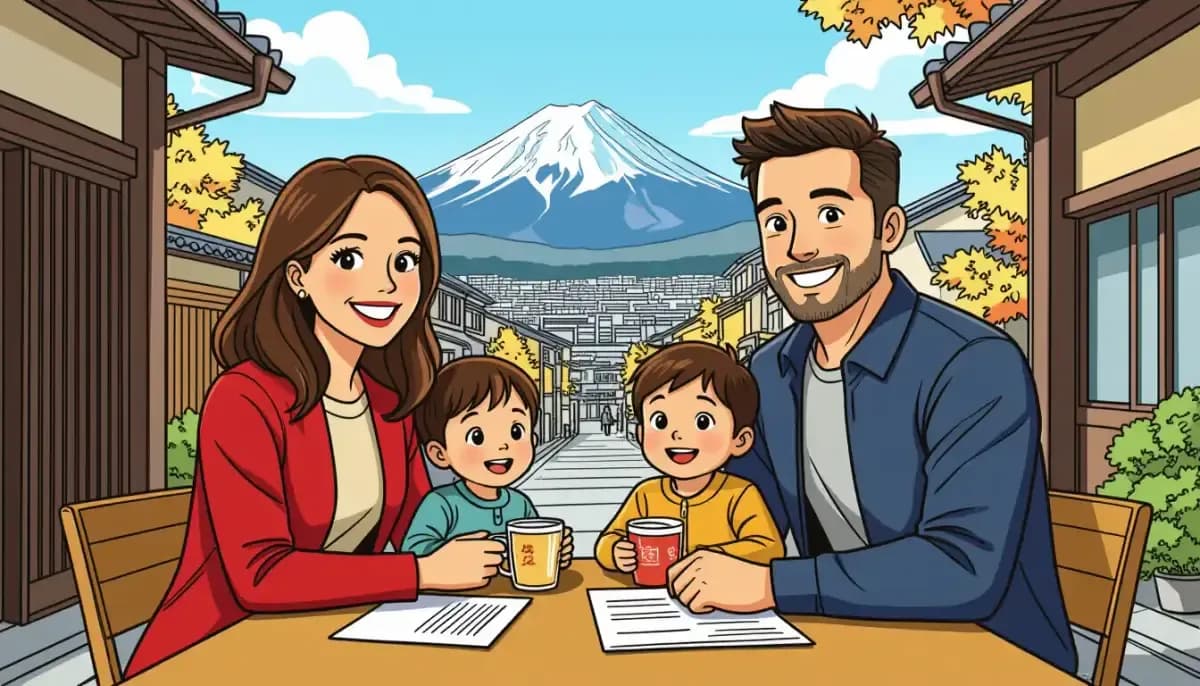
Learn how to build a strong support system as a working expat parent in Japan. Find parent communities, government resources, professional networks, and practical tips for the first month.
Building a Support System as a Working Expat Parent in Japan
Moving to Japan as a working parent is one of the most rewarding — and demanding — challenges you can take on. You are navigating a new language, a new workplace culture, a new education system, and the relentless daily logistics of raising children, often without the extended family network you relied on back home. The good news: Japan has a rich ecosystem of communities, government programs, and professional networks specifically designed to support you. The key is knowing where to look and how to plug in.
This guide walks you through every layer of support available to working expat parents in Japan — from government resources to grassroots parent groups — so you can build a network that keeps your family grounded and thriving.
Why a Support System Is Non-Negotiable for Expat Families
Research is unambiguous on this point. A 2016 Global Mobility Trends Survey found that 52% of expatriates bring children on overseas assignments, and that family members' inability to adjust is one of the most critical causes of failed assignments. Studies published in peer-reviewed journals confirm that family cohesion is the strongest predictor of both quality of life and sociocultural adjustment for expat children — above language ability, above school quality, above income.
Japan presents a specific challenge here. As of December 2024, there are 3,768,977 registered foreign residents in Japan (approximately 3.04% of the population), a record high. Yet Japan remains a relatively high-context, homogeneous society where outsiders can feel invisible. Research published in PLOS One found that the strongest predictor of maternal social isolation in Japan is the perception that neighborhood interactions are not apparent — meaning isolation is often a perception problem as much as a structural one.
The initial adjustment period — roughly the first six months — is characterized by what researchers call "strangeness, difficulties, and feelings of uncertainty." Building your support system early and deliberately is the single most effective intervention for getting through that window intact.
For broader context on managing the competing demands of career and family in Japan, see our complete guide to work-life balance for parents in Japan.
Government and Official Support Resources
Japan's government has invested significantly in foreigner-friendly support infrastructure. These resources are often underutilized simply because people don't know they exist.
FRESC — Foreign Residents Support Center
The Foreign Residents Support Center (FRESC), located in Shinjuku, Tokyo, is the flagship government resource for foreign residents. It offers support in 21 languages covering residence status, employment, social insurance, education, and daily life. Services include in-person consultations, online appointments, and referrals to specialist agencies. If you are overwhelmed and don't know where to start, FRESC is the first call to make.
MOJ Foreign Life Support Portal
The Ministry of Justice maintains a multilingual support portal aggregating information across 18 languages. It links to regional support centers and specialist agencies covering everything from visa renewals to childcare applications.
Regional International Associations
Every major city and many mid-sized cities have an international association (国際交流協会, kokusai kōryū kyōkai) that provides:
- Free or low-cost Japanese language classes
- Multilingual community bulletins
- Document translation assistance
- Foreigner-to-resident matching programs
Notable examples include:
- Musashino International Association (MIA) — provides childcare support consultations for children ages 0-5 in multiple languages
- OFIX Life Support (Osaka) — 11 languages, broad support services
- Yokohama Foreign Residents Information Center — 12 languages
Jidoukan — Children's Community Centers
Every Tokyo ward has at least one Jidoukan (児童館), a free community center for children and parents. These are physical gathering spaces with toys, play equipment, and organized activities. They serve a dual function: entertainment for your child and a social hub for you. Jidoukan staff are trained to support parents and can connect you with local family services. For new arrivals with young children, a Jidoukan visit in your first week is one of the highest-value investments of time you can make.
For detailed information on accessing NPO support services, see forworkinjapan.com's guide to foreigner support NPO services in Japan.
Financial Support You May Not Know About
Building a support system requires energy, and financial stress is one of its biggest drains. Japan offers substantial financial support to families — including foreign families — that significantly reduces the economic pressure of raising children here.
| Benefit | Amount | Who Qualifies |
|---|---|---|
| Childbirth allowance | ¥500,000 per child | All residents with national health insurance |
| Child allowance (ages 0-2) | ¥15,000/month | Foreign residents with qualifying visas |
| Child allowance (ages 3-18) | ¥10,000/month | Income caps removed as of October 2024 |
| Tokyo supplemental allowance | ¥5,000/month per child | Tokyo residents |
| Licensed daycare (ages 3-5) | Free | All residents |
| Prenatal checkup vouchers | 14 vouchers | National health insurance holders |
| Children's healthcare | Free through middle school | Most Tokyo wards and many other regions |
A family with two young children in Tokyo can realistically save ¥950,000 to ¥2.6 million per year through these programs — money that can fund language tutoring, international school supplements, or family travel that keeps your support network strong.
For a complete breakdown of childcare costs and subsidies, see our full guide to the cost of raising a child in Japan and how to apply for Hoikuen daycare.
Finding Your Parent Community
The second layer of support is peer community — other parents who understand exactly what you are navigating because they are living it too.
English-Speaking Parent Groups
Tokyo Mothers Group (TMG) TMG is the largest and most established English-speaking parent community in Japan. It is volunteer-run, free to join, and operates through a Facebook group, mailing list, and seasonal in-person meetups. If you have young children and are based in Tokyo, joining TMG is a non-negotiable first step.
Tokyo Pregnancy Group (TPG) TPG holds regular community meetings for expectant and new parents with guest speakers covering Japan's maternity care system. It is particularly valuable in the pre-birth window when navigating hospital choice, birth registration, and maternity leave feels overwhelming.
Association of Foreign Wives of Japanese (AFWJ) AFWJ has approximately 470 members from 50 countries and holds regular meetups in Tokyo and other major cities. Even if the "wife of Japanese" framing doesn't describe your situation, the practical knowledge base and community quality are excellent.
Otonari-San Family Friend Program This program pairs foreign families with Japanese resident families for six-month shared-life partnerships. The relationship involves child-rearing consultations, seasonal events, and genuine cultural exchange. It is one of the most effective programs for building meaningful cross-cultural friendships rather than just expat-to-expat connections.
Online Communities
Online communities are underrated as a day-to-day support mechanism. When your child has a fever at 11pm and you can't remember the Japanese word for your insurance card, these groups save you.
- Tokyo Expat Network (TEN) — Facebook group, 30,000+ members, active and moderated
- r/japanlife — Reddit, 479,000+ members, resident-focused, searchable archives covering nearly every practical question you will have
- r/japanexpats — More general expat content with parent-specific threads
For a comprehensive overview of expat communities across Japan, Japan Handbook's guide to expat communities is an excellent starting resource.
Professional Networks for Working Parents
Work is where expat parents can feel most isolated — you are navigating a different professional culture while managing family responsibilities that most of your Japanese colleagues may not share (or may not visibly share, given Japan's norms around discussing home life at work).
Women's Professional Networks
For Empowering Women Japan (FEW) FEW is a professional networking organization specifically for working women in Japan, with regular events in Tokyo. The membership base includes many working expat mothers and the programming often covers work-life balance topics directly relevant to your situation.
College Women's Association of Japan (CWAJ) CWAJ has over 300 members from 25+ countries. It combines professional networking with philanthropic work and provides a stable, recurring social calendar that is valuable when you're building a new professional identity in Japan.
Business Chambers and International Clubs
Business chambers — BCCJ (British), CCCJ (Canadian), AmCham (American), ACCJ — all have active Tokyo chapters with regular networking events. These are particularly valuable if you're working for a multinational, as other attendees understand the expat professional context. The Tokyo American Club also runs family programming alongside its professional events.
For further reading on how career and parenthood intersect in the Japanese workplace, see our article on the career impact of becoming a parent in Japan.
Volunteer Work as a Network-Building Strategy
Research on expat community formation consistently identifies volunteering as the fastest route to meaningful friendships. The mechanism is straightforward: volunteering creates repeated contact with the same people around shared purposeful work, which is the structural condition most likely to produce genuine connection.
In Japan, two organizations are particularly welcoming to English-speaking newcomers:
Hands On Tokyo Hands On Tokyo runs bilingual volunteer programs across disability support, children's programs, environmental projects, and elder care. Programs are structured to be accessible to new volunteers without Japanese proficiency, and the bilingual coordination means you're working alongside both Japanese and foreign volunteers.
Second Harvest Japan Japan's largest food bank, Second Harvest Japan actively welcomes new volunteers and creates an easy entry point into meaningful community work. Regular volunteers build strong relationships with staff and other regular participants relatively quickly.
The practical advice: commit to one recurring volunteer shift per month. The consistency matters more than the frequency.
For additional strategies on managing time as a working parent in Japan, see our time management tips for working parents.
A First-Month Integration Framework
The biggest risk for new expat parents is attempting to do everything at once — or, paralyzed by the scale of the task, doing nothing. Here is a practical four-week framework:
| Week | Priority Actions |
|---|---|
| Week 1 | Register at city hall, visit your ward's Jidoukan, attend one parent group meetup |
| Week 2 | Join one recurring activity (parent group, class, or community program), join one online community |
| Week 3 | Attend one professional networking event |
| Week 4 | Complete one volunteer shift |
The goal is one familiar face in each context by the end of month one. Familiar faces compound: the woman you see every week at the Jidoukan becomes the person you text when you need a babysitter recommendation. The colleague from the networking event becomes a lunch companion. Community forms through repetition, not through grand gestures.
Supporting Your Children's Social Integration
Your support system needs to include support for your children's adjustment, which is a parallel project to your own.
Research on "Third Culture Kids" (TCKs) — children raised outside their parents' home culture — shows that they develop unique strengths including cultural flexibility and multilingual ability, but also face specific challenges: loss of friendships, identity ambiguity, and the repeated grief of transition. The good news is that these outcomes are highly responsive to parental support.
Practically, this means:
- Enroll in school promptly. Every week out of school is a week your child isn't building the peer relationships that will anchor their adjustment. See our guide to the Japanese school system for orientation. For children entering Japanese academic pathways, Chuukou Benkyou provides study resources for middle and high school entrance exam preparation.
- Maintain heritage language. Research supports the one-parent-one-language (OPOL) approach for bilingual development. Weekend heritage language schools exist in most major cities. For more, see why maintaining your child's heritage language matters.
- Watch for stress signals. Adjustment difficulties can manifest as behavioral changes, sleep problems, or school refusal. For guidance on recognizing these patterns, see our article on signs of stress and anxiety in expat children.
For comprehensive guidance on raising bilingual children in Japan, see Living in Nihon's guide to raising children and education in Japan for foreigners.
Connecting with Japanese Neighbors
Expat parents sometimes make the mistake of building a support system that is exclusively expat — which limits their integration and can actually increase long-term isolation as the expat community turns over.
Japanese neighborhoods have formal and informal social structures worth engaging:
- Jichikai (自治会) — neighborhood associations that organize local events, distribute community information, and coordinate emergency response. Joining communicates your intention to be a real neighbor.
- PTA at your child's school — intensive but one of the most effective routes to genuine relationships with Japanese parents.
- Local parks at consistent times — Japanese parents are often at the same park at the same time every day. Showing up consistently creates the familiarity that leads to conversation.
Do not be discouraged by initial reserve. Japanese social norms favor longer warm-up periods before friendship. The parents who will become your closest Japanese friends are almost certainly the ones you see repeatedly in a structured context — school, park, neighborhood association — not the ones you meet at a one-off event.
Key Takeaways
Building a support system as a working expat parent in Japan is not a passive process — it requires deliberate, sustained effort across multiple channels simultaneously. The research is clear that the effort pays off: families with strong social networks report significantly higher quality of life, lower parental stress, and better-adjusted children.
Start with the structural foundations: register with your ward, visit your Jidoukan, join TMG or an equivalent parent group, and connect with FRESC if you need guidance on services. Layer in professional networking and volunteering as you stabilize. Accept that it takes months, not weeks, to feel genuinely connected.
The parents who thrive in Japan — who look back on their time here as transformative rather than just demanding — are almost universally the ones who invested early and consistently in community. The tools are available to you. Use them.
For additional resources for foreign families in Japan, explore the For Work in Japan resource guide for foreign residents and Japan Handbook's expat community guide.

Originally from Vietnam, living in Japan for 16+ years. Graduated from Nagoya University, with 11 years of professional experience at Japanese and international companies. Sharing practical information for foreign parents raising children in Japan.
View Profile →Related Articles

Self-Care and Preventing Burnout for Expat Parents
Expat parent burnout in Japan is real. Learn practical self-care strategies, warning signs to watch for, and mental health resources designed for foreign parents raising children in Japan.
Read more →
Managing Dual-Career Families in Japan
Both partners working in Japan while raising children? Navigate daycare waitlists, parental leave rights, health insurance, visa strategy, and household management as a dual-career expat family.
Read more →
Part-Time Work Options for Parents in Japan
A complete guide to part-time work options for foreign parents in Japan — covering visa rules, job types, income thresholds, Japanese job boards, and 2025 workplace rights for working parents.
Read more →
Career Impact of Becoming a Parent in Japan
Discover the real career impact of becoming a parent in Japan. From parental leave rights and financial benefits to daycare challenges and workplace culture — a complete guide for foreign workers.
Read more →
Remote Work and Parenting in Japan: Making It Work
Learn how to balance remote work and parenting in Japan. Covers legal rights, childcare integration, home office setup, financial support, and practical tips for expat parents.
Read more →
Time Management Tips for Working Parents in Japan
Practical time management strategies for working parents in Japan. Learn your legal rights, how to navigate childcare systems, manage the mental load, and balance career and family as a foreign parent in Japan.
Read more →