
Remote Work and Parenting in Japan: Making It Work

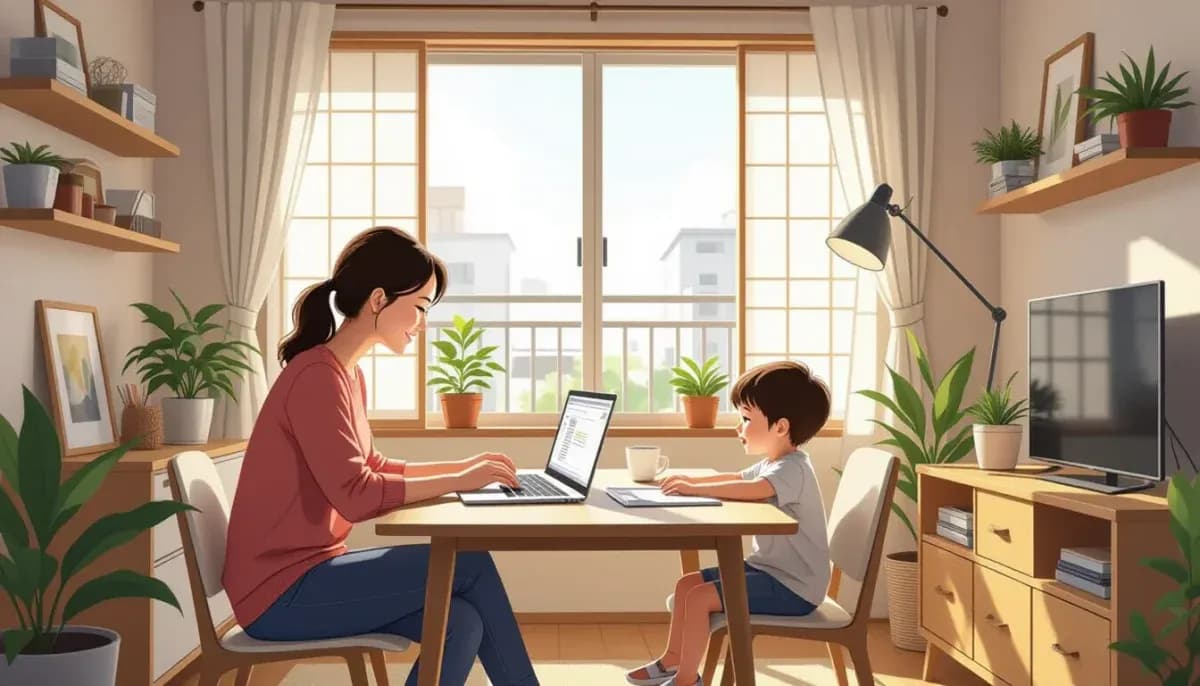
Learn how to balance remote work and parenting in Japan. Covers legal rights, childcare integration, home office setup, financial support, and practical tips for expat parents.
Remote Work and Parenting in Japan: Making It Work
Balancing a remote career with raising children in Japan is more achievable than ever — but it takes planning, knowledge of local laws, and a few smart strategies. Whether you are a foreign employee working for an overseas company, a freelancer, or a local hire negotiating flexible hours, Japan's evolving workplace culture and expanding legal protections offer real options for parents who want to stay productive without sacrificing family time.
This guide covers everything expat parents need to know: the legal framework, practical daily routines, childcare integration, financial support, and the tools that make remote parenting work in Japan.
Japan's Legal Framework for Remote-Working Parents
Japan has made significant legislative progress in recent years. Following 2025 amendments to the Child Care and Family Care Leave Act, employers are now required to offer at least two flexible working options to parents with children aged 3 to 6. One of these must include the option to work remotely for a minimum of 10 days per month. This is a landmark shift from earlier voluntary guidelines.
Key legal rights for working parents in Japan include:
- Childcare leave: Up to one year per child, with income replacement of approximately 67% of salary for the first 180 days and around 50% thereafter.
- Childcare short-time employment benefit: From April 2025, parents of children under age 2 working reduced hours can access a new partial income benefit.
- Overtime exemptions: Parents of children under age 3 can legally refuse overtime requests.
- Nursing care leave: Short-term leave available for children's illnesses.
For foreign employees on standard work visas, these rights apply equally. Always confirm your specific entitlements with your HR department or a licensed labor consultant (社会保険労務士 / shakai hoken roumushi).
For broader guidance on working remotely in Japan as a foreigner, see Living in Nihon's comprehensive freelancing and remote work guide.
Current State of Remote Work in Japan
Remote work adoption has surged nationally. As of December 2024, 31.7% of workers across Japan practiced remote work — a sharp increase from 19.9% in May 2024 — and 82.2% of teleworkers wish to continue their flexible arrangement according to data from Mailmate's remote work statistics report.
However, adoption remains highly uneven by location:
| Region | Remote Work Rate |
|---|---|
| Tokyo metropolitan area | 44.1% |
| Other prefectures | 20.8% |
| National average (Dec 2024) | 31.7% |
More than 70% of Japanese companies had returned to full in-office operations by 2024, meaning negotiating a hybrid arrangement is the realistic goal for most expat employees rather than fully remote work. Among those with flexible preferences, 41.5% favor hybrid schedules and 19.7% prefer fully remote.
Digital Nomad Visa: Japan launched a dedicated Digital Nomad Visa in March 2024 for foreign nationals working remotely for overseas employers. Eligible applicants from 49 countries can stay up to 6 months, provided they earn a minimum of ¥10 million (~USD $66,000) annually and carry private health insurance. This is particularly useful for parents relocating to Japan without a local employer.
For job-search and visa resources specifically for foreign workers, For Work in Japan covers options for expats entering the Japanese job market.
Building a Remote Work Routine Around Japanese Childcare
The foundation of successful remote parenting in Japan is integrating your work schedule with the local childcare system. Japan's licensed daycare centers (保育園 / hoikuen) provide full-day care with reliable hours, making them the backbone of a remote work routine.
See our complete guide to daycare and hoikuen in Japan for enrollment details and how to apply for hoikuen in Japan.
Structuring your day:
- Morning block (9:00–12:00): Deep-focus work, meetings, and complex tasks while children are at hoikuen or kindergarten.
- Afternoon block (13:00–15:30): Collaborative work, email, and lighter tasks.
- Post-pickup window (16:00–18:00): Admin and async tasks after children are settled.
- Evening flex (20:00–22:00): Optional — for video calls with overseas time zones or urgent deadlines.
Japanese preschool and elementary school calendars include numerous half-days, events, and extended breaks (summer, winter, spring) that disrupt standard work hours. Build these into your planning calendar at the start of each semester.
For families navigating bilingual education, also see benefits of raising bilingual children in Japan.
Setting Up Your Home Office in Japan
Japanese apartments, especially in urban areas, tend to be compact. A functional home office requires creativity with space. Here are practical approaches:
| Setup Type | Best For | Approximate Cost |
|---|---|---|
| Dedicated room (study) | Larger families, high-call-volume roles | Higher rent premium |
| Folding desk + room divider | Studio/1LDK apartments | ¥10,000–¥30,000 |
| Coworking space membership | Parents needing focus away from home | ¥10,000–¥50,000/month |
| Café day pass | Occasional overflow work | ¥500–¥1,500/day |
| Coworking day pass | Drop-in option | ¥500–¥2,000/day |
Noise management: Japanese walls can be thin. A good headset with noise cancellation (recommended: Sony WH-1000XM5 or Jabra Evolve2 series) is essential for professional video calls. Many remote workers also use a small folding room divider as a backdrop and sound buffer.
Internet: Japan has excellent broadband infrastructure. Fiber optic (光回線 / hikari kaisen) through providers like NTT, SoftBank, or au typically delivers 1 Gbps speeds. Confirm before signing an apartment lease that the building has fiber available.
Tax tip: If you work from home in Japan and are self-employed or a sole proprietor, a portion of rent and utilities can be deducted as business expenses. Salaried remote workers employed by a Japanese company may qualify for remote work expense reimbursement — check your company's policies.
Financial Support Available to Remote-Working Parents
Japan offers substantial financial support for families that is often underutilized by foreign residents:
Child Allowance (児童手当 / *jidou teate*): Expanded in October 2024 to cover children through high school graduation with no income cap. Monthly payments:
| Child's Age | Monthly Amount |
|---|---|
| Under 3 years old | ¥15,000 |
| 3 years – elementary school | ¥10,000 (¥15,000 for 3rd child+) |
| Junior high school | ¥10,000 |
| High school (from Oct 2024) | ¥10,000 |
Apply at your local municipal office (市区町村役所) after registering your residence. Foreign residents are eligible as long as the child lives in Japan and you have a valid residency status.
Medical costs: Children under 15 (and in many municipalities, under 18) are eligible for heavily subsidized or free medical treatment through local government programs (子ども医療費助成). This removes a major financial stress for remote-working families.
Childcare subsidy: Hoikuen fees are income-based and can be zero for lower-income households. Even at median incomes, fees are significantly lower than equivalent care costs in Western countries.
For visa and legal status questions affecting families, see dependent visa requirements for children in Japan.
Managing Work-Life Balance as a Remote-Working Expat Parent
The psychological challenge of remote parenting in Japan is different from just scheduling. Japan's workplace culture still emphasizes face-time (in-person presence), and remote workers — especially foreign ones — can feel invisible to management or excluded from promotions. Here's how to counter that:
Stay visible: Set up regular check-ins with your manager. Over-communicate project progress via Slack, Teams, or whatever your company uses. Visibility in a remote setting requires intentional effort.
Establish clear boundaries: Japan's uchi-soto (inside-outside) cultural framework means many Japanese colleagues may not grasp the norm of interruption-free work blocks. Clearly communicate your working hours, especially if you have young children at home on sick days.
Community and mental health: Isolation is a real risk for expat remote workers. Seek out expat parent communities (Facebook groups like "Foreign Parents in Japan" or local groups via Meetup), language exchange groups, or international PTA networks at your child's school. Mental health support in English is available through resources shared at signs of stress and anxiety in expat children.
School involvement: Japanese elementary schools have significant parent participation requirements — PTA committees, cleaning days, sports days. Budget time for these. Remote work actually helps here, as you can flex your schedule more easily than a commuting office worker.
See what to expect on the first day of elementary school in Japan for an overview of school culture and parent expectations. For academic support resources, Chuukou Benkyou provides study materials for children in junior high school preparation.
Tools and Apps That Make Remote Parenting Easier in Japan
| Tool / App | Purpose | Notes |
|---|---|---|
| LINE | Family communication, school groups | Universal in Japan — essential |
| Google Workspace / Microsoft 365 | Work collaboration | Most Japanese companies use one |
| Zoom / Teams | Video calls | Stable on Japan's broadband |
| TimeTree | Shared family calendar | Popular in Japan, Japanese UI |
| Rakuten / Amazon Japan | Quick delivery for home office supplies | Same-day delivery in most cities |
| HelloTalk / Tandem | Language practice | Useful for parents learning Japanese |
| NHK for School | Children's educational content | Free, excellent, in Japanese |
For parents working across time zones, keep a world clock widget active and use async-first communication tools (Loom for video messages, Notion for documentation) to reduce meeting load.
Practical Checklist for Remote-Working Parents in Japan
Before going fully remote with children in Japan, confirm you have:
- [ ] Stable fiber internet confirmed in your apartment
- [ ] Hoikuen or yochien enrollment secured (compare hoikuen vs yochien here)
- [ ] Company HR policies clarified: remote work eligibility, overtime rights for parents
- [ ] Child allowance application submitted at municipal office
- [ ] Children's medical subsidy card (受給者証) obtained
- [ ] Emergency backup childcare plan (neighbor, relative, backup nursery slot)
- [ ] Noise-canceling headset and video call background set up
- [ ] School calendar events imported into work calendar
For more information on working remotely in Japan as a foreign resident, Japan-Dev's remote work guide and the TokyoDev article on reduced hours for parents are excellent resources.
Conclusion
Remote work and parenting in Japan is genuinely achievable — and in some ways Japan is becoming better positioned for it than many Western countries, thanks to strong legal protections, excellent childcare infrastructure, and one of the world's best broadband networks. The challenges are real: cultural expectations around office presence, compact living spaces, and complex administrative systems. But with the right setup and knowledge, expat parents can build sustainable, productive remote careers while raising children in Japan.
Start with the legal framework, secure your childcare, invest in your home office setup, and tap into the financial support that Japan provides. The pieces are there — it is a matter of putting them together.

Originally from Vietnam, living in Japan for 16+ years. Graduated from Nagoya University, with 11 years of professional experience at Japanese and international companies. Sharing practical information for foreign parents raising children in Japan.
View Profile →Related Articles

Self-Care and Preventing Burnout for Expat Parents
Expat parent burnout in Japan is real. Learn practical self-care strategies, warning signs to watch for, and mental health resources designed for foreign parents raising children in Japan.
Read more →
Managing Dual-Career Families in Japan
Both partners working in Japan while raising children? Navigate daycare waitlists, parental leave rights, health insurance, visa strategy, and household management as a dual-career expat family.
Read more →
Part-Time Work Options for Parents in Japan
A complete guide to part-time work options for foreign parents in Japan — covering visa rules, job types, income thresholds, Japanese job boards, and 2025 workplace rights for working parents.
Read more →
Building a Support System as a Working Expat Parent
Learn how to build a strong support system as a working expat parent in Japan. Find parent communities, government resources, professional networks, and practical tips for the first month.
Read more →
Career Impact of Becoming a Parent in Japan
Discover the real career impact of becoming a parent in Japan. From parental leave rights and financial benefits to daycare challenges and workplace culture — a complete guide for foreign workers.
Read more →
Time Management Tips for Working Parents in Japan
Practical time management strategies for working parents in Japan. Learn your legal rights, how to navigate childcare systems, manage the mental load, and balance career and family as a foreign parent in Japan.
Read more →