
First Day of Elementary School in Japan: What to Expect

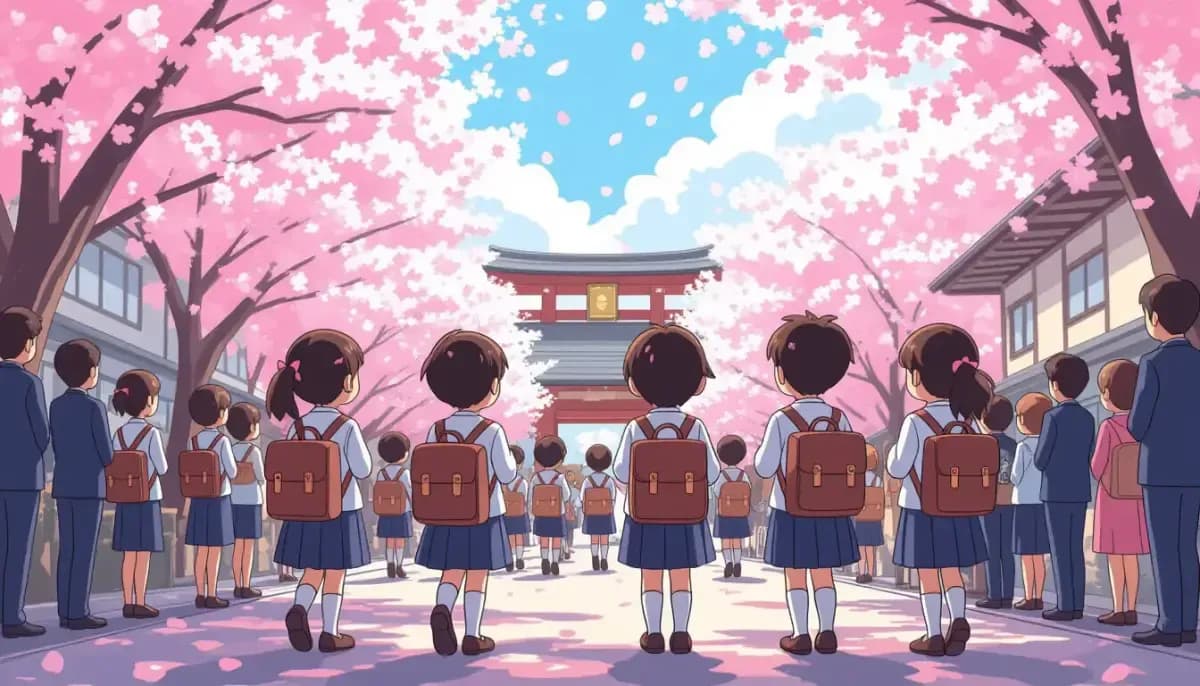
Everything foreign parents need to know about the first day of elementary school in Japan — the entrance ceremony, school supplies, enrollment, daily schedule, and tips for a smooth start.
First Day of Elementary School in Japan: What to Expect
Starting elementary school in Japan is a milestone filled with tradition, ceremony, and a few surprises for foreign families. Whether your child was born in Japan or you've recently relocated, the Japanese elementary school system has its own unique rhythm. This guide walks you through everything you need to know — from the entrance ceremony to the first school lunch — so you and your child can start this exciting chapter with confidence.
The Entrance Ceremony (Nyuugakushiki): Japan's Formal Welcome
In Japan, the first day of elementary school is not just a casual drop-off. It begins with a formal school entrance ceremony called the nyuugakushiki (入学式), held in early April, typically around 9 a.m. in the school gymnasium. This is one of the most important traditions in Japanese school life and marks your child's official entry into formal education.
Here is what typically happens during the ceremony:
- Older students and parents take their seats first, then welcome the new students with applause as they march in
- The national anthem (Kimigayo) is sung
- The principal (kouchou sensei) gives an opening address
- Vice principal, PTA president, and other teachers give remarks
- Homeroom teachers are formally introduced
- An older student gives a welcoming speech
- The school song is sung by older students
- Commemorative class photos are taken
The whole event, including travel, lasts approximately two hours. After the ceremony, children are led to their classrooms by their homeroom teacher (tannin sensei), and parents soon follow to receive important documents, school materials to label, and first instructions from the teacher.
For more guidance on navigating education in Japan as a foreign parent, see our Complete Guide to the Japanese Education System.
What to Wear: Dress Code for Parents and Children
Both children and parents are expected to dress formally for the entrance ceremony. This is a semi-formal to formal event — think a graduation or a wedding reception in terms of how seriously families take attire.
| Who | Recommended Attire |
|---|---|
| Father | Navy or gray suit, white dress shirt, necktipe, dress shoes |
| Mother | Dress with jacket, pantsuit, or blouse+skirt+jacket in navy, gray, black, white, or beige; low heels or flats; small clutch; pearls or flower brooch are common accessories |
| Child (Boy) | Jacket with shorts or long pants |
| Child (Girl) | Jacket with dress or skirt |
Important tips:
- Avoid bright colors and bold patterns — understated and formal is the norm
- Bring indoor shoes (uwabaki or slip-on slippers) for the gym
- Keep phones on silent during the ceremony
- Loud cheering is discouraged, but applause is always welcome
Essential Supplies: What Your Child Needs on Day One
Japanese elementary schools are meticulous about school supplies. Every item, from the backpack to the indoor shoes, has a specific standard. You will receive a detailed list at the school's pre-enrollment parents' meeting (usually held in February), but here are the core items most children need:
| Item | Notes |
|---|---|
| Randoseru (ランドセル) | Structured school backpack, avg. ¥40,000–¥60,000, expected to last all 6 years |
| Uwabaki (上履き) | Indoor shoes worn inside school buildings |
| Taiiku-gi (体育着) | Sports uniform for PE class |
| Tesage-bukuro (手提げ袋) | Large tote bag for carrying things home on Fridays |
| Handkerchief & tissues | Required daily items |
| Shitajiki (下敷き) | Writing board placed under notebook paper |
| Lunch apron & napkin | For lunch duty rotation |
| Subject supplies | Calligraphy sets, art supplies, abacus — added gradually |
A yellow safety hat is often provided by the school or city for use during walking commutes. Uniform policies vary: most public elementary schools do not require uniforms, but a sports uniform and yellow hat are common.
For more on what to prepare before your child enters school, see our Elementary School in Japan: A Complete Guide for Foreign Parents.
Enrollment for Foreign Families: Your Rights and How It Works
Foreign children in Japan have the right to enroll in public elementary school, though it is technically optional for non-Japanese nationals (compulsory education regulations technically apply only to Japanese citizens). In practice, the vast majority of foreign families enroll their children in the local public school.
Here is the enrollment process:
- Register your address at your local municipal office (shiyakusho or kuyakusho)
- Visit the Board of Education (kyouiku iinkai) to express intent to enroll
- Receive a school assignment based on your residential district
- Attend the pre-enrollment meeting in February, where you get the supply list and school information
- Attend the entrance ceremony in early April
All documents are in Japanese. If you need help, contact the Board of Education in advance — many offices can arrange an interpreter or refer you to multilingual support services. The Ministry of Education (MEXT) also provides a Guide for Foreign Students to Start School in multiple languages.
For help with visa and residency paperwork related to your children, see our Visa and Legal Issues for Foreign Families with Children in Japan guide.
The First School Day Schedule: What Actually Happens
After the entrance ceremony, regular school days begin. Japanese elementary school has a structured daily routine that most children adapt to quickly. Here is a sample schedule:
| Time | Activity |
|---|---|
| 8:00–8:20 | Arrive, put belongings away, morning chat time |
| 8:25–8:30 | Morning meeting (chore) |
| 8:30–12:00 | Morning classes (4 periods, ~45 min each) |
| 12:00–13:00 | Lunch (kyuushoku) — served and eaten in classroom |
| 13:00–13:20 | Cleaning duty (souji) — students clean classrooms and hallways |
| 13:20–15:00 | Afternoon classes (1–2 periods depending on day) |
| 15:00–15:30 | Homeroom, pack up, departure |
Key things to know:
- Children eat school lunch (kyuushoku) in the classroom — they take turns serving each other while wearing the lunch apron
- Everyone participates in daily cleaning — this is a core part of Japanese school culture
- Arriving by 8:20 is important so your child is ready for the morning meeting
School lunch costs approximately ¥4,000 per month. Public elementary school tuition is entirely free, and the government provides free textbooks. Families pay for lunch, PTA contributions, some materials, and extracurricular fees.
Language Support for Foreign Children
One of the most common concerns foreign parents have is language. Most public elementary schools offer some level of Japanese language support for non-native speakers, though the extent varies by school and municipality.
Support options may include:
- Pull-out Japanese language classes with specialized teachers
- Bilingual teaching assistants in larger cities with significant foreign populations
- Volunteer support programs organized by local NPOs or international associations
- Translation of key documents into English or other languages
Children who receive language support from the start generally integrate well and achieve academic parity with peers over time. Don't hesitate to request support before or on the first day — schools are required to accommodate foreign students.
For strategies on helping your child thrive bilingual, visit our guide on Raising Bilingual Children in Japan.
!Randoseru school backpack and school supplies for Japanese elementary school first day
Tips for a Smooth First Day: Practical Advice for Foreign Parents
Here are some practical tips to make the first day of elementary school in Japan go smoothly:
- Visit the school route in advance — walk the commute with your child so they know the way. Many children walk to school in groups (tohan).
- Label everything — Japanese schools require every item to be clearly labeled with your child's full name. Bring a black permanent marker to the entrance ceremony.
- Bring lots of bags — you will bring home an enormous amount of paperwork, textbooks, and labeled supplies at the entrance ceremony. Bring 2–3 large tote bags.
- Contact the school in advance if you need help — if your Japanese is limited, reach out before April to ask about interpreter services or translated materials.
- Practice indoor shoe changes — children must swap outdoor shoes for uwabaki when entering school buildings. Practicing this at home avoids confusion on day one.
- Join the PTA — participating in school community activities helps you stay informed and build relationships with other parents.
For broader advice on raising children in Japan as a foreign parent, the team at Living in Nihon has an excellent guide covering education from birth through university. You may also find helpful resources on the For Work in Japan Family Life Guide and at Chuukou Benkyou for thinking ahead to middle school examinations.
Financial Costs: What to Budget for Elementary School
While public school tuition is free, starting elementary school in Japan involves upfront costs. Here is a realistic budget breakdown:
| Expense | Estimated Cost |
|---|---|
| Randoseru (school backpack) | ¥30,000–¥80,000 |
| Uwabaki (indoor shoes) | ¥1,500–¥3,000 |
| Sports uniform | ¥3,000–¥6,000 |
| Stationery and supplies | ¥5,000–¥10,000 |
| Calligraphy set, art supplies | ¥3,000–¥6,000 |
| Monthly school lunch | ~¥4,000/month |
| PTA fees | ¥2,000–¥5,000/year |
Many families spend ¥50,000–¥100,000 getting their child fully equipped for elementary school. Some municipalities offer subsidies for low-income families (shugaku enjosei), so check with your local Board of Education if finances are a concern.
For detailed advice on managing education costs in Japan, see our Financial Planning for Expat Families Raising Children in Japan guide. Additional resources are available from e-housing.jp's guide to school schedules and costs and Japan Living Guide's enrollment walkthrough.
Conclusion
The first day of elementary school in Japan is a meaningful and ceremonious occasion. For foreign families, it can feel overwhelming — but with the right preparation, it is also an exciting opportunity for your child to join a new community and culture. Understand the ceremony, prepare the supplies, connect with the school's support resources, and give your child the tools to thrive. Japan's elementary schools are safe, structured, and deeply community-oriented environments where most children — including foreign children — adjust and flourish.
Related guides to continue your journey:

Originally from Vietnam, living in Japan for 16+ years. Graduated from Nagoya University, with 11 years of professional experience at Japanese and international companies. Sharing practical information for foreign parents raising children in Japan.
View Profile →Related Articles
Elementary School Graduation Ceremony in Japan
Everything foreign parents need to know about Japan's elementary school graduation ceremony (sotsugyo-shiki): ceremony format, dress code, songs, traditions, and tips for expats.
Read more →
Swimming Lessons at Japanese Elementary Schools
Complete guide to swimming lessons at Japanese elementary schools: schedule, required gear, exemptions, grading, and tips for foreign parents navigating suiei season.
Read more →
Music and Arts Education in Japanese Elementary Schools
A complete guide for foreign families on music and arts education in Japanese elementary schools. Learn what subjects are taught, what instruments children use, school festivals, and practical tips for expat parents.
Read more →
Moral Education (Doutoku) at Japanese Elementary Schools
A complete guide to Doutoku (道徳), Japan's moral education class, for foreign parents. Learn what's taught, how classes work, and how to support your child.
Read more →
School Field Trips and Excursions in Japanese Elementary Schools
Everything foreign parents need to know about school field trips in Japanese elementary schools — ensoku day trips, shugakuryoko overnight trips, costs, packing lists, and cultural significance.
Read more →
Parent-Teacher Meetings at Japanese Elementary Schools
A complete guide for foreign parents on navigating parent-teacher meetings at Japanese elementary schools: types, what to expect, language tips, and how to prepare.
Read more →