
Music and Arts Education in Japanese Elementary Schools

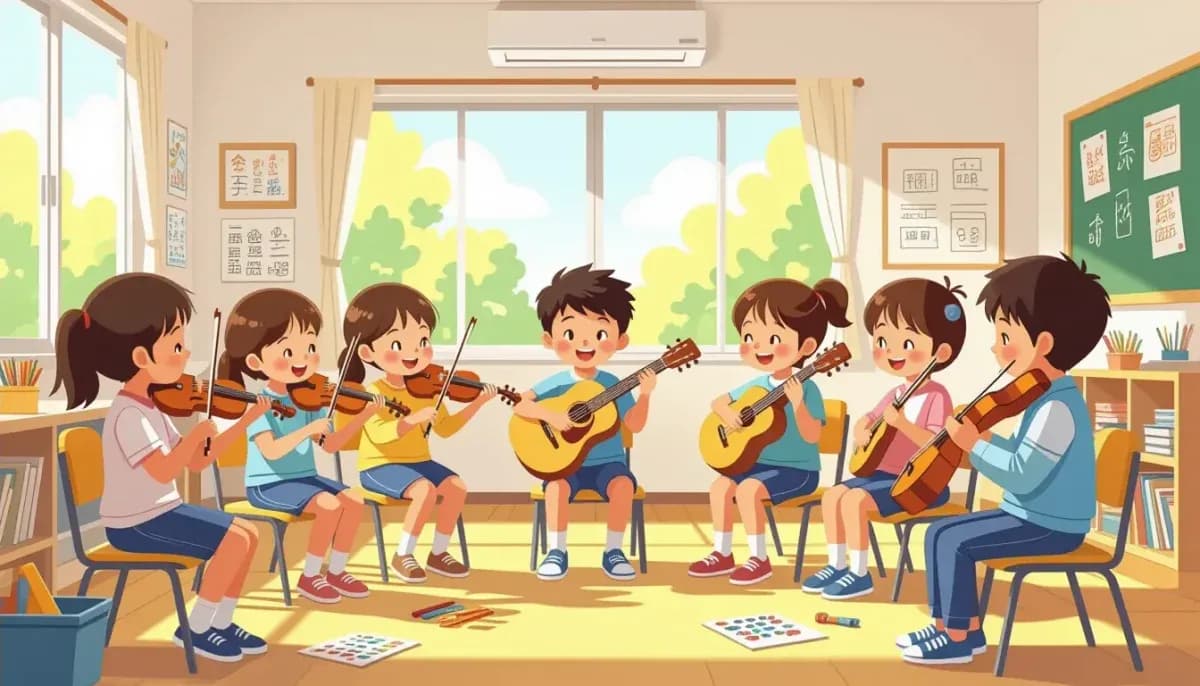
A complete guide for foreign families on music and arts education in Japanese elementary schools. Learn what subjects are taught, what instruments children use, school festivals, and practical tips for expat parents.
Music and Arts Education in Japanese Elementary Schools: A Complete Guide for Foreign Families
If your child is attending — or about to attend — a Japanese elementary school, you may be wondering what to expect from music and arts lessons. These subjects are far from afterthoughts in Japan. Under the national curriculum set by the Ministry of Education, Culture, Sports, Science and Technology (MEXT), music (ongaku 音楽) and arts & crafts (zukōka 図工科) are compulsory core subjects throughout all six years of elementary school. For foreign parents, understanding what your child will experience in these classes can help you prepare them, appreciate their school life, and even engage more meaningfully at home.
This guide covers everything you need to know about music and arts education in Japanese elementary schools — from the curriculum content and teaching philosophy to practical tips for expat families.
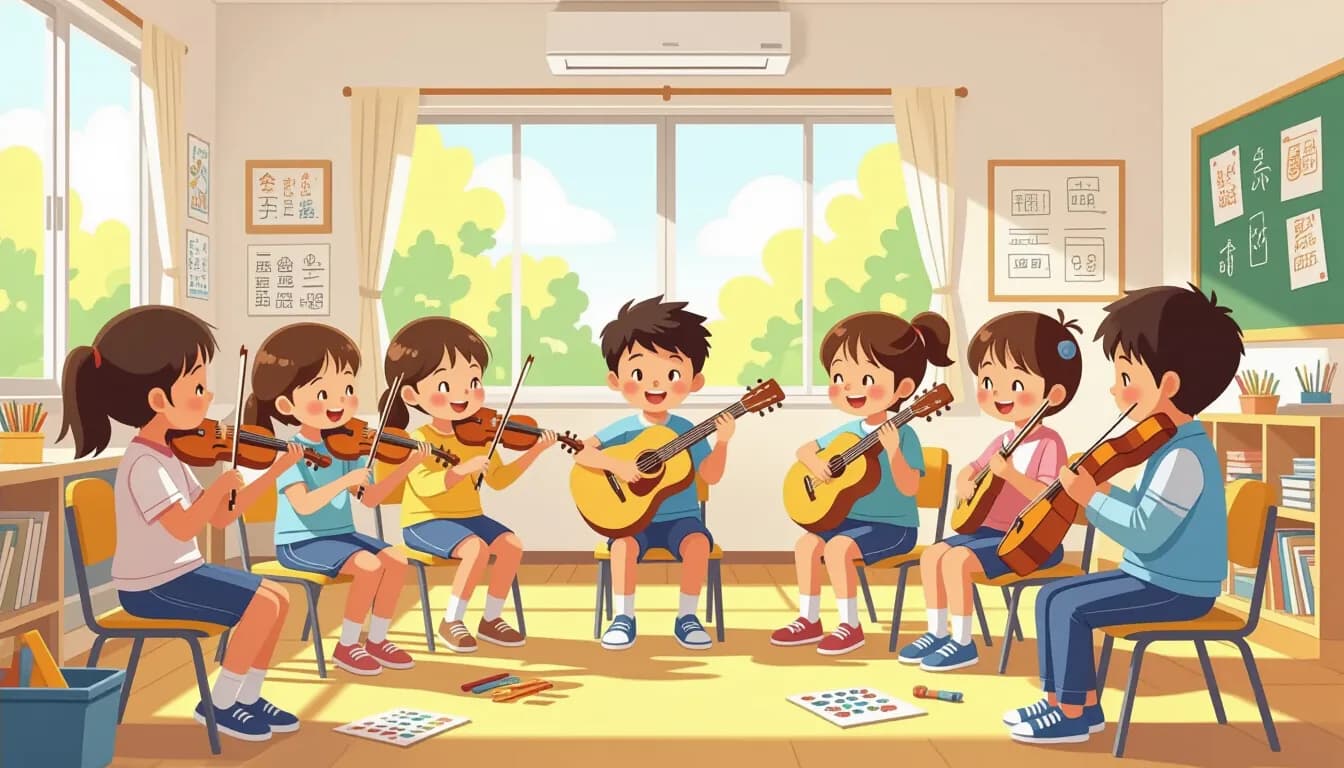
Music Education in Japanese Elementary Schools (音楽)
Music is a compulsory subject in every grade of Japanese elementary school. The curriculum is designed to give children a broad and balanced experience of music — both as performers and as appreciative listeners.
What Children Learn in Music Class
In the early grades (1st and 2nd), children focus on singing simple songs, basic rhythm exercises, and listening activities. By 3rd and 4th grade, they begin learning to play the recorder (recōdā リコーダー), which is a staple instrument of the Japanese elementary music curriculum. Students are expected to develop real proficiency on the recorder, and many families purchase their child's own instrument at the start of 3rd grade.
Another uniquely Japanese instrument found in elementary music classes is the keyboard harmonica, known as the pianica (ピアニカ) or melodica (鍵盤ハーモニカ). Used from 1st grade onwards, it teaches children keyboard technique and note reading in a portable, affordable format. Your child will likely need to buy one before entering 1st grade — check with the school for the specific brand and model required.
Beyond instruments, the music curriculum includes:
- Singing (shōka 唱歌): Seasonal and traditional Japanese songs, as well as simple Western songs
- Music theory: Reading basic music notation, understanding tempo, dynamics, and rhythm
- Music appreciation (kanshō 鑑賞): Listening to and discussing classical and world music
- Ensemble playing: Group recorder and percussion activities build teamwork
For more on navigating Japanese elementary school life as a foreign parent, see our full Elementary School in Japan guide.
Arts and Crafts Education in Japanese Elementary Schools (図工科)
Arts and crafts (zukōka) is taught with the same seriousness as music. The subject is broadly split into two activities: making and expressing (tsukutte arawasu) and experiencing and appreciating (mite kanjiiru).
What Children Create in Art Class
The arts curriculum progresses in complexity as children move through the grades:
| Grade | Focus Areas | Typical Projects |
|---|---|---|
| 1–2 | Sensory exploration, free expression | Finger painting, clay pinch pots, collage |
| 3–4 | Basic technique, tool use | Watercolors, block printing, cardboard constructions |
| 5–6 | Design thinking, mixed media | Oil pastels, woodblock carving, wire sculpture |
Children work with a wide range of materials: watercolor and acrylic paints, clay, wire, cardboard, fabric scraps, and recycled objects. Schools typically provide most supplies, but you may be asked to bring specific items — always check the school's annual supply list (gakkyū tsūshin).
Art appreciation (kanshō) is woven throughout the curriculum. Children look at and discuss famous artworks from both Japanese and Western traditions, learning to articulate what they see and feel. This visual literacy is considered an essential life skill.
For guidance on raising well-rounded bilingual children in Japan, read our article on Raising Bilingual Children in Japan.
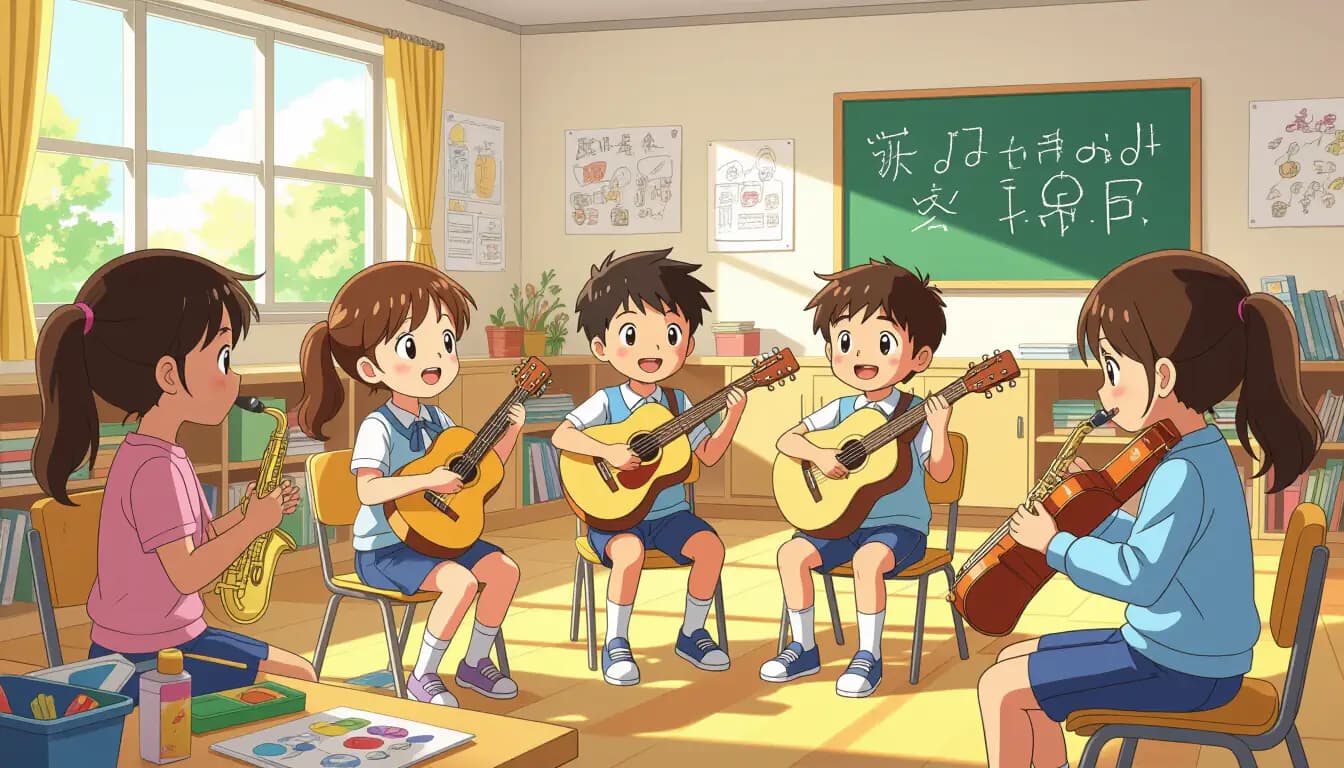
The Philosophy Behind Arts Education in Japan
Japanese education is rooted in the concept of zenjin kyōiku (全人教育) — the education of the "whole person." This philosophy holds that intellectual, emotional, physical, and creative development are equally important and deeply interconnected.
Music and arts education are not viewed as "extras" that can be cut when academic pressure rises. Instead, they are seen as essential paths to developing:
- Emotional expression and self-awareness: Children learn to express feelings and ideas that go beyond words
- Concentration and persistence: Mastering an instrument or completing an artwork takes sustained effort
- Aesthetic sensibility: Appreciation of beauty and craftsmanship is deeply valued in Japanese culture
- Teamwork and social harmony: Ensemble music performances and cooperative art projects reinforce group values
This philosophy explains why Japanese students score high on creative tasks in international assessments and why arts education remains robust despite pressures from academic subjects. You can learn more about the broader educational framework in our Complete Guide to the Japanese Education System.
School Events: Where Music and Art Shine
One of the most memorable aspects of Japanese elementary school life for foreign families is the showcase events where children display their music and arts accomplishments.
Gakugeikai / Bunkasai (School Arts Festival)
Most elementary schools hold an annual arts festival (gakugeikai 学芸会 or bunkasai 文化祭), typically in autumn. Students perform music pieces — often full ensemble or choir performances — and display artwork made during the year. These events are a huge source of pride for children and parents alike. Expect to be moved by the level of preparation and performance quality.
Music Club Activities (4th Grade and Up)
From 4th grade, Japanese elementary schools offer club activities (kurabu katsudō) after school. Music-related clubs commonly include:
- Choir club (gasshoubu): Prepares for competitions and seasonal concerts
- Brass band (suisougaku bu): One of the most popular and competitive clubs; students may participate in regional brass band contests
- Arts and crafts club: Explores creative projects beyond the regular curriculum
Participation in brass band is particularly intense — some schools practice daily and compete at prefectural and national levels. If your child shows musical aptitude and enthusiasm, this can be a wonderful opportunity for growth and belonging.
Practical Tips for Foreign Families
Navigating music and arts education as a foreign family requires some preparation. Here are practical things to keep in mind:
Required Instruments and Supplies
Every child is expected to have their own instruments and art supplies. Standard purchases include:
- Keyboard harmonica / pianica: Usually required before or at the start of 1st grade (¥3,000–¥6,000)
- Recorder: Required at the start of 3rd grade (¥1,500–¥3,000)
- Watercolor paint set: Typically 3rd grade (¥1,000–¥2,000)
- Colored pencils / oil pastels: Various grades
Schools usually send a supply list home in April at the start of the year. If you cannot read Japanese, use a translation app or ask another parent. Some schools have a used-goods exchange or parent support network — don't hesitate to ask.
Language Barriers in Music Theory
Music theory classes — particularly reading notation — are taught in Japanese. While the practical skills (playing an instrument, painting) transfer easily regardless of language, your child may initially struggle with written worksheets and verbal instructions. Encourage them by:
- Practicing the recorder or pianica at home (free practice apps are available)
- Watching short YouTube videos on music notation in your home language
- Asking the homeroom teacher (tantō kyōshi) for bilingual support materials if available
Many foreign children adapt quickly because music and art are largely sensory and physical experiences that transcend language barriers.
Communicating with Teachers
Japanese elementary school teachers typically communicate with parents through the school notebook (renrakuchō 連絡帳). If your child needs accommodation — for example, cannot bring a certain material for cultural or religious reasons — write a note to the teacher. Most teachers are accommodating when approached respectfully. For deeper guidance on navigating school communications, our Elementary School in Japan guide covers the full landscape.
For broader context on raising children in Japan as a foreigner, the team at Living in Nihon has an excellent comprehensive guide to childcare and education in Japan covering everything from daycare through university.
Music and Arts Education Compared: Japan vs. Other Countries
Foreign parents often wonder how Japan's approach compares to what they're used to at home. Here's a general comparison:
| Aspect | Japan | United States | UK | Australia |
|---|---|---|---|---|
| Music as compulsory subject | Yes (all 6 years) | Varies by state/school | Yes (KS1 & KS2) | Yes (F-6) |
| Standard instrument (primary school) | Recorder + Keyboard Harmonica | Varies | Recorder | Varies |
| Arts & Crafts weekly time | ~2 hrs/week | ~1 hr/week | ~1.5 hrs/week | ~1–2 hrs/week |
| School music performances | Annual school festival | School concerts | School concerts | School concerts |
| Club-level brass band | Very common, competitive | Less common | Less common | Less common |
Japan's investment in elementary music and arts education is notably consistent and high compared to many other countries, driven by national curriculum requirements rather than individual school discretion.
Resources for Foreign Families
Understanding the Japanese education system deeply enriches your family's experience. Here are some useful resources:
- MEXT Curriculum Guidelines: The official MEXT Courses of Study page provides English-language overviews of what each subject covers at each grade level
- Understanding the Japanese school system: JoynTokyo's guide gives a clear overview of how the Japanese school system works for foreigners
- Working and living in Japan: If you're a working expat in Japan, For Work in Japan has resources on working in education and other sectors
- Japanese study support: For families who want to help their children succeed academically in Japanese schools, Chuukou Benkyou offers study resources
Also explore these related guides on our site:
- Junior High School in Japan — what to expect when your child transitions
- Cultural Identity for Hafu and Mixed-Race Children — navigating identity through cultural activities
- Teaching Japanese to Foreign Children — language support strategies
Conclusion
Music and arts education in Japanese elementary schools is rich, structured, and deeply meaningful. Your child will learn to play instruments, create visual art, appreciate cultural works, and perform in front of audiences — all within a nurturing, community-focused environment. As a foreign parent, the main things you need to do are purchase the required instruments on time, stay curious about what your child is creating and performing, and attend every school festival you can. These experiences will be among the most memorable of your child's educational journey in Japan.

Originally from Vietnam, living in Japan for 16+ years. Graduated from Nagoya University, with 11 years of professional experience at Japanese and international companies. Sharing practical information for foreign parents raising children in Japan.
View Profile →Related Articles
Elementary School Graduation Ceremony in Japan
Everything foreign parents need to know about Japan's elementary school graduation ceremony (sotsugyo-shiki): ceremony format, dress code, songs, traditions, and tips for expats.
Read more →
Swimming Lessons at Japanese Elementary Schools
Complete guide to swimming lessons at Japanese elementary schools: schedule, required gear, exemptions, grading, and tips for foreign parents navigating suiei season.
Read more →
Moral Education (Doutoku) at Japanese Elementary Schools
A complete guide to Doutoku (道徳), Japan's moral education class, for foreign parents. Learn what's taught, how classes work, and how to support your child.
Read more →
School Field Trips and Excursions in Japanese Elementary Schools
Everything foreign parents need to know about school field trips in Japanese elementary schools — ensoku day trips, shugakuryoko overnight trips, costs, packing lists, and cultural significance.
Read more →
Parent-Teacher Meetings at Japanese Elementary Schools
A complete guide for foreign parents on navigating parent-teacher meetings at Japanese elementary schools: types, what to expect, language tips, and how to prepare.
Read more →
Cleaning Time (Souji): Why Japanese Students Clean Their Schools
Learn why Japanese students clean their own schools every day. Discover how souji works, its cultural roots in Buddhism and Shinto, educational benefits, and what foreign parents need to know.
Read more →