
Cleaning Time (Souji): Why Japanese Students Clean Their Schools

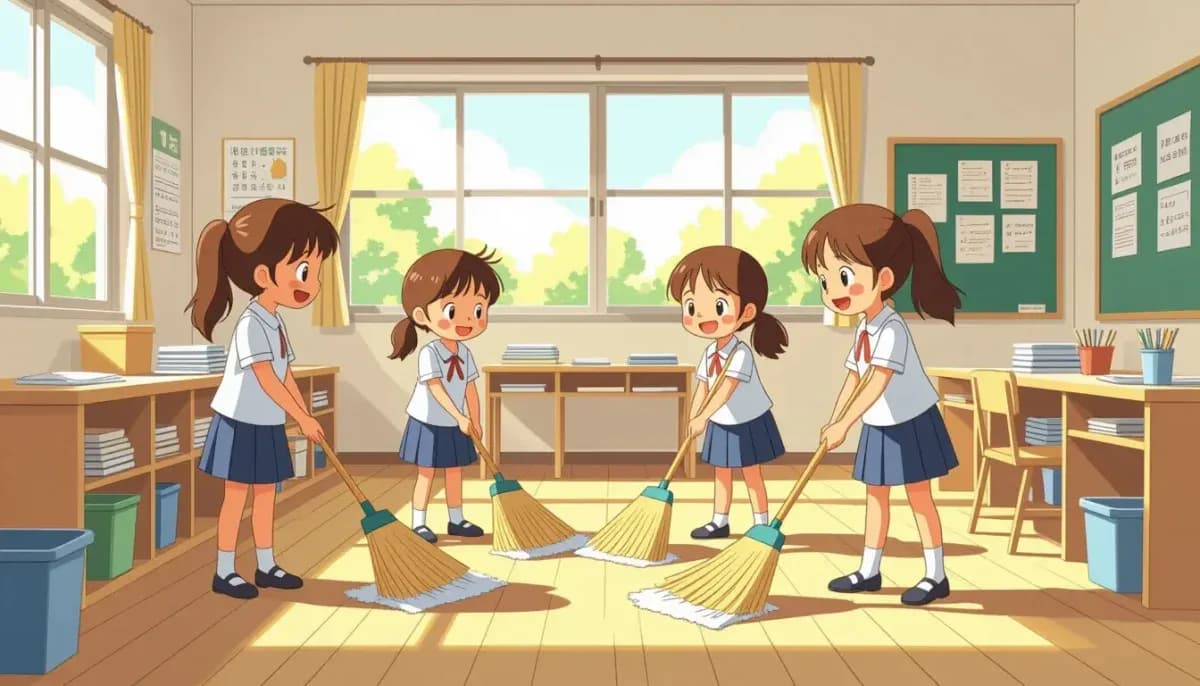
Learn why Japanese students clean their own schools every day. Discover how souji works, its cultural roots in Buddhism and Shinto, educational benefits, and what foreign parents need to know.
Cleaning Time (Souji): Why Japanese Students Clean Their Schools
If you're a foreign parent or expat living in Japan, watching your child come home and talk about cleaning the school toilets might raise an eyebrow. In most Western countries, custodial staff take care of school maintenance — students just attend class. But in Japan, student-led cleaning (souji) is a cornerstone of the education system, and it's been that way for decades. This guide explains what souji is, how it works, and why it's actually one of the most powerful aspects of Japanese schooling that your child will experience.
What Is Souji? The Basics of Japanese School Cleaning
Souji no jikan (掃除の時間) literally means "cleaning time." It is a scheduled part of the daily school routine in virtually every Japanese public school, from elementary through high school. Unlike in many other countries where professional janitors handle school maintenance, Japanese students take responsibility for keeping their school clean themselves.
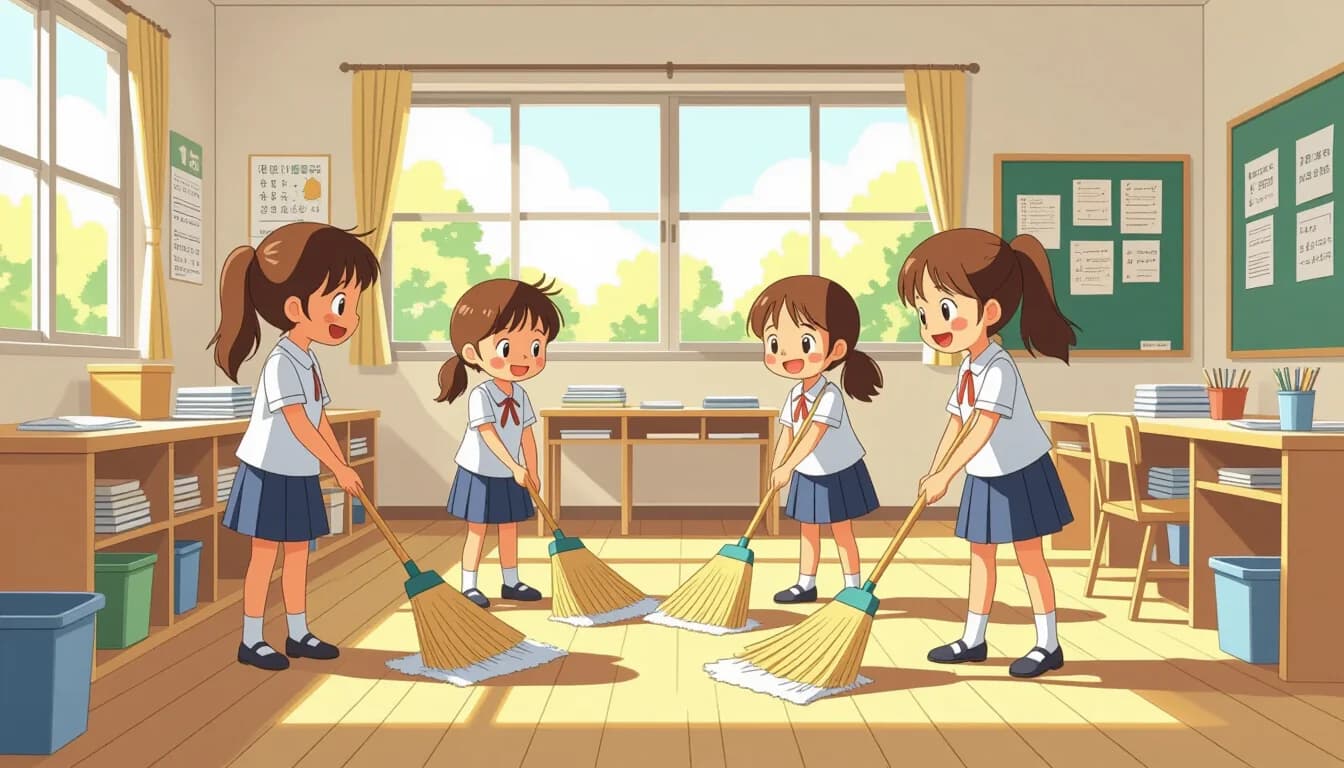
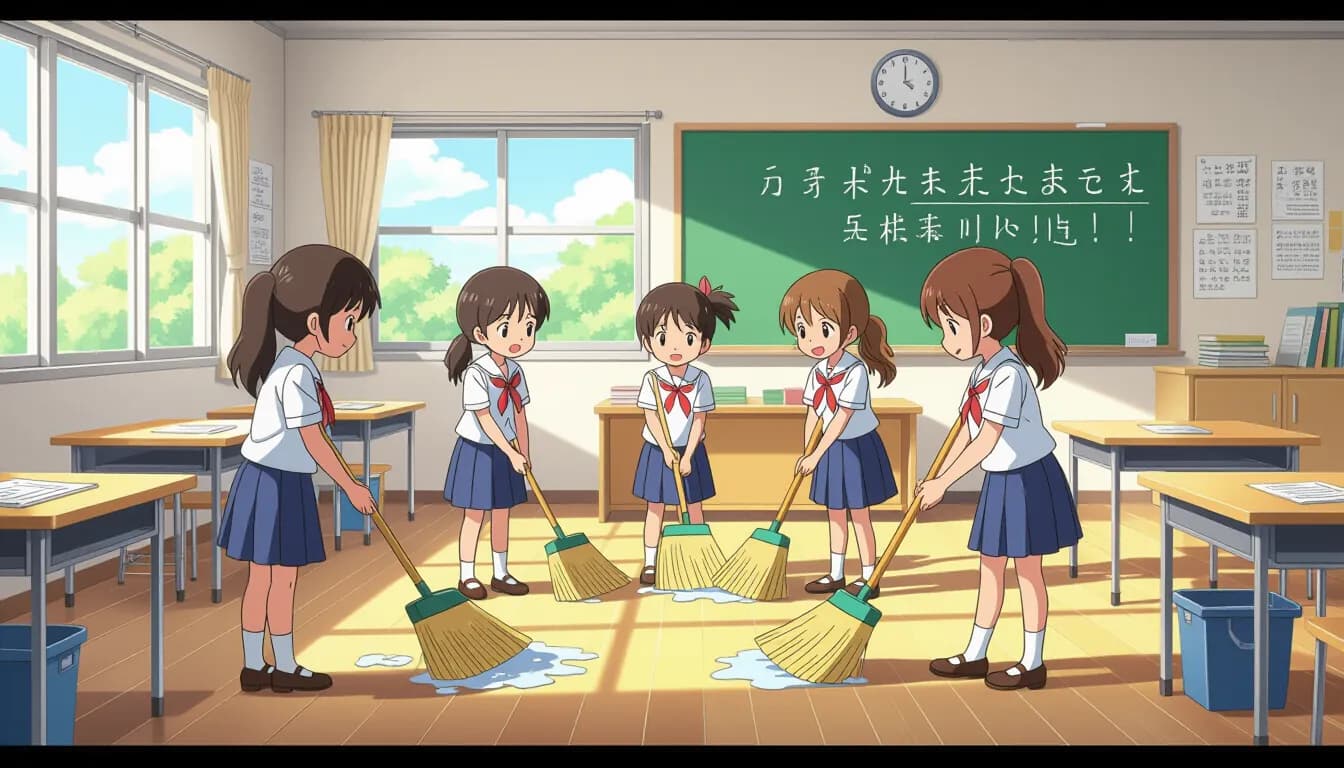
This is not a punishment, nor is it extra-curricular. Souji is embedded into the official school schedule, typically occurring right after lunch. Students grab brooms, rags, dustpans, and mops — and get to work. Teachers participate too, modeling the behavior they expect from students.
The concept is sometimes called gakko soji (学校掃除), or school cleaning, and it reflects deeply held Japanese values around collective responsibility, respect for shared spaces, and character development through practical action.
For foreign families new to Japan, souji can feel surprising at first. But most expat parents quickly come to appreciate it as one of the most grounding and culturally rich experiences their child can have in a Japanese school. For more on what to expect from Japanese elementary school overall, see our Complete Guide to Elementary School in Japan for Foreign Parents.
How Souji Works: The Daily Schedule and Structure
Souji typically takes place 4 days a week, usually after the lunch period. The session lasts between 15 and 30 minutes, depending on the school and grade level. The routine is consistent and structured, not chaotic.
Here's a typical souji flow:
- Signal begins — a chime or music plays over the school PA system, signaling the start of cleaning time. Schools often play classical music or cheerful marching tunes during this period.
- Groups form — students move to their assigned cleaning areas based on pre-set group assignments.
- Cleaning begins — each group works on their designated space for the allotted time.
- Signal ends — cleaning time concludes, students return materials and wash hands before afternoon classes.
The Han System: Cleaning Groups and Rotation
Students are organized into small groups called han (班). Each han is responsible for a specific area of the school, and these assignments rotate on a weekly basis so that every student gets the chance to clean different parts of the building over the course of the year.
Typical areas assigned to student groups include:
- Their own classroom (desks, floors, windows, blackboard area)
- School hallways and corridors
- Staircases
- Toilets and bathroom facilities
- The school library, nurse's office, or other shared rooms
- Outdoor areas and schoolyard
One of the most notable aspects of the han system is that older students often guide younger ones. Sixth-graders are frequently paired with first-graders, creating natural cross-age mentorship opportunities. This helps younger students learn the proper techniques while older students develop leadership and patience.
Comparison: Japanese School Cleaning vs. Other Countries
| Feature | Japan (Souji) | USA / Europe / Australia |
|---|---|---|
| Who cleans | Students + teachers | Hired custodial staff |
| Frequency | Daily (4-5x per week) | As needed by staff |
| Duration | 15–30 minutes | N/A for students |
| Areas covered | Classrooms, halls, toilets, yards | All school areas |
| Cross-age mentoring | Yes (older guides younger) | Rarely |
| Cultural/educational value | Explicitly educational | Not educational in purpose |
| Community cleanups | Yes (3x/year, neighborhood) | Rare |
This stark contrast highlights why souji often surprises foreign families. In Japan, the school itself is seen as a shared community space — and everyone who uses it is responsible for maintaining it.
The Cultural Roots of Souji: Buddhism, Shinto, and Japanese Values
Souji is not a modern invention. Its roots stretch back centuries, deeply tied to Japanese spiritual traditions.
In Zen Buddhism, the act of cleaning is not merely physical — it is considered a form of practice and spiritual discipline. Monks sweep temple courtyards and scrub floors as part of their training, not just for hygiene but to cultivate mindfulness, humility, and a clear mind. This philosophy, sometimes called soji in the Zen context, became integrated into Japanese culture broadly.
Similarly, Shinto traditions emphasize purity and cleanliness as spiritual virtues. The act of cleaning a space is seen as purifying it — maintaining harmony between the physical environment and the people who inhabit it.
These values filtered naturally into the Japanese education system. The purpose of gakko soji, according to educational researchers, is not simply to keep buildings clean — it is to cultivate:
- A sense of social duty and responsibility
- Respect for law, rules, and shared spaces
- The habits of a functional member of society
- Well-mannered behavior in communal settings
For more on how Japanese education philosophy shapes school life, see our Complete Guide to the Japanese Education System for Foreign Families.
Educational Benefits of Souji: What Your Child Actually Learns
Beyond the obvious result of a clean school, souji delivers a remarkable range of developmental benefits that researchers and educators have documented:
1. Responsibility and Ownership
When students clean their own space, they develop a direct relationship between their actions and their environment. If someone makes a mess, they understand it will be their — or their classmates' — job to clean it up. This creates a natural incentive to be tidy and considerate.
2. Teamwork and Cooperation
Cleaning requires coordination. Students must divide tasks, communicate, and cooperate to finish on time. The han system builds genuine team dynamics that carry over into academic group work and social relationships.
3. Humility and Work Ethic
In Japan, no task is considered beneath anyone. Principals clean alongside students. Teachers mop floors. This shared labor removes social hierarchies around physical work and instills respect for all types of effort. Children grow up understanding that hard work — whether intellectual or physical — has equal dignity.
4. Mindfulness and Focus
The rhythmic, repetitive nature of cleaning — sweeping, wiping, scrubbing — has a meditative quality that helps students transition mentally between the lunch break and afternoon study. Many teachers note that students are calmer and more focused in the afternoon after souji.
5. Pride in Community Spaces
Studies on Japanese education note that students who participate in souji develop strong ownership and pride in their school environment. Vandalism and littering rates in Japanese schools are notably low — a natural outcome of students caring for what they maintain.
6. Cross-Generational Mentoring
The pairing of younger and older students creates peer mentoring bonds that build empathy, patience, and leadership in older children while giving younger children positive role models beyond their immediate family.
Souji Beyond the Classroom: Neighborhood Cleanups
The spirit of souji doesn't stop at the school gate. Three times per year, third graders and older students participate in chiiki seiso (地域清掃) — neighborhood cleanups where they clean the streets and public areas surrounding the school.
This practice extends the lesson of communal responsibility from the school to the broader community. Research suggests that students who participate in chiiki seiso are less likely to litter as teenagers and adults, having internalized a genuine sense of civic duty rather than just following rules.
This community engagement is one reason why Japanese public spaces — streets, parks, train stations — tend to be remarkably clean despite a relative scarcity of public trash cans.
Do Japanese Schools Have Janitors? Clearing Up a Common Myth
A common misconception is that Japanese schools have no cleaning staff at all. In reality, most Japanese schools do employ yomushuji (用務主事) or similar maintenance staff who handle:
- Deep cleaning and periodic maintenance
- Repairs and facility upkeep
- Cleaning tasks beyond students' physical capability (e.g., high windows, plumbing)
- Groundskeeping
The key distinction is that routine daily cleaning — wiping desks, sweeping floors, cleaning bathrooms — is the responsibility of students, not staff. This intentional division ensures that souji remains an educational practice rather than a substitute for adult labor.
What Foreign Parents and Children Should Know About Souji
If your child is starting school in Japan, here's what to prepare them for:
It's completely normal and universal. All Japanese students do it, from first grade through high school. Your child won't be singled out as a foreigner — everyone participates equally.
Bring appropriate shoes and clothes on cleaning days. Most schools have designated cleaning cloths (zokin/雑巾) that children are expected to have. Schools usually inform parents when these are needed — check the school newsletter or communication app.
Encourage your child to participate fully. Souji is a prime opportunity for your child to bond with classmates. It creates natural, low-pressure interaction that doesn't require advanced Japanese language skills — cleaning alongside someone is a universal human activity.
Your child may clean toilets. Yes, really. This is a deliberate part of the curriculum and one of the most frequently cited examples of how souji builds humility. Toilet cleaning is rotated fairly among all students.
Teachers clean too. If your child seems reluctant, reassure them that even teachers pick up brooms. The whole school community participates together.
For broader advice on helping your child settle into Japanese school life, our Junior High School in Japan Guide for Foreign Families has additional cultural context.
Souji's Global Influence: A Model Other Countries Are Adopting
Japan's approach to student-led cleaning has attracted international attention. The practice has spread to schools in the Philippines, India, and parts of Africa, where educators have adopted similar programs to foster responsibility and reduce vandalism.
Educational researchers worldwide have noted that student cleaning programs tend to:
- Reduce school damage and vandalism
- Lower maintenance costs for schools
- Improve student attitudes toward communal property
- Strengthen community bonds within the school
The HUNDRED education innovation platform has documented Japan's cleaning tradition as an exemplary model of holistic education that builds life skills alongside academic knowledge.
For expats considering Japanese schooling for their children, souji is often cited — by parents and students alike — as one of the most memorable and character-shaping aspects of the Japanese school experience.
For more information on school culture and the Japanese education system, explore these resources:
- Living in Nihon: Elementary School in Japan Guide
- For Work in Japan — resources for expats navigating Japanese life
- Chuukou Benkyou — education resources for students in Japan
- Shin Edupower: Cleaning Time in Japanese Schools — detailed educational analysis
- BrightVibes: Why Japanese Students Clean Their Classrooms
Summary: Why Souji Matters for Your Child
Souji is far more than a cleaning routine. It is a carefully designed educational practice that teaches Japanese children — including your own — some of life's most essential lessons: how to work together, how to take responsibility, how to care for shared spaces, and how to find dignity in every kind of work.
For foreign families raising children in Japan, souji is an invitation to embrace one of the most distinctive and valuable aspects of Japanese education philosophy. Rather than seeing it as an inconvenience or a novelty, most expat parents who reflect on the experience recognize it as one of the gifts Japanese schooling gave their children.
Your child may come home with clean hands and a sweaty brow — but they'll also be developing character in ways that will serve them for life.
Related articles:

Originally from Vietnam, living in Japan for 16+ years. Graduated from Nagoya University, with 11 years of professional experience at Japanese and international companies. Sharing practical information for foreign parents raising children in Japan.
View Profile →Related Articles
Elementary School Graduation Ceremony in Japan
Everything foreign parents need to know about Japan's elementary school graduation ceremony (sotsugyo-shiki): ceremony format, dress code, songs, traditions, and tips for expats.
Read more →
Swimming Lessons at Japanese Elementary Schools
Complete guide to swimming lessons at Japanese elementary schools: schedule, required gear, exemptions, grading, and tips for foreign parents navigating suiei season.
Read more →
Music and Arts Education in Japanese Elementary Schools
A complete guide for foreign families on music and arts education in Japanese elementary schools. Learn what subjects are taught, what instruments children use, school festivals, and practical tips for expat parents.
Read more →
Moral Education (Doutoku) at Japanese Elementary Schools
A complete guide to Doutoku (道徳), Japan's moral education class, for foreign parents. Learn what's taught, how classes work, and how to support your child.
Read more →
School Field Trips and Excursions in Japanese Elementary Schools
Everything foreign parents need to know about school field trips in Japanese elementary schools — ensoku day trips, shugakuryoko overnight trips, costs, packing lists, and cultural significance.
Read more →
Parent-Teacher Meetings at Japanese Elementary Schools
A complete guide for foreign parents on navigating parent-teacher meetings at Japanese elementary schools: types, what to expect, language tips, and how to prepare.
Read more →