
Elementary School Graduation Ceremony in Japan

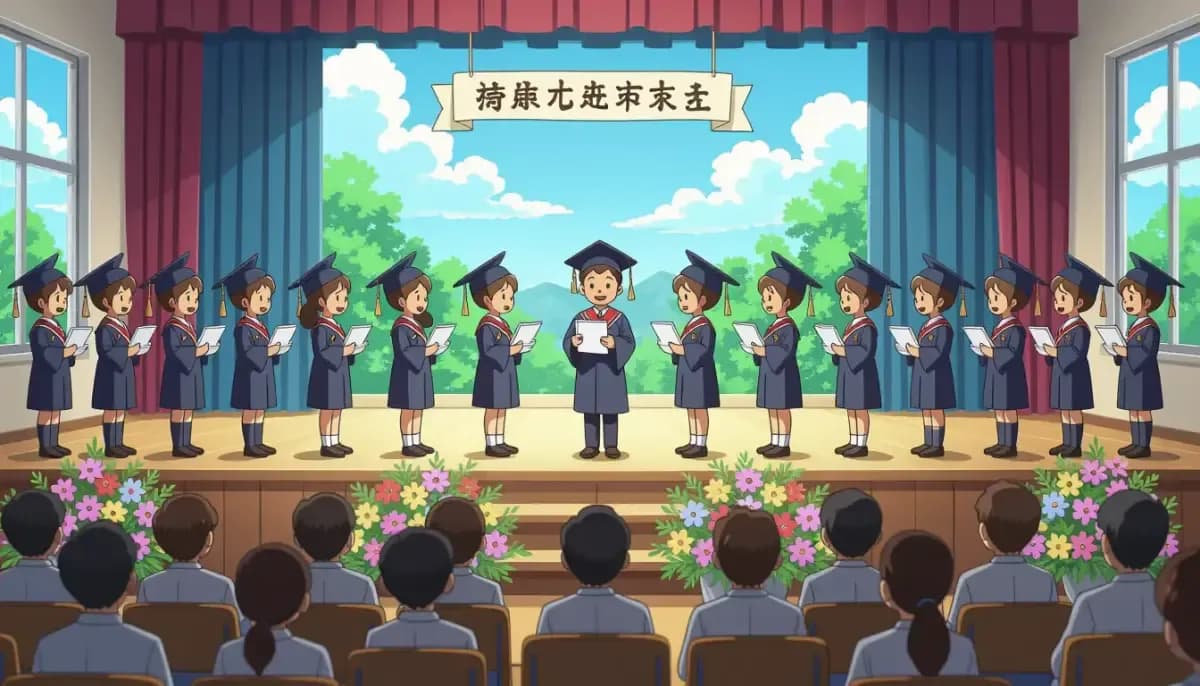
Everything foreign parents need to know about Japan's elementary school graduation ceremony (sotsugyo-shiki): ceremony format, dress code, songs, traditions, and tips for expats.
Elementary School Graduation Ceremony in Japan: A Complete Guide for Foreign Parents
Watching your child graduate from elementary school in Japan is one of the most memorable moments of expat family life. The Japanese elementary school graduation ceremony — known as sotsugyo-shiki (卒業式) — is a deeply emotional, highly formal event that marks the end of six years of schooling. For foreign parents, knowing what to expect, how to dress, and how the ceremony unfolds can help you fully appreciate this meaningful milestone without any surprises.
This guide covers everything you need to know about the elementary school graduation ceremony in Japan, from the ceremony structure and music to dress codes and post-ceremony traditions.
What Is the Sotsugyo-Shiki (卒業式)?
The word sotsugyo-shiki (卒業式) literally means "graduation ceremony." In Japan's public school system, the academic year ends in March and begins again in April. Elementary school graduation marks the completion of 6th grade (小学6年生), after which students move on to junior high school (中学校).
The ceremony is held in mid-to-late March, and schools within the same school district often coordinate their ceremony dates so they fall on the same day. This means all 6th graders in a given area graduate together — a sign of the collective, community-centered nature of Japanese education.
Unlike many Western graduation ceremonies that feel like celebrations with confetti and music, the Japanese sotsugyo-shiki is solemn, formal, and deeply emotional. Students, parents, and teachers alike often shed tears. For foreign parents attending for the first time, this atmosphere can be unexpectedly moving.
For broader context on the Japanese public school system, see our guide on Elementary School in Japan: A Complete Guide for Foreign Parents and the Complete Guide to the Japanese Education System for Foreign Families.
When and Where Is the Ceremony Held?
| Detail | Information |
|---|---|
| Timing | Mid-to-late March (typically the 3rd week) |
| Location | School gymnasium (体育館, taiikukan) |
| Duration | Approximately 2 hours |
| Who attends | Graduating 6th graders, all other students, parents, teachers, PTA representatives, invited guests |
| Dress code | Formal (suits, kimono, or dresses) |
The gymnasium is transformed for the occasion. Red-and-white drapes, floral arrangements, and banners decorate the space. Chairs are laid out in rows — graduates at the front, remaining students behind, and parents seated at the back or sides.
The Ceremony Program: Step by Step
The sotsugyo-shiki follows a carefully rehearsed program. Schools invest weeks or even months preparing students for the ceremony, practicing songs, procession walks, and diploma presentation etiquette.
Here is what typically happens during the ceremony:
1. Opening and National Anthem
The ceremony begins with a formal opening, followed by the raising of the Japanese national flag (日の丸) and the singing of the national anthem, Kimigayo (君が代). Attendees stand in respectful silence.
2. Principal's Address
The school principal delivers a congratulatory speech (祝辞, shukuji), reflecting on the students' six years of growth, acknowledging their achievements, and offering words of encouragement for the journey ahead. This speech is typically heartfelt and about 5–10 minutes long.
3. Speeches by Invited Guests and PTA
Representatives from the local Board of Education, community dignitaries, and PTA leaders offer their own congratulatory remarks. These speeches emphasize the community's pride in the graduating class.
4. Diploma Presentation (卒業証書授与)
This is the emotional centerpiece of the ceremony. Each student's name is called out individually by their homeroom teacher. The student stands, answers with a firm "Hai!" (はい!), walks to the stage, and receives their graduation diploma directly from the principal.
Unlike Western ceremonies where diplomas are collected in bulk, this individual acknowledgment of every child is deeply personal. Parents watch their child walk across the stage, often with tears in their eyes. The diploma is presented with both hands, and the student bows respectfully.
5. Speeches by Students
Student representatives give speeches — non-graduates speak first, expressing gratitude and well-wishes for the seniors, followed by a speech from the graduating class representative. These speeches are often written collaboratively and delivered with practiced emotion.
6. Songs and Musical Performances
Music is one of the most moving parts of the sotsugyo-shiki. Several songs are performed:
- Aoge ba Tatoshi (仰げば尊し) — A traditional song honoring teachers, with lyrics expressing gratitude for years of guidance.
- Tabidachi no Hi ni (旅立ちの日に) — "On the Day of Departure," one of the most beloved graduation songs in Japan, known for its beautiful melody and emotional lyrics about new beginnings.
- Hotaru no Hikari (蛍の光) — Sung to the melody of "Auld Lang Syne," this song is traditionally performed as a farewell at the end of the ceremony.
One of the most touching moments is when the graduating students turn to face their parents and younger classmates seated at the back of the gymnasium and sing a thank-you song directly to them. This unexpected moment of gratitude — children facing their families and singing — brings many parents and teachers to tears.
7. Guard of Honor Procession
As the graduating students exit the gymnasium, the remaining students form a guard of honor (道をつくるシーン) — standing in two rows, applauding and wishing the seniors well as they walk through. This final farewell is both ceremonial and deeply emotional.
8. Classroom Farewells
After the main ceremony, graduates return to their homerooms for a final gathering with their homeroom teacher. Teachers say personal goodbyes to each student, and students exchange message cards (メッセージカード) and small gifts with friends. This is an informal, intimate farewell before everyone goes their separate ways.
What to Wear: Dress Code for Parents
The sotsugyo-shiki is a highly formal event. Dressing appropriately shows respect for the ceremony and your child's school community. Here is a breakdown:
| Attendee | Recommended Attire |
|---|---|
| Fathers | Black or dark suit, white dress shirt, conservative tie |
| Mothers | Formal dark-colored dress, pantsuit, or kimono (留袖 or 訪問着) |
| What to avoid | Casual clothing, bright colors, excessive accessories |
| Shoes | Formal dress shoes (avoid sneakers or casual sandals) |
Tips for foreign parents:
- Conservative dark colors (black, navy, charcoal) are safest
- Mothers who own a kimono will blend in naturally with Japanese mothers
- Formal Western attire (suits, dresses, blazers) is completely appropriate
- Avoid white — in Japan, white can be associated with funerals in formal contexts
- Many mothers carry a small handkerchief (ハンカチ) for tears
What Your Child Will Wear
For graduating 6th graders, there are a few common options:
- Current school uniform — The most common choice for elementary school students
- Junior high school uniform — Some parents choose to dress their child in the uniform of the junior high school they will be entering, symbolizing the next step
- Formal attire — Less common at the elementary level, but some students wear formal wear
Girls sometimes wear hakama (袴) — a traditional formal skirt-like garment — over a kimono or school blouse. This has become increasingly popular for elementary school graduation ceremonies and makes for stunning photos.
Tips for Foreign Parents Attending the Ceremony
Before the Ceremony
- Arrive early. Seats fill up quickly, especially prime spots near the stage. Some schools assign seating; check with the school office in advance.
- Practice your camera ettiquette. Photography is usually permitted during the diploma presentation, but follow the crowd and be discreet. Avoid standing up or blocking others' views.
- Learn your child's full name in Japanese. When the teacher calls your child's name, they will use the Japanese reading. Know what to listen for.
During the Ceremony
- Stand when asked. The ceremony follows structured standing/sitting prompts. Follow the crowd if you're unsure.
- Silence your phone. This is absolutely expected. Put it on silent mode before entering.
- Embrace the emotion. It's completely normal — and expected — to cry. Have a handkerchief ready.
After the Ceremony
- Wait for your child's class to be dismissed. Don't rush to find your child; follow the school's organized dismissal procedure.
- Take photos in front of the school gate. Many families take commemorative photos in front of the school entrance. Expect a friendly queue.
For more advice on navigating Japanese school events, check out our article on Junior High School in Japan: Guide for Foreign Families, which covers what comes next after elementary graduation.
Cultural Significance: Why This Ceremony Matters
In Japan, the sotsugyo-shiki is more than a formality — it is a rite of passage embedded in national culture. Japan's school system places tremendous value on group identity, discipline, and the bonds formed over years of shared experience. Graduation is the culmination of that shared journey.
For teachers, graduation is also bittersweet. Japan's public school teachers are frequently transferred to different schools every few years by the local Board of Education. The sotsugyo-shiki may be the last time a beloved teacher sees their students — making the ceremony emotionally significant for educators as well.
The exchange of message cards at the end has largely replaced the old tradition of exchanging uniform buttons (the "second button" custom, which is now considered old-fashioned). Students write heartfelt messages to classmates and teachers, creating keepsakes of their time at elementary school.
For foreign families raising bilingual children, this ceremony is also a reminder of how deeply your child has integrated into Japanese culture. For tips on supporting your child through such transitions, read our guide on Raising Bilingual Children in Japan: Strategies and Best Practices.
Preparing Your Child for Graduation
The school will handle most of the preparation — students spend weeks rehearsing. But here's how you can support your child at home:
- Practice the songs together. Look up the lyrics to Hotaru no Hikari and Tabidachi no Hi ni and sing along.
- Help with the diploma walk. Practice walking confidently, bowing, and receiving something with both hands.
- Prepare message cards. Help your child write cards in Japanese (or bilingual) to give to classmates and teachers.
- Talk about the transition. Elementary school graduation can bring up mixed emotions — excitement about junior high but sadness about leaving friends. Make space for those feelings.
Useful Japanese Vocabulary for Graduation Day
| Japanese | Reading | Meaning |
|---|---|---|
| 卒業式 | Sotsugyo-shiki | Graduation ceremony |
| 卒業証書 | Sotsugyo shosho | Graduation diploma/certificate |
| 体育館 | Taiikukan | School gymnasium |
| 校長先生 | Kocho sensei | School principal |
| 答辞 | Toji | Graduating students' farewell speech |
| 送辞 | Soji | Underclassmen's farewell speech |
| 袴 | Hakama | Traditional formal skirt |
| 旅立ちの日に | Tabidachi no Hi ni | Famous graduation song title |
Further Resources
For a broader view of the Japanese education journey, explore these resources:
- Living in Nihon: Raising Children and Education in Japan — Comprehensive guide for foreign parents navigating Japanese schools
- For Work in Japan: Family Life Guide — Practical guidance for foreign families in Japan
- Chuukou Benkyou: Middle School Entrance Exams — For parents thinking ahead to your child's next academic challenge
- Away From Origin: Graduation in Japan — Personal account of attending graduation ceremonies in Japan
- GaijinPot: The Sotsugyoushiki — Deep dive into the cultural and emotional aspects of Japanese graduation
Final Thoughts
The elementary school graduation ceremony in Japan is one of the most beautifully structured and emotionally resonant events you will experience as a parent living in this country. It reflects Japan's deep respect for education, community, and the transitions that shape young lives.
As a foreign parent, you may not understand every word spoken, but you will feel the weight of the moment when your child's name echoes across the gymnasium, when they bow to receive their diploma, and when they turn to face you and sing. Bring your handkerchief — you'll need it.
For everything that comes next, explore our guide on Junior High School in Japan: Guide for Foreign Families and keep our Complete Guide to the Japanese Education System bookmarked for every milestone ahead.

Originally from Vietnam, living in Japan for 16+ years. Graduated from Nagoya University, with 11 years of professional experience at Japanese and international companies. Sharing practical information for foreign parents raising children in Japan.
View Profile →Related Articles
Swimming Lessons at Japanese Elementary Schools
Complete guide to swimming lessons at Japanese elementary schools: schedule, required gear, exemptions, grading, and tips for foreign parents navigating suiei season.
Read more →
Music and Arts Education in Japanese Elementary Schools
A complete guide for foreign families on music and arts education in Japanese elementary schools. Learn what subjects are taught, what instruments children use, school festivals, and practical tips for expat parents.
Read more →
Moral Education (Doutoku) at Japanese Elementary Schools
A complete guide to Doutoku (道徳), Japan's moral education class, for foreign parents. Learn what's taught, how classes work, and how to support your child.
Read more →
School Field Trips and Excursions in Japanese Elementary Schools
Everything foreign parents need to know about school field trips in Japanese elementary schools — ensoku day trips, shugakuryoko overnight trips, costs, packing lists, and cultural significance.
Read more →
Parent-Teacher Meetings at Japanese Elementary Schools
A complete guide for foreign parents on navigating parent-teacher meetings at Japanese elementary schools: types, what to expect, language tips, and how to prepare.
Read more →
Cleaning Time (Souji): Why Japanese Students Clean Their Schools
Learn why Japanese students clean their own schools every day. Discover how souji works, its cultural roots in Buddhism and Shinto, educational benefits, and what foreign parents need to know.
Read more →