
Children's Day (Kodomo no Hi): Activities and Traditions

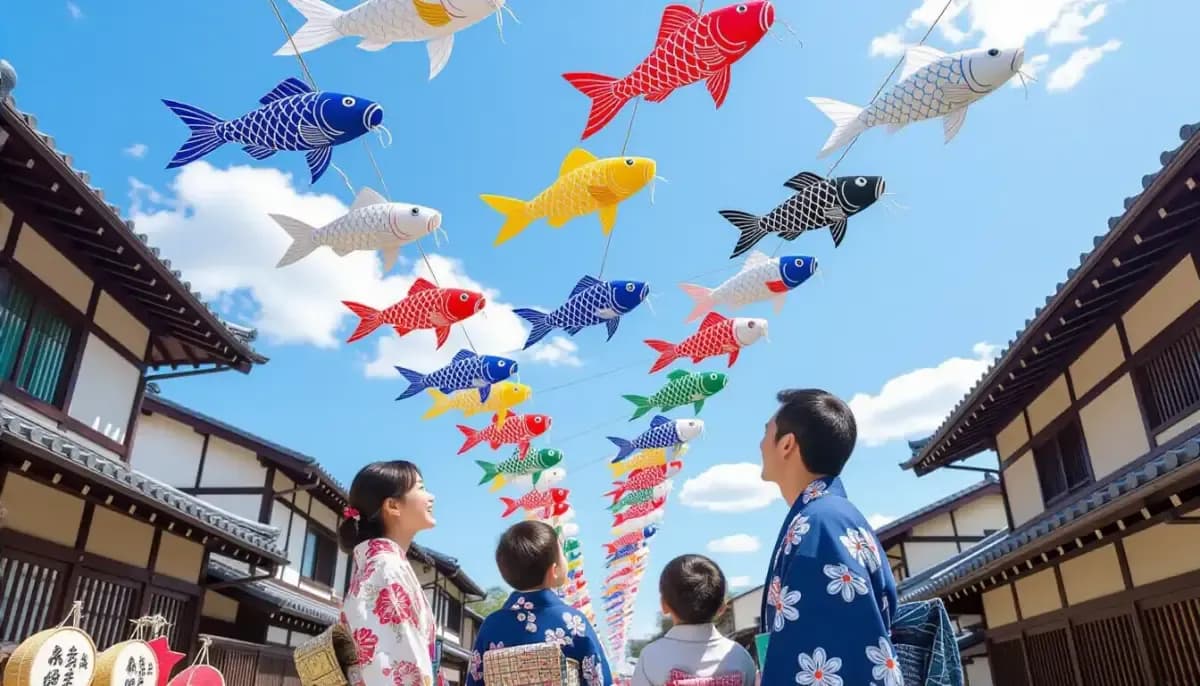
Everything foreign families need to know about Children's Day (Kodomo no Hi) in Japan: koinobori festivals, samurai armor displays, iris bath traditions, traditional foods, and how to celebrate as an expat family.
Children's Day (Kodomo no Hi): Activities and Traditions for Families in Japan
Every year on May 5th, Japan celebrates Kodomo no Hi (こどもの日) — Children's Day — a national public holiday that marks the final day of Golden Week. Colorful carp-shaped streamers sway from rooftops, traditional sweet rice cakes fill shop windows, and families across the country honor the health, happiness, and future of their children. For foreign families living in Japan, this is one of the most visually stunning and culturally rich holidays of the year — and one that is surprisingly easy to participate in, even if you are new to Japan.
This guide covers everything you need to know about Kodomo no Hi: its history, key traditions, where to see spectacular koinobori displays, what foods to try, and how your family can join in the celebration.
What Is Kodomo no Hi? A Brief History
Kodomo no Hi has its roots in an ancient Chinese festival called Duanwu, which was introduced to Japan around the 6th or 7th century alongside Buddhism and the Chinese writing system. In Japan, the festival was originally called Tango no Sekku (端午の節句) and was observed on the 5th day of the 5th month. It was one of five traditional seasonal celebrations at the imperial court.
During the Nara period (710-794), the festival had a connection to women — iris plants were used in purification rituals related to rice planting. But by the Kamakura period (1185-1333), samurai families had transformed it into a celebration for boys. The iris plant (shobu in Japanese) played a central role in this shift: the word shobu (菖蒲) shares its pronunciation with two other Japanese words — 尚武 (shobu, meaning "martial spirit") and 勝負 (shobu, meaning "victory or defeat"). This triple wordplay made the iris deeply symbolic for warrior culture.
During the Edo period (1603-1868), the custom of displaying carp-shaped streamers, called koinobori, spread from warrior families to merchants and artisans throughout Japan. By the 18th century, the modern koinobori tradition was fully established.
After World War II, the Japanese government reframed the holiday for the modern era. In 1948, Tango no Sekku was officially renamed Kodomo no Hi and declared a national public holiday. The new law explicitly included both boys and girls and added an element of thanksgiving toward mothers — a significant shift from the earlier male-focused tradition.
Today, Kodomo no Hi remains one of Japan's most beloved public holidays and a wonderful opportunity for foreign families to experience Japanese seasonal culture firsthand.
Koinobori: The Iconic Carp Streamers
The most recognizable symbol of Kodomo no Hi is the koinobori (鯉のぼり) — colorful carp-shaped streamers that fly from poles above homes, parks, bridges, and festival sites across Japan in late April and early May.
Koinobori are rooted in a Chinese legend about a carp that swam upstream through a powerful waterfall called the Dragon Gate and was transformed into a mighty dragon. The carp became a symbol of perseverance, courage, and success — qualities that parents wish for their children.
A traditional koinobori set is arranged from top to bottom:
| Element | Description |
|---|---|
| Spinning ball (kaitenkyu) | Rotating globe at the top of the pole |
| Windmill (yaguro) | Pinwheel that spins in the breeze |
| Five-colored streamer (goshiki fukinagashi) | Rainbow-colored fabric wind sock |
| Black carp (magoi) | Represents the father |
| Red or pink carp (higoi) | Represents the mother |
| Blue or green carp (kogoi) | Represents a child |
| Additional smaller carp | One for each additional sibling |
Koinobori are typically displayed from late March through early June, with the peak period running from late April through May 5. As Japan's birth rate continues to fall and more families live in apartments, full koinobori sets have become less common. Many urban families now use namae hata — single banners printed with the child's name — as a more apartment-friendly alternative.
For spectacular koinobori displays, check out the annual festivals below.
Major Koinobori Festivals Across Japan
If you want to see koinobori on a grand scale, Japan's regional festivals are unmissable. Here are some of the most impressive:
| Festival | Location | Koinobori Count | Dates |
|---|---|---|---|
| Tatebayashi Festival | Gunma Prefecture | ~5,000 (world record) | Late April – May 5 |
| Tsuetate Onsen | Kumamoto Prefecture | ~3,500 | Early April – May 5 |
| Tokyo Tower Koinobori | Minato, Tokyo | Exactly 333 | Late March – Early May |
| Uzuma no Koinobori | Tochigi Prefecture | 1,000+ | Early March – Mid-May |
| Koinobori Festa 1000 | Osaka | 1,000 | Late April – May 5 |
The Tatebayashi Festival in Gunma holds a world record with approximately 5,000 koinobori across five locations, coinciding with the area's famous azalea blooms. The Tokyo Tower display is particularly beloved for its precision: exactly 333 streamers are hung — matching the tower's height of 333 meters. The display also includes a giant Pacific saury fish in solidarity with the city of Ofunato in Iwate Prefecture, which suffered greatly in the 2011 earthquake and tsunami.
For more information on exploring Japan as an expat, Living in Nihon has practical guides for families settling into life across Japan.
For detailed festival listings and event schedules, Arigato Japan's Kodomo no Hi guide is an excellent resource with specific events and tips for visitors.
Gogatsu Ningyo: The Samurai Armor Display
Inside the home, families traditionally set up a gogatsu ningyo (五月人形) — a display of miniature samurai armor, helmets, weapons, and legendary hero dolls. This tradition originated during the Kamakura to Muromachi period (roughly 1185-1573), when samurai families would air out their actual armor before the rainy season began. Over time, miniature decorative versions replaced the real thing.
A full three-tiered gogatsu ningyo display includes:
- First tier: Samurai helmet (kabuto) or full armor (yoroi), bow and arrows, a sword, and a decorative gold screen featuring dragons and tigers
- Second tier: A war fan, a soldier's hat, and a war drum
- Third tier: Iris-steeped sake containers, kashiwa mochi rice cakes, and chimaki
Today, most families display just the kabuto helmet on a stand, as full three-tiered sets are expensive and require significant space. You can often spot impressive gogatsu ningyo displays in hotel lobbies, traditional Japanese doll shops (ningyo-ya), and department stores throughout April.
A fun fact for movie fans: the distinctive shape of the Japanese samurai kabuto is widely credited as the design inspiration for Darth Vader's helmet in Star Wars — a great conversation starter with children already familiar with the iconic look.
The gogatsu ningyo is traditionally gifted by the maternal grandparents to a baby boy before his first Kodomo no Hi, known as Hatsu Sekku (初節句). If you have a newborn son in Japan, you may receive one of these as a gift from your Japanese in-laws.
For practical guidance on navigating Japanese family life and expat resources, For Work in Japan offers useful information for foreigners living and raising families in Japan.
Iris (Shobu) Traditions and Symbolic Meaning
Long before koinobori and samurai armor became central to the holiday, the iris plant (shobu, 菖蒲) was at the heart of the festival. The iris's sword-like leaves made it a powerful symbol of martial culture, and its medicinal properties gave it spiritual significance as a ward against evil spirits and illness.
Several iris traditions are still practiced today:
Shobu-yu (菖蒲湯): On the morning of May 5, many Japanese families take a bath infused with iris leaves. The long, fragrant leaves are believed to drive away evil spirits and promote good health for the year ahead. Supermarkets and pharmacies sell bundles of iris leaves specifically for bath use from late April onward. This is one of the easiest Kodomo no Hi traditions for foreign families to adopt — just pick up a bundle of iris leaves and add them to your bathtub.
Shobuzake: Adults may drink sake steeped with iris flowers and leaves, traditionally believed to offer protection and health benefits.
Shobumakura: Iris leaves stuffed inside a pillow are sometimes used to protect sleeping children through the night.
The iris tradition connects to the same triple wordplay as the historical samurai symbolism: shobu (菖蒲 = iris), shobu (尚武 = martial spirit), shobu (勝負 = victory or defeat). This linguistic layering is a perfect example of how deeply Japanese seasonal culture is embedded in language itself — something worth sharing with children who are learning Japanese.
For parents looking for ways to raise children with an appreciation of Japanese culture while maintaining their own heritage, see our guide on raising bilingual children in Japan.
Traditional Foods of Kodomo no Hi
Food is an important part of every Japanese seasonal celebration, and Kodomo no Hi is no exception. Two foods in particular are closely associated with the holiday:
Kashiwa Mochi (柏餅)
Kashiwa mochi is a glutinous rice cake filled with sweet red bean paste and wrapped in an oak (kashiwa) leaf. The oak tree holds special symbolic significance: unlike most trees, the oak does not drop its old leaves until new growth appears in spring. This is seen as a metaphor for generational continuity — the family line will not be cut before the next generation is ready. Kashiwa mochi is more commonly eaten in eastern Japan (Kanto region), including Tokyo.
Chimaki (粽)
Chimaki is steamed sticky rice wrapped in bamboo leaves, tied with string. Originating in China and introduced to Japan during the Heian period, chimaki symbolizes strength and resilience — bamboo bends but does not break. The filling varies by region: sweet rice-based chimaki is common in Kanto, while savory versions appear in some other regions. Chimaki is more commonly associated with western Japan (Kansai region), including Kyoto and Osaka.
| Food | Region | Wrapping | Symbolic Meaning |
|---|---|---|---|
| Kashiwa mochi | Eastern Japan (Kanto) | Oak leaf | Generational continuity |
| Chimaki | Western Japan (Kansai) | Bamboo leaves | Strength and resilience |
Both foods are available at traditional Japanese confectionery shops (wagashi-ya) and many supermarkets throughout April and early May. Trying both with your children is a delicious way to explore the holiday's regional variations.
How to Celebrate Kodomo no Hi as a Foreign Family
Kodomo no Hi is one of Japan's most accessible holidays for foreign families. Here are practical ways to participate:
At Home:
- Take a shobu-yu bath — buy a bundle of iris leaves at the supermarket and add them to your bathtub on May 5 morning
- Fold origami kabuto — simple tutorials are available online for making paper samurai helmets that children can wear
- Buy seasonal sweets — pick up kashiwa mochi or chimaki from a local wagashi shop or supermarket
- Display a small koinobori — miniature koinobori sets are sold at 100-yen shops, toy stores, and tourist shops
Out and About:
- Visit a koinobori festival — see the list above for major events near you
- Walk your neighborhood in late April — many houses and local parks display koinobori throughout Golden Week
- Visit a department store or hotel lobby — gogatsu ningyo displays are often beautifully staged for public viewing in April
For School-Age Children:
- Many Japanese elementary schools make origami kabuto, draw koinobori pictures, or discuss the holiday around this time — ask your child's teacher what activities are planned
- If your child attends a Japanese school, they may bring home seasonal crafts before May 5
For more on navigating the Japanese school calendar and cultural events, see our elementary school guide for foreign parents and our kindergarten guide. For educational resources for families navigating the Japanese system, Chuukou Benkyou offers support for foreign families in Japan.
Kodomo no Hi During Golden Week: Practical Tips
Kodomo no Hi falls on May 5th, the final day of Golden Week — Japan's longest consecutive public holiday period. This has practical implications for families:
- Transportation is extremely crowded — bullet trains, highways, and airports are at peak capacity from April 29 through May 5
- Accommodation books up months in advance — if you plan to travel, reserve early
- Most shops and restaurants are open — Golden Week is a commercial peak period
- Festivals and events are numerous — cities and towns across Japan hold special events throughout the week
For families staying in their home city, May 5 itself is often calmer than the earlier days of Golden Week. Local parks, rivers, and bridges tend to have koinobori displays without extreme crowds.
For more ideas on activities and seasonal celebrations, Savvy Tokyo's Kodomo no Hi guide includes recipes and foreigner-friendly activity ideas, and Japan Wonder Travel's celebration guide is aimed specifically at expats and visitors.
For broader guidance on expat family life in Japan, our financial planning guide for expat families covers how to manage Japan's seasonal spending periods, and our guide to government benefits and subsidies explains the family support available to foreign residents.
Final Thoughts
Children's Day is one of the most visually beautiful and emotionally resonant holidays in Japan. Whether you are admiring thousands of carp streamers at a riverside festival, soaking in a fragrant iris bath, or biting into your first kashiwa mochi, Kodomo no Hi offers foreign families a genuine window into Japan's seasonal culture and its enduring wish for the wellbeing of its children.
In a country where the birth rate is declining and each child is considered increasingly precious, the celebration feels both ancient and urgently relevant. Participating in Kodomo no Hi — even in small ways — is a meaningful way to connect your family to the community you are living in, and to give your children memories that span both their heritage and their life in Japan.

Originally from Vietnam, living in Japan for 16+ years. Graduated from Nagoya University, with 11 years of professional experience at Japanese and international companies. Sharing practical information for foreign parents raising children in Japan.
View Profile →Related Articles
Cherry Blossom Season (Hanami) with Children
Complete guide to enjoying cherry blossom season (hanami) with children in Japan. Best family parks, safety tips, what to bring, cultural etiquette, and activities for kids during sakura season.
Read more →
Japanese Summer Festivals (Matsuri) with Kids
Complete guide to Japanese summer festivals (matsuri) for foreign families with children. Top festivals, kid-friendly activities, yukata tips, heat safety, and how to participate respectfully.
Read more →
Seasonal Crafts and Activities to Do with Your Children
Discover the best seasonal crafts and activities to do with your children in Japan — from spring koinobori and Tanabata wishes to autumn moon viewing and Setsubun bean throwing. A complete guide for expat families.
Read more →
School Events Calendar: What to Expect Throughout the Year
A complete guide to the Japanese school events calendar for foreign parents. Learn about Sports Day, Cultural Festival, graduation ceremonies, and all major school events throughout the year.
Read more →
Christmas Celebrations in Japan with Children
Complete guide to celebrating Christmas in Japan with kids: KFC traditions, stunning illuminations, gift shopping, at-home crafts, and practical tips for foreign families living in Japan.
Read more →
Halloween in Japan: How Families Celebrate
Discover how families celebrate Halloween in Japan: theme park events, shopping mall trick-or-treat routes, school parties, and the best family-friendly Halloween events across the country.
Read more →