
Cherry Blossom Season (Hanami) with Children

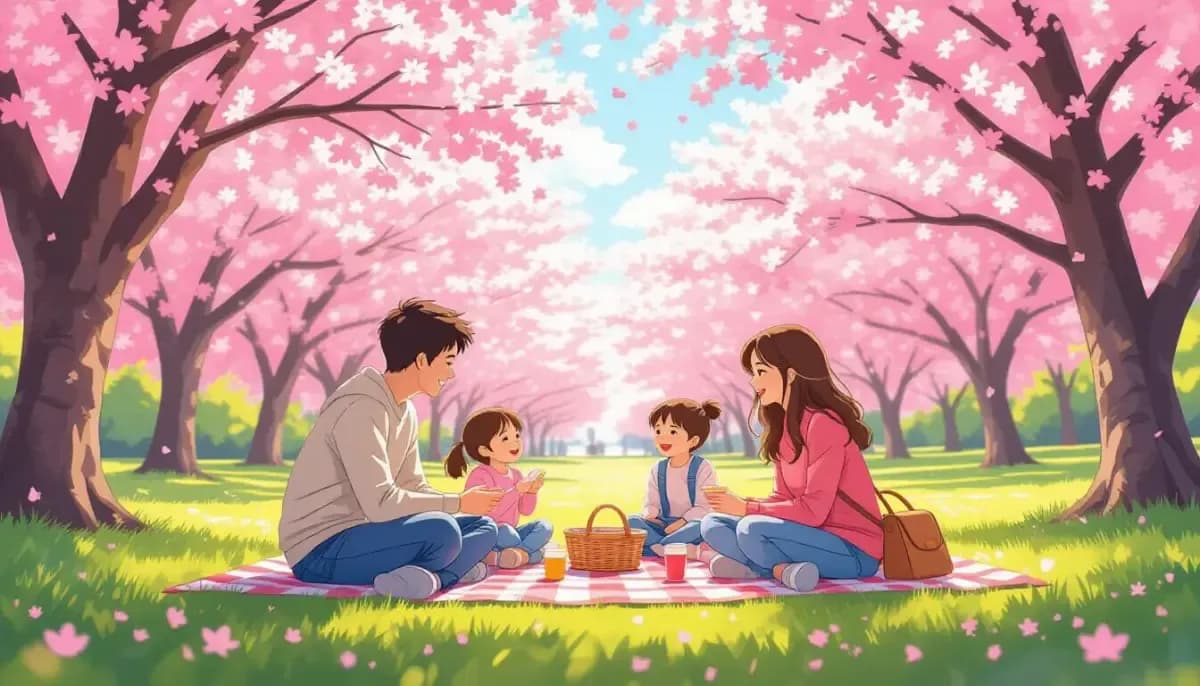
Complete guide to enjoying cherry blossom season (hanami) with children in Japan. Best family parks, safety tips, what to bring, cultural etiquette, and activities for kids during sakura season.
Cherry Blossom Season (Hanami) with Children in Japan
Every spring, Japan transforms into a breathtaking canvas of pink and white blossoms — and experiencing cherry blossom season, known as hanami (花見, literally "flower viewing"), is one of the most magical things you can do with your children while living in Japan. More than 63 million people attend cherry blossom festivals across Japan each year, making it the country's most beloved seasonal celebration. For foreign families raising children in Japan, participating in hanami is more than just sightseeing — it's a genuine cultural immersion that your kids will remember for a lifetime.
This guide covers everything you need to know to make hanami with children a wonderful, safe, and culturally enriching experience.
What Is Hanami and Why It Matters for Families
Hanami has a history stretching back over 1,200 years. The first official imperial hanami was recorded in 812 CE when Emperor Saga hosted a flower-viewing party at Kyoto's Shinsen-in garden. Originally an aristocratic custom, it spread through the samurai class during the medieval period and became a beloved tradition of the common people during the Edo era (1603–1868).
Today, hanami is far more than admiring flowers. It's a social event — families, friends, and colleagues gather on blue tarps beneath blooming trees, share food and drinks, play games, and celebrate the arrival of spring together. Cherry blossoms symbolize mono no aware (物の哀れ) — the bittersweet awareness of impermanence — a concept deeply woven into Japanese culture. Blossoms last only one to two weeks, and this fleeting beauty makes each viewing precious.
For children growing up in Japan, hanami marks the start of a new school year and fiscal year — it's a symbol of new beginnings, transition, and hope. Sharing this tradition with your children connects them to the rhythms of Japanese life in a very tangible way.
There are over 1,000 official hanami spots nationwide, across parks, temple grounds, castle moats, riversides, and mountain slopes. Japan has more than 600 varieties of cherry trees, though the most common is Somei-yoshino, which blooms all at once in a dramatic flush of pale pink blossoms.
When and Where: Cherry Blossom Timing Across Japan
Cherry blossoms bloom at different times depending on the region. Generally, blossoms travel from south to north as spring temperatures warm — so if you miss the peak in one city, you may be able to catch it in another.
| Region | Typical Bloom Period | Notable Spots |
|---|---|---|
| Okinawa | Late January – Early February | Nakijin Castle Ruins |
| Fukuoka | Late March (~March 24) | Maizuru Park, Nishi Park |
| Tokyo | Late March – Early April | Ueno Park, Shinjuku Gyoen, Yoyogi Park |
| Kyoto | Late March – Early April | Maruyama Park, Philosopher's Path |
| Osaka | Early April | Osaka Castle Park, Kema Sakuranomiya |
| Nagoya | Late March – Early April | Nagoya Castle, Tsuruma Park |
| Sendai | Mid April | Nishi Park, Tsutsujigaoka Park |
| Sapporo | Late April – Early May | Maruyama Park, Hokkaido University Campus |
| Mountainous Areas | Late April – May | Yoshinoyama (Nara), Hirosaki (Aomori) |
Planning tip: Follow the Japan Meteorological Corporation's Sakura Forecast (usually released in January each year) to plan your hanami outings precisely. In 2025, Kyoto's peak fell on April 4. Climate change has been pushing blooms earlier across Japan — a trend documented in 1,100+ years of Kyoto blossom records.
The typical viewing window from southernmost to northernmost Japan runs from late March to early May — giving families the opportunity to "chase the sakura" on a regional road trip if timing allows.
Best Family-Friendly Hanami Spots
Not all hanami locations are equally suitable for young children. Large festivals can be crowded, loud, and sometimes dominated by adult alcohol consumption. Here are parks that work especially well for families:
Tokyo — Best Parks for Kids
Shinjuku Gyoen is widely considered the best family hanami spot in Tokyo. With 1,300 cherry trees across formal French, English, and Japanese garden sections, it offers beauty without the boisterous atmosphere. Crucially, alcohol is prohibited, making it significantly calmer than most parks. During peak season, advance online booking is required. Chair and table rentals are available. Entry: 500 yen adults, 250 yen children.
Hinokicho Park (Roppongi) sits behind Tokyo Midtown and combines cherry trees with playground equipment and open lawn — perfect for children who need space to run between blossom gazing.
Himonya Park offers a good combination of playground, a small pond, and cherry trees in a less touristic, residential neighborhood.
Yoyogi Park has over 600 cherry trees and vast open green spaces near Harajuku and Meiji Shrine. It's family-friendly, allows picnics, and has enough room for children to play freely.
Kiba Park and Nogawa Park are excellent quieter alternatives with playgrounds, green spaces, and riverside cherry trees without the massive crowds.
Ueno Park opens at 5:00 AM during hanami season and is pets-friendly on a leash. It's more lively and can be crowded, but the sheer number of trees (about 800) and the festive atmosphere is exciting for older children.
Beyond Tokyo
Nara's Chayama-enchi is extraordinary for children — free-roaming deer walk beneath blooming cherry trees, creating a magical, almost fairy-tale setting. Yoshinoyama (Nara) boasts 30,000 cherry trees across a mountainside, viewable by ropeway.
Hirosaki Castle (Aomori) blooms in late April when much of Japan has finished — with moats reflecting blossoms and tunnels of petals, it's one of Japan's most dramatic sites.
Matsumoto Castle and Inuyama Castle both feature cherry trees against historic black castle architecture reflected in moats.
Practical Tips for Hanami with Children
Planning makes the difference between a stressful day and a magical family memory.
Safety First
Write your phone number on a slip of paper and place it in your child's pocket or pin it inside their clothing. Crowded hanami parks filled with dozens of identical blue tarps are disorienting for children and adults alike — it's easy to get separated and very difficult to describe where your spot is.
Remind children not to wander. Choose a distinct landmark near your spot (a large tree, a sign, a bridge) and show it to your child before they play.
Choose alcohol-free parks (like Shinjuku Gyoen) if you're concerned about the drinking atmosphere, especially with very young children.
What to Bring
The hanami kit is fairly standardized in Japan:
- Blue tarp (ブルーシート) — available at 100-yen shops for 100–300 yen. This is the universal hanami picnic blanket.
- Garbage bags — most hanami locations have minimal or no public trash bins; you must carry out all your waste.
- Bento boxes and snacks — onigiri, dango (sweet rice dumplings), karaage (fried chicken), edamame, and sakura mochi are hanami staples. Juice boxes for kids.
- Thermos of hot tea — spring evenings turn cold quickly.
- Layered clothing — spring weather is unpredictable; warm days but potentially cold evenings.
- Small toys — bubbles, coloring books, mini card games, and small balls keep younger children entertained between snacking and flower viewing.
- Wet wipes and hand sanitizer — essential with children.
- Blankets — for sitting or wrapping children when the temperature drops.
Timing and Crowds
Weekdays are significantly less crowded than weekends. If your child's school schedule allows, a weekday hanami visit is far more pleasant. Mornings are the quietest time at most parks.
For popular parks like Ueno, blue tarps are sometimes placed by company employees or enthusiastic groups from 5–6 AM to secure prime spots. If you want a good location, arriving by 9–10 AM on a weekday gives reasonable choices.
Book Shinjuku Gyoen in advance during peak season — the online booking system fills up quickly.
Activities to Enjoy with Children During Hanami
Hanami isn't just about sitting and looking at flowers. Here are experiences children love:
Sakura food exploration: Make a game of trying sakura-flavored foods — sakura mochi (cherry blossom rice cake), sakura latte, sakura soft cream, sakura Kit Kats, and dango. Many convenience stores and bakeries release limited-edition sakura products each spring.
Yozakura (夜桜 — nighttime blossom viewing): Many parks illuminate cherry trees after dark. The atmosphere is magical — lanterns glow through pink blossoms, food stalls line the paths, and the energy is festive. Ueno Park, Shinjuku Gyoen, and castle parks often feature illuminations. Dress warmly and keep the visit short for younger children.
Kimono or yukata rental: Many photo studios and rental shops near popular hanami spots offer family kimono packages. Dressing up in kimono for a family photo beneath cherry blossoms is an unforgettable memory.
Boat tours: At Chidorigafuchi Moat in Tokyo, you can rent rowboats and glide beneath overhanging cherry blossom branches — a unique experience children find genuinely magical. Sumida River cherry blossom cruises are another excellent option.
Petal play: As blossoms peak and petals begin to fall, children love catching them, creating small petal collections, and watching "sakura snow" drift across the picnic tarp.
Sketching and journaling: Older children can sketch flowers or write about the experience — a meaningful activity that builds observational skills and creates a keepsake.
Cultural Etiquette to Teach Your Children
Hanami is a social ritual with its own etiquette. Teaching your children these points builds cultural awareness:
- Never shake branches, pick flowers, or climb trees. Cherry tree roots are shallow and easily damaged. Disturbing blossoms is considered disrespectful.
- Always take your garbage home. This is non-negotiable. Leave the area cleaner than you found it.
- Be considerate of neighboring groups — keep noise at a reasonable level and avoid stepping on others' tarps.
- The phrase 花より団子 (hana yori dango — "dumplings before flowers") reflects a beloved cultural joke: many Japanese people are just as interested in the food and socializing as in the actual blossoms. It's a reminder that hanami is as much about togetherness as aesthetics.
- If you are invited to join a Japanese friend's or colleague's hanami, bring food or drinks to share, thank the organizer, and join in the first kanpai (cheers) together.
For further reading on hanami etiquette and cultural context, Living in Nihon and For Work in Japan are helpful resources for expats navigating Japanese customs. If your child is enrolled in a Japanese school, Chuukou Benkyou offers additional context on Japanese educational culture and seasonal events that your child may encounter at school.
Connecting Hanami to Your Children's Life in Japan
Hanami has deep connections to the rhythms of Japanese childhood. The school year begins in April — right as cherry blossoms peak. Nyuugaku-shiki (入学式, school entrance ceremonies) are often held beneath cherry trees, making sakura an enduring symbol of new beginnings for Japanese children.
If your child attends a Japanese public school, they will likely participate in school hanami events or entrance ceremony photos beneath blooming trees. This is an important moment of belonging — encourage them, help them dress nicely, and join the tradition whole-heartedly.
For older children, discussing the concept of mono no aware — the beauty in impermanence — can open meaningful conversations about how Japanese culture approaches change, loss, and appreciation. The fact that cherry blossoms last only about two weeks, and that their brevity makes them precious, is a philosophy with wide application in life.
You can find more resources for raising children in Japan's seasonal culture through our guides on Japanese education, toddler parenting in Japan, and cultural identity for mixed-background children.
For comprehensive family travel planning resources during hanami season, Tokyo Family Stays and The Tokyo Chapter offer excellent family-focused hanami guides with park-by-park reviews.
Quick Reference: Hanami with Children Summary
| Topic | Key Takeaway |
|---|---|
| Best timing | Late March – early April (varies by region) |
| Best family park (Tokyo) | Shinjuku Gyoen (alcohol-free, booking required) |
| Essential item | Blue tarp + garbage bags |
| Safety tip | Write your phone number for child's pocket |
| Best activity for kids | Yozakura illuminations + sakura food exploration |
| Etiquette #1 | Never touch or shake the blossoms |
| Etiquette #2 | Always carry out all your garbage |
| Cultural meaning | Impermanence, new beginnings, togetherness |
| Average spend | ~2,908 yen per person per outing |
| National attendance | 63 million+ people per year |
Cherry blossom season with children in Japan is one of those rare experiences that manages to be both deeply Japanese and universally human — a celebration of beauty, togetherness, and the fleeting nature of the most precious moments. Go early, go prepared, and embrace the blue tarp culture wholeheartedly. Your children will thank you for it — and so will the memories you create together beneath the blossoms.

Originally from Vietnam, living in Japan for 16+ years. Graduated from Nagoya University, with 11 years of professional experience at Japanese and international companies. Sharing practical information for foreign parents raising children in Japan.
View Profile →Related Articles
Japanese Summer Festivals (Matsuri) with Kids
Complete guide to Japanese summer festivals (matsuri) for foreign families with children. Top festivals, kid-friendly activities, yukata tips, heat safety, and how to participate respectfully.
Read more →
Seasonal Crafts and Activities to Do with Your Children
Discover the best seasonal crafts and activities to do with your children in Japan — from spring koinobori and Tanabata wishes to autumn moon viewing and Setsubun bean throwing. A complete guide for expat families.
Read more →
School Events Calendar: What to Expect Throughout the Year
A complete guide to the Japanese school events calendar for foreign parents. Learn about Sports Day, Cultural Festival, graduation ceremonies, and all major school events throughout the year.
Read more →
Christmas Celebrations in Japan with Children
Complete guide to celebrating Christmas in Japan with kids: KFC traditions, stunning illuminations, gift shopping, at-home crafts, and practical tips for foreign families living in Japan.
Read more →
Halloween in Japan: How Families Celebrate
Discover how families celebrate Halloween in Japan: theme park events, shopping mall trick-or-treat routes, school parties, and the best family-friendly Halloween events across the country.
Read more →
Obon Festival Explained for Foreign Families
A complete guide to Obon festival for foreign families in Japan: dates, traditions, Bon Odori, Toro Nagashi, and how your family can participate respectfully and joyfully.
Read more →