
Seasonal Crafts and Activities to Do with Your Children

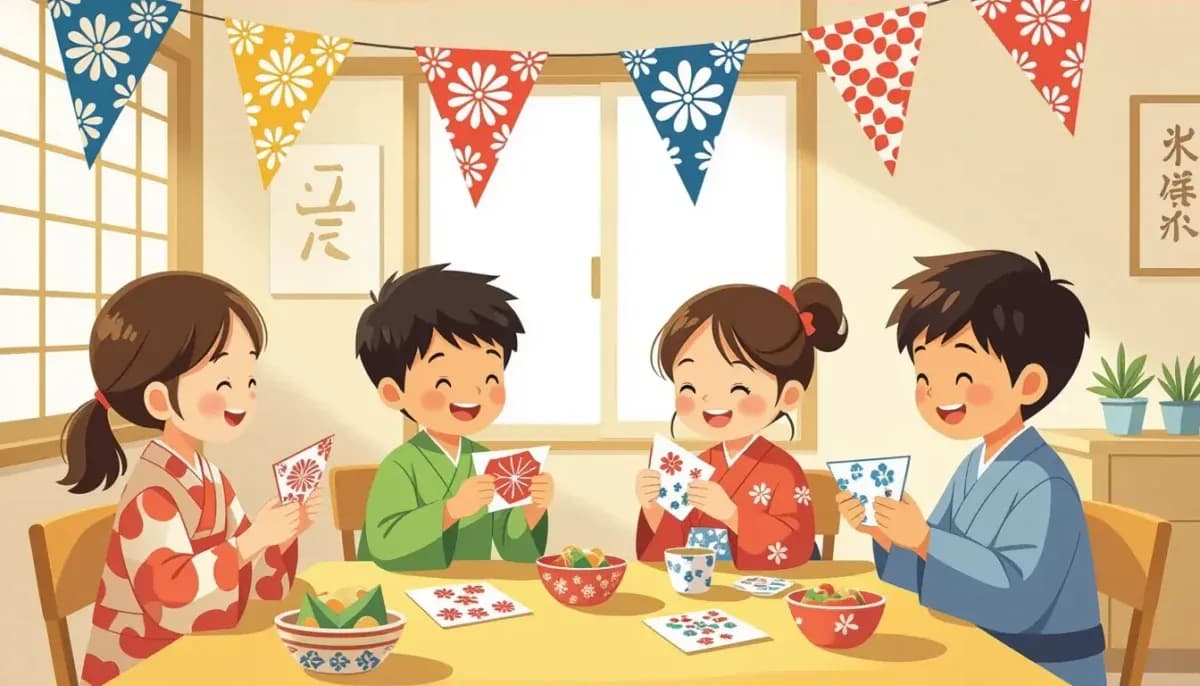
Discover the best seasonal crafts and activities to do with your children in Japan — from spring koinobori and Tanabata wishes to autumn moon viewing and Setsubun bean throwing. A complete guide for expat families.
Seasonal Crafts and Activities to Do with Your Children in Japan
Japan's four seasons aren't just beautiful—they're a living curriculum for your children. From paper kabuto helmets folded on a rainy spring afternoon to throwing beans out the front door on Setsubun, the Japanese calendar is packed with hands-on traditions that turn ordinary days into meaningful memories. For foreign families raising children in Japan, participating in these seasonal activities is one of the most rewarding ways to connect with the culture around you.
This guide walks through the best crafts and activities for each season, with practical tips for expat parents on how to join in, even without fluent Japanese.
Spring: Cherry Blossoms, Dolls, and Carp Streamers
Spring is arguably Japan's most festive season for families. Three major events fall between March and May, each with its own craft traditions.
Hinamatsuri (March 3) — Doll Festival
Hinamatsuri celebrates girls and their healthy growth. Families traditionally display hina-ningyo (ornate imperial court dolls) on tiered red-cloth stands. If buying a full set feels like too much, a simple tabletop display of two main dolls is perfectly acceptable. Many 100-yen shops sell small, beginner-friendly doll sets in February.
For a hands-on craft, try making origami hina dolls with your child using red and white paper. This is a great project even for preschoolers. The traditional foods—chirashi sushi and hina-arare (pastel rice crackers)—are easy to prepare together at home.
Hanami (Late March–Early May) — Cherry Blossom Viewing
Cherry blossom season is perfect for outdoor picnics. Pack a picnic mat, make onigiri together at home, and head to your nearest park. Many neighborhoods have local sakura spots that aren't crowded. Teach children to admire the blossoms without picking or shaking branches—a quiet but important point of etiquette.
Children's Day (May 5) — Koinobori and Kabuto
Children's Day is ideal for crafting. The signature decoration is the koinobori—colorful carp streamers that symbolize strength and perseverance.
Easy DIY koinobori: use a toilet paper roll, markers, colorful paper, and string. Children can draw scales, paint the roll, attach a paper fin and tail, and hang them from a window or balcony rail. This project takes under 30 minutes and produces something kids are genuinely proud of.
The origami kabuto (samurai helmet) is another classic. Fold one from a full sheet of newspaper and your child can actually wear it. Step-by-step instructions are easy to find online. Tokyo Tower displays 333 koinobori each May, and Ueno Zoo and Kasai Rinkai Aquarium offer free admission on Children's Day—great for a day trip.
Traditional Children's Day foods: kashiwamochi (mochi wrapped in oak leaves) and chimaki (sweet rice in bamboo leaves). Both can be found at supermarkets and department store basement food halls (depachika) from late April. Pre-order sweets by May 4th if you want the best selection.
Summer: Tanabata, Festivals, and Outdoor Play
Japan's summers are hot and humid, but they're also filled with festive energy. Research on Japanese children's physical activity patterns (BMC Public Health, 2016) found that children become significantly more sedentary during summer vacation, making structured seasonal activities at home especially important for keeping kids active and engaged.
Tanabata (July 7) — Star Festival
Tanabata celebrates the legend of two stars (representing lovers Orihime and Hikoboshi) meeting once a year across the Milky Way. The main craft is writing wishes on tanzaku—narrow strips of colored paper—and hanging them on bamboo branches.
Buy a small bamboo branch at a florist or garden center, or use any long stick decorated with paper leaves. Then sit down with your children and ask them what they wish for. Write the wishes in Japanese (or English—it's perfectly fine), fold or attach other decorations like paper streamers, and hang your tanzaku together.
Shopping streets and train stations often set up large communal bamboo displays where anyone can hang their wishes. This is a wonderful outing for children.
Bon Odori and Summer Festivals (July–August)
Summer festivals (natsu matsuri) are held across Japan from July through August. Look for bon odori (traditional circle dancing) in your neighborhood—community centers and shrine grounds often host free events. Dress children in yukata (summer kimono, available at department stores for ¥3,000–¥8,000) and join the dance. The movements are simple and welcoming to newcomers.
Festival stalls (yatai) sell classics like takoyaki, shaved ice, and goldfish scooping. Even if your child doesn't catch a fish, the experience of a Japanese summer festival is unforgettable.
Summer Vacation Outdoor Activities
Many prefectures have hands-on cultural workshops during summer school holidays. Look for taiko drumming sessions, pottery classes, and calligraphy (shodo) workshops at local community centers (kominkan). These often cost just a few hundred yen and are welcoming to foreign families.
| Activity | Season | Difficulty | Cost |
|---|---|---|---|
| Origami kabuto | Spring (May) | Easy | Free |
| DIY koinobori | Spring (May) | Easy | ¥100–¥200 |
| Tanzaku wishing | Summer (July) | Easy | ¥100–¥500 |
| Bon odori dancing | Summer (July–Aug) | Easy | Free |
| Tsukimi dango making | Autumn (Sep–Oct) | Medium | ¥500–¥1,000 |
| Mamemaki bean throwing | Winter (Feb) | Easy | ¥100–¥300 |
| Origami hina dolls | Spring (March) | Easy | Free |
| Shodo calligraphy | Year-round | Medium | ¥500–¥2,000 |
Autumn: Moon Viewing, Shichigosan, and Fall Foliage
Autumn in Japan brings cooler temperatures and a calendar of family events centered on reflection, gratitude, and celebration.
Otsukimi (September–October) — Moon Viewing
The Otsukimi festival involves gathering in the evening to admire the harvest moon. The traditional display includes tsukimi dango (round white rice dumplings stacked in a pyramid), susuki grass (silver pampas grass), and autumn vegetables.
You can make tsukimi dango at home using shiratamako (rice flour), which is available at most supermarkets. Roll the dough into balls, boil until they float, then stack them on a plate. It's a surprisingly easy project that children love—and they get to eat the result.
Place your display near a window facing the moon. This is a calm, beautiful autumn tradition that even very young children can participate in.
Shichigosan (November 15) — Children's Growth Celebration
Shichigosan (literally "seven-five-three") celebrates children at the ages of three, five, and seven. Families dress children in formal wear—traditional kimono or Western-style formal clothes—and visit a shrine to pray for their health.
For expat families, participating in shichigosan is deeply meaningful. Kimono rental shops near major shrines can outfit your child for ¥5,000–¥15,000 including dressing service, and some include photography. Children receive chitose ame (long candy in a decorative bag) at shrines, symbolizing long life.
Even if your child isn't the right age this year, visiting a shrine during shichigosan season to watch other families is a lovely outing.
Autumn Foliage Crafts
Japan's autumn leaf season (koyo) runs from October through November. Collect fallen maple and ginkgo leaves during a walk and use them for simple art projects at home: leaf rubbings, pressed leaf collages, or wax-paper leaf lanterns. These low-cost crafts make beautiful keepsakes from the season.
For more ideas on arts and creative activities for children in Japan, see our guide on Arts, Music, and Creative Development for Children in Japan.
Winter: New Year, Setsubun, and Indoor Crafts
Winter in Japan is rich with family traditions, many centered around the home.
Oshogatsu / New Year (January 1–3)
New Year is Japan's most important holiday, and its traditions are remarkably family-friendly. In the days before New Year's, families decorate their entrances with kadomatsu (bamboo and pine arrangements) and shimenawa (twisted rope decorations). Simple versions are available at home centers and florists.
On New Year's Day, families make hatsumode—the first shrine visit of the year—to pray for health and good fortune. Children receive otoshidama (money in special envelopes) from relatives. Traditional foods like osechi ryori (decorative boxed foods) and ozoni (rice cake soup) can be ordered or partially made at home.
Try making ozoni together with your children. The recipe varies by region—the Tokyo style uses clear soy-based broth with rectangular mochi—and the process of cutting vegetables and arranging the bowl is a lovely family cooking project.
Setsubun (February 3) — Bean Throwing
Setsubun marks the traditional end of winter and is one of the most fun family events of the year. The ritual is mamemaki: throwing roasted soybeans to drive away oni (demons/bad luck) and welcome good fortune. One person wears an oni mask while others throw beans shouting "Oni wa soto! Fuku wa uchi!" ("Demons out! Good luck in!")
Oni masks are sold at 100-yen shops from late January. Roasted soybeans (irimame) are available at supermarkets. After throwing, everyone eats the number of beans equal to their age—a tradition children find genuinely funny. In recent decades, eating ehomaki (a thick uncut sushi roll facing the year's lucky direction) has also become popular.
For a deeper look at Japanese festivals and how to celebrate them as a foreign family, see our guide on Japanese Holidays, Festivals, and Seasonal Events for Families.
Year-Round Japanese Cultural Activities for Children
Beyond the seasonal calendar, several traditional Japanese activities can be practiced year-round and make excellent ongoing projects for children.
Origami — Paper folding is free, portable, and available at every skill level. Start with simple cranes and progress to complex modular designs. Many libraries and community centers offer origami workshops.
Shodo (Calligraphy) — Writing Japanese characters with a brush teaches children patience and appreciation for the visual beauty of the language. Beginner sets are available at stationary shops (bunguten) for around ¥1,000–¥3,000.
Karuta — A traditional Japanese card matching game. The Hyakunin Isshu (One Hundred Poets) version is played in schools and competitions, but simpler versions exist for young children. Playing at home builds listening skills and Japanese vocabulary.
Ayatori — Cat's cradle with string. A simple, traditional game that children can play anywhere. String patterns have names like "rice field," "Mount Fuji," and "Tokyo Tower."
Kendama — A wooden ball-and-cup toy with deep roots in Japanese culture. Modern kendama has become a global skill toy community, and Japanese children are often skilled players. Good for hand-eye coordination at any age.
For more on Japanese cultural traditions and seasonal events, visit the comprehensive guide at Living in Nihon — Japanese Seasons, Traditions, and Events Complete Guide.
Tips for Expat Parents Joining Japanese Seasonal Traditions
Participating in Japanese seasonal traditions as a foreign family can feel intimidating, but the Japanese community is generally welcoming and appreciative when foreign families make the effort to engage. A few practical points:
Where to find supplies: 100-yen shops (hyakkin like Daiso, Seria, and Can Do) stock seasonal craft materials well in advance of each holiday. Check from about one month before any major festival.
Community events: Local kominkan (community centers), neighborhood associations (jichikai), and shrines often host free or very low-cost seasonal events open to everyone. These are excellent opportunities to participate alongside Japanese families.
School involvement: Japanese preschools, kindergartens, and elementary schools celebrate seasonal events throughout the year. Foreign children attend these celebrations alongside their classmates—it's a natural point of cultural integration. See our guide on Elementary School in Japan: A Complete Guide for Foreign Parents for more on how schools incorporate cultural events.
Language: You don't need to speak Japanese to participate in most seasonal activities. Craft projects are visual, festivals are open, and neighbors are generally welcoming. If you want to explain your child's participation to other parents or teachers, a few simple phrases go a long way.
For ideas on integrating your children into Japanese social life, see our guide on Making Friends and Developing Social Skills in Japan.
Additional resources for seasonal activities with children in Japan:
- Children's Day in Japan: Traditions, Crafts, and Events for Expats
- Japanese Culture Activities for Kids — Tiny Whale Tales
- 12 Japanese Games and Cultural Activities for Kids — Just One Cookbook
- For Work in Japan — Resources for Foreign Families
- Chuukou Benkyou — Study Support for Children in Japan
Conclusion
Japan's seasonal calendar offers foreign families an extraordinary opportunity: a ready-made, culturally rich schedule of activities that connect children to the community around them. Whether you're folding origami kabuto in May, hanging tanzaku in July, or throwing beans in February, these traditions give children not just fun memories but a genuine stake in the culture of their home country.
Start with one activity per season. Pick whatever sounds most accessible to your family—a 100-yen koinobori craft, a neighborhood bon odori, or a simple tsukimi dango evening at home. Over time, these seasonal moments accumulate into a childhood defined by cultural richness and a deep sense of belonging in Japan.

Originally from Vietnam, living in Japan for 16+ years. Graduated from Nagoya University, with 11 years of professional experience at Japanese and international companies. Sharing practical information for foreign parents raising children in Japan.
View Profile →Related Articles
Cherry Blossom Season (Hanami) with Children
Complete guide to enjoying cherry blossom season (hanami) with children in Japan. Best family parks, safety tips, what to bring, cultural etiquette, and activities for kids during sakura season.
Read more →
Japanese Summer Festivals (Matsuri) with Kids
Complete guide to Japanese summer festivals (matsuri) for foreign families with children. Top festivals, kid-friendly activities, yukata tips, heat safety, and how to participate respectfully.
Read more →
School Events Calendar: What to Expect Throughout the Year
A complete guide to the Japanese school events calendar for foreign parents. Learn about Sports Day, Cultural Festival, graduation ceremonies, and all major school events throughout the year.
Read more →
Christmas Celebrations in Japan with Children
Complete guide to celebrating Christmas in Japan with kids: KFC traditions, stunning illuminations, gift shopping, at-home crafts, and practical tips for foreign families living in Japan.
Read more →
Halloween in Japan: How Families Celebrate
Discover how families celebrate Halloween in Japan: theme park events, shopping mall trick-or-treat routes, school parties, and the best family-friendly Halloween events across the country.
Read more →
Obon Festival Explained for Foreign Families
A complete guide to Obon festival for foreign families in Japan: dates, traditions, Bon Odori, Toro Nagashi, and how your family can participate respectfully and joyfully.
Read more →