
Sibling Relationships in Multicultural Families
A practical guide to sibling dynamics in multicultural families in Japan. Learn how to strengthen bonds, navigate cultural differences, and support your children's identity development.
Read more →
How foreign children can make friends and develop social skills in Japan. Covers naraigoto, jidokan, school culture, and strategies for expat parents to support their child's integration.
Moving to Japan is a life-changing experience, but for foreign children, one of the biggest challenges is making friends and building social connections in a new culture. Japan's social norms are distinct from those in most Western and Asian countries, and the path to genuine friendship can feel slow and confusing — especially for kids who don't yet speak Japanese. This guide is designed to help parents understand the cultural landscape, practical strategies, and support systems available so their children can thrive socially in Japan.
Before diving into strategies, it helps to understand how Japanese children form friendships — because it is genuinely different from what most expat families are used to.
Japanese social culture is built around the concept of wa (和), meaning harmony and group cohesion. Children are taught from a very young age to prioritize the group over the individual, to avoid standing out, and to follow the lead of the majority. This doesn't mean Japanese children are unfriendly — quite the opposite — but it does mean that friendships develop slowly and through repeated, shared experiences rather than bold, direct approaches.
The Japanese concept of tatemae (public face) and honne (true feelings) is also key. Japanese people, including children, tend to show a polished, agreeable public face while keeping genuine feelings more private. What looks like friendliness on the surface may be polite social behavior rather than a close bond. This can confuse foreign children who take casual friendliness as a signal of deep friendship before it has truly developed.
Research confirms that trust in Japanese social relationships develops through weeks and months of consistent presence and shared activity — not from a single good conversation. For foreign children, this means patience is not optional; it's essential. According to GaijinPot's guide on making Japanese friends, the key is consistent effort over time rather than a one-time grand gesture.
Approximately 129,000 foreign children attend Japanese public elementary and middle schools, with about 70,000 requiring dedicated Japanese language instruction — a number that has doubled over the past decade. Over 1,000 foreign children remain entirely out of school as of 2024. These numbers mean that while your child may feel isolated, they are far from alone. The challenge is knowing where to find and connect with others in similar situations.
Understanding the obstacles your child may face is the first step to helping them overcome those obstacles.
The most obvious challenge is language. Japanese schools conduct all instruction in Japanese, and many teachers have limited English ability. A child who cannot communicate in Japanese will struggle to join in conversations, group projects, games at recess, and the informal small talk that forms the foundation of childhood friendship.
Even children who speak some Japanese may find the social vocabulary — slang, jokes, group references to popular TV shows and games — takes time to learn. This is normal and temporary, but it can feel very isolating in the early months.
Japanese schools value conformity more than most systems. Uniforms, synchronized schedules, identical lunch equipment (often mandated), and strong peer pressure to behave the same as everyone else are the norm. A child who looks different, acts differently, or brings food that smells different can attract unwanted attention.
Research on kikokushijo (帰国子女) — Japanese children who have returned from overseas — shows that even children with Japanese heritage face bullying and ostracism for "standing out" due to foreign language ability or overseas habits. Foreign children face the same risks. Some teachers may dismiss this with "shikata ga nai" (it can't be helped), which makes parental awareness and advocacy particularly important. Tofugu's deep-dive on the kikokushijo experience offers valuable insight into this dynamic.
Japan recorded 240,000 truant elementary and junior high school students in 2021 — the highest number ever recorded. Social isolation, bullying, and failure to integrate are major contributing factors. Foreign children who do not find social footing early are statistically at higher risk of school refusal (futoko, 不登校). Monitoring your child's emotional state and acting early is critical.
For more on supporting your child's mental health in Japan, see our guide on mental health and emotional wellbeing for foreign children in Japan.
Despite these challenges, thousands of foreign children successfully make deep, lasting friendships in Japan every year. Here are the strategies that work.
The single most recommended strategy across virtually every expat parent community in Japan is enrolling your child in naraigoto (習い事) — after-school lessons and activities. Naraigoto typically include:
The reason naraigoto works so well for friendship-building is that it brings together the same children from the same local school or neighborhood in a lower-pressure, non-academic context. Children who are shy about talking during class become more relaxed when they're focused on a shared activity. Progress is visible and celebrated together. Over weeks and months, regular attendance creates the repeated shared experience that is the foundation of Japanese friendship.
According to Savvy Tokyo's guide for parents in the Japanese school system, naraigoto is consistently cited by experienced expat families as the activity that finally "broke through" social barriers for their children.
For younger children (toddlers through early elementary), jidokan (児童館) are a goldmine. These are ward-run community centers specifically designed for children, usually offering free or very cheap drop-in hours where children can play in a supervised, safe environment with other local kids.
Jidokan typically feature:
Staff at many urban jidokan have some multilingual capacity or are accustomed to foreign families. The environment is relaxed and informal, making it an ideal first step for young children who are just beginning to navigate social contact in Japanese. This resource is particularly valuable in Tokyo, Osaka, and other large cities.
In Japan's elementary school system, parent relationships directly influence children's friendships. Other parents will be more likely to arrange playdates, include your child in group outings, and speak positively about your family to their own children if they know and trust you.
Practical ways to build parent networks:
The Tokyo Chapter's personal account describes how one expat mother discovered that her visibility at the school gate each day was itself a friendship signal — children told their parents about "the foreign mother who always comes," and that visibility opened doors.
Nothing accelerates social integration for children more than Japanese language ability. Children who can participate in classroom jokes, understand playground games, and follow group conversations become part of the social fabric far faster than those who cannot.
Prioritize Japanese language learning from the moment you arrive:
For detailed strategies, see our guide on teaching Japanese to foreign children. The research is clear: as Japanese language competency increases, social anxiety and isolation decrease significantly.
Large cities, especially Tokyo, have robust expat community networks that organize events specifically for foreign families with children. These include:
While the goal is integration into Japanese society, having a peer group of children from similar backgrounds provides emotional grounding and reduces the feeling of being the only one navigating two cultures. This is especially important in the first year.
| Activity | Age Range | Cost | Language Needed | Friendship Speed | Best For |
|---|---|---|---|---|---|
| Naraigoto (sports/music lessons) | 3–15 | ¥3,000–¥10,000/month | Minimal initially | Medium (weeks–months) | All children |
| Jidokan community centers | 0–12 | Free or ¥100 | Minimal | Slow but organic | Young children |
| School clubs (bukatsu) | 12–18 | ¥1,000–¥5,000/month | Moderate | Medium-Fast | Junior/senior high |
| International playgroups | 0–8 | ¥500–¥2,000/session | English OK | Fast | Newly arrived |
| Church/religious groups | All ages | Varies | Often bilingual | Medium | Faith-oriented families |
| Sports teams (local club) | 6–18 | ¥3,000–¥15,000/month | Moderate | Fast (if committed) | Athletic children |
| Online gaming/shared interests | 8+ | Free–¥1,000/month | Minimal | Slow | Introverted children |
Social integration is not just a practical challenge — it's an emotional one. Children who feel they don't belong can experience anxiety, depression, and regression. Parents play a crucial role in supporting their child through this process.
If these signs appear, it is important to act quickly. Contact the school's homeroom teacher (tantou no sensei) and request a meeting. Japan's school system does have counselors (sukuuru kaunseraa) and social workers (sooshow waakaa), though their availability and quality vary by school and prefecture.
For families in Tokyo, resources include:
Research consistently shows that children who develop a balanced bicultural identity — those who maintain their home language and culture while also integrating into Japanese society — show better social adjustment and psychological wellbeing than those who feel forced to choose one or the other.
Celebrating your home culture at home while supporting Japanese integration at school is not a contradiction. Children who are proud of their heritage are more confident, and confident children make friends more easily. See our guide on cultural identity for hafu and mixed-race children in Japan for more on this topic.
For broader context on raising children successfully in Japan, Living in Nihon's complete guide to raising children and education in Japan for foreigners is an excellent comprehensive resource. Additionally, For Work in Japan's family resources and Chuukou Benkyou's guide on the foreign student exam system offer supplementary perspectives on navigating life in Japan as a foreign family.
One of the most important decisions affecting your child's social life in Japan is the choice between Japanese public school and international school.
| Factor | Japanese Public School | International School |
|---|---|---|
| Japanese friends | High potential | Low potential |
| Language immersion | Intensive | Limited |
| Cultural integration | Deep | Shallow |
| English instruction | Minimal | Full |
| Cost | Free (mostly) | ¥1M–¥3M+/year |
| Peer diversity | Low | High |
| Bullying risk (for foreign kids) | Higher | Lower |
| Long-term Japan integration | Stronger | Weaker |
There is no universally correct answer. Families planning to stay in Japan long-term often benefit from Japanese public school despite the challenges, while families on shorter assignments or with children who have already struggled with integration may find international schools a better fit. For a full analysis, see our guide on international schools in Japan and elementary school in Japan for foreign parents.
Social integration looks different at different ages. Here's a quick breakdown:
Ages 0–3 (Infant/Toddler): Focus on jidokan, parent playgroups, and bilingual mommy-and-me classes. Language barely matters at this age — shared physical play creates bonds naturally. See our toddler parenting in Japan guide for detailed resources.
Ages 3–6 (Kindergarten/Yochien): This is the golden window. Children are at their most linguistically flexible and socially open. Enrolling in a local yochien rather than an international preschool, if feasible, can yield lifelong Japanese friendships. See our yochien guide.
Ages 7–12 (Elementary School): Naraigoto becomes the primary friendship engine. Parental visibility at school and in the community matters enormously. Bilingual playdate arrangements (you host, offer great snacks) can help break the ice.
Ages 13–15 (Junior High): Club activities (bukatsu) become the dominant social organizing force. Encourage your child to join a club aligned with their interests — this is where junior high friendships are made. See junior high school in Japan: guide for foreign families.
Ages 16–18 (High School): Social dynamics become more self-directed. Japanese language ability, shared interests (gaming, music, sports), and genuine effort to understand Japanese pop culture are key. See high school in Japan: options and guidance for foreign families.
Raising bilingual, bicultural children in Japan is genuinely challenging — but the children who navigate it successfully gain something extraordinary: fluency in two cultures, deep friendships across linguistic and national boundaries, and a resilience and flexibility that will serve them for life. For more on the bilingual journey, see our guide on raising bilingual children in Japan.
For additional community support resources in Japan, Savvy Tokyo's guide on supporting your child in the Japanese school system remains one of the most practical resources available online.
A practical guide to sibling dynamics in multicultural families in Japan. Learn how to strengthen bonds, navigate cultural differences, and support your children's identity development.
Read more →
Practical strategies for foreign parents raising socially confident children in Japan. Covers Japanese parenting philosophy, research-backed techniques, community resources, and expat-specific challenges.
Read more →
Discover the best summer camps and year-round group activities to help your children make friends in Japan. Practical guide for expat families with activity recommendations by age.
Read more →
A complete guide to online friendships and internet safety for children in Japan. Learn about Japanese platforms, legal protections, school guidelines, and how to keep your child safe online as a foreign family in Japan.
Read more →
Learn how to maintain friendships after moving within Japan. Essential tips on LINE, communication strategies, rebuilding your social circle, and navigating Japan's unique social culture as an expat.
Read more →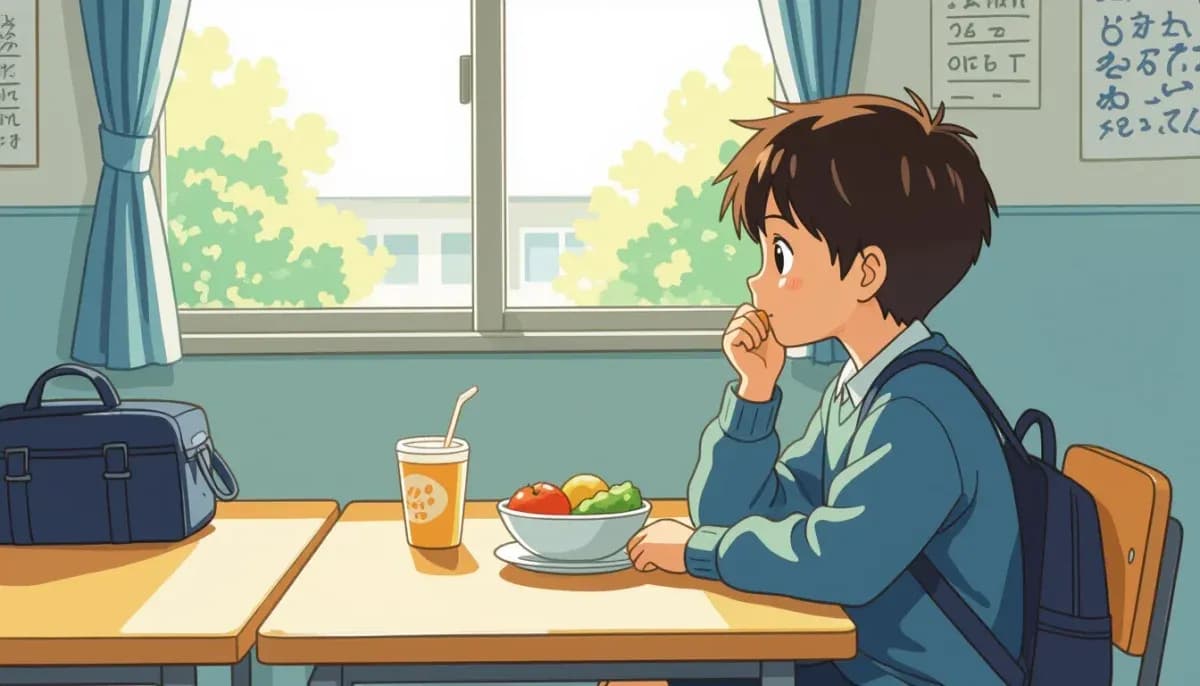
How to support shy and introverted children in Japan's conformity-driven social culture. Practical strategies for foreign parents on school, activities, and mental health resources.
Read more →
Guide for foreigners in Japan on managing cross-cultural friendship conflicts. Learn about uchi-soto, indirect communication, and practical strategies for children and adults.
Read more →
Discover how Japan builds social skills in children through school routines, moral education, and cultural values like kuuki wo yomu. A practical guide for foreign parents in Japan.
Read more →
A complete guide for expat families on community events, after-school activities, and expat networks in Japan that help children make friends and build a social life.
Read more →
Learn how non-Japanese children can navigate friendship challenges in Japan — from cultural uchi/soto dynamics to language barriers, practical strategies, and real statistics on expat children in Japanese schools.
Read more →
Discover the key social rules and etiquette Japanese children follow — from school cleaning routines and lunch customs to public behavior and home rules. Essential reading for expat families in Japan.
Read more →
Discover how playdates and socializing work in Japan for expat families. Learn about uchi/soto culture, the renrakucho, PTA participation, and practical tips to help your children build friendships at Japanese schools.
Read more →
Practical strategies for helping your foreign child make friends in Japan. Learn about school choice, language learning, naraigoto activities, and how to navigate Japanese school culture as an expat family.
Read more →