
Building Social Confidence in Your Child

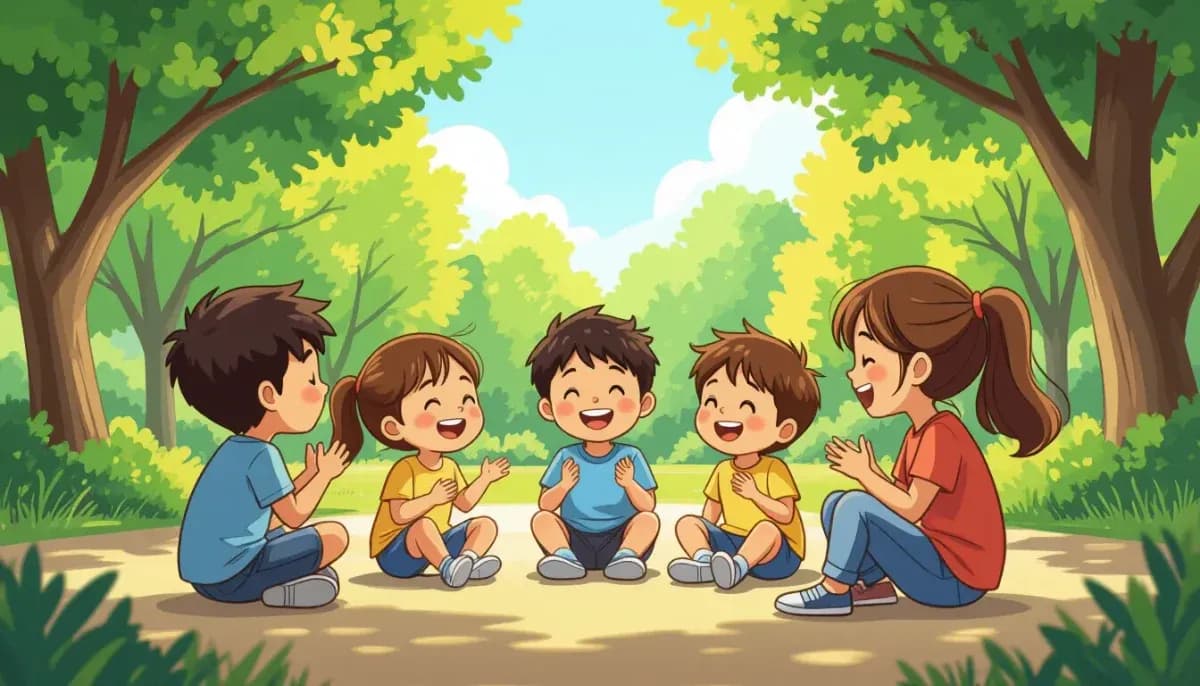
Practical strategies for foreign parents raising socially confident children in Japan. Covers Japanese parenting philosophy, research-backed techniques, community resources, and expat-specific challenges.
Building Social Confidence in Your Child: A Guide for Families in Japan
Raising a confident, socially capable child is one of the most rewarding — and challenging — aspects of parenting anywhere in the world. In Japan, the journey carries its own unique textures. Whether your child is navigating a local hoikuen, joining an elementary school classroom for the first time, or learning to make friends in a language that is not their own, building social confidence takes intention, patience, and cultural awareness.
This guide is written for foreign families raising children in Japan. It draws on Japanese parenting philosophy, research-backed strategies, and practical advice from expat parents who have been there before you. The goal is simple: to help your child grow into a socially confident person — someone who can walk into a room, connect with others, and recover gracefully when things go wrong.
Understanding Social Confidence in the Japanese Context
Social confidence does not look the same across all cultures. In Japan, confident children are often described as those who contribute to the group harmoniously, follow through on commitments, and show empathy toward others — not necessarily those who speak first or loudest.
Japanese culture emphasizes the concept of wa (harmony) and values collective wellbeing. Children in Japanese schools learn early that their actions affect others. Discipline tends to come through social awareness rather than punishment: "How do you think your friend felt when that happened?" This approach cultivates deep emotional literacy and an ability to read social cues — skills that are central to genuine confidence.
The Japanese proverb nana korobi ya oki — "Fall down seven times, get up eight" — captures the national philosophy on resilience. Rather than wishing a child "good luck," Japanese parents and teachers say ganbatte! (do your best), placing the emphasis firmly on effort and persistence rather than outcomes or innate ability.
For foreign families, understanding this cultural orientation helps immensely. Your child may be learning to navigate two or more sets of social norms simultaneously. That is not a disadvantage — it is an enormous long-term strength. But in the short term, it requires your active support.
For broader context on the social development landscape, see our guide on Making Friends and Developing Social Skills in Japan.
Why Effort Matters More Than Talent: The Research-Backed Approach
One of the most consistent findings in child development research is that praising effort rather than ability builds more durable confidence. Telling a child "You worked so hard to solve that problem" is more beneficial in the long run than "You're so smart." This aligns perfectly with Japanese educational values, which teach children in mixed-ability groups and reinforce the message that outcomes depend on dedication, not natural talent.
A 2023 study published in PMC/NIH evaluated the effectiveness of the Fun FRIENDS Social-Emotional Learning (SEL) program among preschoolers in Japan. The program ran for 10 weekly sessions of approximately one hour each and used a cognitive-behavioral approach focused on the FRIENDS acronym: Feelings, Relax, I Can Try, Encourage, Nurture, Do Not Forget to Be Brave.
The results were striking. Cooperation scores in the intervention group improved significantly from an average of 9.38 to 11.04 (p<0.001) over just 10 weeks, while the control group showed no significant change. Self-control scores also improved in the intervention group (p=0.044), while remaining flat in the control group. This demonstrates that structured, consistent social-emotional skill building works — and that it can be incorporated into everyday activities, not just formal programs.
You can apply the FRIENDS framework at home:
- Feelings: Help your child name emotions without judgment. "It looks like you felt left out. Is that right?"
- Relax: Teach simple breathing or grounding exercises for overwhelming social moments.
- I Can Try: Encourage small social risks, like saying hello to a neighbor or joining a group game.
- Encourage: Model encouraging self-talk out loud. "I don't know how to do this yet."
- Nurture: Build connection time with your child daily — even 15 minutes of undivided attention matters.
- Do Not Forget to Be Brave: Celebrate acts of courage, however small.
For more on how emotional wellbeing supports social growth, see Mental Health and Emotional Wellbeing for Foreign Children in Japan.
Practical Strategies for Building Social Confidence in Japan
Building social confidence is an everyday process, not a single intervention. Here are proven approaches that work particularly well in the Japanese context.
1. Make Greetings a Daily Habit
One of the most consistent pieces of advice from long-term expat parents in Japan is to be generous with greetings. Saying ohayou gozaimasu (good morning) to neighbors, shop staff, and school parents normalizes social engagement and teaches children that connection is always within reach. Children who see their parents greet strangers confidently absorb that behavior and build their own social ease over time.
As one parent wrote on Savvy Tokyo: children who learn to greet others gain "confidence and great social skills" that serve them well beyond childhood.
2. Lean Into Local Play Spaces
Japan's jidokan (community children's centers) are underused gems for foreign families. These free or low-cost centers offer structured play, crafts, seasonal events, and opportunities for children to interact with local peers in a low-pressure environment. Regular attendance helps children develop familiarity and comfort with Japanese social norms while building friendships at their own pace.
Research consistently shows that regular park play and unstructured group interaction outperform specialized enrichment classes for broad social and physical development. Prioritize free play and community spaces alongside any structured activities.
3. Use Advance Notice for Social Transitions
Children with social anxiety or shyness often struggle most with transitions — entering a new space, shifting from one activity to another, or meeting unfamiliar people. Giving your child advance notice ("In ten minutes we're going to say goodbye and leave the park") helps them mentally prepare, reducing the friction that can make social situations feel overwhelming.
This approach is particularly valuable in Japan, where public emotional displays are less common and children may feel additional pressure to manage their reactions smoothly.
4. Teach Hansei (Self-Reflection) Rather Than Self-Criticism
Japanese schools use hansei — a practice of honest, non-judgmental self-reflection — to help children identify what went well and what they want to do differently next time. This is not self-blame; it is constructive self-awareness. You can introduce this at home through gentle evening conversations: "What was hard today? What would you try differently?"
Reframing mistakes as information rather than failures is the cornerstone of what researchers call a "growth mindset." The "yet" technique is simple and powerful: when your child says "I can't do this," respond with "You can't do this yet — what's one small step you could try?"
5. Model the Social Confidence You Want to See
Children learn social behavior primarily by watching adults. If you approach social situations with warmth and openness — even when you feel uncertain — your child internalizes that pattern. Narrate your own social confidence-building: "I was a little nervous to talk to my new colleague today, but I introduced myself and it went well."
Eye-level communication also matters. Sitting on the floor or at a low table to talk with your child, rather than always talking down to them, builds mutual respect and creates a conversational dynamic that translates into how your child engages with peers.
Group Childcare and Social Development: What the Research Shows
Japan has long held a cultural belief sometimes called the "Three-Year-Old Myth" — the idea that maternal home care until age three is essential for healthy development. However, Japan's Ministry of Health, Labour and Welfare has stated clearly that this belief "has no rational basis."
A 2024 study published in Scientific Reports (Nature) analyzed data from approximately 40,000 children in the Japan Environment and Children's Study (JECS), one of the largest birth cohort studies in the world. Children who enrolled in group childcare at six months of age showed enhanced development by age three across five areas: communication skills, personal-social skills, gross motor function, fine motor function, and problem-solving.
The researchers advised families to "choose what works best for them without guilt or anxiety." For social confidence specifically, early group experiences — whether at hoikuen, yochien, or jidokan — provide children with repeated, low-stakes opportunities to navigate social dynamics, manage conflict, and build relationships.
See our full guide on Daycare and Hoikuen in Japan for Foreign Parents for practical help with enrollment.
Social Confidence Strategies: Quick Reference
The table below summarizes key strategies, when to use them, and what they address.
| Strategy | Best Age | What It Builds | How to Start |
|---|---|---|---|
| Daily greetings habit | 2+ | Social ease, warmth | Say hello to neighbors together every day |
| Jidokan / park play | 1+ | Group social skills, peer interaction | Visit 2–3 times per week |
| FRIENDS framework at home | 3+ | Emotional literacy, self-regulation | Use one FRIENDS letter per week |
| Advance transition notice | 2+ | Anxiety reduction, smooth transitions | Give 10-minute and 5-minute warnings |
| Hansei / growth mindset | 5+ | Resilience, self-reflection | Brief nightly reflection conversations |
| Effort praise | All ages | Intrinsic motivation, persistence | Replace "You're so smart" with "You worked so hard" |
| Eye-level communication | All ages | Mutual respect, open dialogue | Use floor time or a low table daily |
| Modeling confident behavior | All ages | Social role modeling | Narrate your own social efforts aloud |
Navigating the Unique Challenges for Foreign Children
Foreign children in Japan face a set of overlapping social challenges. Language differences can create barriers to peer connection, particularly in the early years of school. Cultural expectations around social behavior may differ from what your child learned at home. And the experience of being visibly or culturally "different" in a highly homogeneous society can affect a child's sense of belonging.
These challenges are real, but they are navigable. Here is what long-term expat families recommend:
Language and Social Inclusion: Even basic Japanese phrases go a long way socially. Work with your child on simple greetings, turn-taking phrases, and play-related vocabulary. Many friendships at young ages are built through parallel play and physical activity rather than complex conversation. See our guide to Teaching Japanese to Foreign Children: Methods and Resources for practical approaches.
Identity and Belonging: Children who have a strong sense of their own identity — rooted in family bonds, cultural heritage, and personal interests — tend to navigate social differences with greater confidence. The Tokyo Chapter notes that children "develop strong identity from family bonds rather than nationality," suggesting that flexible, secure identity formation is a protective factor. Our article on Cultural Identity for Hafu and Mixed-Race Children in Japan explores this in depth.
Building a Support Network: Foreign families who build strong local community ties — through jidokan, parent groups, neighborhood connections, and school involvement — consistently report better social outcomes for their children. Community is not just a nice-to-have; it is a fundamental resource. See Community and Support Networks for Foreign Families in Japan for a full overview.
When to Seek Professional Support: If your child is showing persistent signs of social anxiety, withdrawal, or distress — especially in school settings — it is worth reaching out to a professional. TELL (Tokyo English Lifeline) offers English-language counseling services in Japan. The Tokyo Child Guidance Center also provides support for families dealing with behavioral and developmental concerns.
Helpful Resources for Families
Building social confidence in your child is a long-term project, and you do not have to do it alone. Here are resources that families in Japan have found genuinely useful:
- Living in Nihon — practical guides for foreign residents of Japan, including education and family life
- For Work in Japan — resources for working expats, including family support information
- Chuukou Benkyou — educational resources for Japanese schoolchildren and families
- How Japan Raises Resilient Children — Savvy Tokyo — excellent overview of Japanese approaches to resilience and confidence
- Raising Kids in Japan as an Expat — Foreigners Tokyo — honest account of the challenges and rewards of expat parenting in Japan
For context on your child's broader development journey in Japan, explore our guides on After-School Activities, Juku, and Extracurriculars in Japan and Bullying (Ijime) in Japanese Schools: Prevention and Response.
Final Thoughts
Building social confidence in your child is one of the most meaningful investments you can make as a parent. In Japan, that investment is supported by a culture that deeply values persistence, group harmony, and emotional intelligence. The same culture can also feel opaque or demanding for foreign families navigating it from the outside.
The good news is that the fundamentals are universal: be present, model what you want to see, celebrate effort, and give your child frequent low-stakes opportunities to practice social engagement. Japan — with its safe neighborhoods, community centers, school culture, and seasonal festivals — provides an extraordinarily rich environment for social growth, if you know how to use it.
Your child does not need to be perfect at social situations. They need to know that trying is worthwhile, that setbacks are survivable, and that you are there to help them get back up. Nana korobi ya oki. Fall down seven times, get up eight.

Originally from Vietnam, living in Japan for 16+ years. Graduated from Nagoya University, with 11 years of professional experience at Japanese and international companies. Sharing practical information for foreign parents raising children in Japan.
View Profile →Related Articles
Sibling Relationships in Multicultural Families
A practical guide to sibling dynamics in multicultural families in Japan. Learn how to strengthen bonds, navigate cultural differences, and support your children's identity development.
Read more →
Summer Camps and Group Activities for Making Friends
Discover the best summer camps and year-round group activities to help your children make friends in Japan. Practical guide for expat families with activity recommendations by age.
Read more →
Online Friendships and Safety for Children in Japan
A complete guide to online friendships and internet safety for children in Japan. Learn about Japanese platforms, legal protections, school guidelines, and how to keep your child safe online as a foreign family in Japan.
Read more →
Maintaining Friendships After Moving Within Japan
Learn how to maintain friendships after moving within Japan. Essential tips on LINE, communication strategies, rebuilding your social circle, and navigating Japan's unique social culture as an expat.
Read more →
Shy and Introverted Children in Social Japan
How to support shy and introverted children in Japan's conformity-driven social culture. Practical strategies for foreign parents on school, activities, and mental health resources.
Read more →
Managing Friendship Conflicts Across Cultures
Guide for foreigners in Japan on managing cross-cultural friendship conflicts. Learn about uchi-soto, indirect communication, and practical strategies for children and adults.
Read more →